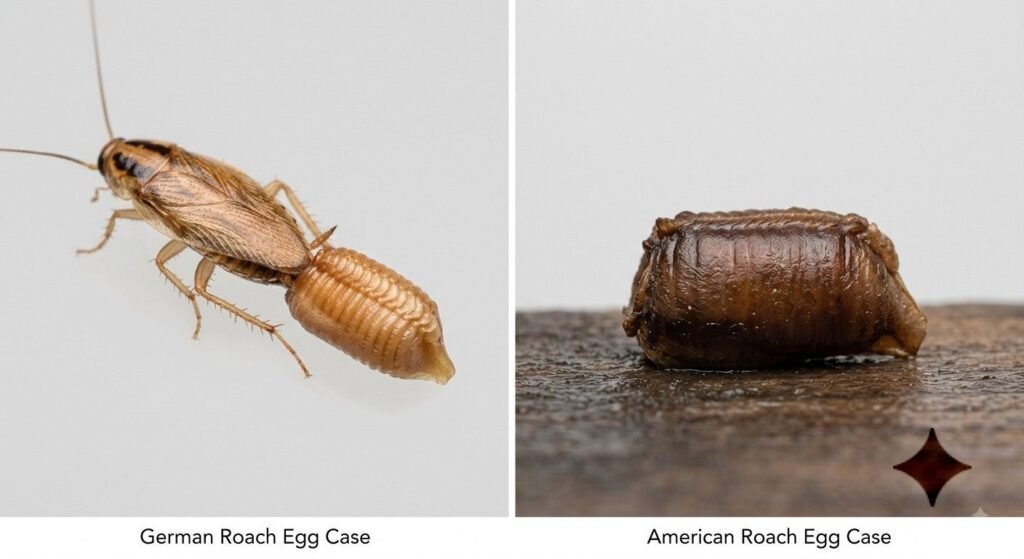
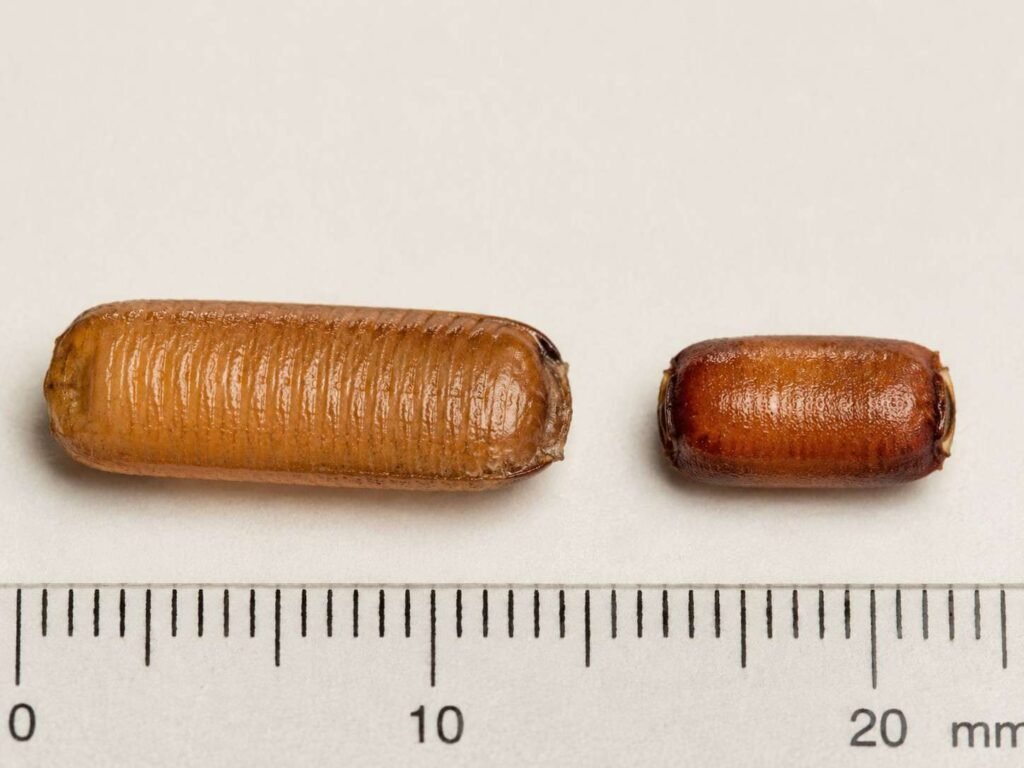
German roach eggs and brown-banded roach eggs are both enclosed inside protective egg cases called oothecae, but they differ in egg count, placement behavior, size, location, and infestation pattern. German roach egg cases are usually light tan to brown, about 6–9 mm long, and contain about 30–40 eggs. Brown-banded roach egg cases are smaller, about 5 mm long, yellowish to reddish-brown, and contain up to about 18 eggs.
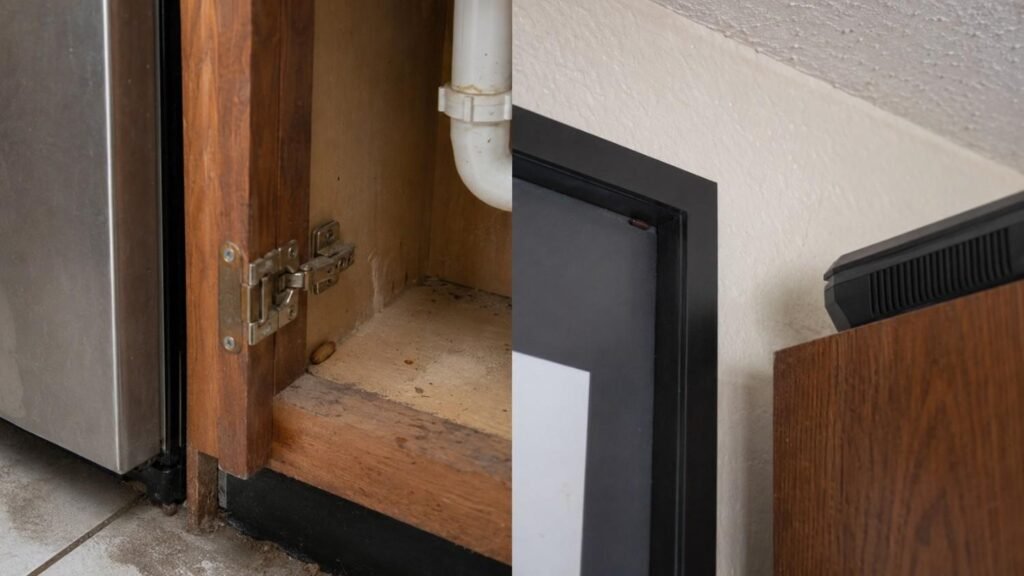
The fastest difference is where the egg case is found. German cockroach egg cases are strongly tied to kitchens and bathrooms because German roaches need food and moisture. Brown-banded cockroach egg cases are often glued to drier, warmer, higher locations such as furniture, walls, ceilings, closets, picture frames, electronics, desks, tables, and sometimes bedding.
If you see a female roach carrying a tan ootheca near a sink, cabinet hinge, or appliance, German roaches are more likely. If you find a tiny reddish-brown capsule glued high on furniture, behind wall decor, or inside electronics, brown-banded roaches are more likely.
Quick Comparison: German vs Brown-Banded Roach Eggs
| Feature | German Roach Eggs | Brown-Banded Roach Eggs |
|---|---|---|
| Scientific name | Blattella germanica | Supella longipalpa |
| Egg structure | Ootheca, protective egg case | Ootheca, protective egg case |
| Size | About 6–9 mm long | About 5 mm long / 3/16 inch |
| Color | Light tan, amber, yellowish-brown, or brown | Yellowish, light brown, reddish-brown, or tan |
| Shape | Narrow, ridged, purse-shaped capsule | Small, barrel-like or capsule-shaped case |
| Eggs per case | About 30–40, sometimes more | Up to 18; often about 10–18 |
| Female behavior | Carries ootheca until near hatch | Carries briefly, then attaches/glues it to objects |
| Hatching time | Often about 28–30 days | Often around one to two months; sources vary by conditions |
| Common location | Kitchens, bathrooms, under sinks, cabinet hinges, appliances | Furniture, ceilings, upper walls, closets, electronics, picture frames, desks, bedding |
| Moisture preference | High moisture and food access | Drier and warmer rooms than German roaches |
| Infestation clue | Egg-bearing female or loose tan case near kitchen/bathroom harborages | Small glued case away from sinks, often high or in furniture |
Rutgers NJAES states that a typical German cockroach egg case contains about 40 eggs and measures about 8 mm by 3 mm by 2 mm Rutgers NJAES. Oklahoma State University Extension states that the brown-banded cockroach egg capsule is yellowish or reddish-brown, 3/16 inch or 5 mm long, carried for 24–36 hours, and then attached to an object, with up to 18 eggs in a capsule Oklahoma State University Extension.
For a general visual guide, read what roach eggs look like.
What German and Brown-Banded Roach Eggs Have in Common
German and brown-banded roach eggs are both protected inside oothecae. An ootheca is a firm capsule that holds multiple developing roaches until they hatch.
Both egg cases are:
- Visible to the naked eye
- Brownish or tan in color
- Capsule-shaped
- Firm or leathery when mature
- Capable of releasing multiple nymphs
- Hidden in protected locations
- Evidence of active or recent roach reproduction
The University of Florida IFAS cockroach management guide explains that cockroach eggs are deposited in groups inside a leathery case or capsule called an ootheca UF IFAS Cockroaches and Their Management.
For ootheca basics, read what are roach eggs?.
German Roach Eggs: Key Identification Features
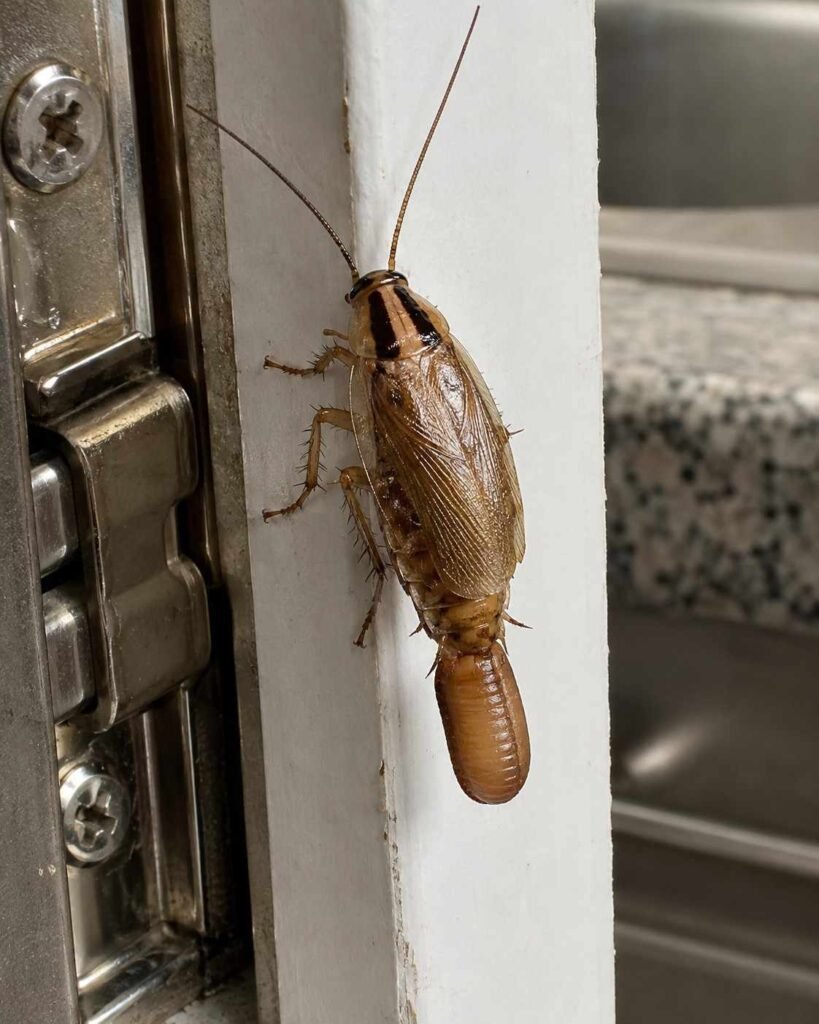
German roach eggs are enclosed inside a narrow, light tan to brown ootheca that the female carries until the eggs are close to hatching. This carrying behavior is the strongest German roach egg clue.
A German roach egg case usually has these traits:
- Size: about 6–9 mm long
- Color: light tan, amber, yellowish-brown, or brown
- Shape: narrow, purse-shaped, capsule-like, and ridged
- Egg count: about 30–40 eggs per case
- Texture: firm, leathery, and segmented
- Female behavior: carried on the end of the abdomen until near hatch
- Common rooms: kitchens and bathrooms
- Common hiding spots: cabinet hinges, drawer tracks, under sinks, refrigerator backs, stove gaps, dishwasher edges
University of Florida IFAS describes the German cockroach ootheca as a tiny brown, purse-shaped capsule about 8 mm long, 3 mm high, and 2 mm wide, typically containing 30–40 eggs UF IFAS German cockroach profile.
For the full species guide, read German roach eggs.
Brown-Banded Roach Eggs: Key Identification Features
Brown-banded roach eggs are enclosed inside a smaller ootheca that is carried briefly and then attached to hidden objects. Brown-banded roaches often place egg cases in drier and higher areas than German cockroaches.
A brown-banded roach egg case usually has these traits:
- Size: about 5 mm long
- Color: yellowish, light brown, reddish-brown, or tan
- Shape: small capsule, barrel-like, or purse-like case
- Egg count: up to 18 eggs per case
- Texture: firm and attached to a surface
- Female behavior: carried for about 24–36 hours, then glued to an object
- Common rooms: bedrooms, living rooms, closets, offices, upper kitchen areas
- Common hiding spots: desks, tables, furniture, bedding, closets, picture frames, walls, ceilings, electronics
Oklahoma State University Extension notes that brown-banded cockroaches are often found on ceilings, high on walls, behind picture frames, near motors of refrigerators and appliances, in light switches, closets, and furniture. The same source explains that they do not require as much moisture as German cockroaches, which is why they are often found outside kitchens and bathrooms Oklahoma State University Extension.
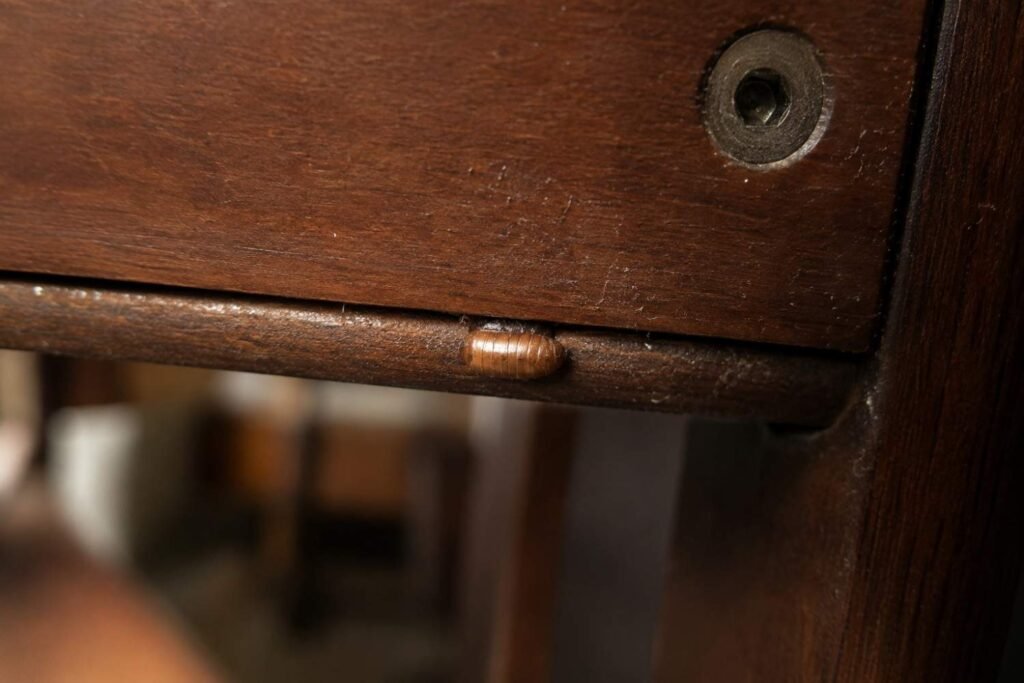
Size Difference: Brown-Banded Egg Cases Are Smaller
Brown-banded roach egg cases are smaller than German roach egg cases. German cases are about 6–9 mm long, while brown-banded cases are about 5 mm long.
| Measurement | German Roach Egg Case | Brown-Banded Roach Egg Case |
|---|---|---|
| Length | About 6–9 mm | About 5 mm |
| Approx. inch size | About 1/4–1/3 inch | About 3/16 inch |
| Visual comparison | Rice-grain length, narrow, ridged | Shorter, tiny capsule, easy to miss |
| Common mistake | Confused with seeds or debris near kitchen harborages | Confused with dirt, glue, seeds, or furniture debris |
A brown-banded ootheca is small enough to be overlooked during cleaning. Use a flashlight to inspect furniture undersides, wall decor, electronics, closet shelving, and upper cabinet corners.
For a full species chart, read How big are roach egg cases?.
Color Difference: Both Are Brownish, but German Cases Are Often Lighter
German and brown-banded roach egg cases can overlap in color. Both may appear tan, amber, yellowish-brown, or reddish-brown. German oothecae are often light tan to brown, while brown-banded oothecae are often yellowish to reddish-brown.
| Stage | German Roach Eggs | Brown-Banded Roach Eggs |
|---|---|---|
| Fresh | Pale tan, amber, light brown | Yellowish, tan, light reddish-brown |
| Mature | Brown or darker tan | Reddish-brown, tan, or light brown |
| Hatched | Lighter, papery, flattened, split | Dry, split, dull, often still attached |
Color alone is not enough. The more reliable clues are size, placement, and whether the case is carried or glued.
For color-stage detail, read What color are roach eggs?.
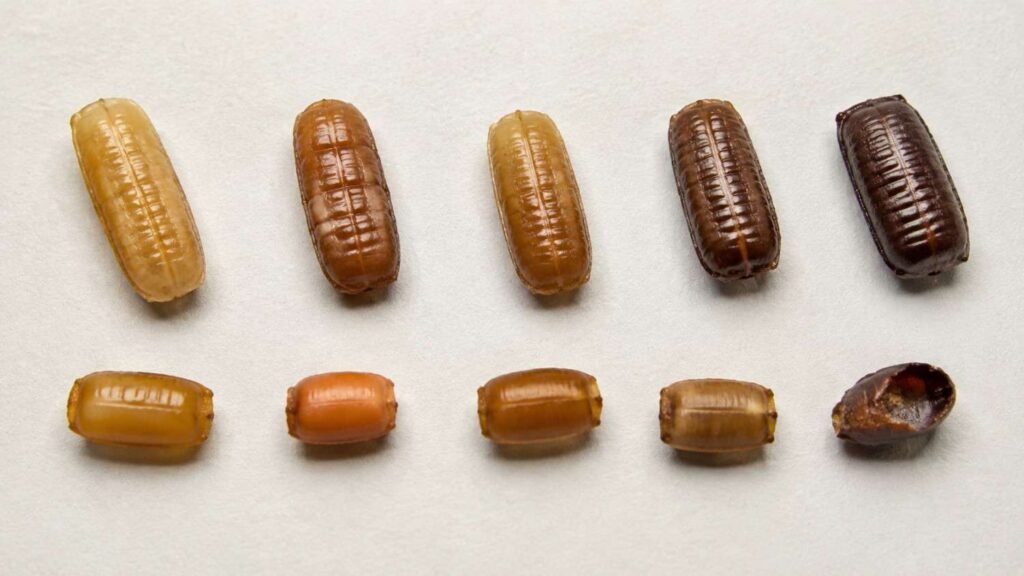
Shape and Texture Difference
German roach egg cases are usually narrow, ridged, and purse-shaped. Brown-banded roach egg cases are smaller, often barrel-like or capsule-shaped, and commonly attached to hidden surfaces.
German Ootheca Shape Clues
A German ootheca often looks:
- Narrow
- Ridged or segmented
- Light tan to brown
- Purse-shaped
- Attached to the female if active
- Found near food and water
Brown-Banded Ootheca Shape Clues
A brown-banded ootheca often looks:
- Very small
- Yellowish to reddish-brown
- Capsule-shaped or barrel-like
- Glued to a surface
- Found high, dry, or inside furniture/electronics
- Less tied to sink moisture
Both egg cases are firm when mature. If the object is tiny black specks, it is probably droppings, not eggs.
For texture details, read Are roach eggs hard, soft, sticky, or brittle?.
Egg Count Difference: German Roach Egg Cases Hold More
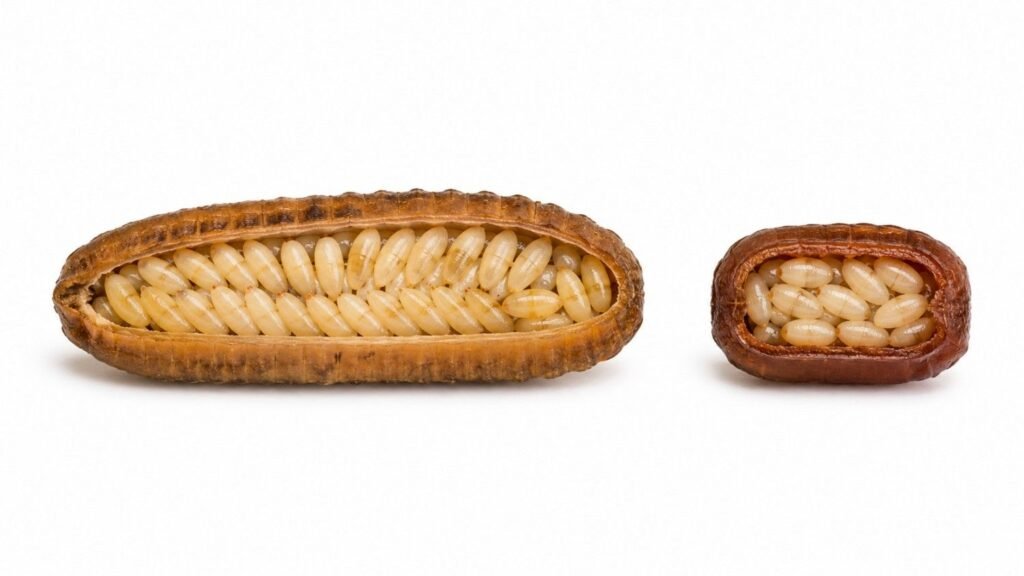
German roach egg cases contain far more eggs than brown-banded roach egg cases. This makes German roach reproduction especially explosive in kitchens, bathrooms, and apartments.
| Species | Eggs Per Ootheca | Infestation Meaning |
|---|---|---|
| German cockroach | About 30–40, sometimes more | High risk of fast indoor population growth |
| Brown-banded cockroach | Up to 18, often 10–18 | Lower per-case count but harder-to-find placement in many rooms |
German roaches are more dangerous in terms of reproductive speed per egg case. Brown-banded roaches are tricky because they spread egg cases into drier rooms, furniture, electronics, closets, and elevated areas that people may not inspect.
For more egg-count data, read How many eggs do roaches lay?.
Hatching Time Difference
German roach egg cases often hatch faster than brown-banded roach egg cases. German oothecae often hatch around 28–30 days. Brown-banded egg capsules may take longer, depending on temperature and humidity.
| Species | Typical Hatching Time | Key Note |
|---|---|---|
| German cockroach | Often about 28–30 days | Female carries ootheca until near hatch |
| Brown-banded cockroach | Often around one to two months; varies by conditions | Case is glued to an object after brief carrying period |
Oklahoma State University Extension lists the brown-banded cockroach average incubation period as 69.7 days Oklahoma State University Extension. Hatching time can vary based on indoor conditions.
For a full hatch-time guide, read How long do roach eggs take to hatch?.
Carrying Behavior: German Roaches Carry Longer
German and brown-banded roaches both carry oothecae, but not for the same length of time. German roaches carry the egg case until near hatching. Brown-banded roaches carry it briefly, then attach it to a hidden object.
German Female Behavior
A German cockroach female carries the ootheca on the end of her abdomen until the eggs are almost ready to hatch. This protects the embryos and reduces the chance that loose egg cases are found early.
UF IFAS states that German cockroach eggs are carried by the female until just before hatch, and nymphs may hatch while the female is still carrying the ootheca UF IFAS German cockroach profile.
Brown-Banded Female Behavior
A brown-banded cockroach female carries the egg capsule only briefly before gluing it to an object. This behavior spreads egg cases into furniture, walls, closets, desks, bedding, electronics, and high room areas.
Oklahoma State University Extension states that brown-banded females carry the egg capsule for 24–36 hours and then attach it to an object Oklahoma State University Extension.
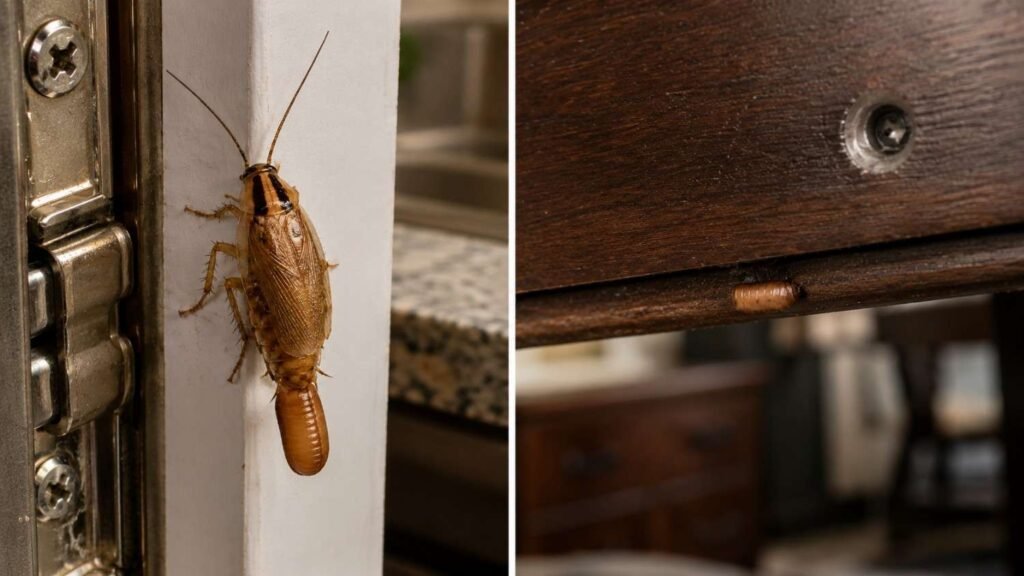
Location Difference: Sink Areas vs High, Dry Hiding Places
Location is the clearest practical difference between German and brown-banded roach eggs. German roaches cluster near food and water. Brown-banded roaches can place egg cases in drier rooms and high areas.
| Location | More Likely Species | Why |
|---|---|---|
| Under kitchen sink | German roach | Moisture and food nearby |
| Cabinet hinges | German roach | Tight, warm kitchen harborages |
| Behind refrigerator | German or brown-banded | German near food/moisture; brown-banded near motor warmth |
| Bathroom vanity | German roach | Moisture source |
| Behind picture frames | Brown-banded roach | Dry, high, protected surface |
| Closets | Brown-banded roach | Warm, dry harborage |
| Inside electronics | Brown-banded roach | Warm, dry, protected equipment |
| Under furniture | Brown-banded roach | Hidden attachment sites |
| Ceilings or upper walls | Brown-banded roach | Elevated hiding behavior |
| Bedding | Brown-banded roach | OSU notes capsules may even be glued in bedding |
Rutgers NJAES states that German cockroaches are mostly found in kitchens and bathrooms where food and water are available Rutgers NJAES. Oklahoma State University Extension states that brown-banded cockroaches do not require as much moisture as German cockroaches and are often found in rooms other than kitchens or bathrooms Oklahoma State University Extension.
For kitchen inspection, read Find cockroach eggs in the kitchen.
German vs Brown-Banded Roach Eggs in Apartments
German and brown-banded roaches can both infest apartments, but they spread differently. German roaches usually move through kitchens, bathrooms, shared walls, plumbing lines, and food-service areas. Brown-banded roaches often spread through furniture, electronics, closets, wall hangings, and higher dry spaces.
In apartments, inspect:
German Roach Zones
- Kitchen sink cabinet
- Refrigerator back and motor area
- Stove sides
- Dishwasher edges
- Bathroom vanity
- Plumbing gaps
- Cabinet hinges
- Drawer tracks
Brown-Banded Roach Zones
- Furniture seams
- Behind picture frames
- Electronics
- Closets
- Bedroom furniture
- Desks and tables
- Upper walls
- Ceiling corners
- Light switches
- Warm appliance motors
If egg cases are found beyond the kitchen and bathroom, brown-banded roaches become more likely.
Hatched German vs Hatched Brown-Banded Egg Cases
Hatched German and brown-banded egg cases both look split, hollow, dry, and papery. The difference is often location and attachment.
| Feature | Hatched German Ootheca | Hatched Brown-Banded Ootheca |
|---|---|---|
| Size | About 6–9 mm | About 5 mm |
| Color | Tan, light brown, faded, papery | Reddish-brown, tan, dull, dry |
| Shape | Narrow, ridged, flattened | Small attached capsule or barrel-like case |
| Location | Kitchen/bathroom cracks and appliance areas | Furniture, walls, ceilings, closets, electronics |
| Attachment | Often loose or near female drop site | Often still glued to object |
A hatched ootheca will not hatch again, but nymphs may already be active nearby. Read What do hatched roach egg cases look like?.
German vs Brown-Banded Roach Eggs vs Droppings
German and brown-banded egg cases can both be mistaken for droppings, especially when they are small or dark. The difference is structure.
| Evidence | Appearance | Meaning |
|---|---|---|
| German ootheca | Light tan to brown ridged capsule | German roach reproduction |
| Brown-banded ootheca | Small reddish-brown/tan capsule attached to object | Brown-banded roach reproduction |
| German droppings | Tiny black pepper-like specks | German roach movement and feeding |
| Brown-banded droppings | Small dark specks in drier/high harborage | Brown-banded roach movement and feeding |
If you found black dots rather than a capsule, read Are black dots roach eggs or poop?.
Which Is Worse: German or Brown-Banded Roach Eggs?
German roach eggs are usually more urgent because each egg case contains more embryos and German roaches reproduce quickly in kitchens and bathrooms. Brown-banded roach eggs are still serious because they are smaller, glued to hidden surfaces, and spread into rooms people may not associate with roaches.
German roach egg risk:
- More eggs per case
- Faster hatch cycle
- Kitchen and bathroom breeding
- Strong apartment infestation risk
- Egg-bearing females can be hard to eliminate before hatch
Brown-banded roach egg risk:
- Egg cases are very small
- Cases are glued to hard-to-see objects
- Infestations spread beyond kitchens
- Electronics and furniture may harbor cases
- Less moisture dependence allows broader room distribution
The more urgent species depends on where you find the egg case. In a kitchen cabinet, German roaches are usually worse. In furniture, electronics, or bedrooms, brown-banded roaches may be the main concern.
What to Do If You Find German or Brown-Banded Roach Eggs
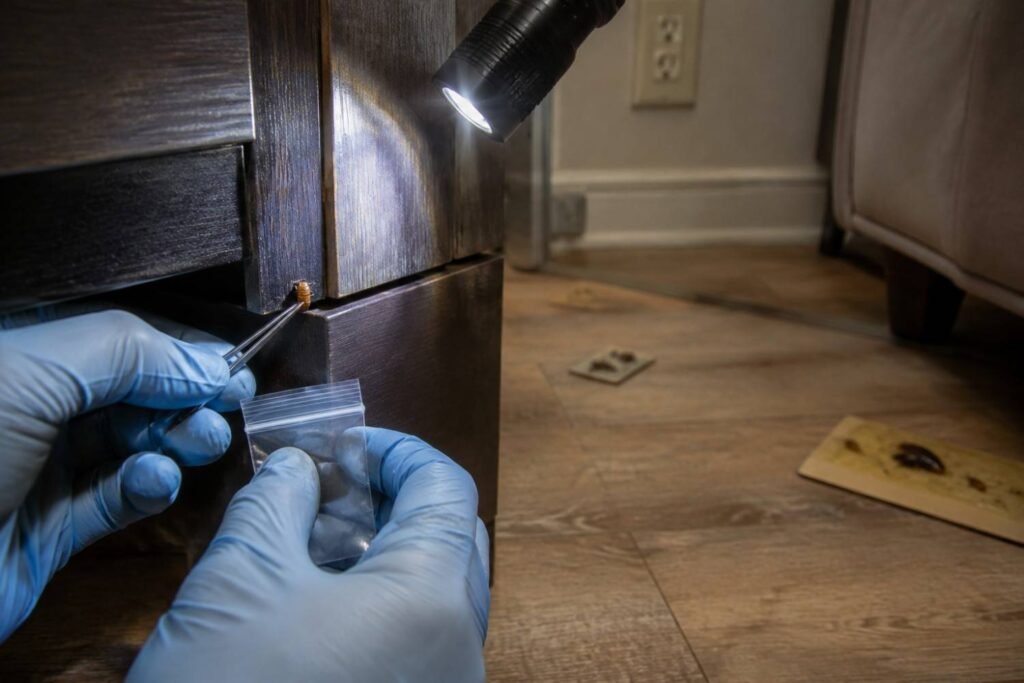
Any suspected roach egg case should be removed and followed by inspection. Do not leave intact oothecae in place.
Follow this action plan:
- Put on disposable gloves.
- Photograph the egg case before removal.
- Note the location. Kitchen/bathroom suggests German; high/dry/furniture suggests brown-banded.
- Pick it up with tape, tweezers, or a paper towel.
- If glued, lift carefully with a scraper or tape.
- Seal it in a plastic bag.
- Dispose of it outdoors.
- Vacuum nearby cracks, shelves, furniture seams, and appliance gaps.
- Clean droppings and stains with hot, soapy water where appropriate.
- Inspect the surrounding 6–10 feet for more cases.
- Place sticky monitors near suspected harborages.
- Use baits and insect growth regulators where appropriate.
For treatment options, read What kills roaches and their eggs?.
Final Verdict: German vs Brown-Banded Roach Eggs
German roach eggs and brown-banded roach eggs both develop inside oothecae, but their infestation patterns are different. German roach egg cases are larger, lighter, carried until near hatch, and usually found near kitchens and bathrooms. Brown-banded roach egg cases are smaller, often reddish-brown or tan, carried briefly, then glued to hidden objects in drier and higher locations.
If the egg case is light tan, narrow, and near food or water, suspect German roaches. If the egg case is tiny, reddish-brown, attached to furniture, walls, electronics, ceilings, closets, or bedroom objects, suspect brown-banded roaches.
Either finding means reproduction is happening or recently happened. Remove the egg case, inspect nearby harborages, clean evidence, place monitors, and treat the lifecycle.
Frequently Asked Questions
What is the difference between German and brown-banded roach eggs?
German roach egg cases are about 6–9 mm long, light tan to brown, and contain about 30–40 eggs. Brown-banded roach egg cases are smaller, about 5 mm long, yellowish to reddish-brown, and contain up to about 18 eggs.
Are brown-banded roach egg cases smaller than German roach egg cases?
Yes. Brown-banded egg cases are about 5 mm long, while German egg cases are about 6–9 mm long.
Which egg case has more eggs?
German roach egg cases have more eggs. A German ootheca commonly contains about 30–40 eggs, while a brown-banded ootheca contains up to about 18 eggs.
What color are German roach eggs?
German roach egg cases are usually light tan, amber, yellowish-brown, or brown.
What color are brown-banded roach eggs?
Brown-banded roach egg cases are usually yellowish, light brown, tan, or reddish-brown.
Do German roaches carry their egg cases?
Yes. Female German cockroaches carry the ootheca until just before hatching, and nymphs may hatch while the female is still carrying it.
Do brown-banded roaches carry their egg cases?
Brown-banded females carry the egg capsule briefly, usually about 24–36 hours, and then attach it to an object.
Where do brown-banded roaches hide egg cases?
Brown-banded roaches hide egg cases on furniture, desks, tables, walls, ceilings, picture frames, closets, electronics, light switches, and sometimes bedding.
Where do German roaches hide egg cases?
German roaches are most common in kitchens and bathrooms, especially near cabinet hinges, sinks, drawer tracks, appliances, and plumbing gaps.
Which is harder to find: German or brown-banded roach eggs?
Brown-banded roach egg cases can be harder to find because they are smaller and glued to hidden objects in many rooms, not just kitchens and bathrooms.