

What Are Roach Eggs? Lifecycle, Identification & Removal
What are roach eggs? Roaches don’t lay single eggs like birds. Instead, female cockroaches produce a protective capsule called an ootheca (pronounced oh-uh-THEE-kuh). This small, purse-shaped egg case holds anywhere from 12 to 50 individual eggs, depending on the species.
Key facts at a glance:
| Species | Eggs Per Ootheca | Size (mm) | Color | Incubation Time |
|---|---|---|---|---|
| German cockroach | 30–50 | 6–9 mm | Tan/light brown | 28–30 days |
| American cockroach | 12–16 | 8–10 mm | Dark reddish-brown | 44–60 days |
| Oriental cockroach | 16–18 | 8–10 mm | Dark brown/black | 42–81 days |
| Brown-banded cockroach | 10–18 | 5 mm | Light reddish-brown | 37–103 days |
Bottom line: If you find even one roach egg case in your home, it likely means dozens of baby roaches (called nymphs) could emerge within weeks. Quick action is mandatory.
In this complete guide we will teach you exactly how to identify roach eggs, understand their lifecycle, find where roaches hide their eggs, and remove them safely using proven methods.
What Is an Ootheca? Basic Biology & Terminology
Definition: Ootheca, Egg Case, and Roach Egg Capsule
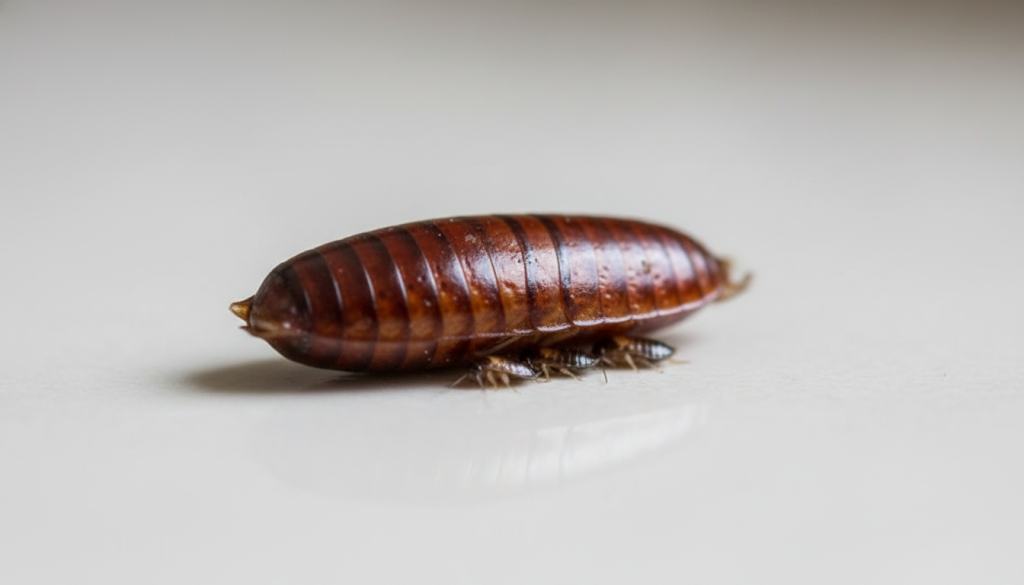
An ootheca is the scientific name for a cockroach egg case. The word comes from the Greek “oo” (egg) and “theca” (container or case). Think of it as a protective purse or capsule that holds multiple eggs inside.
When people say “roach eggs,” they usually mean the ootheca itself, not individual eggs. Each tiny egg inside the case is protected by its own thin membrane called a chorion. The outer shell of the ootheca is made of a hard, protein-rich material that shields the developing embryos from the environment.
Understanding this distinction matters for pest control. You’re not looking for loose eggs scattered around. You’re looking for small, pill-shaped capsules that contain many eggs at once.
Anatomy of an Ootheca (External Shape, Segments, and Casing)
A cockroach ootheca has several unique features:
| Feature | Description |
|---|---|
| External shape | Most oothecae are oval or purse-shaped, similar to a small dried bean or a tiny wallet. Some species produce longer, thinner cases, while others create more rounded ones. |
| Segments and ridges | Look closely (or use a magnifying glass), and you’ll see faint ridges running along the length. These ridges mark the compartments inside where individual eggs sit. |
| The operculum | This is the “seam” or “lid” along one edge. When it’s time to hatch, baby roaches push open this seam to escape. |
| Size comparison | Most roach egg cases are about the size of a small dried kidney bean, roughly 5 to 10 millimeters long, depending on the species. |
| Color and texture | Fresh oothecae tend to be lighter in color (tan, reddish-brown, or amber). As they age, they often darken. The outer surface may appear smooth or slightly textured. |
Key Terms to Know
Before we go further, let’s define some important terms you’ll encounter in this guide:
Ootheca: The protective egg case produced by female cockroaches that contains eggs inside.
Nymph: A baby cockroach that has hatched from the egg.
Instar: A stage of growth between molts; nymphs go through multiple instars before becoming adults
Oviposition: The act of depositing or laying the ootheca
Chorion: The thin membrane surrounding each individual egg inside the ootheca
Embryogenesis: The development of embryos inside the eggs before hatching
Sclerotization: The hardening process that toughens the outer shell of the ootheca
What Do Roach Eggs Look Like? Visual Identification
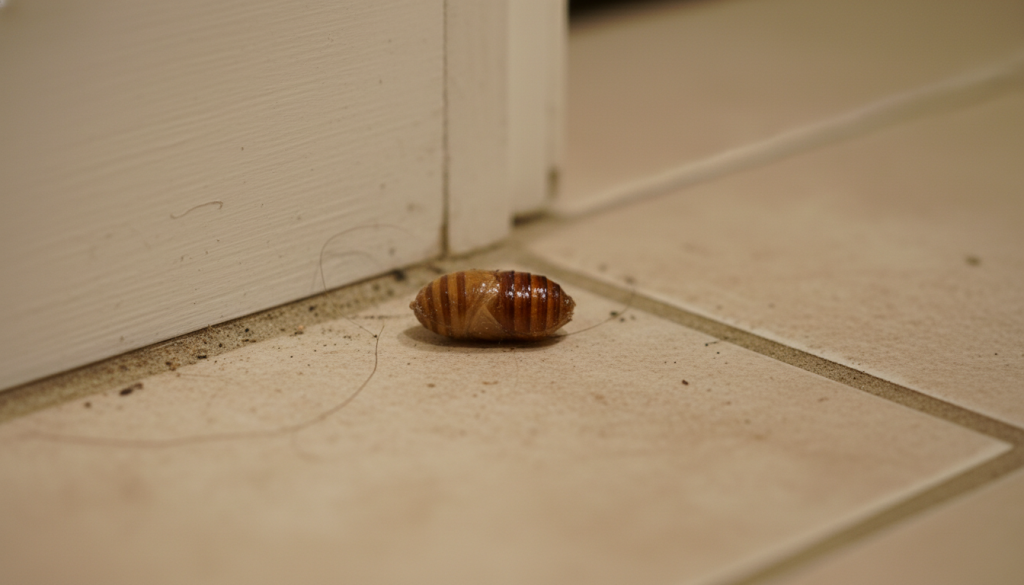
General Appearance: Size, Color, Texture, and Shape
Identifying roach eggs correctly is the first step toward effective control. Here’s what to look for:
Size: Cockroach egg cases range from about 5 mm to 10 mm long (roughly ¼ to ½ inch). That’s about the size of a grain of rice to a small dried bean.
Color: Fresh oothecae are typically tan, amber, reddish-brown, or light brown. Older or hatched cases may appear darker brown or almost black.
Texture: The outer shell feels smooth but may have visible ridges or seam lines. Some species produce glossy cases, while others are more matte.
Shape: Most are elongated ovals or purse-shaped, slightly flattened from side to side. Some describe them as looking like tiny leather pouches or pill capsules.
Species-by-Species Visual Guide
Different cockroach species produce distinctly different oothecae. Knowing which type you’re dealing with helps you choose the right control strategy.
German Cockroach Ootheca (Blattella germanica)
| Feature | Details |
|---|---|
| Size | 6–9 mm long (about the size of a grain of rice) |
| Color | Light tan to golden brown |
| Shape | Elongated, rectangular with rounded ends |
| Clutch size | 30–50 eggs per ootheca (highest among common species) |
| Distinctive feature | Female carries the ootheca attached to her abdomen until just before hatching (1–2 days before eggs emerge) |
| Location | Kitchens, bathrooms, near water sources |
Note: Because females carry their eggs, loose oothecae are less common. One female can produce 4–8 oothecae in her lifetime, potentially hundreds of offspring.
American Cockroach Ootheca (Periplaneta americana)
| Feature | Details |
|---|---|
| Size | 8–10 mm long (slightly larger than German roach eggs |
| Color | Dark reddish-brown to mahogany, darkening to almost black with age |
| Shape | Purse-shaped, symmetrical, with a raised ridge (keel) along the top |
| Clutch size | 12–16 eggs per ootheca |
| Distinctive feature | Females deposit the ootheca within 1–2 days of formation, often glued to surfaces using saliva |
| Location | Basements, sewers, crawl spaces, around pipes, damp areas |
Control note: Because American cockroaches deposit their eggs and leave them, you’re more likely to find oothecae during inspections.
Oriental Cockroach Ootheca (Blatta orientalis)
The Oriental cockroach is sometimes called the “black beetle” due to its shiny, dark appearance.
| Feature | Details |
|---|---|
| Size | 8–10 mm long |
| Color | Very dark brown to black, with a reddish tint |
| Shape | Slightly inflated, with a more prominent ridge along the seam |
| Clutch size | 16–18 eggs per ootheca |
| Distinctive feature | Females deposit oothecae in warm, protected areas with high humidity |
| Location | Basements, drains, damp crawl spaces, mulch beds, near decaying organic matter |
Key identifier: Oriental cockroach oothecae tend to be found in the dampest areas of a home.
Brown-Banded Cockroach Ootheca (Supella longipalpa)
The brown-banded cockroach is smaller and prefers warmer, drier locations than other species.
| Feature | Details |
|---|---|
| Size | 5 mm long (smallest among common species) |
| Color | Light reddish-brown, almost yellowish |
| Shape | Small, slightly curved, bean-like |
| Clutch size | 10–18 eggs per ootheca |
| Distinctive feature | Females glue oothecae to hidden surfaces—high walls, ceilings, furniture, behind picture frames |
| Location | Bedrooms, living rooms, closets, upper cabinets, inside furniture |
Important note: Unlike other roaches that prefer kitchens and bathrooms, brown-banded cockroaches spread throughout the home. Look for eggs in unusual spots away from water sources.
Close-Up Signs: Viable vs. Empty Egg Cases
Finding an ootheca is concerning, but understanding whether it’s viable (unhatched) or empty helps you assess your situation:
| Status | Characteristics |
|---|---|
| Viable (unhatched) | Plump, slightly swollen; uniform color; seam closed and intact; slightly firm or resistant if pressed |
| Empty (hatched) | Flattened or collapsed; seam split open; lighter, papery, or translucent; often partially crumbled |
May feel slightly firm or resistant if gently pressed
Empty (hatched) ootheca:
Flattened or collapsed
Seam is split open or damaged
May appear lighter, papery, or translucent
Often partially crumbled or fragmented
An empty ootheca means nymphs have already emerged; you likely have an active infestation. A viable ootheca means eggs haven’t hatched yet; immediate removal can prevent dozens of nymphs from entering your home.
Common Confusions and Lookalikes
People sometimes mistake other objects for roach eggs. Here’s how to tell the difference:
Rodent droppings: Mouse droppings are similar in size but have pointed ends and no ridges or seams. They’re solid, not hollow.
Shed cockroach skins: Nymphs leave behind translucent, shell-like molts. These are flattened, hollow, and roach-shaped, not capsule-shaped.
Seed pods and plant debris: Some seeds look similar but typically lack the distinctive ridges and purse-like shape of oothecae.
Insect frass: Cockroach droppings (frass) look like small black specks or coffee grounds, completely different from egg cases.
Pill bug shells: These are rounder and segmented, resembling miniature armadillo shells.
Pro tip: Use a magnifying glass and bright flashlight during inspections. Real oothecae have visible segmentation lines and a distinct seam along one edge.
Cockroach Life Cycle: From Egg to Adult
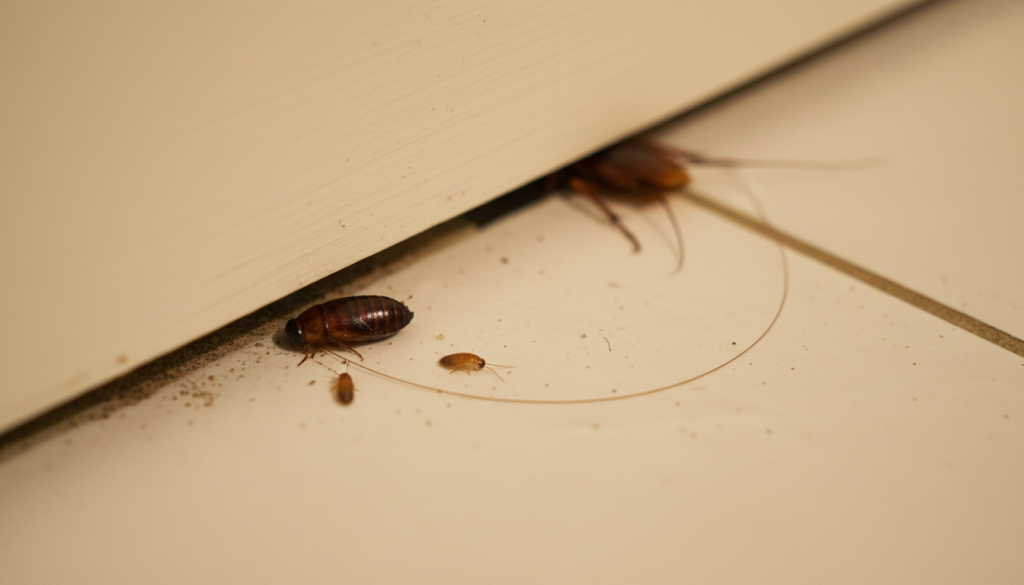
Understanding the cockroach life cycle helps you target control efforts at the most vulnerable stages.
Egg Stage: Deposition, Incubation, and Hatch Cues
Cockroaches undergo incomplete metamorphosis, meaning they develop through three stages: egg, nymph, and adult. There is no pupal (cocoon) stage like butterflies or beetles.
Oviposition (egg-laying): After mating, a female produces an ootheca over several hours. Some species carry the ootheca; others deposit it in a hidden location and glue it in place.
Incubation: Embryos develop inside the eggs over several weeks. Temperature and humidity strongly influence how fast this happens.
Hatching cues: When ready, nymphs use a combination of pressure and a specialized egg tooth to push open the operculum (the seam of the ootheca). All eggs in an ootheca typically hatch within minutes of each other.
Typical Incubation Times by Species
| Species | Incubation Period | Notes |
|---|---|---|
| German cockroach | 28–30 days | Shortest incubation; fastest reproduction |
| American cockroach | 44–60 days | Moderate incubation; deposits eggs early |
| Oriental cockroach | 42–81 days | Long incubation; temperature-dependent |
| Brown-banded cockroach | 37–103 days | Wide range; prefers warmer temperatures |
Environmental Factors Affecting Development
Temperature: Warmer conditions speed up development. Optimal temperatures for cockroach eggs range from 77°F to 86°F (25°C to 30°C). Below 50°F (10°C), development slows dramatically or stops.
Humidity: Cockroach eggs require moisture. Low humidity can desiccate (dry out) eggs, preventing hatching. High humidity promotes faster development and higher hatch rates.
Location: Eggs deposited in warm, humid, protected spots have the best survival rates.
Nymph Stages (Instars): Number of Molts and Development Timeline
After hatching, baby cockroaches are called nymphs. They look like smaller versions of adults but lack wings (or have undeveloped wing pads).
Nymphs grow through a series of stages called instars. At each stage, they shed their exoskeleton (molt) to accommodate growth. The number of instars varies by species:
| Species | Number of Instars | Development Timeline |
|---|---|---|
| German cockroach | 5–7 instars | 6–12 weeks |
| American cockroach | 10–13 instars | 6–12 months |
| Oriental cockroach | 7–10 instars | 6–18 months |
| Brown-banded cockroach | 6–8 instars | 3–6 months |
Key point: Nymphs are highly vulnerable during molting. This is when insect growth regulators (IGRs) and residual insecticides are most effective.
Adult Stage: Reproduction and Ootheca Production Rates
Adult cockroaches are reproductively mature and capable of mating. Females can produce multiple oothecae over their lifespans:
| Species | Oothecae Per Lifetime | Total Potential Offspring |
|---|---|---|
| German cockroach | 4–8 | 120–400+ |
| American cockroach | 10–90 | 120–1,440+ |
| Oriental cockroach | 8–14 | 128–252+ |
| Brown-banded cockroach | 12–20 | 120–360+ |
This is why early action matters. A single mated female can produce hundreds of descendants in a matter of months.
Where Roaches Lay Eggs: Common Locations and Habitats
Knowing where to look for roach eggs is essential for detection and removal. Cockroaches are secretive creatures that prefer dark, warm, humid, and undisturbed locations close to food and water.
Indoor Hotspots
Kitchens: The most common infestation zone. Check behind and under refrigerators, stoves, dishwashers, and sinks. Inspect inside cabinets, drawers, and pantry shelves. Look behind loose wallpaper, near grease buildup, and around plumbing connections.
Bathrooms: High humidity makes bathrooms attractive. Examine under sinks, behind toilets, around pipe penetrations, inside vanity cabinets, and near floor drains.
Behind appliances: Refrigerators, washing machines, dryers, and water heaters generate warmth, ideal for egg development.
Cardboard and clutter: Roaches love cardboard. Boxes stored in garages, basements, and closets can harbor eggs.
Drains and plumbing: American and Oriental cockroaches often use drains as entry points and egg-laying sites.
Outdoor and Transitional Areas
Mulch and landscaping: Organic mulch near foundations provides shelter and moisture for American and Oriental cockroaches.
Sewers and storm drains: Major harborage sites for American cockroaches. Oothecae can be found on pipe surfaces.
Cracks in foundations: Entry points where outdoor roaches may deposit eggs before moving inside.
Under porches and decks: Protected areas with accumulated debris.
Trash and compost areas: Food sources and moisture attract roaches.
Microhabitat Preferences by Species
| Species | Preferred Environment | Common Egg Locations |
|---|---|---|
| German cockroach | Warm, humid, indoors | Kitchen/bathroom crevices, appliance motors |
| American cockroach | Damp, dark, indoor/outdoor | Basements, sewers, drain areas |
| Oriental cockroach | Cool, very damp | Basements, crawl spaces, mulch |
| Brown-banded cockroach | Warm, dry, elevated | Upper walls, ceilings, furniture |
Health Risks, Sanitation Concerns & Misconceptions
Allergens and Asthma Triggers
Cockroaches are significant indoor allergens. Their saliva, droppings, shed skins, and decomposing body parts contain proteins that trigger allergic reactions and asthma attacks.
Who’s at risk?
| At-Risk Group |
|---|
| Children living in infested homes |
| People with pre-existing asthma |
| Individuals with allergies |
| Elderly and immunocompromised individuals |
According to the American College of Allergy, Asthma & Immunology, cockroach allergens are a major trigger for asthma in urban areas, particularly affecting children.
Mechanism: Cockroach proteins become airborne, are inhaled, and trigger immune responses. Even after roaches are eliminated, allergens can persist in dust and fabrics for months.
Pathogen Carriage
Cockroaches are living carriers for pathogens. As they crawl through sewage, garbage, and decaying matter, they pick up bacteria, viruses, fungi, and parasites on their bodies and legs. They can then transfer these to food preparation surfaces, tools, and food itself.
Pathogens associated with cockroaches include:
| Pathogen | Associated Illness |
|---|---|
| Salmonella species | Food poisoning |
| E. coli | Intestinal infections |
| Staphylococcus aureus | Skin and respiratory infections |
| Various enteric viruses | — |
Important note: While cockroaches can carry and transfer pathogens, they are not considered primary disease carriers like mosquitoes or ticks.
Some Myths vs. Facts
Myth: “Roach eggs spread diseases.”
Fact: The eggs themselves are sealed inside the ootheca. The health risk comes from roach droppings, shed skins, and body parts, not the eggs directly.
Myth: “You can crush roach eggs to destroy them.”
Fact: Crushing an ootheca may not kill the eggs inside due to the tough outer shell. It’s better to vacuum and dispose of them properly.
Myth: “Spraying insecticide on eggs will kill them.”
Fact: Most insecticides don’t penetrate the ootheca’s protective casing. Eggs often survive surface treatments. IGRs (insect growth regulators) are more effective at disrupting development.
Myth: “If I don’t see roaches, I don’t have a problem.”
Fact: Cockroaches are nighttime creatures and hide during the day. An infestation can exist undetected for weeks.
Prevention: Long-Term Strategies to Stop Roaches Laying Eggs
The best way to deal with roach eggs is to prevent them from being laid in the first place. Prevention focuses on three principles: deny food, deny water, and deny shelter.
Sanitation Best Practices
Food storage:
| Best Practice |
|---|
| Store food in sealed glass or plastic containers |
| Never leave pet food out overnight |
| Clean up crumbs and spills immediately |
| Empty garbage daily |
| Keep fruit and vegetables in the refrigerator |
Cleaning schedules:
| Task |
|---|
| Clean under and behind appliances regularly |
| Wipe down countertops nightly |
| Vacuum and mop floors weekly |
| Clean drains monthly (use enzyme cleaners to remove buildup) |
| Deep clean kitchen and bathrooms quarterly |
Clutter reduction:
| Action |
|---|
| Eliminate cardboard boxes (roaches eat and hide in cardboard) |
| Organize storage areas |
| Remove piles of newspapers, magazines, and bags |
Moisture Control
Cockroaches need water to survive. Eliminate water sources:
| Action |
|---|
| Fix leaky faucets and pipes promptly |
| Use dehumidifiers in damp basements |
| Improve ventilation in bathrooms |
| Empty drip pans under refrigerators and air conditioners |
Seasonal and Local Considerations
Climate impacts: In warm, humid climates (southern U.S., coastal regions), roaches breed year-round. In colder areas, activity peaks in spring and summer.
High-risk months: Late spring through early fall sees the highest roach activity and reproduction.
Local species: Know which species are common in your area to target prevention and treatment appropriately.
Removal and Treatment Options for Roach Eggs (By Severity)
Immediate DIY Removal Steps
Safety first:
- Wear gloves
- Use a flashlight to locate oothecae
- Have plastic bags ready for disposal
Removal process:
1. Locate the ootheca
2. Use a vacuum with a HEPA filter to suck it up, avoid crushing
3. Alternatively, pick it up with a paper towel (wearing gloves)
4. Seal the vacuum bag or debris in a plastic bag
5. Dispose in an outdoor trash can
6. Clean the area with soap and water
Non-Chemical Controls
Vacuuming: Vacuuming removes eggs, nymphs, and adults. Always seal and dispose of vacuum contents immediately.
Heat treatment: Extreme heat (above 130°F/54°C for sustained periods) can kill eggs. Professional heat treatments are sometimes used for severe infestations.
Cold treatment: Freezing can kill eggs, but temperatures must remain below 0°F (−18°C) for several days. This is impractical for most home infestations but may work for infested items that can be frozen.
Chemical and Insecticidal Approaches
Insect Growth Regulators (IGRs): How They Work
IGRs are chemicals that disrupt insect development. They don’t kill on contact but prevent nymphs from maturing into reproductive adults.
Why IGRs are essential: Because most insecticides don’t penetrate the ootheca, IGRs are critical for breaking the reproductive cycle. When nymphs hatch and encounter IGR-treated surfaces, they’re unable to develop normally.
Baits: Efficacy for Population Control
Cockroach baits contain slow-acting insecticides mixed with attractive food. Roaches eat the bait, return to their hiding spots, and die. Other roaches may feed on the dead roach or its droppings, creating a secondary kill effect.
Baits vs. eggs: Baits don’t directly kill eggs. However, they’re highly effective at eliminating the adult population, which stops new eggs from being produced.
Pro tip: Combine baits with IGRs for comprehensive control.
Professional Treatments
When to call an exterminator:
- DIY methods haven’t worked after 3–4 weeks
- You’re seeing roaches daily
- The infestation is in wall voids or hard-to-access areas
- Health concerns require rapid elimination
- You’re dealing with German cockroaches
Treatment Decision Matrix
| Infestation Level | Signs | Recommended Action |
|---|---|---|
| Light | 1–5 roaches seen, few droppings | DIY: baits, traps, sanitation |
| Moderate | Multiple sightings, several oothecae | DIY + IGRs, or professional evaluation |
| Heavy | Daily sightings, numerous oothecae, strong odor | Professional treatment required |
| Severe | Roaches seen during day, widespread | Professional + intensive follow-up |
Species-Specific Notes and Tactics
German Cockroach: Rapid Reproduction, Best Control Practices
The German cockroach is the most challenging pest roach due to its rapid reproduction and indoor lifestyle.
Key challenges:
- Females carry eggs, protecting them from treatments
- Short generation time (egg to adult in 2–3 months)
- Builds resistance to insecticides quickly
- Hides in tiny cracks and crevices
Best control practices:
- Use gel baits as the primary treatment
- Apply IGRs to prevent nymphs from maturing
- Focus on sanitation to reduce food and water sources
- Seal cracks in kitchens and bathrooms
- Avoid repellent sprays that scatter the population
American Cockroach: Outdoor Harborage, Baiting Strategies
American cockroaches often live outdoors in sewers and move indoors opportunistically.
Best control practices:
- Address outdoor harborage areas (mulch, drains, sewers)
- Apply granular baits around the foundation
- Seal entry points (door sweeps, pipe penetrations)
- Use perimeter treatments to create a barrier
- Indoor baiting for established populations
Oriental Cockroach: Moisture Issues and Sanitation Focus
Oriental cockroaches do well in damp environments.
Best control practices:
- Fix all water leaks and moisture problems
- Improve basement and crawl space ventilation
- Clean drains and remove organic debris
- Apply residual insecticides in damp harborage areas
- Use exterior perimeter treatments
Brown-Banded Cockroach: Different Hiding Preferences
Brown-banded cockroaches prefer warm, dry locations away from water sources.
Best control practices:
- Inspect bedrooms, living rooms, and closets
- Place glue traps near ceilings, behind picture frames, and inside furniture
- Use gel baits in higher locations (roaches feed at night)
- Check electronics, clock radios, and TVs
- Don’t overlook non-kitchen areas
Integrated Pest Management (IPM) Approach
Principles of IPM Applied to Roach Eggs. Integrated Pest Management combines multiple strategies for long-term pest control while minimizing environmental impact.
There are four pillars of IPM:
1. Monitor: Use sticky traps and regular inspections to detect activity
2. Prevent: Eliminate food, water, and shelter through sanitation and exclusion
3. Treat: Apply targeted treatments (baits, IGRs, residual products) as needed
4. Evaluate: Assess effectiveness and adjust strategies
Effective roach control isn’t about spraying chemicals everywhere. It’s about understanding the pest’s biology and addressing all contributing factors:
- Sanitation removes the resources roaches need
- Exclusion keeps new roaches from entering
- Monitoring tells you if your efforts are working
- Treatment targets remaining populations strategically
EPA guidance: Always use EPA-registered products. Read and follow the label, it’s the law.
Frequently Asked Questions (FAQ)
How long until roach eggs hatch?
Roach eggs take 28 to 103 days to hatch, depending on the species and environmental conditions. German cockroach eggs hatch in about 28–30 days, while brown-banded cockroach eggs may take up to 103 days in cooler temperatures.
How many eggs are in a roach egg case?
A single roach egg case (ootheca) contains 12 to 50 eggs. German cockroach oothecae hold the most (30–50 eggs), while American cockroaches produce cases with 12–16 eggs.
Where do roaches hide their eggs?
Roaches lay eggs in dark, warm, humid, and protected locations near food and water. Common spots include behind appliances, under sinks, inside cabinets, in wall cracks, and near plumbing. Brown-banded cockroaches often hide eggs in higher locations like ceilings and furniture.
Can roach eggs survive insecticides?
Yes, roach eggs often survive insecticides because the protective ootheca shell prevents chemicals from penetrating. This is why insect growth regulators (IGRs) and repeated treatments are important, they target nymphs after hatching.
How do you destroy roach eggs safely?
Vacuum up oothecae using a HEPA-filter vacuum, seal the vacuum contents in a plastic bag, and dispose of it in an outdoor trash can. Wear gloves and wash hands afterward. Avoid crushing eggs with bare hands.
Do roach eggs hatch inside the mother?
Most cockroach species do not hatch eggs internally. The female produces an ootheca and either carries it externally (German cockroach) or deposits it in a hidden location. However, ovoviviparous species (rare among household roaches) do give live birth.
Will freezing kill roach eggs?
Extreme cold can kill roach eggs, but temperatures must remain below 0°F (−18°C) for several days. This is generally impractical for home infestations but may work for isolated infested items.
Can you see roach eggs with the naked eye?
Yes, roach egg cases (oothecae) are visible to the naked eye. They range from 5 to 10 mm long, about the size of a grain of rice to a small bean. Individual eggs inside are much smaller and not easily visible without magnification.
How fast do roaches reproduce?
German cockroaches reproduce fastest, completing their lifecycle in 2–3 months under ideal conditions. A single female can produce 4–8 oothecae in her lifetime, potentially generating 300+ offspring per year.
Do roaches lay eggs in electronics?
Yes, roaches often harbor in warm electronics like TVs, computers, gaming consoles, and clocks. They may deposit eggs in these locations, especially brown-banded cockroaches.
How do I know if roach eggs have hatched?
Hatched oothecae appear flattened, collapsed, or split open along the seam. Unhatched cases look plump and have an intact seam.
Will cleaning get rid of roach eggs?
Cleaning alone won’t eliminate roach eggs already present, but it’s essential for prevention. Removing food and water sources makes your home less attractive to roaches and supports other control efforts.
Can one roach egg cause an infestation?
Yes. A single ootheca can release 12–50 nymphs. If those nymphs mature and reproduce, a small problem can become a severe infestation within months.
Are roach eggs dangerous?
Roach eggs themselves are not directly dangerous. However, an active infestation produces allergens and can expose you to pathogens carried by roaches. Allergic reactions and asthma exacerbation are genuine health risks.
How often do roaches lay eggs?
Female cockroaches produce oothecae every 3–6 weeks during their reproductive lifespan. German cockroach females may produce one ootheca per month for several months.
Final Checklist & Next Steps
10-Point Quick Action Checklist
1. ☐ Inspect all high-risk areas (kitchen, bathroom, basement)
2. ☐ Document findings with photos and notes
3. ☐ Remove any oothecae found (vacuum and dispose properly)
4. ☐ Deep clean kitchens and bathrooms
5. ☐ Fix all water leaks and moisture issues
6. ☐ Seal cracks, gaps, and entry points
7. ☐ Place sticky traps to monitor activity
8. ☐ Apply gel baits in harborage areas
9. ☐ Use IGRs to disrupt the reproductive cycle
10. ☐ Schedule follow-up inspections every 1–2 weeks
When to Call a Professional
Call a licensed pest control professional if:
- You find multiple oothecae or see roaches daily
- DIY treatments show no improvement after 3–4 weeks
- You have health concerns (asthma, allergies)
- The infestation is in inaccessible areas (wall voids, attics)
- You want guaranteed, faster results
Take Action Today
Don’t wait for roach eggs to hatch. Every day of delay can mean dozens more nymphs in your home. Start with a thorough inspection, improve sanitation, seal entry points, and use the right treatments for your situation.
Need help identifying roach eggs or controlling an infestation? Contact a licensed pest control professional for a thorough inspection and customized treatment plan. Many companies offer free evaluations.
Share this guide with friends and family who may be dealing with roach problems—knowledge is the first step to a pest-free home.
Disclaimer:
For personalized advice, consult a licensed pest management professional in your area.