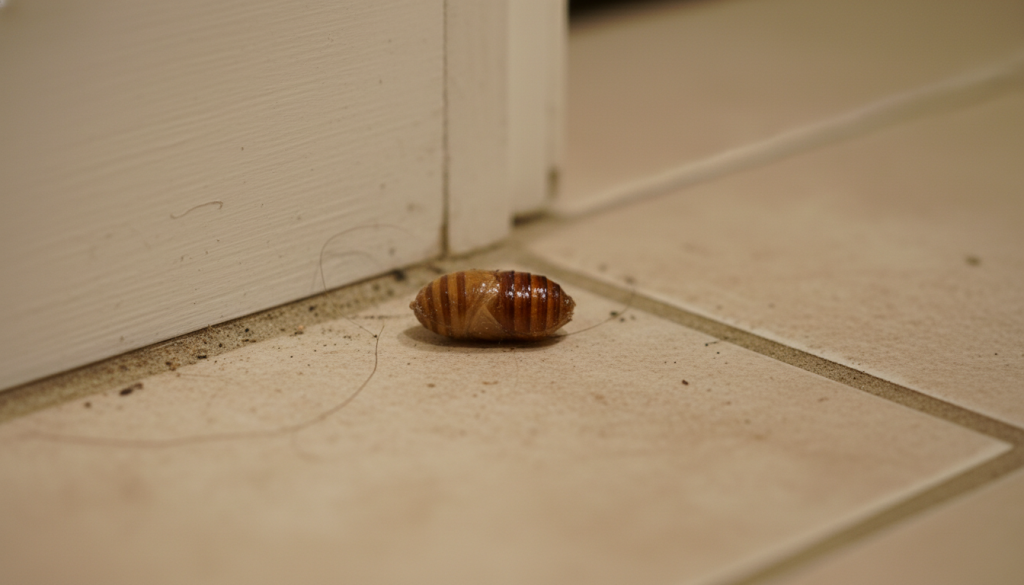
A single German cockroach female can produce over 300 offspring in her lifetime. And she doesn’t deliver them one at a time; she deposits them in a protein-shelled egg case called an ootheca, each one packed with dozens of developing embryos ready to flood your kitchen in under a month.
So, how long does it take for roach eggs to hatch? The answer depends on the cockroach species, ambient temperature, humidity levels, and whether that egg case is tucked behind your fridge or sitting in a garage. Most species hatch somewhere between 14 and 60+ days, but the details matter a lot more than the average.
This guide breaks down the cockroach egg incubation period for every major species, explains what influences hatching speed, and shows you exactly what to look for if you suspect roach eggs are already developing in your home. Because knowing the timeline is the first step toward breaking the roach breeding cycle for good.
Table of Contents
1. What Is a Cockroach Ootheca (and Why Should You Care)?
2. Roach Egg Hatching Time: The Quick-Reference Table
3. German Cockroach Eggs Hatching Time (14–28 Days)
4. American Cockroach Egg Incubation Period (44–55 Days)
5. Oriental Cockroach Egg Hatching Period (~60 Days)
6. Brown-Banded Cockroach Egg Case Incubation (37–103 Days)
7. Other Species: Smoky Brown, Australian, and Beyond
8. Does Temperature Affect Cockroach Egg Hatching?
9. Cockroach Egg Development Stages: Ootheca to Nymph
10. Do Cockroach Eggs Hatch on Their Own Without the Mother?
11. How to Tell If Roach Eggs Have Hatched
12. FAQs
13. Key Takeaways
What Is a Cockroach Ootheca (and Why Should You Care)?
Before you can understand roach egg hatching time, you need to understand the delivery system. Cockroaches don’t lay individual eggs like a housefly. Instead, the female produces a hardened egg capsule called an ootheca, a ridged, purse-shaped pod that holds multiple embryos in separate egg chambers.
Think of it like a carton of eggs, except the carton is made of hardened protein and each “egg” inside is a developing cockroach nymph.
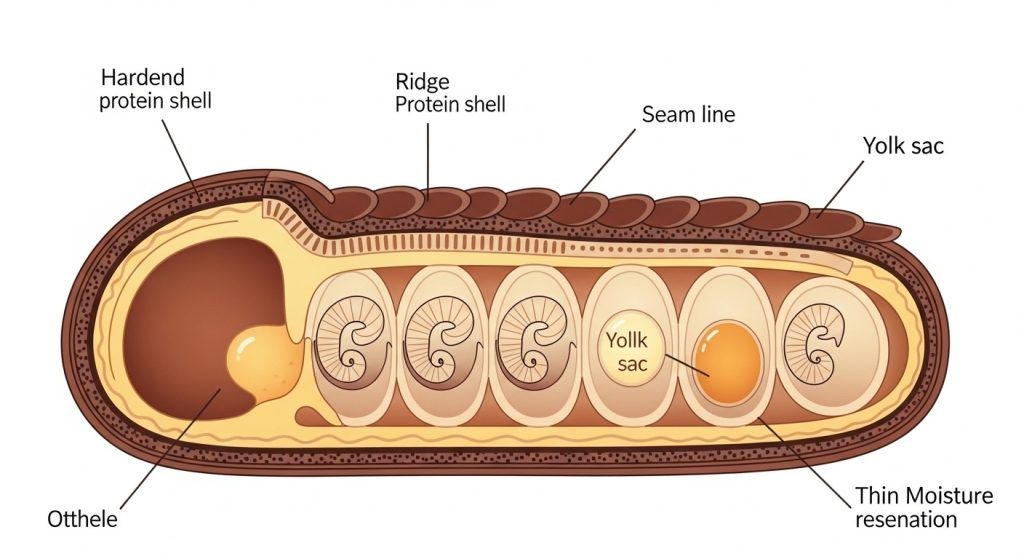
Anatomy of a Roach Egg Case
An ootheca has several distinct structural features:
– Outer casing (protein shell): A tough, darkened layer that shields embryos from desiccation, mild pesticide exposure, and physical crushing
– Keel (seam line): A ridge running along the top where nymphs eventually push through during emergence
– Individual egg chambers: Separate compartments inside, each containing one embryo surrounded by a chorion (protective egg membrane)
– Yolk sac nutrient supply: Provides developing embryos with the energy they need to reach the nymph stage
– Moisture-retention layer: An inner lining that regulates water loss, critical for pest egg viability duration
– Adhesive secretion: Some species glue the ootheca to surfaces using a sticky secretion from the ootheca attachment point
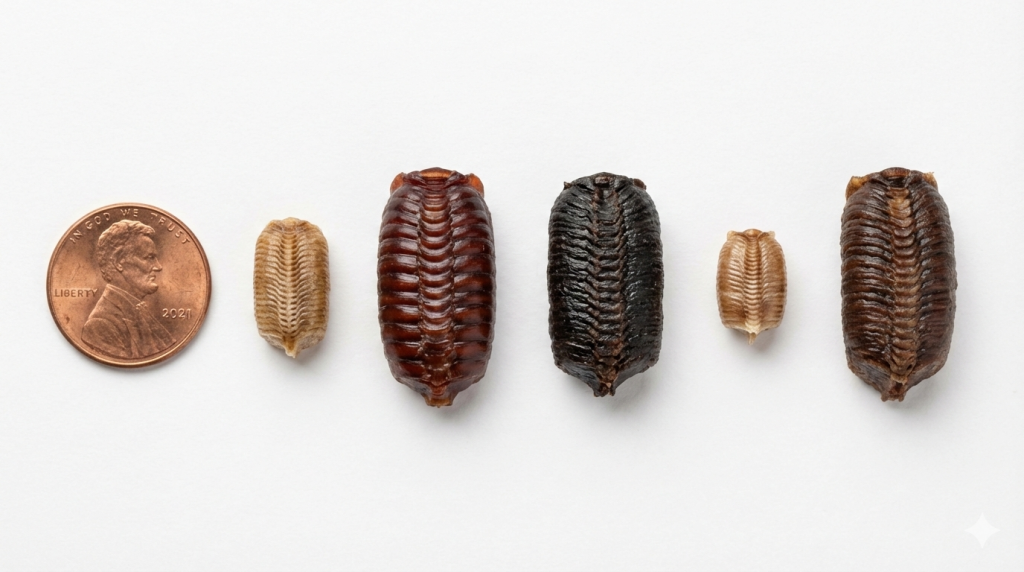
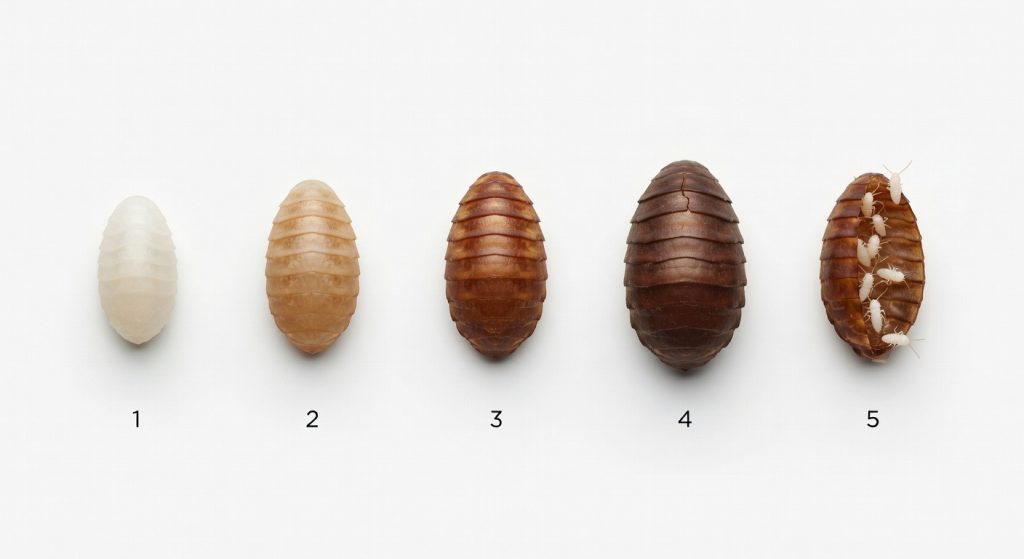
The egg case pigmentation layer darkens as the ootheca matures. A freshly deposited ootheca is often white or pale tan, while a mature one turns dark brown or nearly black.
Pro Tip: If you find a roach egg sac that’s dark and appears slightly swollen along the keel, it may be close to hatching. Light-colored, firm oothecae are typically earlier in the cockroach gestation period.
How Many Roaches Hatch From One Egg?
This question comes up constantly, and the answer is species-specific. Each ootheca contains a set number of embryonic segments (pre-hatch nymphs), and the count varies dramatically.
– German cockroach (Blattella germanica): 30–48 nymphs per egg case
– American cockroach (Periplaneta americana): 14–16 nymphs per egg case
– Oriental cockroach: 16 nymphs per egg case
– Brown-banded cockroach (Supella longipalpa): 10–18 nymphs per egg case
– Australian cockroach (Periplaneta australasiae): 22–24 nymphs per egg case
A single German cockroach ootheca can release up to 48 nymphs at once. Multiply that by the 4–8 egg cases one female produces in her lifetime, and you begin to see why the roach population growth rate spirals so quickly in infested homes.
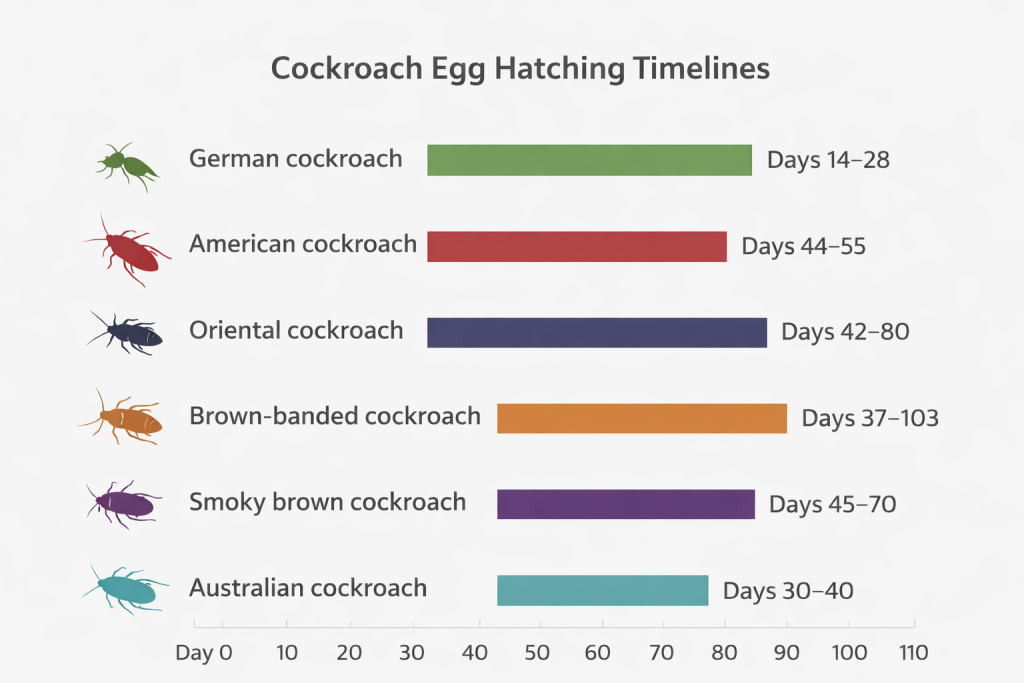
How Long Does Ootheca Take to Hatch? Quick-Reference Table
Here’s the roach egg case hatching time for each major household cockroach species, compiled from entomological research published by universities including Purdue, the University of Florida, and Texas A&M AgriLife Extension:
Species | Scientific Name | Incubation Period | Eggs per Ootheca | Egg Case Behavior
German cockroach | Blattella germanica | 14–28 days | 30–48 | Carried until hatching
American cockroach | Periplaneta americana | 44–55 days | 14–16 | Deposited & glued to surface
Oriental cockroach | Blattodea family | 42–80 days (avg. ~60) | 16 | Deposited in sheltered area
Brown-banded cockroach | Supella longipalpa | 37–103 days | 10–18 | Glued to ceilings/furniture
Smoky brown cockroach | Periplaneta fuliginosa | 45–70 days | 20 | Deposited near moisture
Australian cockroach | Periplaneta australasiae | 30–40 days | 22–24 | Deposited in moist debris Turkestan cockroach | Shelfordella lateralis | 40–60 days | 16–18 | Deposited in soil/crevices
These figures assume standard indoor conditions (roughly 72–80°F / 22–27°C with moderate humidity). Extreme cold, dryness, or chemical pesticide exposure can extend or completely halt the insect egg development period.
German Cockroach Eggs Hatching Time (14–28 Days)
The German cockroach is the fastest reproducer among common synanthropic species (insects that thrive alongside humans in indoor environments). With a cockroach egg incubation period of just 14 to 28 days, this species can cycle from egg deposition to nymph emergence in under a month.
Why German Roaches Hatch the Fastest
Three factors explain the speed:
1. Maternal protection of ootheca. Unlike most cockroach species, the female German cockroach carries the ootheca attached to her abdomen until just 1–2 days before hatching. This egg-case-carrying vs. depositing behavior gives the embryos consistent access to her body heat and moisture, dramatically improving the roach egg’s survival rate.
2. Smaller body, faster metabolism. German cockroaches belong to the family Ectobiidae. Their small size (roughly 13–16mm as adults) correlates with a faster overall biological clock compared to larger species in the family Blattidae.
3. Indoor adaptation. As obligate indoor pests in temperate climates, German cockroaches have evolved to exploit the stable temperatures and humidity of human homes, conditions that happen to be perfect for rapid embryo development.
Did You Know? A 2016 study published in the Journal of Economic Entomology found that German cockroach oothecae kept at 86°F (30°C) hatched in as few as 14 days, while those at 68°F (20°C) took closer to 28 days. Temperature is the single biggest variable in nymph emergence timing for this species.
After hatching, German cockroach nymphs molt 6 times over roughly 6–12 weeks before reaching adulthood. The entire cockroach reproductive cycle, from egg to reproducing adult, can be completed in as little as 100 days under ideal conditions.
That’s why pest control professionals consider the German cockroach the most challenging urban pest insect to eradicate. You’re not just fighting adults; you’re racing against eggs that are already weeks into development.
American Cockroach Egg Incubation Period (44–55 Days)
The American cockroach (Periplaneta americana) is the largest common household cockroach in the United States, measuring up to 53 mm. Its ootheca development timeline is significantly longer than that of the German species.
American cockroach females produce an ootheca roughly every 6–10 days during peak reproduction. Each egg case contains 14–16 embryos and takes 44 to 55 days to hatch under typical conditions.
Key behavioral differences:
– The female deposits the ootheca within 1–2 days of formation, gluing it to a surface near food and moisture sources (unlike German cockroaches, which carry theirs)
– Preferred deposition sites include basement corners, behind appliances, inside wall voids, and near plumbing environments that naturally maintain the egg-hatching temperature requirements
– Females produce an average of 6–14 oothecae over their lifetime (approximately 1–1.5 years as adults)
The math is sobering. At 14 eggs per case and 10 cases per female, a single American cockroach can produce 140 offspring, each of which reaches reproductive maturity within 6–12 months.
Because the ootheca is deposited rather than carried, American cockroach egg cases are more vulnerable to environmental stress effects on hatch rate. Extreme dryness, flooding, or direct exposure to residual insecticide sprays can reduce viability significantly.
Oriental Cockroach Egg-Hatching Period (~60 Days)
The Oriental cockroach is sometimes called the “water bug” because of its preference for cool, damp environments. Its egg incubation period is one of the longest among indoor pest species: approximately 42–80 days, with most oothecae hatching around the 60-day mark.
Oriental cockroaches are classified within the order Blattodea and display oviparous reproduction, meaning embryos develop entirely outside the female’s body after egg deposition.
Here’s what makes their hatching behavior distinct:
– Egg case placement: Females deposit oothecae in sheltered, moist locations, such as drain openings, mulch beds, leaf litter, and space crevices
– Temperature sensitivity: Oriental cockroach embryo development slows dramatically below 68°F (20°C) and can enter a state of diapause (developmental arrest) during cold snaps
– Seasonal hatching: In temperate climates, most Oriental cockroach nymph emergence happens in late spring through early summer, making the cockroach infestation progression highly seasonal
Each Oriental cockroach ootheca contains roughly 16 embryos, and a single female deposits about 8 oothecae during her adult lifespan.
Important: Because Oriental cockroaches prefer cooler environments than other species, they’re commonly found in basements, garages, and outdoor harborage areas. If you find dark, reddish-brown egg cases (roughly 8–10mm long) in these spaces, you’re likely dealing with this species.
Brown-Banded Cockroach Egg Case Incubation (37–103 Days)
The brown-banded cockroach (Supella longipalpa) presents the widest hatching window of any common pest cockroach: 37 to 103 days. That enormous range reflects this species’ extreme sensitivity to ambient conditions.
What makes Supella longipalpa unusual:
– High egg case placement. Unlike most cockroaches, brown-banded females glue their oothecae to elevated surfaces behind picture frames, on closet shelves, underneath furniture tops, and even on ceilings. This predation risk and ootheca placement strategy keeps egg cases away from floor-dwelling predators and moisture-triggered mold.
– Lower moisture needs. Brown-banded cockroach oothecae can survive in drier conditions than those of German or Oriental species, which extends the roach ootheca development timeline but improves egg case survival in arid indoor environments.
– Smaller egg count. Each ootheca contains only 10–18 embryos, but a single female produces up to 14 egg cases, potentially yielding over 200 offspring.
The wide incubation range means you can’t assume a timeline. In a warm apartment at 80°F with moderate humidity, brown-banded eggs might hatch in 5–6 weeks. In a cooler, drier home, the same eggs could take over three months.
Does Temperature Affect Cockroach Egg Hatching?
Yes, temperature is the single most influential variable in cockroach egg incubation.
All cockroaches are ectotherms (cold-blooded organisms). Their metabolic rate, including the rate of embryo development inside the oocyte, scales directly with ambient temperature.
Here’s how temperature shifts affect hatching for the German cockroach, based on laboratory data from Purdue University’s Department of Entomology:
Temperature | Approximate German Cockroach Hatching Time
59°F (15°C) | Developmental arrest (no hatching)
68°F (20°C) | ~28 days
77°F (25°C) | ~20 days
86°F (30°C) | ~14 days
95°F (35°C) | 12–14 days (but increased embryo mortality)
The sweet spot for fastest hatching with highest survival is 77–86°F (25–30°C), which happens to match the average temperature inside most heated or air-conditioned homes. That’s not a coincidence. Synanthropic cockroach species have evolved specifically to exploit indoor vs. outdoor hatching conditions in human dwellings.

Humidity as a Developmental Variable
Temperature gets the most attention, but humidity matters almost as much. The ootheca’s moisture-retention layer can only compensate for so much dryness. Research from the University of Florida’s Entomology Department has shown that:
– German cockroach oothecae held below 40% relative humidity experience up to 90% embryo mortality
– American cockroach egg cases in humid environments (70%+ RH) consistently achieve hatch rates above 85%
– Brown-banded cockroach oothecae tolerate lower humidity than other species, partly because of their evolved ootheca placement strategy (elevated, sheltered locations with less moisture fluctuation)
Pro Tip: If you’re trying to reduce cockroach hatching success in your home, focus on dehumidification, especially in basements, crawl spaces, and under-sink cabinets. A relative humidity below 50% significantly reduces roach egg survival rate across most species.
Environmental Stress and Chemical Exposure
Not all pesticides kill cockroach eggs. In fact, most contact insecticide sprays cannot penetrate the ootheca’s outer protein shell. That hardened casing evolved specifically to protect embryos from environmental threats, including the chemical pesticide effect on egg viability that modern products attempt to exploit.
Products that do affect ootheca viability include:
– Insect growth regulators (IGRs) like hydroprene and pyriproxyfen, which disrupt embryonic development
– Desiccant dusts like diatomaceous earth and boric acid, which compromise the ootheca’s moisture-retention layer over time
– Fumigant-class products (professional use only) that can reach embryos through gas-phase penetration
This is a key reason why integrated pest management (IPM) frameworks combine multiple control methods rather than relying on a single spray application.
Cockroach Egg Development Stages: Ootheca to Nymph
Understanding the full cockroach biological cycle helps you identify exactly where an infestation stands. The egg phase alone goes through several distinct stages:
Stage 1: Egg Deposition (Day 0)
The female forms the ootheca and either deposits it or continues carrying it (depending on species). At this point, embryos are in early cellular division. The ootheca appears pale, soft, and slightly translucent.
Stage 2: Embryo Development (Days 1–50%, Species-Dependent)
Embryonic segments differentiate inside individual egg chambers. Yolk sac nutrients fuel growth. The pro-nymphal cuticle, a temporary membrane surrounding each developing nymph, forms during this phase.
Stage 3: Late Embryonic Development (50–90% of Incubation)
Nymph body structures become visible through the chorion in some species. The ootheca darkens as the egg case pigmentation layer matures. The egg case may swell slightly along the egg case’s suture line (the keel).
Stage 4: Pre-Emergence (Final 24–48 Hours)
Nymphs begin moving inside the ootheca. Air is drawn in through the keel, and the increased internal pressure helps split the egg case suture line open.
Stage 5: Nymph Emergence
Tiny, pale nymphs push through the keel and emerge. Nymph antennae are the first visible posthatch structure, followed by the head and legs. Newly hatched cockroach nymphs are soft and white and darken within hours as their exoskeleton hardens.
Nymph Molting Sequence Post-Hatching
After emergence, each nymph undergoes a series of instars (molts) before reaching adulthood:
– German cockroach: 6 instars over 6–12 weeks
– American cockroach: 10–13 instars over 6–12 months
– Oriental cockroach: 7–10 instars over 6–18 months
Each molt produces a slightly larger nymph with more developed wings (where applicable). The entire progression from egg to reproducing adult constitutes the cockroach reproductive cycle timeline, and understanding it reveals why a small problem becomes a large one so fast.
Do cockroach eggs hatch on their own without the mother?
Yes, with one notable exception.
For the vast majority of cockroach species, once the ootheca is deposited, the female plays no further role. The egg case is a self-contained development unit. As long as temperature and humidity remain within viable ranges, the embryos inside will develop and hatch independently.
This is true for:
– American cockroaches (deposited oothecae)
– Oriental cockroaches
– Brown-banded cockroaches
– Smoky brown cockroaches
– Australian cockroaches
The exception is the German cockroach. Because the female carries the ootheca until 1–2 days before hatching, premature separation from the mother reduces hatch rates significantly. Research published in the Annual Review of Entomology has demonstrated that German cockroach oothecae removed more than 48 hours before their natural hatch date show up to 50% lower emergence rates, primarily due to dehydration.
However, if a German cockroach ootheca is detached close to its hatching date and remains in a warm, humid environment, the nymphs can still emerge successfully. The critical factor isn’t maternal presence; it’s the egg-hatching environmental triggers of warmth and moisture.
Real-World Scenario: I’ve seen homeowners crush a German cockroach and unknowingly detach a nearly mature ootheca. Days later, 30+ tiny nymphs appear in the same area. The lesson? Always inspect crushed roaches for attached egg cases, and dispose of them in a sealed bag outside the home.
How to Tell If Roach Eggs Have Hatched
Finding an ootheca in your home raises an immediate question: is it still full, or have the nymphs already emerged? Here’s how to tell:
Visual Indicators of a Hatched Ootheca
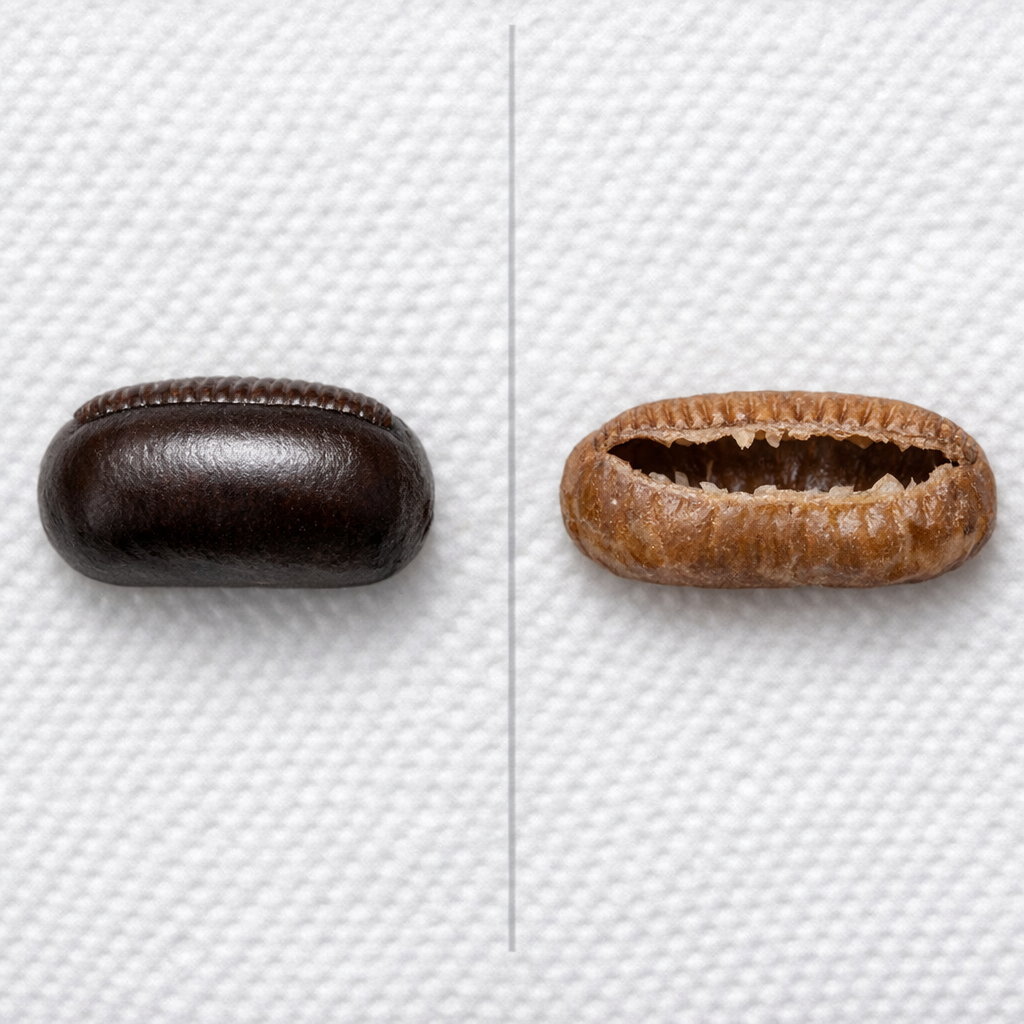
– Split keel: A hatched egg case will have a clearly open seam along the top ridge. Unhatched oothecae have a closed, intact keel.
– Flattened or deflated appearance: After nymphs exit, the ootheca loses its plump, rounded shape and appears compressed.
– Lighter color (sometimes): Some hatched oothecae bleach slightly over time, though this isn’t reliable on its own.
– Empty egg chambers: If you carefully break open a suspected-hatched ootheca, the individual compartments inside will be hollow.
Indirect Evidence of Recent Hatching
Look for these signs in the surrounding area:
– Tiny nymphs (1–3mm): Newly hatched cockroach nymphs are extremely small, translucent white to light brown, and fast-moving
– Shed pronymphal cuticles: Paper-thin, translucent casings left behind at the hatch site
– Fecal specks: Nymph droppings look like tiny black pepper flakes, often concentrated near the original ootheca location
– Increased roach sightings at night: A sudden spike in small roach sightings often correlates with a recent hatch event
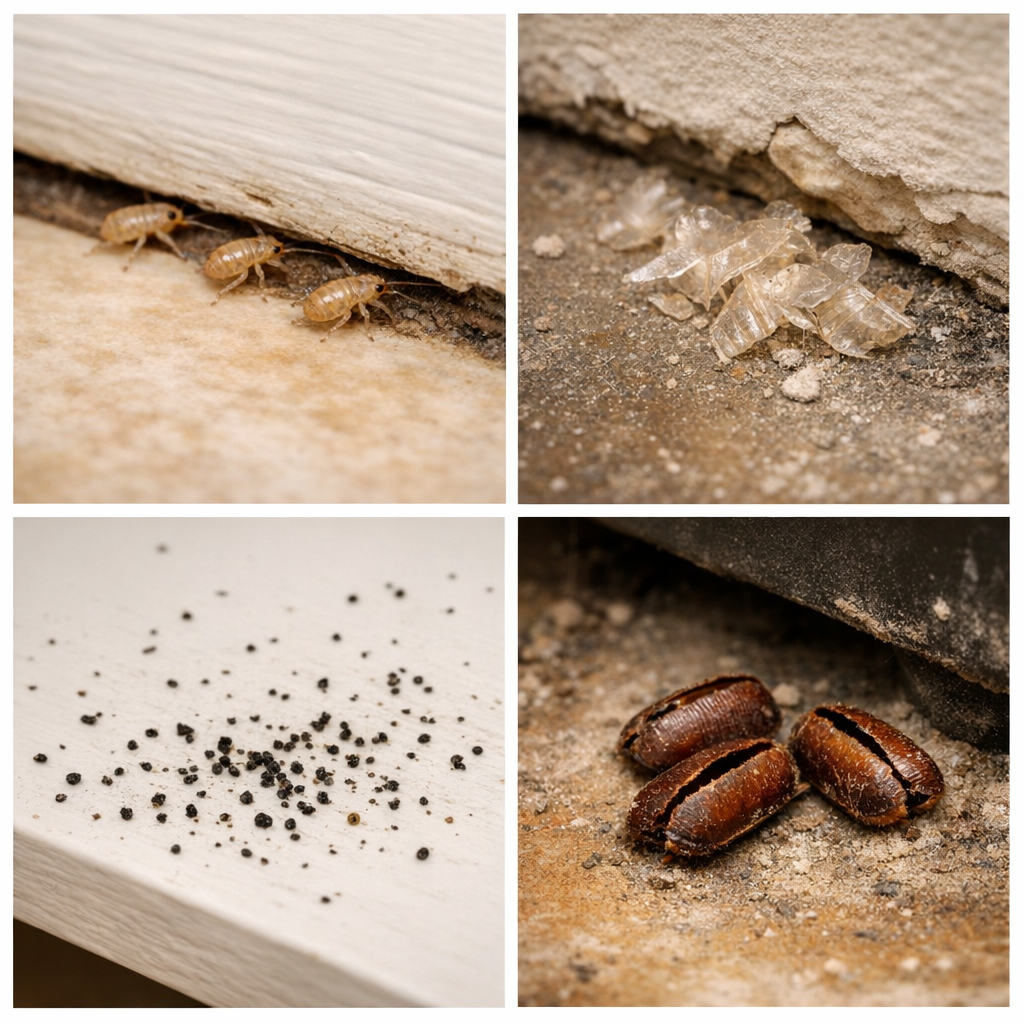
Pro Tip: If you find multiple hatched oothecae in a single area (behind the refrigerator, under the dishwasher, or inside a cabinet void), you’re looking at an established roach harborage environment, a breeding hotspot that requires targeted treatment, not just surface spraying.
Frequently Asked Questions
Q: How fast do cockroach eggs hatch?
A: German cockroach eggs hatch the fastest in as few as 14 days at warm temperatures. American cockroach eggs take 44–55 days, and Oriental cockroach eggs average around 60 days. Warmer, more humid conditions consistently accelerate the timeline across all species.
Q: How many roaches hatch from one egg?
A: Each ootheca contains multiple embryos. German cockroach egg cases hold 30–48 nymphs, American cockroach cases contain 14–16, and brown-banded cases carry 10–18. One egg case can produce a significant population increase.
Q: How long does a cockroach ootheca survive without hatching?
A: An ootheca can remain viable for several weeks to months, depending on conditions. In dry, cold environments, embryos may enter diapause, a dormant state, and resume development when conditions improve. However, prolonged extreme dryness or cold will eventually kill the embryos.
Q: Can you see cockroach eggs with the naked eye?
A: You can easily see the ootheca (egg case), which ranges from 5mm to 13mm depending on the species. Individual embryos inside are not visible without magnification, but the egg case itself is distinctive, dark brown, ridged, and capsule-shaped.
Q: Do cockroach eggs survive pesticide spray?
A: Most contact sprays cannot penetrate the ootheca’s hardened protein shell. Insect growth regulators (IGRs) and desiccant dusts are more effective at reducing hatch rates. This is why pest professionals recommend multi-method treatment plans.
Q: How long after seeing one cockroach do eggs appear?
A: A mature female cockroach can begin producing oothecae almost immediately. German cockroach females generate a new egg case every 3–4 weeks. If you see even one adult female, assume egg cases are already present or imminent.
Q: Where do cockroaches usually lay their eggs?
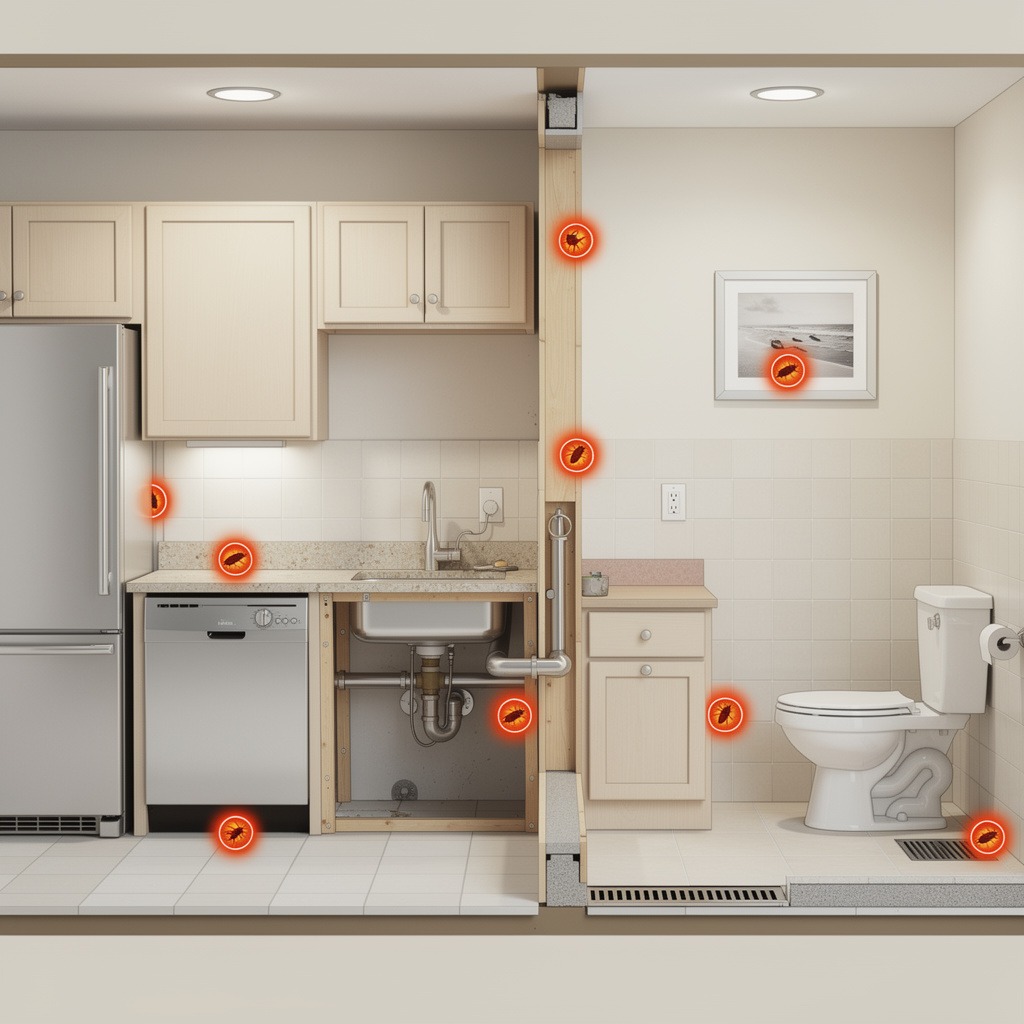
A: Preferred egg deposition sites include behind and under appliances, inside wall voids, behind baseboards, near plumbing, in cabinet crevices, and (for brown-banded cockroaches) on upper walls and ceilings. These locations offer warmth, humidity, and protection from disturbance.
Key Takeaways
Cockroach egg-hatching timelines vary widely, but a few core facts should guide your response to any infestation:
1. German cockroach eggs hatch the fastest (14–28 days) because the female carries the ootheca on her body, providing ideal incubation conditions. This species drives the majority of indoor cockroach infestations worldwide.
2. Temperature and humidity are the primary developmental variables. Warm, moist indoor environments, exactly the conditions in most homes, accelerate the cockroach egg incubation period. Reducing humidity below 50% meaningfully slows development and reduces hatch rates.
3. Most oothecae hatch on their own without the mother. Don’t assume that killing an adult cockroach eliminates the egg threat. Any deposited egg case in viable conditions will continue developing independently.
4. Standard contact sprays rarely kill eggs. Effective cockroach control requires targeting egg cases specifically with IGRs, desiccant dusts, or physical removal, ideally within a structured integrated pest management approach.
5. Species identification determines your timeline. The difference between a 14-day and a 60-day hatch window changes how urgently you need to act and which treatment approach will work best.
If you found this guide helpful, share it with anyone dealing with a cockroach problem and check out our related guides on identifying cockroach species by sight and building a DIY cockroach elimination plan that actually works.