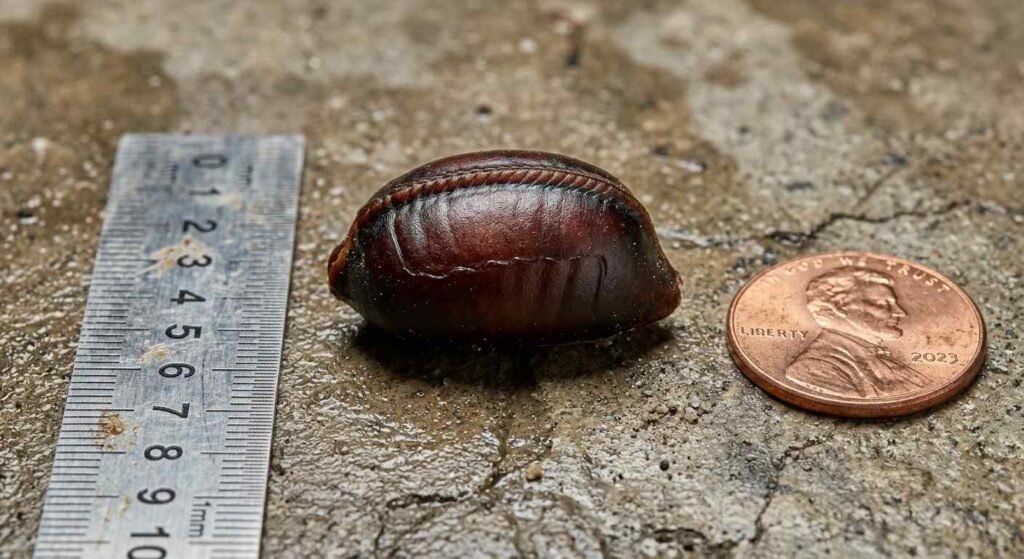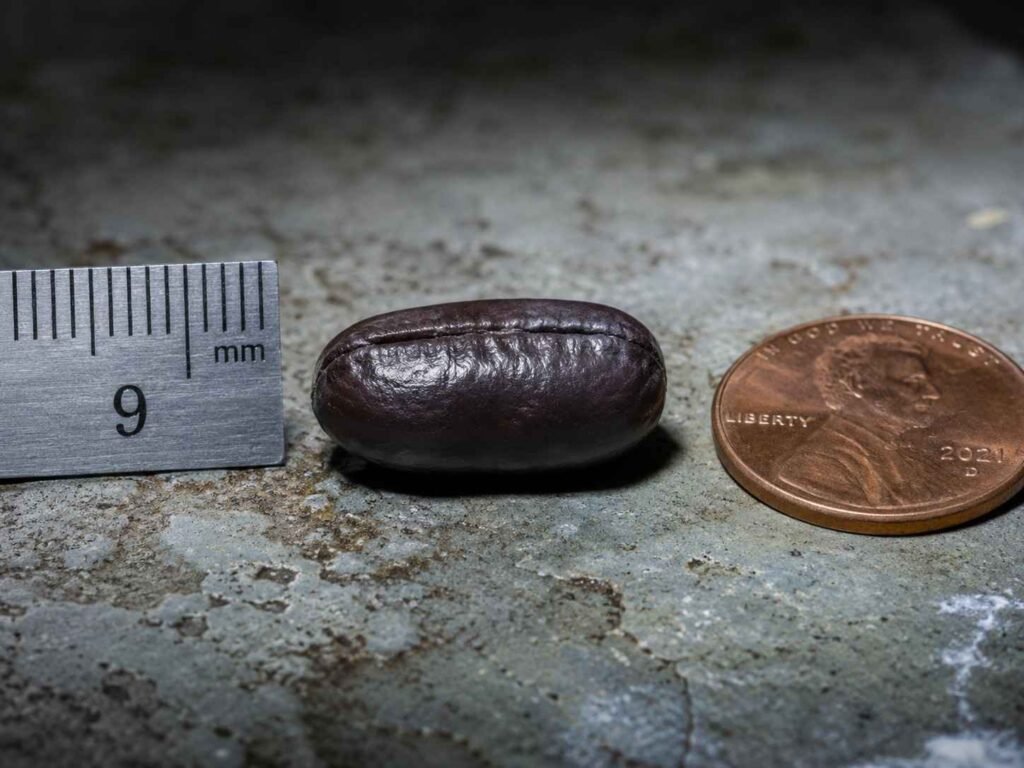
Australian cockroach eggs are enclosed inside a brown to dark-brown egg case called an ootheca. An Australian cockroach ootheca can measure up to 11 mm long, may contain about 24 embryos, and is often dropped or glued in hidden cracks and crevices long before the eggs hatch.
Australian cockroaches, Periplaneta australasiae, are large peridomestic roaches that live mostly outdoors but can enter homes, greenhouses, interiorscapes, cupboards, sinks, and warm damp building areas. Their egg cases are most likely to be found in moist, protected places such as cracks, crevices, greenhouses, under bark, firewood piles, sinks, cupboards, and other warm dark locations.
Finding an Australian cockroach egg case means there may be a moisture-supported harborage nearby. These roaches resemble American cockroaches, but adults have light yellow markings on the outer wing margins near the wing base.
Quick Facts About Australian Cockroach Eggs
| Feature | Australian Cockroach Egg Case Details |
|---|---|
| Scientific name | Periplaneta australasiae |
| Egg structure | Ootheca, a protective egg case |
| Size | Up to 11 mm long, or about 7/16 inch |
| Color | Brown to dark brown |
| Shape | Oval, capsule-shaped, or elongated ootheca |
| Eggs per case | About 24 embryos |
| Hatching time | About 40 days for embryonic development; some sources report 40 days to 3 months depending on conditions |
| Female behavior | Carries the ootheca briefly, then drops or glues it in hidden cracks and crevices |
| Main hiding zones | Warm, damp, dark places outdoors, greenhouses, interiorscapes, sinks, cupboards, cracks, firewood, bark, and moist voids |
| Main identification clue | Brown ootheca in a warm damp place, especially where adult roaches show yellow wing-edge markings |
University of Florida IFAS describes the Australian cockroach ootheca as up to 11 mm long and states that an ootheca may contain 24 embryos that require about 40 days to complete embryonic development UF IFAS Australian cockroach profile. NC State Extension describes the egg capsule as brown, oval, about 3/8 inch long, carried for a few days, then glued to a substrate usually in a crack or crevice NC State Extension.
For general egg-case identification, read what roach eggs look like.
What Are Australian Cockroach Eggs?
Australian cockroach eggs are developing embryos protected inside an ootheca. The ootheca is the visible egg case, while the individual eggs are sealed inside the capsule.
Most homeowners will not see loose Australian cockroach eggs. They are more likely to find a brown ootheca hidden in a crack, crevice, greenhouse, cupboard, or damp sheltered area. If the case is intact and sealed, embryos may still be developing. If it is split and hollow, nymphs may already have emerged.
The University of Florida IFAS cockroach management guide explains that cockroach eggs are deposited in groups inside a leathery case or capsule called an ootheca, and that non-German cockroach capsules may contain 10–28 eggs UF IFAS Cockroaches and Their Management.
For basic ootheca biology, read what are roach eggs?.
What Do Australian Cockroach Egg Cases Look Like?
Australian cockroach egg cases look like brown to dark-brown oval capsules. They are larger than German, brown-banded, American, and many Oriental roach egg cases, but slightly smaller than some smokybrown oothecae.
An Australian cockroach ootheca usually has these features:
- Color: brown to dark brown
- Size: up to 11 mm long
- Shape: oval, capsule-shaped, or elongated
- Texture: firm, leathery, protective casing
- Surface: structured ootheca with a seam where nymphs emerge
- Placement: dropped or glued in hidden cracks and crevices
- Habitat clue: warm, damp, dark locations
NC State Extension describes Australian cockroach eggs as laid in a brown, oval ootheca about 3/8 inch long and usually glued in a crack or crevice after the female carries it for a few days NC State Extension.
Australian Cockroach Egg Case Size
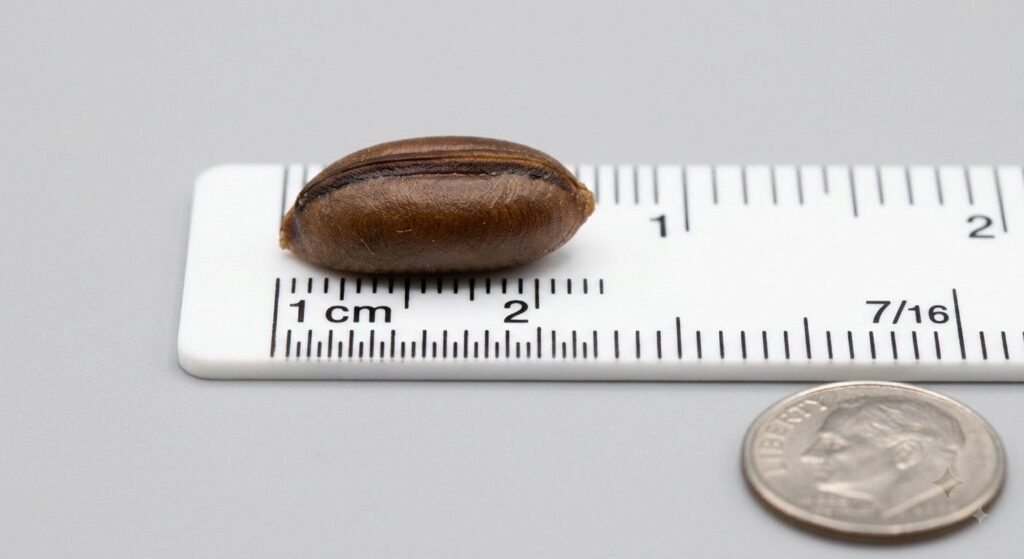
Australian cockroach egg cases can measure up to 11 mm long, or about 7/16 inch. NC State Extension describes them as about 3/8 inch long, which is close to 9.5 mm, while UF IFAS gives a maximum length of up to 11 mm.
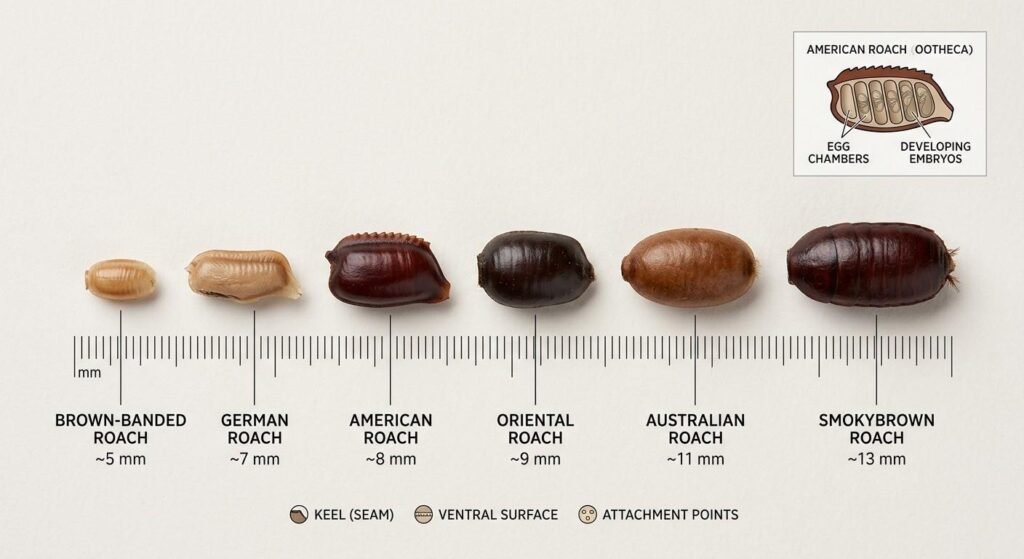
Size comparison:
| Object or Egg Case | Approximate Size | Comparison |
|---|---|---|
| Brown-banded roach egg case | About 5 mm | Much smaller |
| German roach egg case | About 6–9 mm | Smaller and lighter |
| American roach egg case | About 8 mm | Smaller and darker/purse-shaped |
| Oriental roach egg case | About 8–10 mm | Similar but usually darker and slightly inflated |
| Australian cockroach egg case | Up to 11 mm | Large brown ootheca in warm damp cracks |
| Smokybrown roach egg case | About 13 mm / 1/2 inch | Often slightly larger |
For the full species chart, read How big are roach egg cases?.
Australian Cockroach Egg Case Color
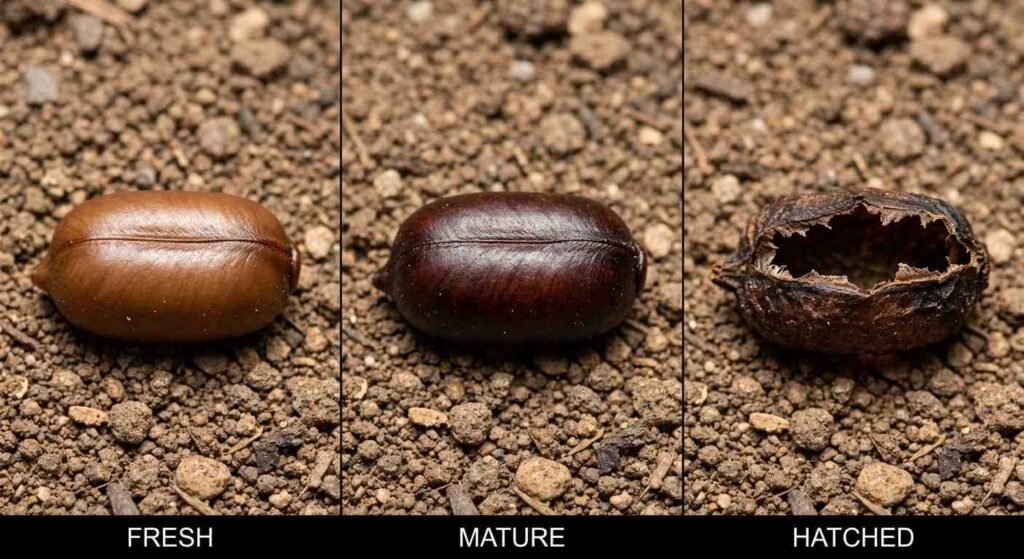
Australian cockroach egg cases are usually brown to dark brown. A fresh case may look medium brown, while older or mature cases can appear darker.
Color by stage:
| Stage | Australian Cockroach Egg Case Color | What to Check |
|---|---|---|
| Fresh | Brown | Firm capsule, closed seam, recently carried or deposited |
| Mature | Brown to dark brown | Full, intact, sealed ootheca |
| Hatched | Dark, dry, split, hollow, or papery | Open seam and nearby nymphs suggest hatching |
| Old or failed | Dark, brittle, shriveled, dusty, or damaged | May be dead, dried, or no longer viable |
Color alone does not prove whether the egg case has hatched. A dark-brown ootheca can still be active if the seam is closed and the body is full.
For color-stage differences, read What color are roach eggs?.
How Long Do Australian Cockroach Eggs Take to Hatch?
Australian cockroach embryos require about 40 days to complete development inside the ootheca under favorable conditions. NC State Extension reports that 12–24 nymphs usually hatch between 40 days and 3 months NC State Extension.
Hatching time depends on:
- Temperature
- Humidity
- Ootheca condition
- Indoor vs outdoor location
- Greenhouse or interiorscape warmth
- Moisture availability
- Disturbance or damage to the egg case
Warm, damp conditions support faster development. Cooler or less favorable conditions can extend hatch time.
For a broader timeline, read How long do roach eggs take to hatch?.
How Many Eggs Are in an Australian Cockroach Ootheca?
An Australian cockroach ootheca may contain about 24 embryos. NC State Extension reports that 12–24 nymphs usually hatch from each capsule, while UF IFAS states that an ootheca may contain 24 embryos UF IFAS.
Typical roach egg counts by species:
| Species | Eggs or Nymphs Per Case |
|---|---|
| German cockroach | About 30–40+ |
| American cockroach | About 14–16 |
| Oriental cockroach | About 16 |
| Brown-banded cockroach | Up to 18 |
| Smokybrown cockroach | About 20 or more |
| Australian cockroach | About 24 embryos |
For more egg-count detail, read How many eggs do roaches lay?.
Where Do Australian Cockroaches Hide Their Eggs?
Australian cockroaches hide egg cases in warm, damp, protected cracks and crevices. They are often associated with outdoor moisture, greenhouses, interiorscapes, and building areas that stay humid.
Common Australian cockroach egg locations include:
- Under bark
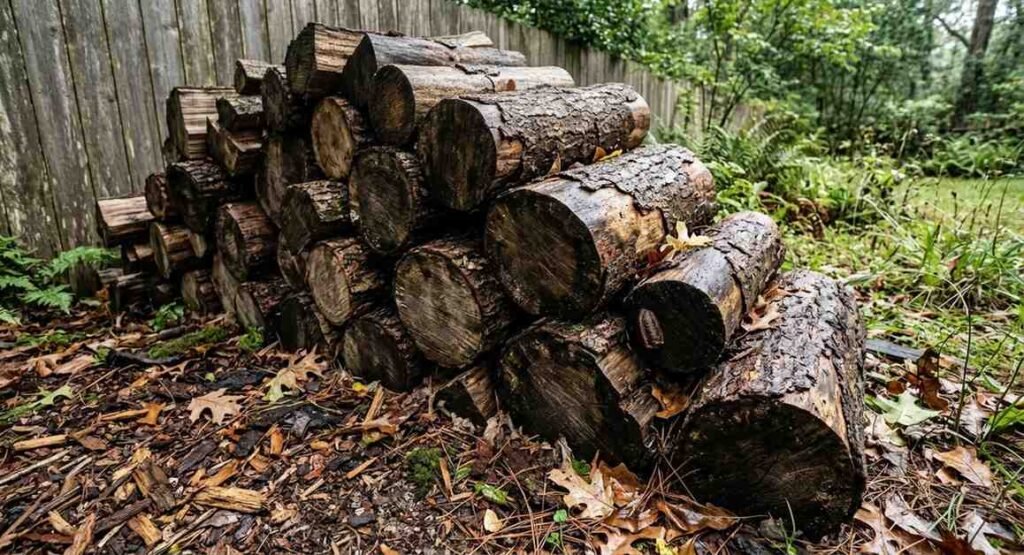
- Firewood piles
- Moist cracks and crevices
- Greenhouses
- Interiorscapes
- Warm damp cupboards
- Under sinks
- Around toilets and water pipes
- Dark warm voids
- Outdoor mulch and plant debris
- Tree bark and sheltered wood areas
- Building cracks near moisture
- Lower floors of infested buildings
- Plant containers and ornamental plant areas
UF IFAS notes that Australian cockroaches can be found under tree bark, in firewood piles, and in locations with moisture. Indoors, they may inhabit greenhouses, water pipes, sinks, toilets, cupboards, and dark warm environments UF IFAS.
Australian Cockroach Eggs in Greenhouses and Interiorscapes
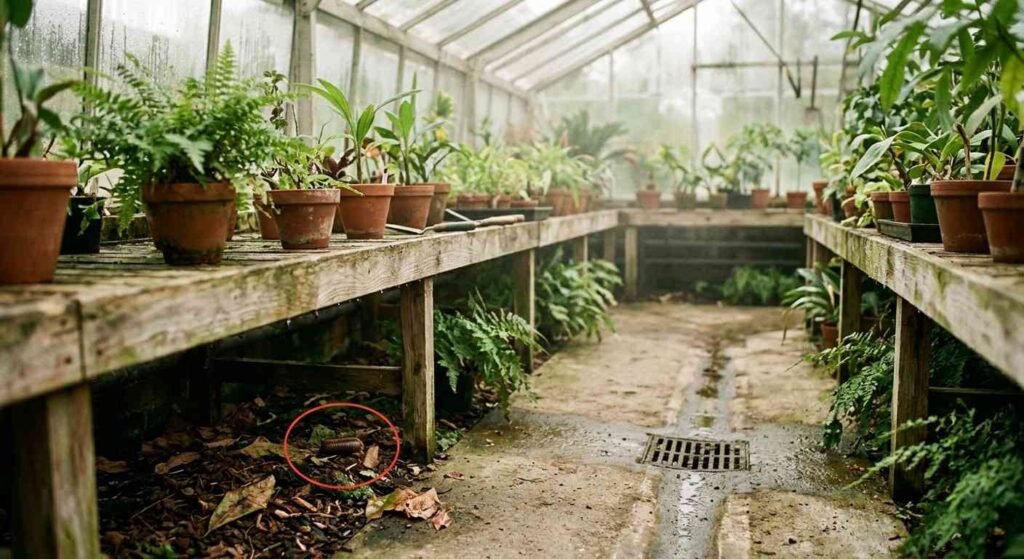
Greenhouses and interiorscapes are important Australian cockroach egg zones because they provide warmth, moisture, plant material, and protected crevices. Australian cockroaches can also damage tender seedlings and ornamental foliage.
Check these areas:
- Under plant benches
- Around irrigation lines
- Behind pots and trays
- Under damp plant debris
- Around greenhouse walls
- In floor cracks
- Near drains and hose areas
- Under bark mulch in containers
- Around storage shelves
- Inside warm dark cabinet areas
NC State Extension notes that Australian cockroaches prefer warm, damp places outdoors or in greenhouses, interiorscapes, and buildings with warm damp situations NC State Extension.
Australian Cockroach Eggs Indoors
Australian cockroach egg cases can be found indoors when warm damp conditions are present. They are not usually the same kind of kitchen-dominant pest as German cockroaches, but they can survive inside favorable environments.
Inspect indoor locations such as:
- Lower floors
- Sinks
- Toilets
- Cupboards
- Greenhouse rooms
- Utility areas
- Warm damp storage
- Bathrooms
- Plant rooms
- Water pipe voids
- Cracks near moisture
If Australian cockroach egg cases are appearing indoors, look for moisture, plants, organic debris, and entry points connecting the indoor space to outdoor harborage.
Australian Cockroach Eggs Outdoors
Australian cockroaches are mostly outdoor or peridomestic roaches. Their egg cases are often tied to outdoor harborage near structures.
Inspect outdoor areas such as:
- Tree bark
- Firewood stacks
- Mulch
- Leaf litter
- Dense plantings
- Moist foundation cracks
- Plant containers
- Greenhouse edges
- Outdoor storage areas
- Damp boards or debris
- Soil-contact wood
Reducing outdoor moisture and harborage can reduce the number of Australian cockroaches entering buildings.
Australian Cockroach Eggs vs American Roach Eggs
Australian and American cockroach egg cases can be confused because both species are large, brown, and peridomestic. Australian egg cases can be slightly longer and are often associated with warm damp greenhouses, plant areas, and lower-floor moisture.
| Feature | Australian Cockroach Eggs | American Roach Eggs |
|---|---|---|
| Size | Up to 11 mm | About 8 mm long |
| Color | Brown to dark brown | Brown to dark brown or blackish-brown |
| Eggs per case | About 24 embryos | About 14–16 eggs |
| Hatching time | About 40 days to 3 months | About 6–8 weeks |
| Common location | Greenhouses, interiorscapes, sinks, cupboards, warm damp cracks | Basements, drains, sewers, utility rooms, damp concealed areas |
| Adult clue | Yellow bands on outer wing margins | Reddish-brown body with pale/yellowish pronotal marking |
For American roach details, read American Roach Eggs.
Australian Cockroach Eggs vs Smokybrown Roach Eggs
Australian and smokybrown roaches both prefer warm, humid environments and can be found outdoors or in structure-adjacent spaces. Adult markings are often the clearest difference.
| Feature | Australian Cockroach Eggs | Smokybrown Roach Eggs |
|---|---|---|
| Size | Up to 11 mm | About 13 mm / 1/2 inch |
| Color | Brown to dark brown | Dark brown |
| Eggs / nymphs per case | About 24 embryos | About 20 or more |
| Hatching time | About 40 days to 3 months | About 45 days average |
| Common location | Greenhouses, warm damp cracks, sinks, cupboards, plant areas | Tree holes, leaf litter, attics, crawl spaces, gutters, garages |
| Adult clue | Light yellow markings on wing margins | Uniform shiny dark brown or mahogany body |
For smokybrown details, read Smokybrown Roach Eggs.
Australian Cockroach Eggs vs German Roach Eggs
Australian cockroach eggs and German roach eggs differ in size, color, location, and female behavior. German roach cases are smaller and usually tied to kitchens and bathrooms. Australian cases are larger and tied to warm damp outdoor, greenhouse, or interiorscape environments.
| Feature | Australian Cockroach Eggs | German Roach Eggs |
|---|---|---|
| Size | Up to 11 mm | About 6–9 mm |
| Color | Brown to dark brown | Light tan to brown |
| Eggs per case | About 24 embryos | About 30–40+ |
| Female behavior | Carries briefly, then drops or glues in hidden cracks | Carries until near hatch |
| Common location | Greenhouses, damp cracks, sinks, cupboards, plant areas | Kitchens, bathrooms, appliances, cabinet hinges |
If the egg case is light tan and found in a kitchen cabinet or appliance area, compare it with our German roach eggs guide.
Australian Cockroach Egg Case vs Droppings
An Australian cockroach egg case is a structured brown capsule. Droppings are smaller, darker, and not capsule-shaped.
| Feature | Australian Cockroach Egg Case | Roach Droppings |
|---|---|---|
| Shape | Oval or elongated capsule | Specks, pellets, stains, or smears |
| Size | Up to 11 mm | Usually smaller |
| Texture | Firm, leathery, protective shell | Crumbly, grainy, or smearable |
| Color | Brown to dark brown | Dark brown or black |
| Meaning | Reproduction | Roach movement and feeding |
If you found tiny black specks instead of a capsule, read Are black dots roach eggs or poop?.
Fresh vs Hatched Australian Cockroach Egg Cases
Fresh or active Australian cockroach egg cases are brown, firm, and sealed. Hatched cases are split, hollow, dry, or brittle.
| Case Status | What It Looks Like | What It Means |
|---|---|---|
| Fresh | Brown, firm, closed seam | Recently formed or deposited |
| Mature | Brown to dark brown, full, sealed | Embryos may still be developing |
| Hatched | Split seam, hollow, dry, papery | Nymphs likely emerged |
| Old or failed | Brittle, shriveled, dusty, damaged | May be dead or no longer viable |
A split seam is the strongest clue that the egg case has hatched. A dark color alone does not prove the case is empty.
Read What do hatched roach egg cases look like? for more detail.
What Baby Australian Cockroaches Look Like After Hatching
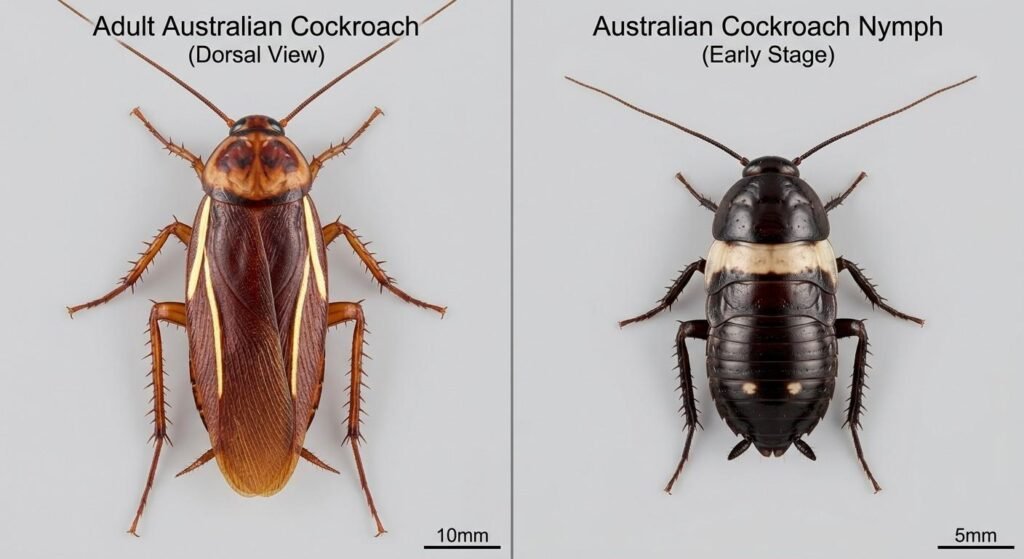
Baby Australian cockroaches are called nymphs. They are wingless and develop through five nymphal instars before adulthood.
UF IFAS notes that Australian cockroach nymphs can have light-yellow spots on top of the abdomen, which helps distinguish the species from other Periplaneta roaches UF IFAS. NC State Extension describes young nymphs as small and very dark brown, with a pale band across the thorax and two pale spots on the abdomen NC State Extension.
Look for:
- Small wingless roach-shaped nymphs
- Dark brown body color
- Pale band across the thorax
- Pale spots on the abdomen
- Activity in warm damp areas
- Shed skins as nymphs grow
- Droppings near egg-case locations
What to Do If You Find Australian Cockroach Eggs
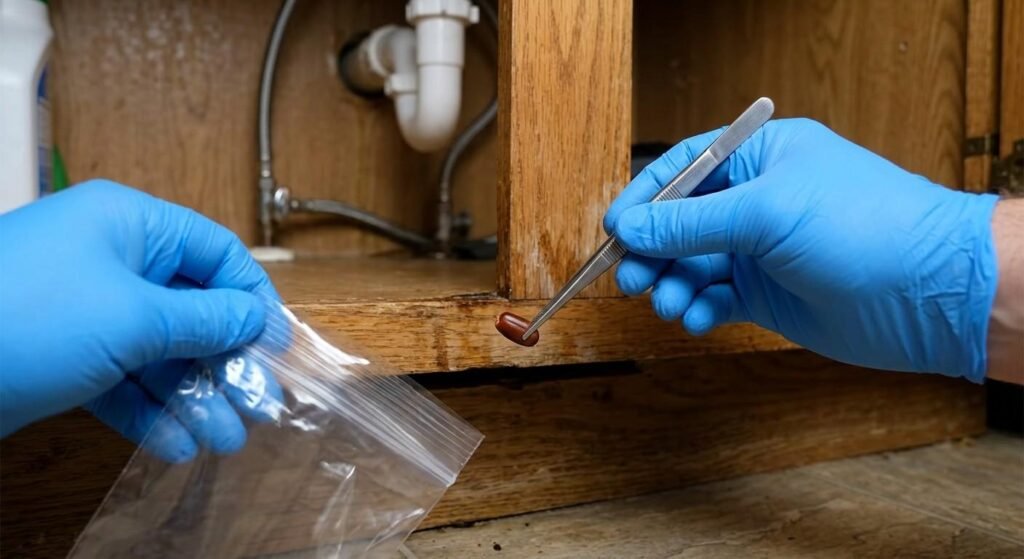
If you find an Australian cockroach egg case, remove it and inspect the warm damp area around it. More egg cases or nymphs may be hidden nearby.
Follow this action plan:
- Put on disposable gloves.
- Photograph the ootheca before removing it.
- Pick it up with tape, tweezers, a scraper, or a paper towel.
- Seal it in a plastic bag.
- Dispose of it outdoors.
- Vacuum nearby cracks, crevices, plant debris, and shelf edges.
- Clean droppings and residue with hot, soapy water where appropriate.
- Inspect the surrounding 6–10 feet for more oothecae.
- Look for nymphs, shed skins, and adult roaches.
- Correct moisture problems.
- Reduce plant debris and outdoor harborage.
- Use sticky monitors near entry points, greenhouses, and damp rooms.
For treatment options, read what kills roaches and their eggs.
How to Prevent Australian Cockroach Eggs Around Your Home
Preventing Australian cockroach eggs requires moisture control, plant-debris reduction, exclusion, and sanitation. Because this species often lives outdoors or in greenhouse-like environments, prevention should target both indoor and outdoor harborage.
Use this prevention checklist:
- Remove leaf litter and plant debris near the structure.
- Store firewood away from the house.
- Reduce mulch depth near foundations.
- Fix leaks around sinks, toilets, and water pipes.
- Improve ventilation in damp rooms.
- Keep greenhouse floors and benches clean.
- Remove dead plant material from interiorscapes.
- Seal cracks, crevices, door gaps, and utility penetrations.
- Use tight containers for food and plant supplies.
- Keep lower floors dry and uncluttered.
- Clean around cupboards, sinks, and plant containers.
- Place sticky monitors in warm damp areas.
If Australian cockroaches are repeatedly found indoors, inspect the outdoor moisture and plant zones connected to the building.
Final Verdict: Australian Cockroach Eggs
Australian cockroach eggs are held inside brown to dark-brown oothecae that can measure up to 11 mm long and contain about 24 embryos. The female carries the ootheca briefly, then drops or glues it in hidden cracks and crevices.
The most important identification clues are brown oval capsule shape, warm damp location, and association with greenhouses, interiorscapes, sinks, cupboards, plant debris, bark, firewood, and moist cracks. A closed, full ootheca may still be active. A split, hollow case likely hatched already.
If you find one, remove it safely, inspect nearby warm damp harborage, reduce moisture, clean plant debris, and monitor for nymphs and adults.
Frequently Asked Questions
What do Australian cockroach eggs look like?
Australian cockroach eggs are enclosed inside a brown to dark-brown ootheca. The case looks like a firm oval or elongated capsule hidden in cracks, crevices, or warm damp areas.
How big are Australian cockroach egg cases?
Australian cockroach egg cases can measure up to 11 mm long, or about 7/16 inch. NC State Extension describes them as about 3/8 inch long.
What color are Australian cockroach eggs?
Australian cockroach egg cases are usually brown to dark brown. Hatched or old cases may look darker, dry, split, or brittle.
How many eggs are in an Australian cockroach ootheca?
An Australian cockroach ootheca may contain about 24 embryos. NC State Extension reports that usually 12–24 nymphs hatch from each capsule.
How long do Australian cockroach eggs take to hatch?
Australian cockroach eggs may hatch in about 40 days under favorable conditions, but some sources report 40 days to 3 months depending on environment.
Where do Australian cockroaches hide egg cases?
Australian cockroaches hide egg cases in warm damp cracks and crevices, greenhouses, interiorscapes, under bark, firewood piles, cupboards, sinks, toilets, water pipe areas, and other protected moist locations.
Are Australian cockroach eggs found indoors?
Yes. Australian cockroach egg cases can be found indoors in warm damp areas such as greenhouses, plant rooms, lower floors, sinks, cupboards, bathrooms, and utility spaces.
Are Australian cockroach eggs the same as American roach eggs?
No. Australian oothecae may be slightly larger and contain more embryos. Adult Australian cockroaches also have light yellow markings on the outer wing margins, while American cockroaches have a different pronotal pattern.
How do I know if an Australian cockroach egg case has hatched?
A hatched Australian cockroach ootheca usually has a split seam, hollow body, dry texture, and brittle or papery appearance. Nymphs, droppings, or shed skins may be nearby.
What should I do if I find Australian cockroach eggs?
Remove the egg case, seal it in a bag, dispose of it outdoors, inspect nearby warm damp cracks, reduce moisture and plant debris, seal entry points, and monitor for nymphs and adult roaches.