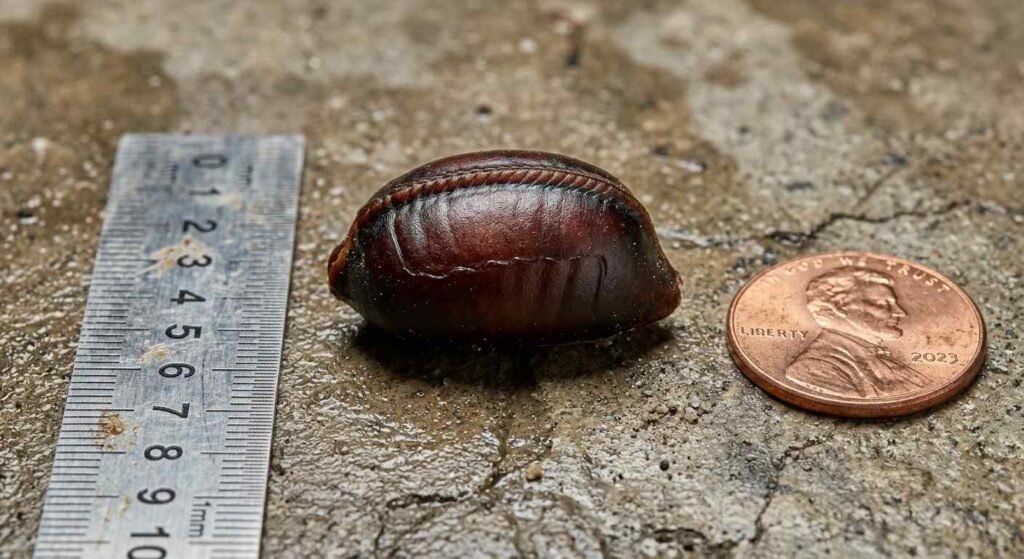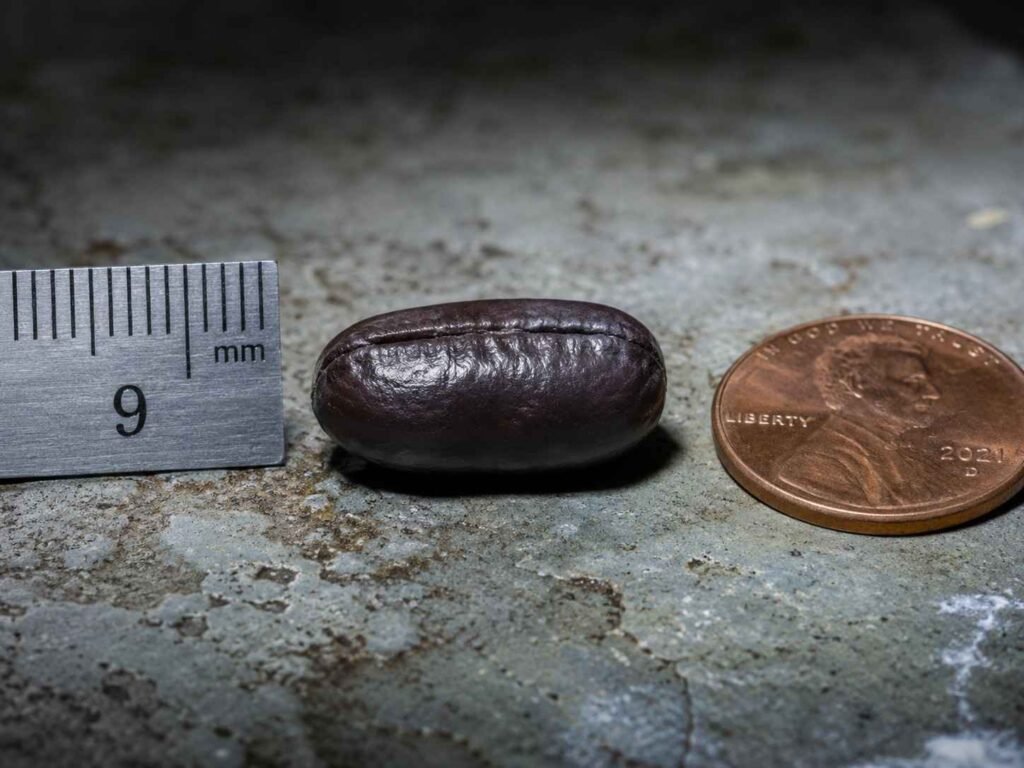
Smokybrown roach eggs are enclosed inside a dark brown egg case called an ootheca. A smokybrown cockroach ootheca is about 1/2 inch long, holds about 20 nymphs on average, and usually hatches after about 45 days under favorable conditions.
Smokybrown cockroaches, Periplaneta fuliginosa, are large, shiny dark-brown to mahogany roaches that prefer warm, humid, protected environments. Their egg cases are most often hidden in leaf litter, tree holes, wood piles, garages, crawl spaces, attics, greenhouses, roofs, gutters, wall voids, and other damp sheltered areas.
Finding a smokybrown roach egg case usually means there is a moisture-supported harborage nearby. These roaches are strong fliers, attracted to lights at night, and often move from outdoor harborage into homes through gaps, vents, eaves, attic openings, and lit entry points.
Quick Facts About Smokybrown Roach Eggs
| Feature | Smokybrown Roach Egg Case Details |
|---|---|
| Scientific name | Periplaneta fuliginosa |
| Egg structure | Ootheca, a protective egg case |
| Size | About 1/2 inch long, roughly 13 mm |
| Color | Dark brown |
| Eggs / nymphs per case | About 20 nymphs hatch per ootheca on average |
| Incubation time | About 45 days on average |
| Adult appearance | Uniformly shiny dark brown or mahogany |
| Main habitat | Warm, humid, protected areas |
| Common egg case locations | Leaf litter, tree holes, wood piles, attics, crawl spaces, garages, greenhouses, gutters, wall voids |
| Main clue | Large dark ootheca in a humid outdoor or attic-like harborage |
Oklahoma State University Extension states that smokybrown cockroach eggs are laid in a dark brown ootheca that is 1/2 inch long, with incubation averaging 45 days and about 20 nymphs hatching from each ootheca Oklahoma State University Extension.
For a general egg-case guide, read what roach eggs look like.
What Are Smokybrown Roach Eggs?
Smokybrown roach eggs are developing embryos protected inside an ootheca. The ootheca is a firm egg capsule that keeps the eggs grouped and protected until nymphs emerge.
Homeowners usually do not see individual smokybrown cockroach eggs. They see the egg case. The case is dark, firm, capsule-shaped, and hidden in a damp protected place. If the case is split and hollow, the nymphs may already have emerged.
The University of Florida IFAS cockroach management guide explains that cockroach eggs are deposited in groups inside a leathery case or capsule called an ootheca, and that most non-German cockroach capsules contain 10–28 eggs University of Florida IFAS.
For ootheca biology, read what are roach eggs?.
What Do Smokybrown Roach Egg Cases Look Like?
Smokybrown roach egg cases look like dark brown, elongated capsules. They are larger than German, brown-banded, American, and Oriental roach egg cases in many common household comparisons.
A smokybrown ootheca usually has these features:
- Color: dark brown
- Size: about 1/2 inch long, roughly 13 mm
- Shape: elongated capsule or bean-like egg case
- Texture: firm, leathery, and protective
- Surface: may show lateral indentations or a weak terminal point
- Location: humid, protected, outdoor-connected or attic-like spaces
The University of Tennessee Extension Urban IPM newsletter describes the smokybrown cockroach egg case as dark, about 0.4–0.6 inch long, with lateral indentations and a weak terminal point. It also states that each ootheca contains approximately 26 eggs University of Tennessee Extension.
Different sources may report slightly different egg counts because hatch success and counting methods vary. For homeowners, the practical point is simple: one smokybrown ootheca can produce roughly 20 or more nymphs.
Smokybrown Roach Egg Case Size
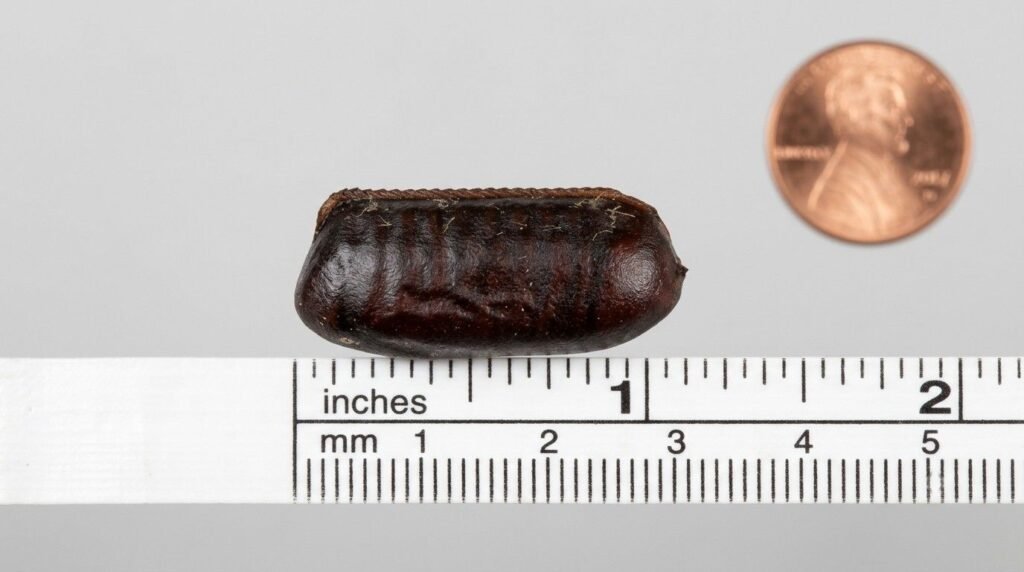
Smokybrown roach egg cases are about 1/2 inch long. That equals about 13 mm, making them one of the larger roach egg cases commonly associated with homes and outdoor-connected structures.
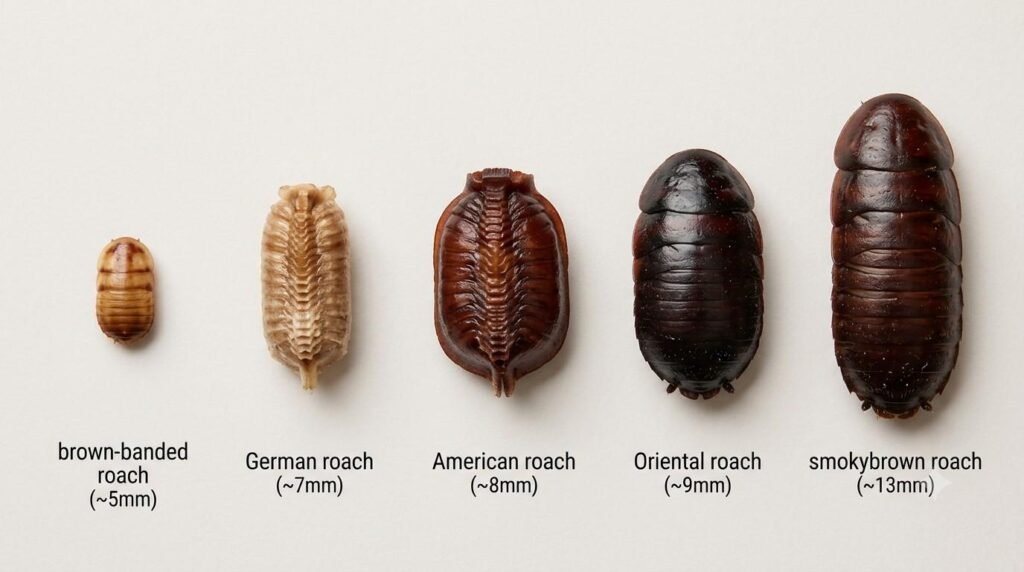
Size comparison:
| Object or Egg Case | Approximate Size | Comparison |
|---|---|---|
| Brown-banded roach egg case | About 5 mm | Much smaller |
| German roach egg case | About 6–9 mm | Smaller and lighter |
| American roach egg case | About 8 mm | Smaller and often darker/purse-shaped |
| Oriental roach egg case | About 8–10 mm | Smaller or similar but usually more inflated |
| Australian roach egg case | Up to 11 mm | Slightly smaller |
| Smokybrown roach egg case | About 13 mm / 1/2 inch | Large, dark, elongated ootheca |
For a full species chart, read How big are roach egg cases?.
Smokybrown Roach Egg Case Color
Smokybrown roach egg cases are dark brown. Their dark color matches the adult’s uniformly shiny dark-brown or mahogany body, which helps separate smokybrown cockroaches from species with clear stripes, bands, or yellow markings.
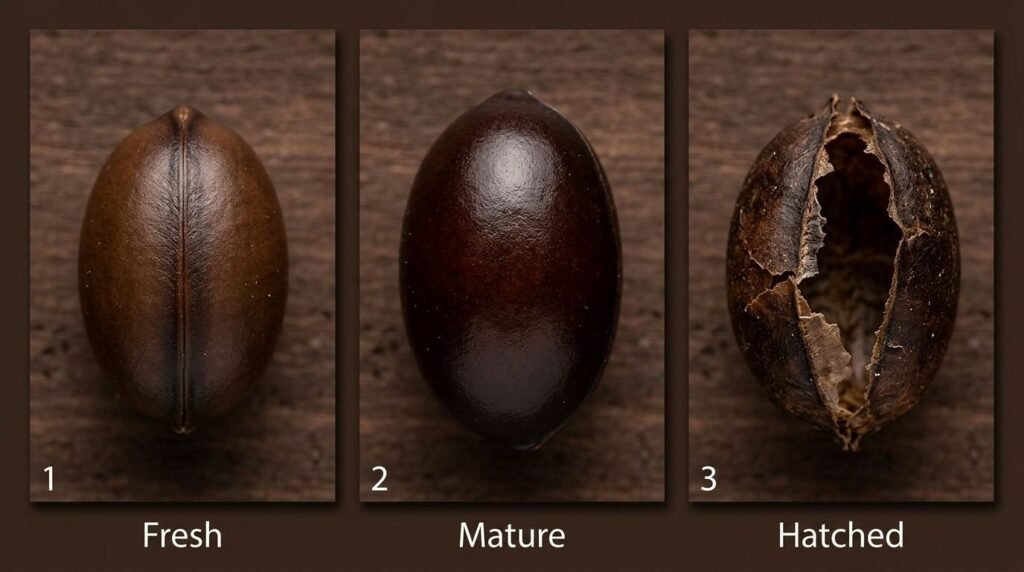
Color by stage:
| Stage | Smokybrown Egg Case Color | What to Check |
|---|---|---|
| Fresh | Dark brown | Firm capsule, closed seam |
| Mature | Dark brown to deeper brown | Full, intact, protective case |
| Hatched | Dark, dry, split, hollow, or brittle | Open seam and nearby nymphs suggest hatching |
| Old or failed | Dark, dusty, shriveled, or brittle | May be dead, dried, or abandoned |
A dark smokybrown egg case is not automatically hatched. Check the seam. A closed seam and full body can mean the case is still active. A split seam and hollow body suggest the nymphs have already emerged.
For more color-stage detail, read What color are roach eggs?.
How Long Do Smokybrown Roach Eggs Take to Hatch?
Smokybrown roach eggs take about 45 days to hatch on average. Oklahoma State University Extension lists average incubation at 45 days Oklahoma State University Extension.
Hatching time depends on:
- Temperature
- Humidity
- Ootheca condition
- Harborage protection
- Indoor vs outdoor environment
- Moisture availability
Smokybrown roaches lose moisture more readily than many other cockroach species, so high-humidity environments support their survival. The University of Tennessee Extension newsletter notes that smokybrown cockroaches are often found in moist, warm, protected habitats because water loss is accentuated in low-humidity environments University of Tennessee Extension.
For a broader hatching timeline, read How long do roach eggs take to hatch?.
Where Do Smokybrown Roaches Hide Their Eggs?
Smokybrown roaches hide egg cases in warm, humid, protected places. They are more outdoor-associated than German roaches and more likely to use attic, roofline, crawl-space, tree, gutter, and landscape harborage.
Common smokybrown roach egg locations include:
- Tree holes
- Leaf litter
- Mulch beds
- Wood piles
- Shrubs and ground cover
- Garages
- Crawl spaces
- Attics
- Greenhouses
- Roofs
- Rain gutters
- Soffits and eaves
- Wall voids with moisture
- Block walls
- Porch and carport ceiling voids
- Landscape timbers
- Debris-filled gutters
- Areas near pet food bowls or trash
Oklahoma State University Extension states that smokybrown cockroaches are prevalent in leaf litter, shrubs, trees, tree holes, wood piles, garages, crawl spaces, attics, greenhouses, roofs, and rain gutters Oklahoma State University Extension.
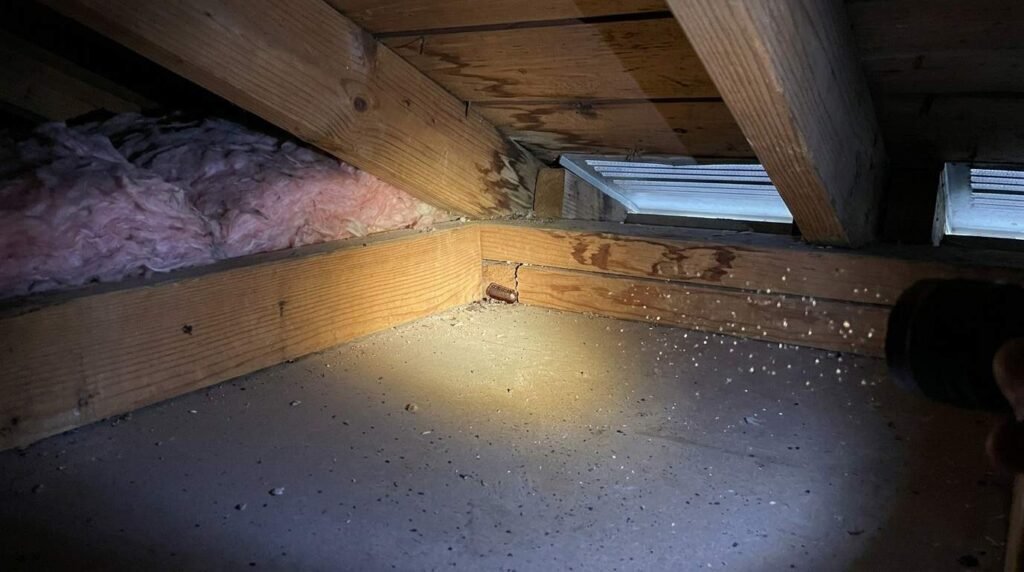
Smokybrown Roach Eggs in Attics
Attics are a common smokybrown roach egg inspection zone because attic spaces can mimic the protected, warm, humid voids these roaches prefer. Roof leaks, clogged gutters, poor ventilation, and tree contact can increase risk.
Check these attic areas:
- Eaves
- Soffit gaps
- Roof-wall junctions
- Insulation edges
- Stored cardboard
- Around attic vents
- Near water-damaged wood
- Around roof leaks
- Ceiling voids near porch or carport areas
If you find a large dark ootheca in the attic, inspect for water stains, droppings, shed skins, dead insects, and adult smokybrown roaches.
Smokybrown Roach Eggs in Crawl Spaces and Garages
Crawl spaces and garages provide moisture, darkness, and shelter, making them suitable for smokybrown roach egg cases. These areas often connect outdoor harborage with indoor entry routes.
Inspect:
- Crawl-space vents
- Foundation gaps
- Damp wood
- Stored boxes
- Utility penetrations
- Garage corners
- Around trash storage
- Under shelving
- Near pet food
- Around water heaters or condensate lines
If the area stays humid, egg cases can remain viable and nymphs may develop nearby.
Smokybrown Roach Eggs Outdoors
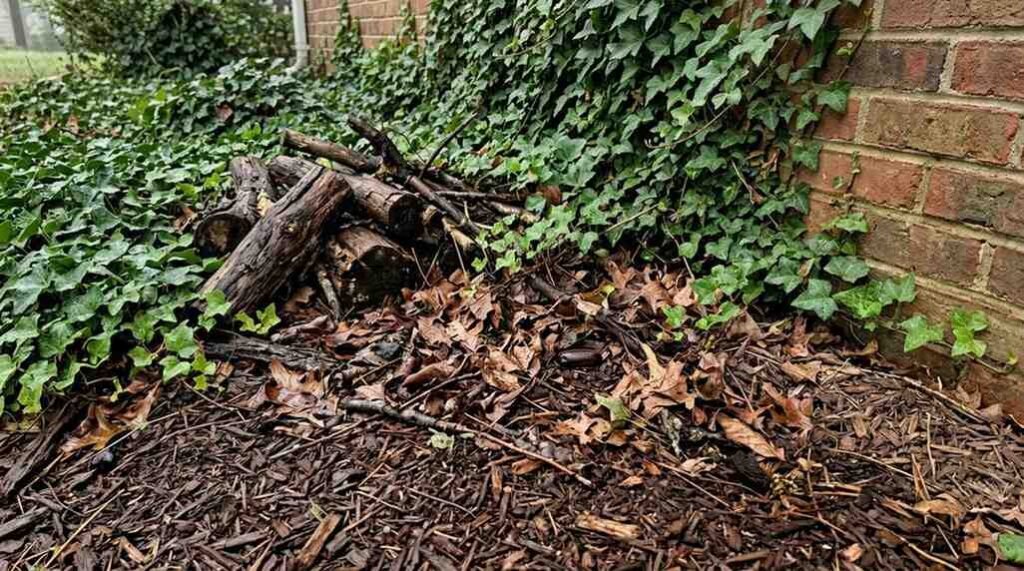
Smokybrown roach egg cases are often associated with outdoor harborage. Outdoor populations can move indoors at night, especially around lights and entry points.
Inspect outdoor areas such as:
- Leaf piles
- Mulch
- Ground cover
- Ivy
- Shrub beds
- Tree holes
- Wood stacks
- Fence lines
- Landscape timbers
- Gutters
- Downspout splash zones
- Compost or organic debris
- Trash storage zones
Reducing outdoor harborage is often more important for smokybrown roaches than indoor spraying alone.
Smokybrown Roach Eggs vs American Roach Eggs
Smokybrown and American roach eggs can be confused because both species are large, dark, outdoor-connected roaches. Smokybrown oothecae are usually larger and strongly associated with humid outdoor, attic, crawl-space, and tree-related harborage.
| Feature | Smokybrown Roach Eggs | American Roach Eggs |
|---|---|---|
| Size | About 13 mm / 1/2 inch | About 8 mm long |
| Color | Dark brown | Brown to dark brown or blackish-brown |
| Eggs / nymphs per case | About 20 nymphs on average; some sources report about 26 eggs | About 14–16 eggs |
| Hatching time | About 45 days average | About 6–8 weeks |
| Common location | Leaf litter, tree holes, attics, crawl spaces, gutters, garages | Basements, sewers, drains, utility rooms, damp concealed areas |
| Adult clue | Uniform shiny dark brown or mahogany | Reddish-brown with pale/yellowish pronotal marking |
For American roach details, read American Roach Eggs.
Smokybrown Roach Eggs vs Oriental Roach Eggs
Smokybrown and Oriental roach eggs are both dark, but their habitats and adult roach behavior differ. Oriental roaches are more floor-level and drain/basement-associated, while smokybrown roaches are more likely in attics, trees, leaf litter, gutters, and humid exterior harborage.
| Feature | Smokybrown Roach Eggs | Oriental Roach Eggs |
|---|---|---|
| Size | About 13 mm | About 8–10 mm |
| Color | Dark brown | Dark reddish-brown to nearly black |
| Shape | Elongated dark ootheca | Slightly inflated dark capsule |
| Common location | Attics, crawl spaces, leaf litter, tree holes, gutters | Damp basements, drains, crawl spaces, floor-level moisture |
| Hatching time | About 45 days average | About two months / 6–8 weeks |
For Oriental roach details, read Oriental Roach Eggs.
Smokybrown Roach Eggs vs German Roach Eggs
Smokybrown roach eggs are very different from German roach eggs. German roach egg cases are smaller, lighter, and usually tied to kitchens and bathrooms. Smokybrown egg cases are larger, darker, and more associated with humid exterior or attic-like environments.
| Feature | Smokybrown Roach Eggs | German Roach Eggs |
|---|---|---|
| Size | About 13 mm | About 6–9 mm |
| Color | Dark brown | Light tan to brown |
| Eggs per case | About 20 or more | About 30–40+ |
| Female behavior | Deposits egg cases in protected areas | Carries ootheca until near hatch |
| Common location | Attics, crawl spaces, trees, gutters, garages | Kitchens, bathrooms, cabinets, appliances |
If the egg case is light tan and found in a kitchen cabinet, compare it with our German roach eggs guide.
Smokybrown Roach Egg Case vs Droppings
A smokybrown roach egg case is a dark capsule. Roach droppings are smaller pellets, specks, or smears. Do not identify based only on color.
| Feature | Smokybrown Egg Case | Roach Droppings |
|---|---|---|
| Shape | Elongated capsule or ootheca | Specks, pellets, smears, stains |
| Size | About 1/2 inch long | Usually smaller |
| Texture | Firm, leathery, protective shell | Crumbly, grainy, or smearable |
| Color | Dark brown | Dark brown or black |
| Meaning | Reproduction | Roach movement and feeding |
If you found tiny black specks instead of a capsule, read Are black dots roach eggs or poop?.
Fresh vs Hatched Smokybrown Roach Egg Cases
Fresh or active smokybrown roach egg cases are dark brown, firm, and closed. Hatched cases are split, hollow, dry, or brittle.
| Case Status | What It Looks Like | What It Means |
|---|---|---|
| Fresh | Dark brown, firm, closed seam | Recently deposited or early development |
| Mature | Dark brown, full, leathery, sealed | Embryos may still be developing |
| Hatched | Split seam, hollow body, dry shell | Nymphs likely emerged |
| Old or failed | Brittle, dusty, shriveled, damaged | May be dead or no longer viable |
A hatched case will not hatch again, but nearby nymphs may already be active. Check cracks, voids, insulation edges, leaf litter, and damp shelter near the empty case.
For more detail, read What do hatched roach egg cases look like?.
What Baby Smokybrown Roaches Look Like After Hatching
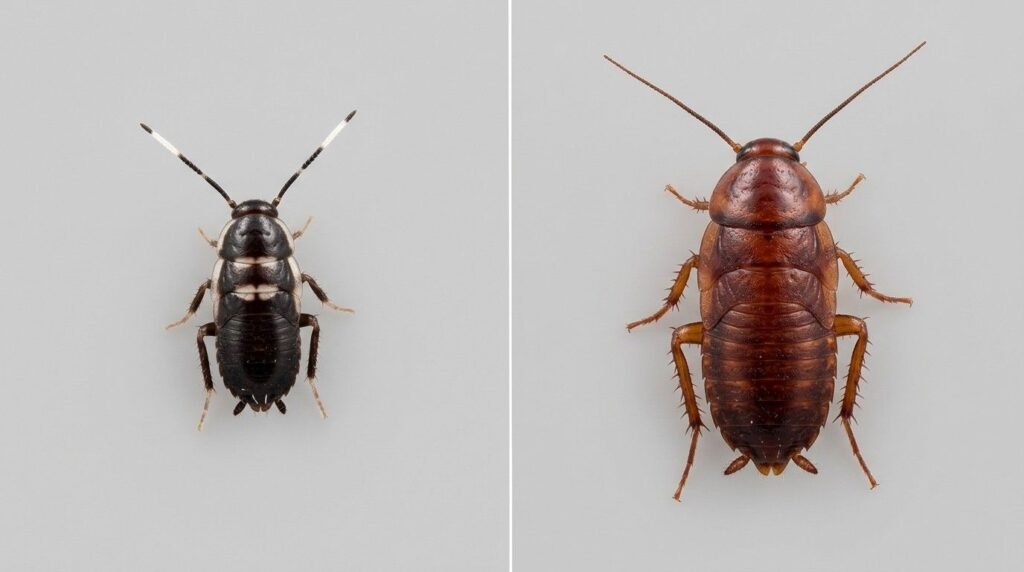
Baby smokybrown roaches are called nymphs. The University of Florida IFAS Cockroach Photographs CD-ROM notes that smokybrown nymphs are reddish to dark brown or black, with some light or pale white areas depending on instar University of Florida IFAS.
The University of Tennessee Extension newsletter adds that young nymphs are dark, with two white stripes on the body and a white antennal tip, while older nymphs are reddish-brown University of Tennessee Extension.
Look for:
- Small wingless roach-shaped nymphs
- Dark bodies with pale or white markings in younger stages
- Reddish-brown older nymphs
- Activity in humid shelter
- Droppings near the egg case
- Shed skins as nymphs grow
What to Do If You Find Smokybrown Roach Eggs
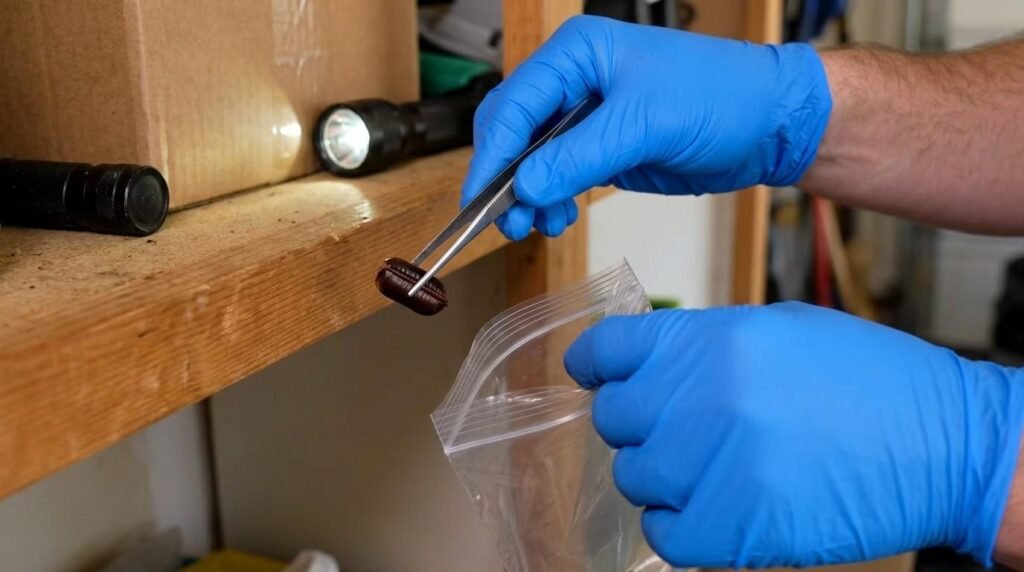
If you find a smokybrown roach egg case, remove it and inspect the humid harborage around it. One ootheca can produce many nymphs, and more egg cases may be hidden in nearby voids or debris.
Follow this action plan:
- Put on disposable gloves.
- Photograph the egg case before removal.
- Pick it up with tape, tweezers, a scraper, or a paper towel.
- Seal it in a plastic bag.
- Dispose of it outdoors.
- Vacuum nearby cracks, voids, insulation edges, and debris.
- Check the surrounding 6–10 feet for more oothecae.
- Look for nymphs, droppings, shed skins, and adult roaches.
- Correct moisture sources. Fix roof leaks, gutter issues, condensation, or damp crawl-space conditions.
- Reduce exterior harborage. Remove leaf litter, dense ground cover, wood piles, and debris near the structure.
- Use sticky monitors in attics, garages, crawl spaces, and entry points.
- Use baits or professional treatment where needed. Focus on harborage and entry zones.
For egg-stage treatment options, read what kills roaches and their eggs.
How to Prevent Smokybrown Roach Eggs Around Your Home
Preventing smokybrown roach eggs requires moisture control, exterior habitat reduction, and sealing entry points. These roaches often originate outdoors, so indoor treatment alone may not solve the problem.
Use this prevention checklist:
- Clean leaf litter from around the foundation.
- Remove debris-filled gutters.
- Repair roof leaks and soffit gaps.
- Trim tree limbs away from the roofline.
- Reduce ivy and dense ground cover near the house.
- Store firewood away from the structure.
- Seal gaps around attic vents, soffits, doors, and utility penetrations.
- Keep garages and crawl spaces dry.
- Avoid leaving pet food outdoors overnight.
- Keep trash sealed.
- Reduce mulch depth near the foundation.
- Use exterior monitors where roaches are seen.
- Check attic and crawl-space humidity.
The University of Tennessee Extension newsletter notes that integrated smokybrown cockroach management emphasizes removing harborage and moisture-retaining materials, sealing and treating entry points, and using perimeter treatments or baits where appropriate University of Tennessee Extension.
Final Verdict: Smokybrown Roach Eggs
Smokybrown roach eggs are protected inside dark brown oothecae that are about 1/2 inch long. Oklahoma State University Extension reports average incubation of 45 days and about 20 nymphs hatching from each ootheca. Other extension materials describe the egg case as about 0.4–0.6 inch long and containing approximately 26 eggs, so the practical range is roughly 20–26 potential nymphs per case.
The most important identification clues are size, dark brown color, humid location, and association with outdoor-connected spaces such as leaf litter, tree holes, gutters, attics, garages, crawl spaces, and greenhouses.
If you find a smokybrown ootheca, remove it safely, inspect nearby humid harborages, correct moisture problems, reduce exterior debris, and monitor entry points for adults and nymphs.
Frequently Asked Questions
What do smokybrown roach eggs look like?
Smokybrown roach eggs are enclosed inside a dark brown ootheca. The egg case looks like a firm elongated capsule or dark bean-shaped shell.
How big are smokybrown roach egg cases?
Smokybrown roach egg cases are about 1/2 inch long, or roughly 13 mm. Some extension material describes them as about 0.4–0.6 inch long.
What color are smokybrown roach eggs?
Smokybrown roach egg cases are dark brown. Hatched or old cases may look dry, dull, brittle, or split along the seam.
How many eggs are in a smokybrown roach ootheca?
Oklahoma State University Extension reports that an average of 20 nymphs hatch from each ootheca. University of Tennessee Extension material states that each ootheca contains approximately 26 eggs.
How long do smokybrown roach eggs take to hatch?
Smokybrown roach eggs take about 45 days to hatch on average, depending on temperature, humidity, and ootheca condition.
Where do smokybrown roaches hide egg cases?
Smokybrown roaches hide egg cases in humid, protected places such as leaf litter, tree holes, wood piles, garages, crawl spaces, attics, greenhouses, gutters, eaves, wall voids, and debris near structures.
Are smokybrown roach eggs found indoors?
Yes. Smokybrown roach egg cases can be found indoors, especially in attics, crawl spaces, garages, wall voids, kitchens, bathrooms, and moisture-damaged areas. They often originate from outdoor harborage.
Are smokybrown roach eggs the same as American roach eggs?
No. Smokybrown egg cases are usually larger, about 1/2 inch long, and dark brown. American roach egg cases are about 8 mm long and are more associated with basements, sewers, drains, and utility rooms.
How do I know if a smokybrown roach egg case has hatched?
A hatched smokybrown ootheca usually has a split seam, hollow body, dry shell, or brittle texture. Nymphs, droppings, and shed skins may be nearby.
What should I do if I find smokybrown roach eggs?
Remove the egg case, seal it in a bag, dispose of it outdoors, inspect nearby humid areas, reduce moisture and leaf litter, seal entry points, and place sticky monitors around attic, crawl-space, garage, and exterior harborage zones.