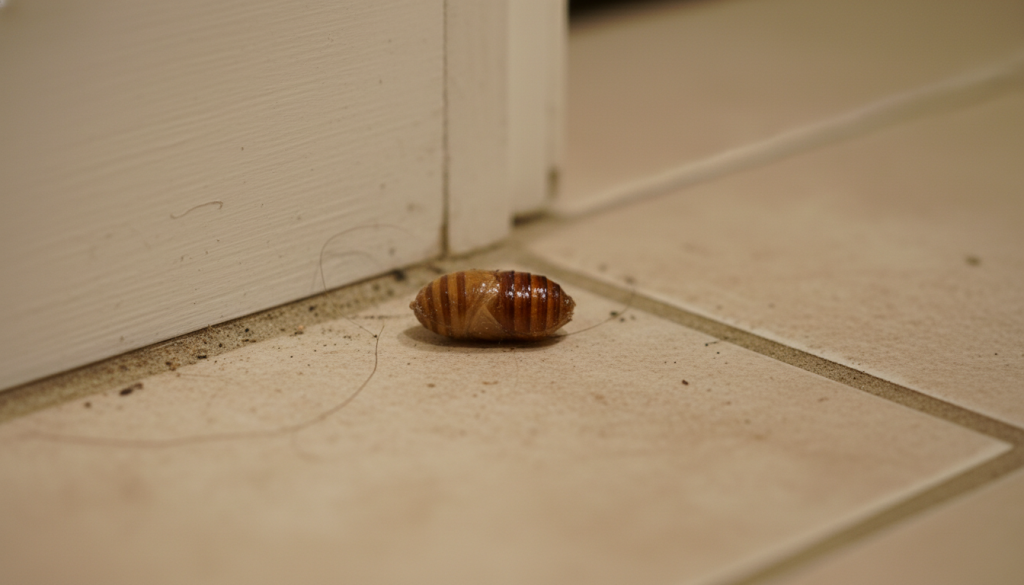
A single German cockroach female produces up to 300 offspring in one year, and it all starts with one tiny egg case glued behind your kitchen cabinet. If you’ve spotted something small, brown, and pill-shaped near your sink or stove, you likely have kitchen cockroach eggs hiding in your home. Ignore them, and dozens of nymphs could hatch within weeks, turning a minor nuisance into a full-scale infestation.
This guide covers what cockroach eggs look like, where roaches hide them, how to destroy them effectively, and how to make sure they never come back. Whether you found a single egg case or several, you’ll leave here with a clear, step-by-step action plan.
What Do Kitchen Cockroach Eggs Look Like?
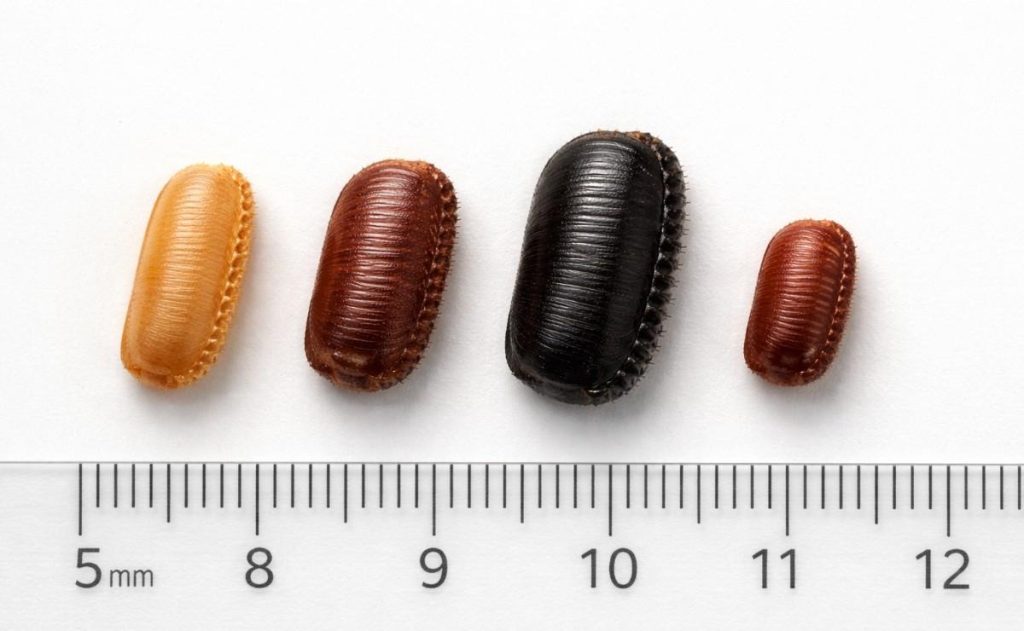
Cockroaches don’t scatter individual eggs across your countertops. Instead, they produce an ootheca, a hardened, protective capsule that holds multiple eggs inside. Think of it as a tiny armored pouch engineered by 300 million years of evolution to shield developing embryos from predators and harsh conditions.
Most cockroach egg cases share a few defining features:
✔ Shape: Oblong or pill-shaped, similar to a small dried bean
✔ Size: Roughly 5–10 mm long (about the size of a grain of rice)
✔ Color: Ranges from light tan to dark reddish-brown, depending on species and age
✔ Texture: Smooth with faint ridges running lengthwise. These ridges mark the keel, where nymphs eventually push their way out
A freshly formed ootheca appears white or pale and feels soft. Within hours, it hardens and darkens into its characteristic brown color as the outer protein-chitin matrix sclerotizes. By the time you spot one, it’s usually already rigid and camouflaged against wood or cardboard surfaces.
Cockroach Eggs vs. Mouse Droppings
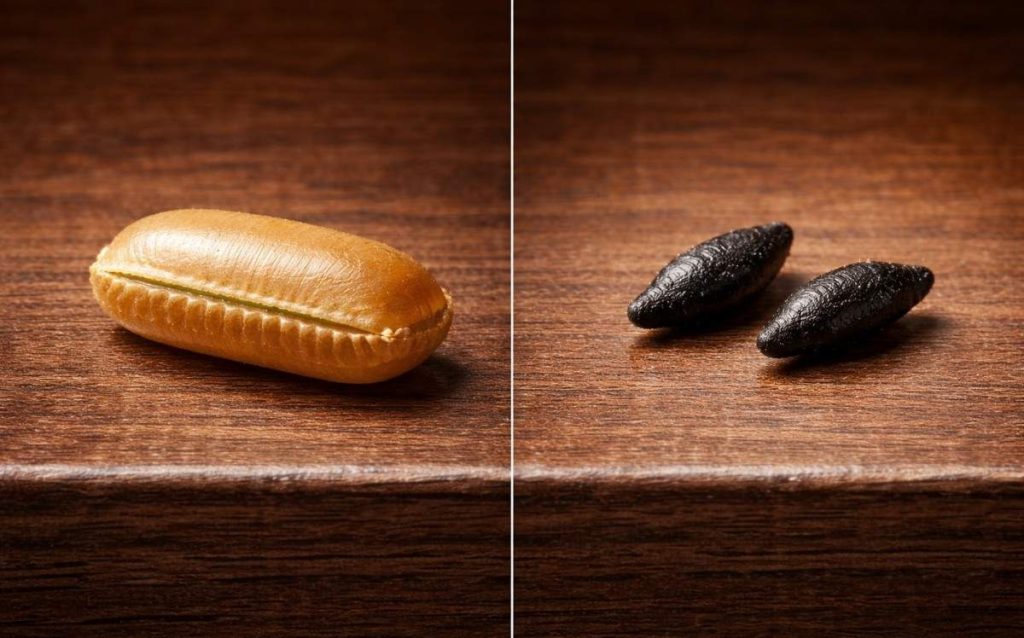
One of the most common mix-ups homeowners make is confusing a roach egg case in the kitchen with mouse droppings. Both are small and dark brown, so the confusion is understandable. The key difference? Mouse droppings are pointed at both ends, slightly tapered, and solid throughout.
Cockroach oothecae are wider, flatter, and feature visible ridges or a seam along one edge. If you press an ootheca gently with gloved fingers, you’ll feel it’s hollow or semi-hollow inside. A mouse dropping won’t have that give.
Where Do Cockroaches Lay Eggs in the Kitchen?
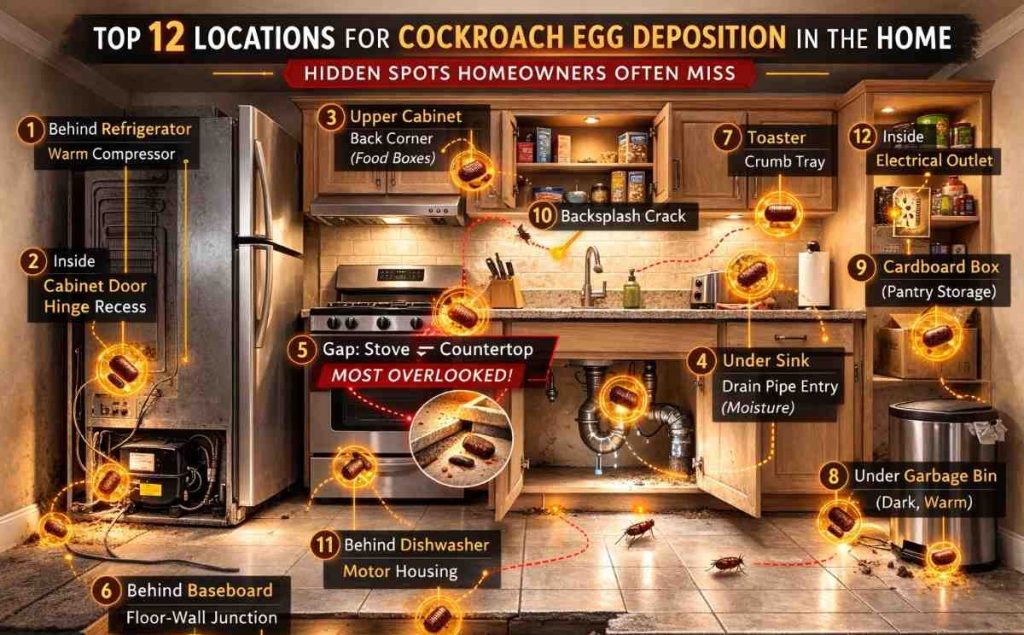
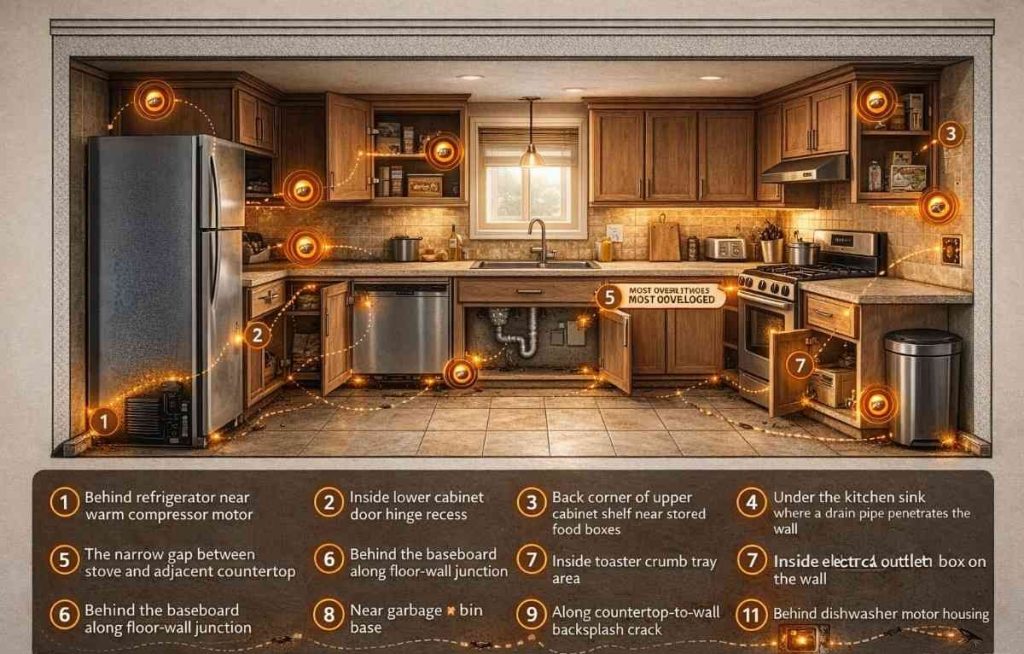
Cockroaches choose egg-laying spots that are warm, dark, humid, and close to food. Your kitchen checks every single box. Here are the hiding spots you need to inspect first.
Behind and Under Appliances
The area behind your refrigerator is prime real estate for cockroach egg deposits. The compressor generates consistent warmth, and the space is rarely disturbed. In my experience, pulling the fridge out during an inspection reveals egg cases about 70% of the time during active infestations.
You’ll also find oothecae under stoves, inside microwave housings, near dishwasher motors, and tucked against the base of coffee makers and toasters.
Cockroach Eggs in Kitchen Cabinets
Cabinet corners, hinges, and the underside of shelves provide dark, protected surfaces ideal for egg placement. Cockroaches often attach their egg cases to wood or cardboard using a sticky secretion that bonds tightly. Check the back corners of upper and lower cabinets, particularly near stored food.
Under the Kitchen Sink
The combination of moisture from plumbing pipes, constant darkness, and proximity to food scraps makes under-sink areas a reliable hotspot. Inspect around pipe joints, behind cleaning bottles, and along the cabinet floor edges where caulk has cracked or separated.
Additional Hiding Spots Worth Checking
✔ Inside or behind toaster crumb trays
✔ Along baseboards and wall-floor junctions
✔ Near garbage bins and recycling containers
✔ Inside cardboard boxes stored in or near the kitchen
✔ Around pantry shelves, especially near unsealed food
✔ In cracks along countertop backsplashes
✔ Within the narrow gap between the stove and countertop
That last one, the stove-to-counter gap, is the most frequently overlooked location. Pull your range forward during inspections. You’ll often find egg cases, droppings, and live roaches wedged in that tight space.
Cockroach Egg Identification by Species
Not all cockroach oothecae look the same. Identifying the species behind the eggs helps you choose a more targeted treatment strategy.
German Cockroach Eggs (Blattella germanica)
The German cockroach is the most common kitchen invader worldwide. Its ootheca is light tan to brown, about 6–9 mm long, and holds 30–48 eggs per capsule, the highest count among common household species. The female carries the egg case attached to her abdomen until just before hatching, which makes German cockroach eggs in your kitchen harder to find sitting loose. When you do spot a detached one, hatching is usually imminent.
American Cockroach Eggs (Periplaneta americana)
American cockroaches produce a larger, darker brown ootheca measuring about 8–10 mm. Each case contains approximately 14–16 eggs. Females deposit their oothecae in hidden areas and sometimes cover them with bits of debris for camouflage, a behavior that makes detection trickier.
Oriental Cockroach Eggs (Blatta orientalis)
Oriental cockroach oothecae are dark reddish-brown to nearly black, roughly 10–12 mm long, and hold around 16 eggs. These roaches prefer cool, damp environments, so their eggs turn up most often near drains, basement entries, or cockroach eggs under the sink.
Brown-Banded Cockroach Eggs (Supella longipalpa)
Brown-banded cockroach egg cases are the smallest of the bunch, about 5 mm, and appear light reddish-brown. Each holds 10–18 eggs. Unlike other species, brown-banded cockroaches cement their oothecae to walls, ceilings, and the tops of furniture, not just low crevices. Check upper cabinet surfaces and even areas behind picture frames near the kitchen.
How Many Eggs Does a Cockroach Lay at Once?
A single ootheca holds anywhere from 10 to 50 eggs, depending on the species. German cockroaches pack the most per case, which partly explains their explosive population growth.
Here’s where the math gets alarming:
| Species | Eggs per Ootheca | Oothecae per Lifetime | Total Potential Offspring |
|---|---|---|---|
| German cockroach | 30–48 | 4–8 | 120–384 |
| American cockroach | 14–16 | 6–14 | 84–224 |
| Oriental cockroach | ~16 | 8–10 | 128–160 |
| Brown-banded cockroach | 10–18 | 10–20 | 100–360 |
A German cockroach female generates a new ootheca roughly every 3–4 weeks. Cockroach egg hatching time averages 28–30 days for the German species, meaning the full cycle from egg to nymph to reproducing adult can be completed in as little as 60–100 days. This rapid reproductive rate is exactly why early detection of kitchen cockroach eggs matters so much; delay by a month, and you could face hundreds of nymphs.
Signs You Have Cockroach Eggs in Your Kitchen
Finding an ootheca is the most obvious sign, but several other clues point to active egg-laying and a growing colony.
✔ Cockroach droppings: Small dark specks resembling ground black pepper (for small species like German cockroaches) or dark cylindrical pellets (for larger species) near drawers, shelves, and food storage areas
✔ Shed skins: Translucent, shell-like casings left behind by nymphs that have molted; a clear signal that eggs have already hatched
✔ Musty, oily odor: A strong, distinctive smell that intensifies as the cockroach colony grows. If your kitchen has an unexplained odor near cabinets, investigate further.
✔ Smear marks: Dark, irregular streaks along walls, cabinet interiors, or baseboards where roaches travel repeatedly
✔ Daytime live sightings: Cockroaches are nocturnal creatures. Seeing them in daylight usually indicates severe overcrowding in their harborage and plenty of active egg production
Pay special attention to empty cockroach egg casings. An open, hollow ootheca confirms nymphs have already emerged and are living somewhere in your kitchen. Even one discarded egg case means a breeding population has established itself nearby.
How to Get Rid of Cockroach Eggs in the Kitchen
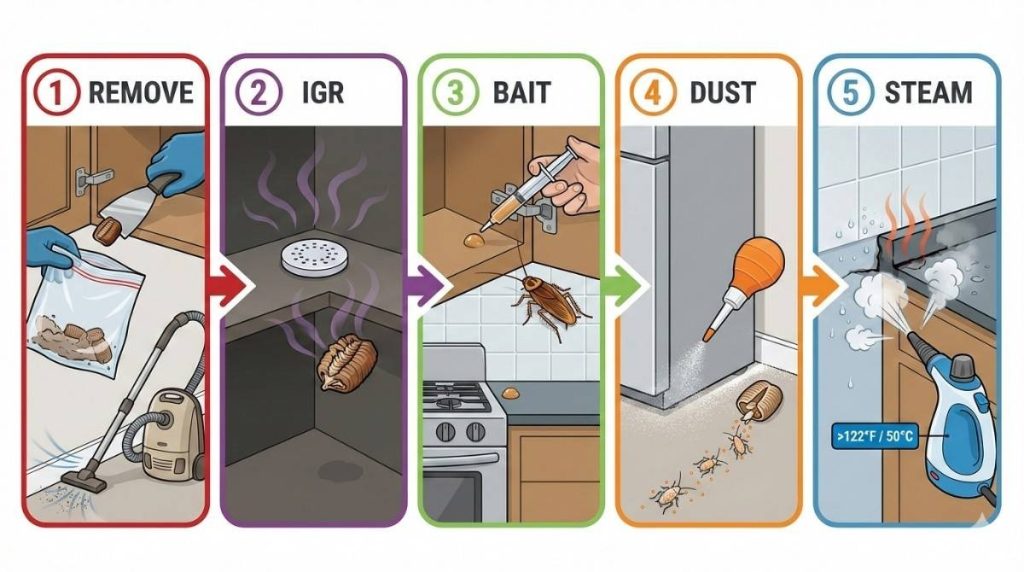
Eliminating cockroach eggs requires a different approach than killing adult roaches. The ootheca’s hardened, sclerotized shell protects embryos from most surface sprays and aerosol products, so you need targeted methods.
Step 1: Locate and Physically Remove Egg Cases
Grab a flashlight and methodically inspect every hiding spot listed earlier. When you find an ootheca:
1. Put on protective gloves
2. Scrape off or pick up the egg case
3. Seal it immediately in a plastic bag
4. Dispose of the bag in an outdoor trash bin, never your kitchen garbage
Crushing the ootheca works, but sealing it and removing it from your home entirely is more reliable. A HEPA vacuum cleaner is excellent for collecting egg cases lodged in tight cracks and crevices you can’t easily reach by hand.
Step 2: Apply Insect Growth Regulators (IGRs)
IGRs rank among the most effective tools for cockroach egg sac removal and long-term colony control. Products containing hydroprene or pyriproxyfen disrupt embryo development inside the ootheca and prevent surviving nymphs from maturing into reproducing adults. The EPA classifies IGRs as a reduced-risk pest management option, making them suitable for kitchen environments.
Step 3: Deploy Gel Baits Strategically
Gel baits like Advion Cockroach Gel Bait (manufactured by Syngenta) or Maxforce FC (by Bayer) won’t kill eggs directly, but they eliminate the adults that produce them. Place small dots of bait inside cracks, behind appliances, under sinks, and along cabinet edges. As adult and nymph roaches consume the bait and die, the colony’s reproductive cycle collapses.
Step 4: Dust with Boric Acid or Diatomaceous Earth
A thin layer of boric acid powder or food-grade diatomaceous earth in wall voids, behind appliances, and along baseboards kills nymphs shortly after they hatch. Both substances work mechanically; they damage the cockroach’s exoskeleton and cause fatal dehydration. Apply barely visible layers; roaches actively avoid heavy, visible piles.
Step 5: Steam Clean Hard-to-Reach Areas
Handheld steam cleaners generate temperatures well above 50°C (122°F), which destroys cockroach eggs on contact. Direct steam into cracks, under appliances, and along cabinet edges to eliminate eggs hidden in spots you can’t physically access. Steam also sanitizes surfaces contaminated by cockroach droppings and allergens.
Does Bleach or Boric Acid Kill Cockroach Eggs?
These two come up constantly, so here’s a direct answer.
Bleach:
A concentrated bleach-and-water solution can kill cockroach eggs on prolonged, direct contact. However, bleach evaporates quickly, struggles to penetrate the ootheca’s protective shell reliably, and creates health risks when overused near food preparation surfaces. Use bleach for sanitizing surfaces after you’ve physically removed egg cases, not as your primary egg-killing strategy.
Boric acid:
Boric acid doesn’t penetrate sealed oothecae either. Its real value emerges after eggs hatch. When newly emerged nymphs walk through boric acid dust, the powder clings to their bodies and kills them within 24–72 hours. Boric acid excels as one piece of a broader treatment strategy rather than a standalone egg eliminator.
For direct egg destruction, physical removal combined with steam cleaning remains the most dependable approach. Layer in IGRs and baits to interrupt the reproductive cycle long-term.
How to Prevent Cockroach Eggs in Your Kitchen
Destroying existing eggs solves the immediate crisis. Prevention ensures it doesn’t repeat. Focus on three pillars: sanitation, exclusion, and monitoring.
Sanitation
✔ Store all food, including pet food,d in airtight containers
✔ Wipe down countertops, stovetops, and tables after every meal
✔ Sweep floors daily to remove crumbs and food residue
✔ Clean grease buildup under and behind your stove at least monthly
✔ Wash dishes promptly; never leave dirty dishes sitting overnight
✔ Take out kitchen trash daily and use bins with tight-fitting lids
✔ Rinse recyclables before placing them in bins
Exclusion
✔ Seal cracks and crevices around cabinets, baseboards, and countertops with caulk or foam sealant
✔ Fix leaky pipes and faucets under the sink; cockroaches need moisture even more than food
✔ Add weather stripping to gaps around exterior doors and windows
✔ Replace deteriorating shelf liners that may harbor eggs or droppings
✔ Remove cardboard boxes from the kitchen entirely (cockroaches feed on cardboard glue and lay eggs in the corrugated ridges)
✔ Inspect grocery bags, delivery boxes, and secondhand appliances before bringing them inside
Monitoring
✔ Place sticky traps in strategic locations: under the sink, behind the fridge, and inside lower cabinets
✔ Check traps weekly; even a single captured roach signals the need for deeper inspection
✔ Pull out major appliances monthly and inspect with a flashlight
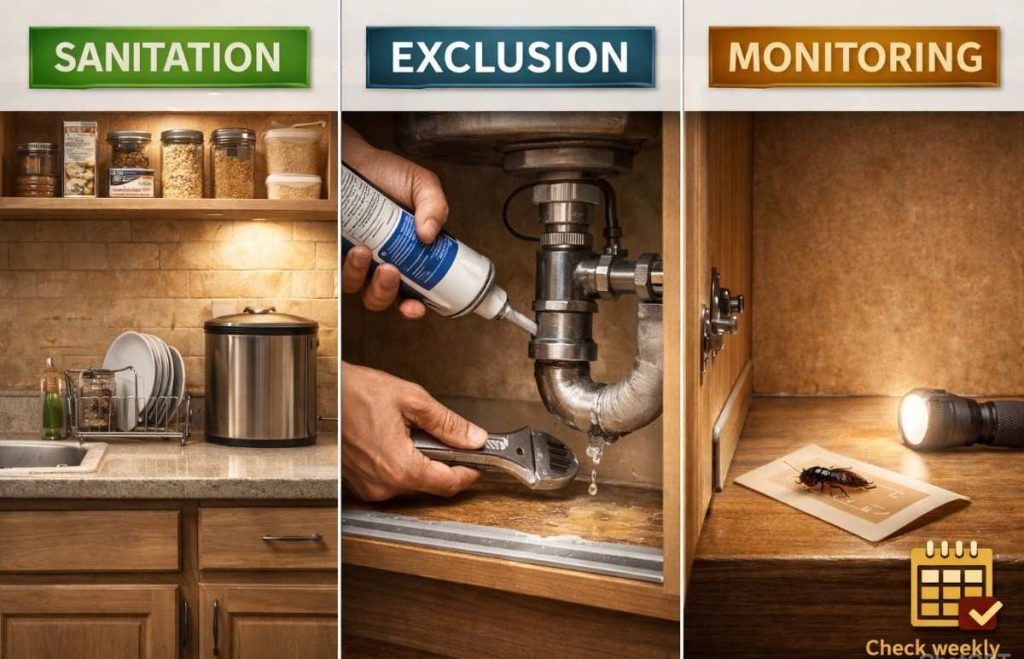
The National Pest Management Association (NPMA) recommends Integrated Pest Management (IPM), which combines sanitation, exclusion, monitoring, and targeted chemical treatments, as the most effective and sustainable approach to preventing cockroach infestations in residential kitchens.
When to Call a Professional Exterminator
DIY methods handle most small-to-moderate cockroach egg problems effectively. But certain situations call for professional pest control intervention:
✔ You keep finding oothecae after multiple rounds of treatment
✔ Baby cockroaches (nymphs) keep appearing despite baiting and dusting
✔ The infestation involves wall voids, plumbing chases, or shared apartment walls you can’t access
✔ You’re facing a heavy German cockroach infestation; they reproduce fastest and resist many over-the-counter products
✔ Health concerns are a factor; the CDC confirms that cockroach allergen proteins trigger asthma attacks and respiratory inflammation, particularly in children and elderly household members
Licensed exterminators use professional-grade gel baits, targeted IGR applications, residual insecticide treatments, and systematic inspection protocols that exceed typical DIY capabilities. Many companies, including national providers like Terminix, offer customized treatment plans with follow-up visits and re-infestation guarantees.
Frequently Asked Questions
Can you see cockroach eggs with the naked eye?
Yes. Cockroach oothecae measure 5–12 mm long, roughly the size of a grain of rice or a small bean. They’re clearly visible, though their dark brown color and hidden placement make them easy to overlook without a flashlight during inspection.
How long does it take for cockroach eggs to hatch?
Hatching time depends on species. German cockroach eggs hatch in about 28–30 days, American cockroach eggs take 44–60 days, and Oriental cockroach eggs may need up to 60 days. Temperature and humidity levels directly affect the timeline.
Do cockroaches lay eggs in food?
Cockroaches rarely deposit eggs directly in food. They prefer dark, protected crevices near food sources instead. However, contaminated food may contain cockroach droppings, shed skins, or bacteria like Salmonella and E. coli transferred through roach contact.
Can cockroach eggs survive without the mother?
Yes. Once a female deposits the ootheca, the eggs develop independently. The sclerotized shell protects embryos from dehydration and many insecticides. Only German cockroach females carry the ootheca until near hatching; most other species drop theirs well in advance.
What kills cockroach eggs on contact?
Steam above 50°C (122°F) destroys cockroach eggs on contact. Physical crushing also works. Most chemical sprays fail to penetrate the ootheca shell effectively. IGRs prevent development over time but don’t provide instant results.
Are empty cockroach egg cases a sign of infestation?
Without question. An empty, split-open ootheca confirms nymphs have already hatched and are living nearby. Finding even one empty egg casing means an active breeding population has established itself in or near your kitchen.
Can one cockroach infest a whole kitchen?
Yes, if she’s a pregnant female. A single gravid German cockroach can produce 30–48 nymphs from one ootheca and generate multiple egg cases across her lifetime, potentially founding a colony of hundreds within just a few months.
Key Takeaways
Kitchen cockroach eggs are small, cleverly hidden, and dangerously productive. Here are the five things that matter most:
1. Identify fast. Look for pill-shaped, brown oothecae behind appliances, inside cabinets, under sinks, and near food sources. Knowing what cockroach egg cases look like gives you a critical head start.
2. Remove physically first. Chemical sprays rarely breach the ootheca shell. Vacuuming, scraping, and steam cleaning deliver the most reliable egg elimination results.
3. Break the reproductive cycle. Combine IGRs, gel baits like Advion or Maxforce FC, and boric acid dust to kill nymphs after hatching and stop surviving adults from producing new eggs.
4. Lockdown prevention. Seal cracks, repair leaks, store food in airtight containers, and maintain a strict daily sanitation routine. These habits make your kitchen hostile territory for egg-laying roaches.
5. Know when to call a professional. Recurring oothecae, persistent nymph sightings, or health concerns, especially cockroach-triggered asthma, justify professional extermination services.
Discovering kitchen cockroach eggs feels unsettling, but it’s also your opportunity to act before a small problem spirals out of control. Start your inspection tonight: grab a flashlight, pull back the fridge, and check under the sink. The sooner you find and destroy those egg cases, the faster you take back your kitchen.