

German Roach Eggs: Complete Identification and Elimination Guide
The German roach eggs is one of the hardest pest concerns for homeowners to deal with. There are 30 to 40 developing eggs in one German roach eggs sac. German roaches are the fastest-reproducing indoor pests because they lay so many eggs. Knowing how to find and get rid of these eggs will keep your home from getting a lot more of them.
The way German cockroaches (Blattella germanica) reproduce is different from that of other cockroaches. Females of this species carry their eggs casings until just before they hatch, which is different from other species. This maternal protection provides embryos with the best chance of staying alive. If you can learn to find a pregnant female or a hidden ootheca, you can stop infestations before they get out of hand.
What Does an Eggs Case for a German Roach Look Like?
There are some things about the German roach eggs case that make it easy to tell apart from other types. If you know what to look for, you can find signs of breeding in your house.
Form and Structure
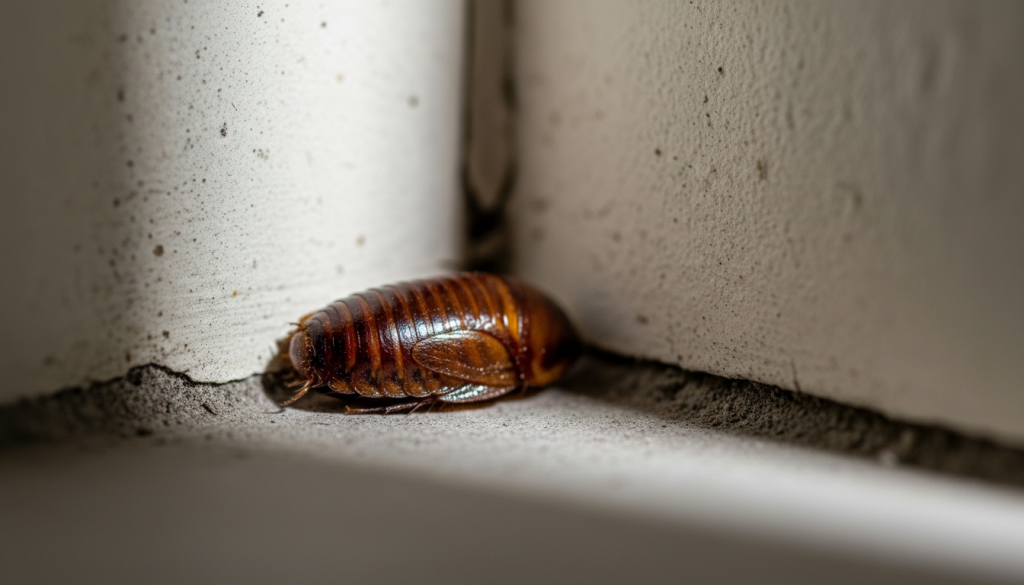
The German cockroach ootheca has a capsule-shaped appearance. Many describe it as purse-shaped or bean-shaped. The case looks like a little ridged pill.
There are two rows of individual eggs in the protective case. There may be a ridge that looks like a keel going along the length. There are about 16 apparent segments on the surface of this segmented object.
There is a hatching seam on one side of the ootheca. When nymphs are ready to come out, they push through this seam. The structure protects the eggs that are forming inside the best.
Size of the German roach egg case
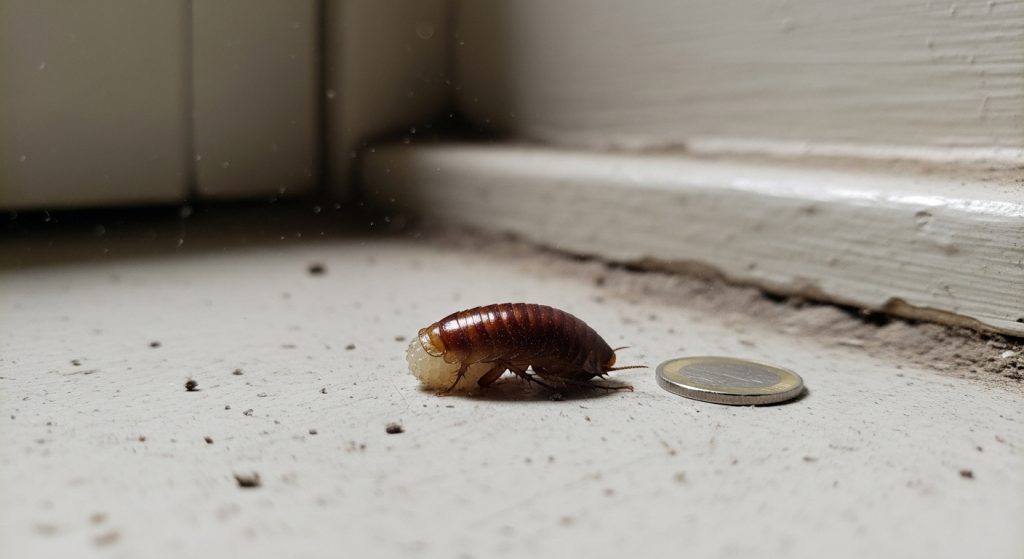
The eggs of German cockroaches are smaller than those of other types of roaches. The capsule that holds the eggs is 6 to 9 millimeters long. That’s roughly a quarter of an inch long or less than a centimeter.
The case is around 3 millimeters tall and 2 millimeters broad. Because it is so small, it is hard to find without a close look. The light casing doesn’t make the roach holding it seem too heavy.
American roach eggs, on the other hand, are 8 to 10 millimeters long. German cockroach eggs casings are smaller, yet they hold more eggs.
Changes in color throughout time
As German cockroach eggs grow, their casings change color. Knowing how this process works can help you guess the age of an egg.
When originally made, a newly formed ootheca looks clear or white. The protein shell isn’t completely firm yet.
Making an ootheca: It starts out pink and then turns light brown as the embryos grow. The outer layer gets darker with time.
Mature ootheca: Changes from light brown to dark reddish-brown. The eggs are about to hatch when the shell turns chestnut brown.
Empty eggs case: The case looks deflated and lighter in color when the eggs hatches. Hatched oothecae look flat and empty.
How Many Eggs Does a German Roach Produce?
German cockroaches can reproduce very quickly. They lay more eggs than any other popular home cockroach species.
Eggs in Each Case
There are 30 to 40 eggs in each German cockroach egg sac. Some reports say that each ootheca has between 30 and 50 eggs. This high number of eggs per capsule makes it easy for the population to increase quickly.
This is different from other species:
American roach: 14 to 16 eggs in each instance
Oriental roach: 16 to 18 eggs per case
Brown-banded roach: 10 to 18 eggs per case
The German cockroach lays more eggs, which is why infestations spread so quickly.
Egg Production for Life
At normal temperature, one female German cockroach lays four to five oothecae. Under the best conditions, some females make 5 to 8 oothecae in their lifespan.
This suggests that a female who can reproduce can lay 200 to 250 eggs in her lifetime. Most of these eggs hatch successfully because they have high egg viability rates.
The possibility of a population explosion
The reproductive nature of German roaches allows their populations to grow quickly. In theory, one female that has mated can have 30,000 babies every year. This means that many generations are breeding at the same time.
Generations that overlap make it possible for reproduction to happen all the time. Breeding all year round ensures that the population doesn’t stop growing during the winter. This is why a little German roach problem can soon turn into a big one.
German Roach Eggs-Carrying Behavior
The German cockroach has a special way of protecting its young. Knowing this will help you find females that are breeding and their eggs.
How Females Carry Their Eggs
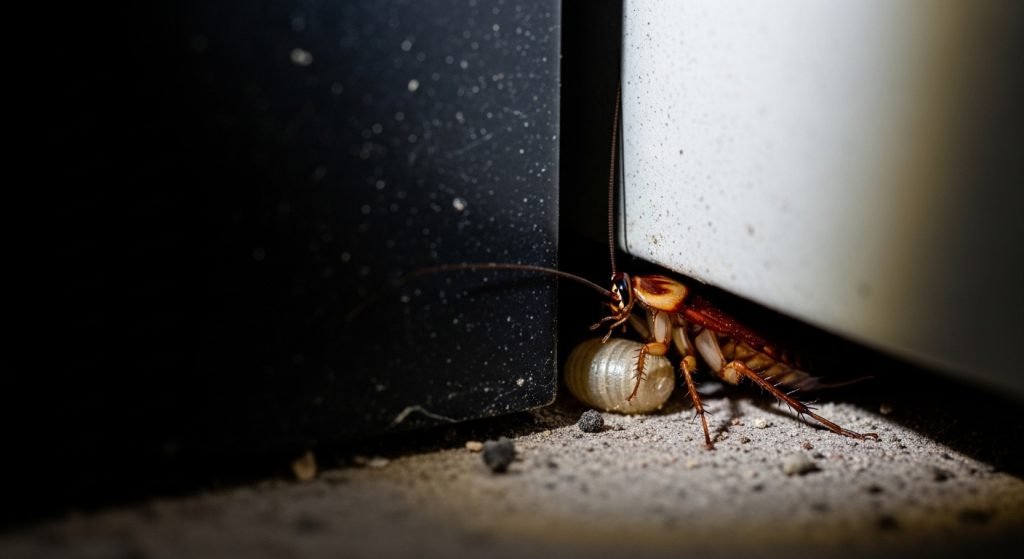
The eggs case of a female German roach is linked to the end of her abdomen. You can see the ootheca sticking out from the back end. You can see it sticking out of the back end of the roach.
The female keeps the growing ootheca linked to the outside of her body throughout incubation. You can tell that a German cockroach is pregnant by how it seems like it’s sticking out. The attachment at the back stays in place while she moves around.
Length of Carrying Period
It usually takes German cockroach females 2 to 3 weeks to carry their eggs. This oothecal stage lasts for most of the time that the embryo is developing. The carrying behavior goes on until the eggs are about to hatch.
Healthy females make ootheca every 20 to 30 days. After putting away one case, she starts working on another. This cycle of laying eggs goes on for the rest of her life.
Why They Drop Eggs Before They Hatch
Females let go of their ootheca a few hours before the eggs hatch. This behavior of dropping before hatching happens in safe places. The timing makes sure that nymphs come out in safe places to hide.
Under stress, females sometimes drop their eggs too soon. Exposure to pesticides or a lack of food induces early deposition. Early instances may not hatch as well as later ones.
Comparing to Other Species
German roaches are the most frequent type of roach that carries eggs for the longest time. American cockroaches lay their eggs right after making them. Brown-banded and oriental roaches also lay eggs swiftly.
This advantage of parental protection helps German roaches live longer. Predators and environmental stress can’t get to protected eggs. With this method, German cockroaches are the most common type of domestic pest.
Where do German roaches lay eggs?
German cockroaches pick certain places to lay their eggs. When you investigate, knowing these places will help you find hidden oothecae.
Preferred Environmental Conditions
German roaches need certain circumstances to lay eggs successfully. They choose microhabitats that have the best temperature range of 77 to 86 degrees Fahrenheit. For proper incubation, the humidity levels must also be high.
Warm, humid places are best for embryos to grow quickly. The female’s instincts for thermoregulation help her choose where to live. In many modern homes, climate control makes it easy for animals to breed.
Kitchen Hiding Spots
Kitchens have everything German roaches need to breed. Look for egg cases in these places:
- Behind appliances: Eggs are very frequent behind the refrigerator. Oothecae can also be found under the dishwasher and near the stove.
- Kitchen cabinets: Egg casings for cabinets hide in corners and on hinges. Check the corners of the cabinet frames.
- Under sinks: Sink area deposits happen close to pipes and water. Eggs are protected by dark spaces surrounding pipes.
- Close to places where food is stored: Gravid females are drawn to pantries and food storage spaces.
Bathroom Locations
The humidity in bathrooms is what German roaches like best. Many oothecae are hidden in bathroom sinks and vanities. Look beneath toilets and around pipes for plumbing.
Warm pipes make little areas that speed up growth. Eggs that have been laid are safe in tight spaces around tiles and baseboards.
Other Common Areas
German roaches lay eggs all over structures that are infested.
- Behind appliances all over the house
- Inside electronics that create heat
- Hidden places and wall voids
- Furniture that has a lot of bugs in it
- Cardboard boxes in places where things are stored
Any safe place that is warm and humid could become a breeding ground.
How Long Do German Roach Eggs Take to Hatch?
The eggs of the German cockroach take the least amount of time to hatch compared to other common species. This rapid growth speeds up the growth of infestations.
Standard Timeline for Hatching
In about 28 to 30 days, German roach eggs hatch. This incubation duration is based on the best temperature conditions. The embryos grow swiftly inside the protective container.
Look at how this compares to other species:
| Roach species | Hatching time |
|---|---|
| American roach: | 44 to 56 days |
| Brown-banded roach: | 50 days |
| Oriental roach: | More than 60 days |
It’s difficult to handle German cockroaches since they reproduce faster.
How temperature affects growth
Temperature has a direct effect on how fast eggs hatch. The best temperature for the fastest growth is between 77 and 86 degrees Fahrenheit. Cooler temperatures slow down the development of embryos much more.
Climate-controlled spaces are good for indoor pests. Modern HVAC systems keep the perfect conditions for incubation all year long. This gets rid of limits on reproduction that happen throughout certain times of the year.
From Egg to Adult: A Timeline
It takes roughly 100 days for an egg to become a reproductive adult. First instar nymphs start eating right away after they hatch. Several molts are needed for nymphal stage development.
Nymphs of the German cockroach go through five to seven instars. With each molt, they get closer to being able to reproduce. The whole process from egg to pregnant female unfolds very quickly.
Identifying a Pregnant German Cockroach
Seeing a female with eggs means that breeding is going on. This early detection lets you step in before the eggs hatch.
Signs for Visual Identification
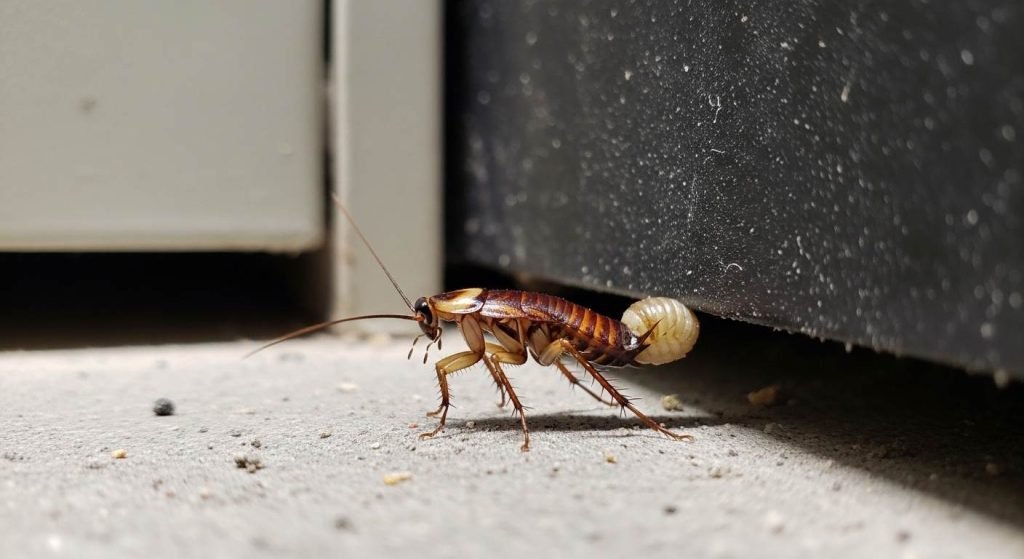
A pregnant roach has a bump on her back that you can see. The ootheca looks like a brown capsule that is linked to the outside. This bulging look sets her apart from cockroaches that are not pregnant.
The capsule moves with the tip of the abdomen. The pregnant cockroach keeps her grasp even while she runs. This noticeable bump makes it easy to tell what it is.
Differences in Behavior
Pregnant German cockroaches may be more careful as they migrate. The extra weight makes it a little harder to move about with eggs. They generally stay near places where they may hide.
Females with eggs show activities that protect their eggs. They pick safer places to hide more carefully. Their geographical preferences are based on the best conditions for incubation.
What It Means to See Pregnant Roaches
If you see a pregnant roach, it means that your home is currently reproducing. This is the first symptom of an infestation or proof that a colony is already there. Unless you do something, population growth will speed up.
One pregnant female might have 30 to 40 baby roaches. Seeing multiple pregnant roaches means the population is rising. This kind of early warning indicator needs prompt action.
German Roach Eggs Treatment Challenges
A lot of common pest control treatments don’t work on German cockroach eggs. Knowing about these problems will help you pick the right therapies.
Why pesticides don’t work on roach eggs
The protein shell around German roach eggs makes treatment hard. Because of egg case immunity, surface sprays don’t work very well. Protected development goes on even when pesticides are used nearby.
Standard contact pesticides kill adults but not the eggs. This leaves holes in treatment for population control. After a few weeks, the eggs hatch and the infestation starts over.
The Maternal Protection Advantage of Roach
Because females carry eggs, the ootheca is better protected. The treated surfaces don’t touch the growing case until it’s almost time for it to hatch. Maternal care protects eggs from dangers in the environment.
The ootheca may still be alive even if the females die from being exposed to pesticides. Dropping before hatching can still happen. Viable eggs may hatch despite the mother’s death.
Timing Treatment Effectively
To treat German roach eggs successfully, you need to choose the right time. Before the next generation of patients matures, follow-up therapies must happen. Reproductive control entails getting treatment more than once.
Treatments that are 2 to 4 weeks apart deal with nymphs that are just starting to grow. This disturbance of the life cycle stops the following generation from reproducing. Multiple applications make sure that the entire population is kept down.
How to Eliminate German Roach Eggs
Several methods effectively target German cockroach eggs. Combining techniques produces better outcomes.
Ways to Get Rid of roach Eggs Physically
Direct egg case destruction eliminates developing roaches immediately. Vacuuming eggs with a HEPA filter works well. When you crush eggcases, the embryos inside die.
During inspections, pay special attention to managing egg cases. Check all known harborage locations systematically. Remove and dispose of every ootheca you find.
Immediately seal the contents of the vacuum after collecting them. Dispose of materials in outside garbage containers. Wipe surfaces to erase pheromone trails.
Insect Growth Regulators (IGRs)
IGRs are great for controlling German roaches’ reproduction. These products mess with the hormonal growth of eggs and nymphs. Embryos might not grow as they should.
IGRs stop nymphs from becoming sexually mature. Breaking the breeding cycle creates population suppression. These products provide long-term control when applied correctly.
Common IGR active compounds include:
- Hydroprene
- Pyriproxyfen
- Methoprene
Use IGRs in places where eggs are laid.
Bait Stations and Gel Baits
While baits primarily target adults and nymphs, they reduce breeding females. Fewer reproductively active females means fewer eggs produced. Population control influences future generations.
Putting bait in the right places near harborage locations makes it work best. To keep baits interesting, change them out often. For full treatment, use baiting and IGRs together.
Targeted Treatment Methods
Professional extermination often includes treatments that are specialized to eggs. Crack and crevice applications can get to places that are protected. Dust formulations get into wall voids where eggs are hiding.
Heat treatments destroy eggs at all embryonic stages. Professional tools can get hot enough to kill embryos. This procedure works even in inconspicuous locations.
Prevention: Stopping German Roach Eggs Production
Preventing breeding activity protects your home long-term. Environmental modifications discourage reproduction.
Sanitation Practices
Good sanitation removes attractants that bring German roaches inside. Food availability directly affects egg production rates. Hungry females produce fewer oothecae.
Clean thoroughly and regularly:
- Wipe counters and appliances daily
- Store food in sealed containers
- Remove crumbs and spills immediately
- Take garbage out frequently
- Clean behind and under appliances monthly
Reduced food access decreases reproductive success.
Humidity Control
German roaches need humidity for successful embryogenesis. Reducing moisture discourages breeding activity. Dry environments stress developing eggs.
Control humidity by:
- Fixing leaky pipes and faucets
- Using exhaust fans in bathrooms and kitchens
- Running dehumidifiers in damp areas
- Ensuring proper ventilation throughout
Lower humidity reduces hatching success rates.
Exclusion Methods
Sealing entry points prevents German roaches from establishing populations. Fewer roaches means fewer eggs in your home. Exclusion supports breeding interruption.
Seal all potential harborage:
- Caulk cracks around baseboards and pipes
- Install door sweeps on exterior doors
- Repair gaps around electrical outlets
- Fill spaces where cabinets meet walls
Eliminating hiding spots exposes eggs to treatment.
Ongoing Monitoring
Regular inspection catches new breeding activity early. Use sticky trap inspection methods throughout your home. Place monitoring stations near previous infestation areas.
Check traps weekly and document findings. Population assessment helps gauge treatment effectiveness. Early detection prevents small problems from growing.
Signs of German Roach Breeding Activity
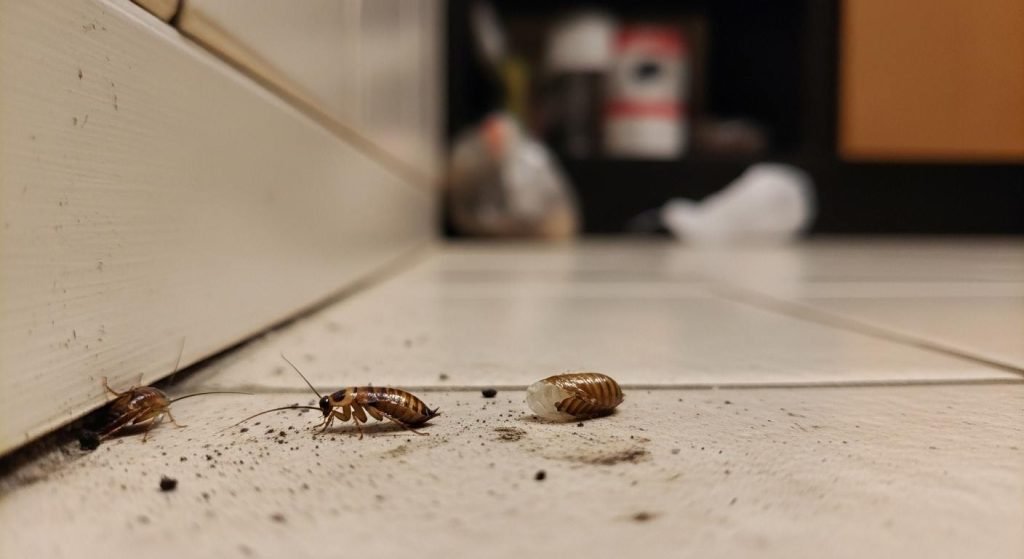
Multiple indicators reveal reproductive activity in your home. Recognizing these helps assess infestation severity.
Finding Eggs Cases
Ootheca discovery confirms breeding is occurring. Fresh egg cases indicate current reproduction. Empty cases show historical hatching activity.
Multiple oothecae in different locations suggest established colony status. A single case might represent early infestation. Either finding demands immediate response.
Seeing Pregnant Females
Pregnant roach sighting confirms active breeding in your space. The visible egg case protrusion makes identification easy. One gravid female means others likely exist.
Observing Multiple Life Stages
Seeing roaches of different sizes indicates overlapping generations. First instar nymphs alongside adults confirm ongoing reproduction. Active reproduction continues unless interrupted.
Other Infestation Evidence
Additional signs accompany breeding activity:
- Fecal pheromone spots (small dark specks)
- Shed skins from molting nymphs
- Musty odor in severe infestations
- Dead roaches in hidden areas
Multiple indicators suggest heavy reproduction and growing populations.
German Roach Eggs vs. Other Species
Understanding differences helps with accurate identification. German roach eggs have distinctive characteristics.
Size Comparison
German cockroach egg cases are smallest among common species. Their compact size belies the high egg capacity inside. Larger doesn’t mean more eggs.
| Species | Egg Case Size | Eggs Inside |
|---|---|---|
| German | 6-9mm | 30-40 |
| American | 8-10mm | 14-16 |
| Oriental | 8-10mm | 16-18 |
| Brown-banded | 5mm | 10-18 |
German roaches produce the smallest egg case with the highest egg count.
Carrying Behavior Differences
Only German cockroaches carry eggs longest through complete incubation. Other species deposit eggs shortly after ootheca formation. This behavioral difference significantly affects control strategies.
American, Oriental, and brown-banded roaches glue or deposit eggs on surfaces. Their eggs are more vulnerable to environmental conditions. German roach maternal protection increases survival rates dramatically.
Reproduction Rate Comparison
German roaches reproduce faster than American roaches and all other common species. Their shorter incubation period accelerates population growth. More eggs per case compound this advantage.
No other household species matches the German cockroach’s reproductive capacity. This makes them the most challenging indoor pest to eliminate.
When to Call Professional Pest Control
Some German roach eggs situations require expert intervention. Professional help offers advantages DIY methods cannot match.
Signs You Need Professional Help
Consider calling a professional exterminator when:
- You find multiple oothecae throughout your home
- Pregnant German cockroaches appear regularly
- DIY treatments haven’t stopped reproduction
- The infestation affects multi-unit housing
- Commercial building or restaurant infestation exists
- The population seems out of control, breeding
Professional Treatment Advantages
Licensed pest control technicians understand German roach reproductive biology thoroughly. They access commercial-grade IGRs and professional products. Their integrated pest management approaches address all life stages.
Professionals conduct a thorough population assessment and infestation evaluation. They identify harborage sites you might miss. Targeted treatment reaches eggs in concealed spots.
What Professionals Do Differently
Experts use combination approaches for maximum effectiveness:
- Commercial IGRs that prevent reproduction
- Professional-grade baits with better attraction
- Crack and crevice treatments reaching hidden eggs
- Follow-up visits, ensuring complete elimination
- Monitoring for reproduction, long-term
Their systematic approach addresses German roach egg challenges comprehensively.
Integrated Pest Management for German Roach Eggs
Effective control combines multiple strategies. IPM approaches address eggs as part of complete life cycle management.
IPM Components
A comprehensive German roach program includes:
- Inspection: Thorough egg case survey of all areas
- Identification: Confirming German cockroach presence
- Sanitation: Removing food and water sources
- Exclusion: Sealing entry and harborage sites
- Treatment: Targeted applications including IGRs
- Monitoring: Ongoing surveillance for breeding activity
Why Target Eggs Specifically
Egg case management interrupts the reproductive cycle permanently. Each ootheca eliminated prevents 30 to 40 future roaches. Breeding interruption stops population explosion potential.
Focusing only on adults leaves eggs to hatch later. Treatment without egg focus creates endless cycles. Complete control requires addressing all life stages.
Long-Term Success
Sustained control requires ongoing vigilance. German roaches are a synanthropic species that live alongside humans. Reintroduction from neighboring units or incoming items happens.
Regular monitoring catches new activity before breeding is established. A quick response to early warning signs prevents major infestations. Long-term commitment delivers lasting results.
Take Action Against German Roach Eggs Today
Now you understand everything about the German roach eggs and its role in infestations. These small egg cases contain 30 to 40 developing roaches each. The female’s carrying behavior protects eggs throughout incubation. Finding oothecae or pregnant females confirms active breeding.
German cockroaches are the fastest reproducing indoor pest species. Their high reproductive capacity creates exponential population growth. A single female produces hundreds of eggs in her lifetime. Acting quickly prevents minor problems from becoming severe infestations.
Don’t wait for eggs to hatch and multiply your roach problem. Start inspecting your home today. Focus on kitchens, bathrooms, and dark crevices behind appliances. Look for the distinctive 6- to 9-millimeter brown capsules.
Remove any egg cases you find through vacuuming or physical destruction. Implement sanitation and exclusion measures to discourage breeding. Consider IGR products that disrupt egg and nymph development.
For established German cockroach infestations, contact a licensed pest control professional immediately. Their expertise ensures the complete elimination of eggs and all life stages. Protect your family’s health and home; take action against German roach eggs now.