German vs Brown-Banded Roach Eggs: Side-by-Side Comparison
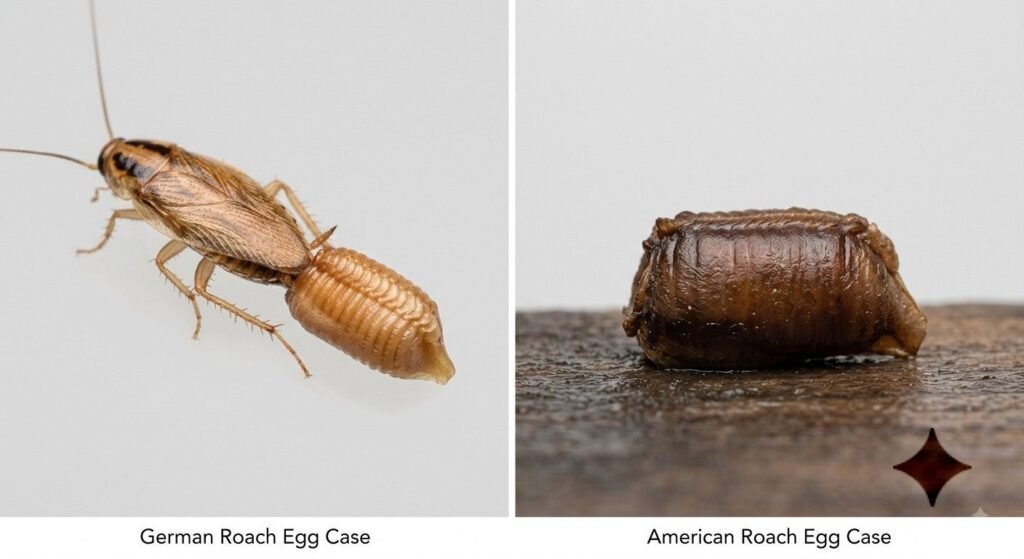
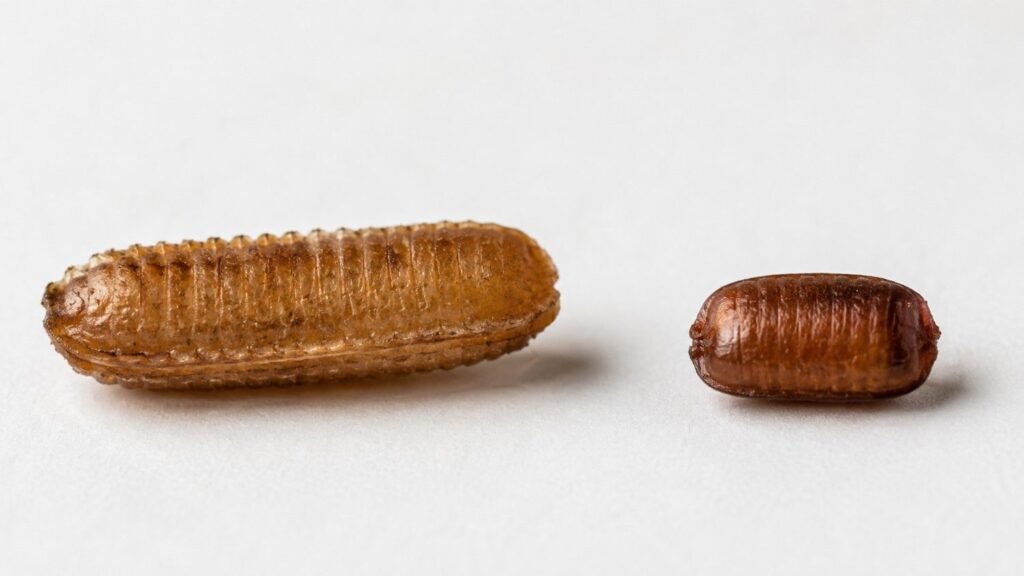
German roach eggs and brown-banded roach eggs are both enclosed inside protective egg cases called oothecae, but they differ in egg count, placement behavior, size, location, and infestation pattern. German roach egg cases are usually light tan to brown, about 6–9 mm long, and contain about 30–40 eggs. Brown-banded roach egg cases are smaller, about 5 mm long, yellowish to reddish-brown, and contain up to about 18 eggs. The fastest difference is where the egg case is found. German cockroach egg cases are strongly tied to kitchens and bathrooms because German roaches need food and moisture. Brown-banded cockroach egg cases are often glued to drier, warmer, higher locations such as furniture, walls, ceilings, closets, picture frames, electronics, desks, tables, and sometimes bedding. If you see a female roach carrying a tan ootheca near a sink, cabinet hinge, or appliance, German roaches are more likely. If you find a tiny reddish-brown capsule glued high on furniture, behind wall decor, or inside electronics, brown-banded roaches are more likely. Quick Comparison: German vs Brown-Banded Roach Eggs Feature German Roach Eggs Brown-Banded Roach Eggs Scientific name Blattella germanica Supella longipalpa Egg structure Ootheca, protective egg case Ootheca, protective egg case Size About 6–9 mm long About 5 mm long / 3/16 inch Color Light tan, amber, yellowish-brown, or brown Yellowish, light brown, reddish-brown, or tan Shape Narrow, ridged, purse-shaped capsule Small, barrel-like or capsule-shaped case Eggs per case About 30–40, sometimes more Up to 18; often about 10–18 Female behavior Carries ootheca until near hatch Carries briefly, then attaches/glues it to objects Hatching time Often about 28–30 days Often around one to two months; sources vary by conditions Common location Kitchens, bathrooms, under sinks, cabinet hinges, appliances Furniture, ceilings, upper walls, closets, electronics, picture frames, desks, bedding Moisture preference High moisture and food access Drier and warmer rooms than German roaches Infestation clue Egg-bearing female or loose tan case near kitchen/bathroom harborages Small glued case away from sinks, often high or in furniture Rutgers NJAES states that a typical German cockroach egg case contains about 40 eggs and measures about 8 mm by 3 mm by 2 mm Rutgers NJAES. Oklahoma State University Extension states that the brown-banded cockroach egg capsule is yellowish or reddish-brown, 3/16 inch or 5 mm long, carried for 24–36 hours, and then attached to an object, with up to 18 eggs in a capsule Oklahoma State University Extension. For a general visual guide, read what roach eggs look like. What German and Brown-Banded Roach Eggs Have in Common German and brown-banded roach eggs are both protected inside oothecae. An ootheca is a firm capsule that holds multiple developing roaches until they hatch. Both egg cases are: The University of Florida IFAS cockroach management guide explains that cockroach eggs are deposited in groups inside a leathery case or capsule called an ootheca UF IFAS Cockroaches and Their Management. For ootheca basics, read what are roach eggs?. German Roach Eggs: Key Identification Features German roach eggs are enclosed inside a narrow, light tan to brown ootheca that the female carries until the eggs are close to hatching. This carrying behavior is the strongest German roach egg clue. A German roach egg case usually has these traits: University of Florida IFAS describes the German cockroach ootheca as a tiny brown, purse-shaped capsule about 8 mm long, 3 mm high, and 2 mm wide, typically containing 30–40 eggs UF IFAS German cockroach profile. For the full species guide, read German roach eggs. Brown-Banded Roach Eggs: Key Identification Features Brown-banded roach eggs are enclosed inside a smaller ootheca that is carried briefly and then attached to hidden objects. Brown-banded roaches often place egg cases in drier and higher areas than German cockroaches. A brown-banded roach egg case usually has these traits: Oklahoma State University Extension notes that brown-banded cockroaches are often found on ceilings, high on walls, behind picture frames, near motors of refrigerators and appliances, in light switches, closets, and furniture. The same source explains that they do not require as much moisture as German cockroaches, which is why they are often found outside kitchens and bathrooms Oklahoma State University Extension. Size Difference: Brown-Banded Egg Cases Are Smaller Brown-banded roach egg cases are smaller than German roach egg cases. German cases are about 6–9 mm long, while brown-banded cases are about 5 mm long. Measurement German Roach Egg Case Brown-Banded Roach Egg Case Length About 6–9 mm About 5 mm Approx. inch size About 1/4–1/3 inch About 3/16 inch Visual comparison Rice-grain length, narrow, ridged Shorter, tiny capsule, easy to miss Common mistake Confused with seeds or debris near kitchen harborages Confused with dirt, glue, seeds, or furniture debris A brown-banded ootheca is small enough to be overlooked during cleaning. Use a flashlight to inspect furniture undersides, wall decor, electronics, closet shelving, and upper cabinet corners. For a full species chart, read How big are roach egg cases?. Color Difference: Both Are Brownish, but German Cases Are Often Lighter German and brown-banded roach egg cases can overlap in color. Both may appear tan, amber, yellowish-brown, or reddish-brown. German oothecae are often light tan to brown, while brown-banded oothecae are often yellowish to reddish-brown. Stage German Roach Eggs Brown-Banded Roach Eggs Fresh Pale tan, amber, light brown Yellowish, tan, light reddish-brown Mature Brown or darker tan Reddish-brown, tan, or light brown Hatched Lighter, papery, flattened, split Dry, split, dull, often still attached Color alone is not enough. The more reliable clues are size, placement, and whether the case is carried or glued. For color-stage detail, read What color are roach eggs?. Shape and Texture Difference German roach egg cases are usually narrow, ridged, and purse-shaped. Brown-banded roach egg cases are smaller, often barrel-like or capsule-shaped, and commonly attached to hidden surfaces. German Ootheca Shape Clues A German ootheca often looks: Brown-Banded Ootheca Shape Clues A brown-banded ootheca often looks: Both egg cases are firm when mature. If the object is tiny black specks, it is probably droppings, not eggs. For texture details, read