

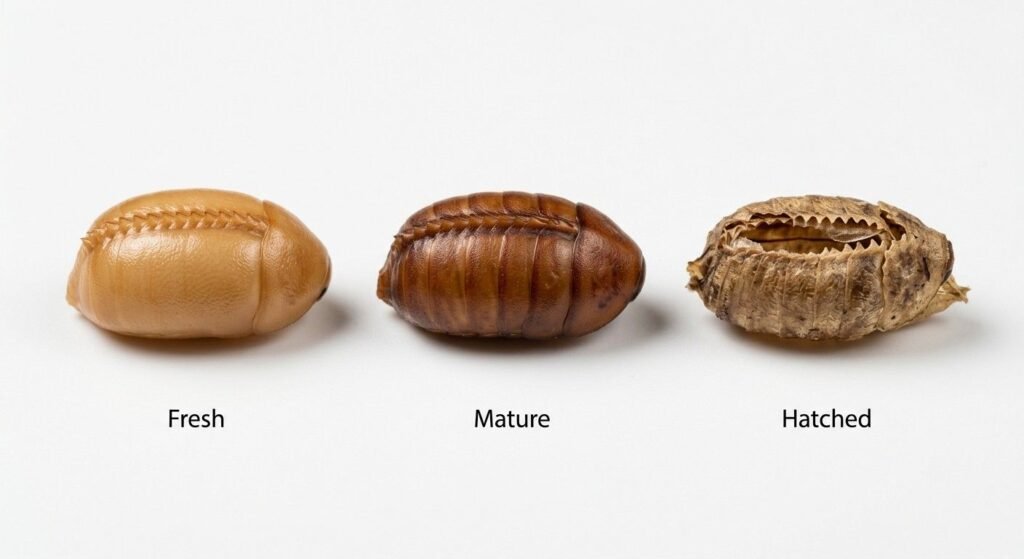
Roach eggs are usually tan, brown, reddish-brown, dark brown, or blackish because cockroach eggs are protected inside a capsule called an ootheca. Fresh roach egg cases often look lighter, mature egg cases usually darken as embryos develop, and hatched egg cases may look dull, papery, flattened, split, or lighter after the nymphs emerge.
The exact color depends on the species. German roach egg cases are usually light tan to brown. American roach egg cases start brown or reddish-brown and can turn very dark. Oriental roach egg cases are dark brown to nearly black. Brown-banded roach egg cases are usually yellowish, light brown, or reddish-brown.
Color helps identification, but color alone is not enough. A roach egg case should also be judged by size, shape, seam condition, texture, and location.
Quick Color Chart: Fresh vs Mature vs Hatched Roach Egg Cases
| Roach Egg Case Stage | Common Color | Visual Clues | What It Means |
|---|---|---|---|
| Fresh ootheca | Pale tan, amber, light brown, reddish-brown | Plump, smooth, sealed, slightly glossy or leathery | Newly formed or recently deposited egg case |
| Mature ootheca | Brown, reddish-brown, dark brown, sometimes blackish | Firm, full, sealed seam, darker than fresh case | Embryos may be developing or close to hatch |
| Hatched ootheca | Dull brown, faded tan, papery brown, dark dry brown, or translucent-looking | Split seam, hollow body, flattened or collapsed shape | Nymphs have likely emerged |
| Failed or dried ootheca | Shriveled brown, dark, dusty, moldy, or brittle | May be sealed but collapsed or dried | Egg case may have died before hatch |
For a full shape and size guide, see what roach eggs look like.
Roach Eggs Are Not Usually White or Loose
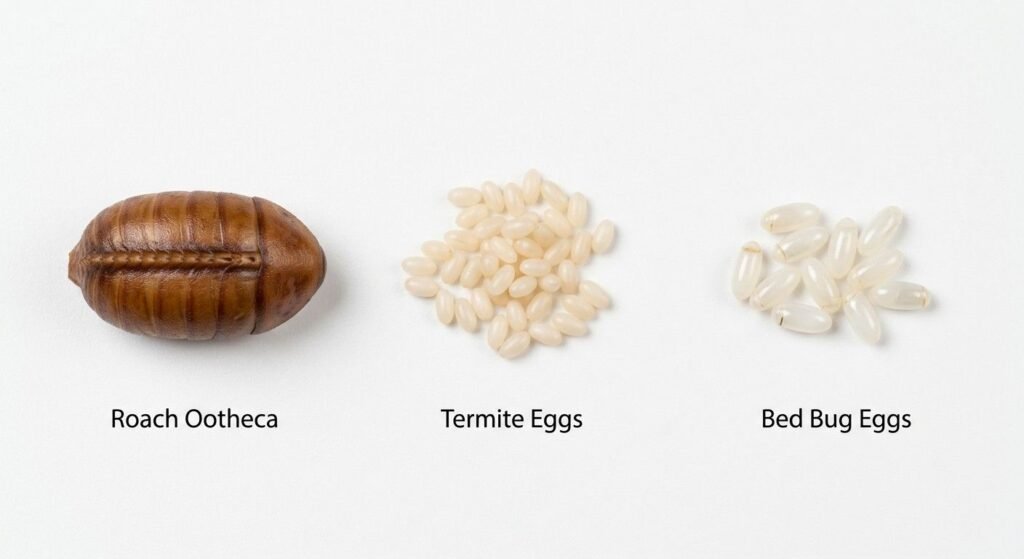
Roach eggs are not usually found as loose white eggs scattered around your home. Cockroach eggs develop inside an ootheca, which is a protective egg case produced by the female.
The University of Florida IFAS Extension explains that cockroach eggs are deposited in groups inside a leathery case or capsule called an ootheca. German cockroach capsules may contain 30–48 eggs, while capsules of other roaches may contain 10–28 eggs University of Florida IFAS.
This matters because people often confuse roach eggs with termite eggs, bed bug eggs, pantry pest eggs, or tiny white specks. True roach egg cases are usually visible brownish capsules, not loose pale dots.
For the basic biology of oothecae, read what are roach eggs?
What Color Are Fresh Roach Eggs?
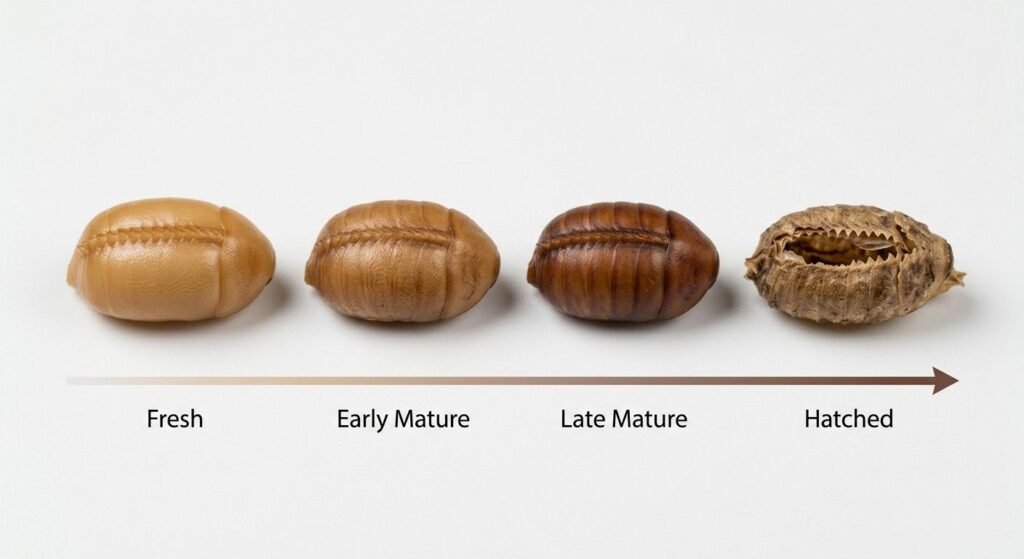
Fresh roach egg cases are usually lighter than older egg cases. Depending on species, a fresh ootheca may look pale tan, amber, light brown, yellowish-brown, or reddish-brown.
Fresh oothecae often look:
- Plump
- Smooth
- Sealed along the seam
- Slightly glossy or leathery
- Lighter than older cases
- More uniform in color
A fresh case does not always mean newly laid that same day. Color changes can happen as the protective case hardens and as embryos develop inside.
Fresh Color Warning
Do not assume a light-colored ootheca is harmless. A pale or tan case can still contain live embryos, especially if the seam is closed and the body looks full.
What Color Are Mature Roach Eggs?
Mature roach egg cases are usually darker than fresh cases. They may become brown, reddish-brown, dark brown, mahogany, chestnut, or blackish-brown depending on the species.
A mature ootheca often looks:
- Firm and full
- Darker than a fresh case
- Sealed along the seam
- Capsule-shaped or purse-shaped
- Leathery rather than papery
- Intact with no hatch opening
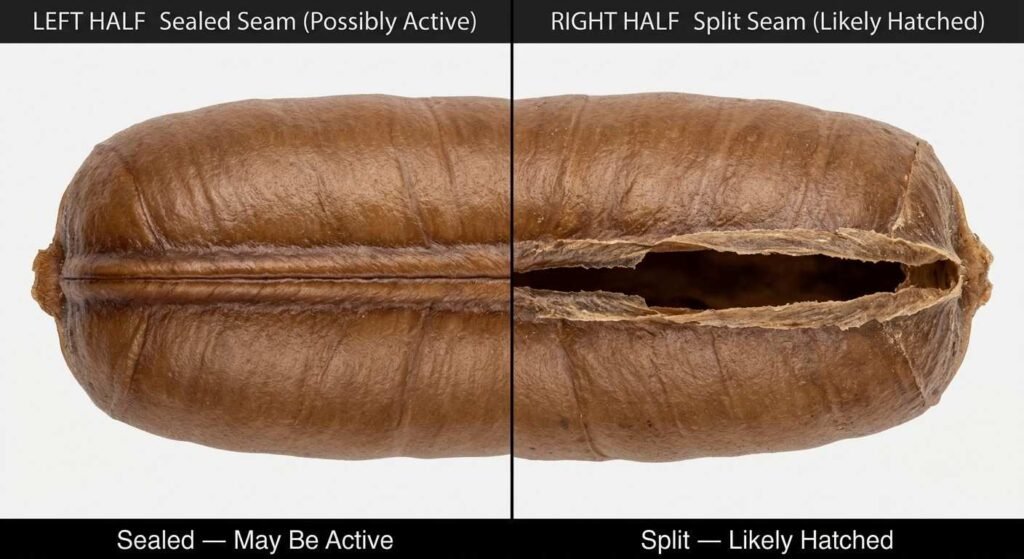
Mature does not always mean hatched. A dark case can still be active if it is sealed, plump, and firm. The seam is more reliable than color.
What Color Are Hatched Roach Egg Cases?
Hatched roach egg cases can be lighter, duller, darker, or more papery than active cases. The strongest sign of hatching is not color; it is a split seam along the ootheca.
A hatched ootheca may look:
- Split along the long ridge or keel
- Hollow or lightweight
- Flattened or collapsed
- Dry and papery
- Faded tan or dull brown
- Dark and brittle if old
- Slightly translucent-looking after drying
If you find a very dry, split capsule, baby roaches may already have emerged nearby. Read what do hatched roach egg cases look like? for a full hatched vs unhatched comparison.
Fresh vs Mature vs Hatched: The Seam Matters More Than Color
The seam is the most important feature for judging whether a roach egg case is fresh, mature, or hatched. The seam is the ridge or opening line where nymphs emerge.
Use this rule:
- Closed seam + plump body: possibly fresh or mature and unhatched.
- Closed seam + dried collapsed body: possibly failed or dead.
- Open seam + hollow body: likely hatched.
- Open seam + tiny nymphs nearby: recently hatched.
Color can mislead you because different species naturally produce different colors. A dark Oriental roach ootheca may be normal. A dark American roach ootheca may be mature. A dark, split, hollow case may be hatched.
German Roach Egg Case Color
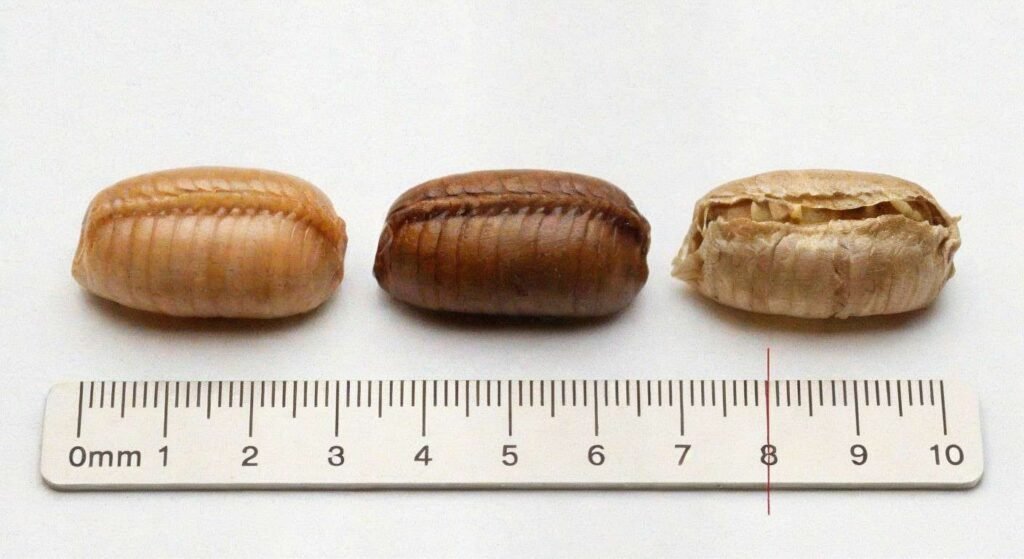
German roach egg cases are usually light tan, amber, yellowish-brown, or brown. They may darken slightly as the embryos mature, but they are usually lighter than American or Oriental roach egg cases.
Rutgers NJAES states that German cockroach eggs are carried in an egg case by the female until just before hatch. A typical German cockroach egg case contains about 40 eggs and measures about 8 mm by 3 mm by 2 mm Rutgers NJAES. University of Florida IFAS describes the German cockroach egg case as a tiny brown, purse-shaped capsule about 8 mm long UF IFAS German cockroach profile.
German Roach Color by Stage
| Stage | German Roach Egg Case Color | Key Clue |
|---|---|---|
| Fresh | Pale tan, amber, light brown | Female may still be carrying it |
| Mature | Medium brown, sometimes darker tan | Plump and sealed if active |
| Hatched | Lighter, papery, flattened, or split | Seam is open or separated |
Because German roach females carry the ootheca until near hatch, a loose German egg case should always be inspected carefully. If it is sealed and full, it may still be active. If it is split and hollow, nymphs may already be hiding nearby.
For more detail, read our German roach eggs guide.
American Roach Egg Case Color
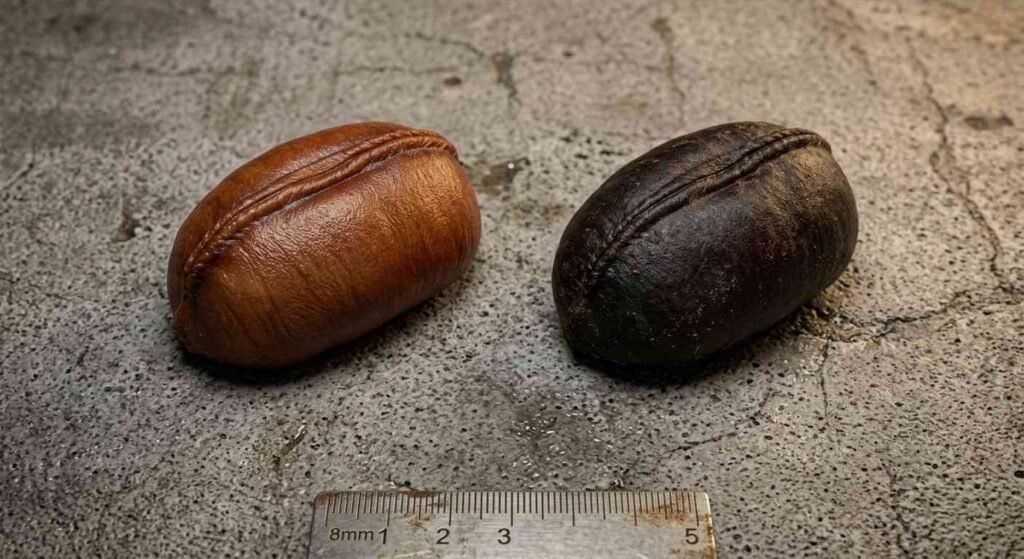
American roach egg cases are usually brown, reddish-brown, dark brown, or blackish-brown. They often darken after being deposited.
University of Florida IFAS states that the American cockroach egg case is brown when deposited and turns black in a day or two. The same source describes it as about 8 mm long and 5 mm high, with about 16 eggs per case UF IFAS American cockroach profile.
American Roach Color by Stage
| Stage | American Roach Egg Case Color | Key Clue |
|---|---|---|
| Fresh | Brown or reddish-brown | Recently deposited, often near food/moisture |
| Mature | Dark brown to blackish-brown | Can still be active if sealed and full |
| Hatched | Dark, dull, split, dry, or hollow | Look for opened seam and nymphs nearby |
Do not assume a blackish American ootheca is empty. American roach egg cases can darken naturally soon after deposition. Check the seam and body fullness.
Oriental Roach Egg Case Color
Oriental roach egg cases are usually dark reddish-brown, dark brown, or nearly black. They are among the darkest common household roach egg cases.
Orkin describes Oriental cockroach oothecae as dark reddish-brown, 8–10 mm long, slightly inflated, and containing approximately 16 eggs Orkin cockroach egg facts.
Oriental Roach Color by Stage
| Stage | Oriental Roach Egg Case Color | Key Clue |
|---|---|---|
| Fresh | Reddish-brown to dark brown | Deposited in protected humid areas |
| Mature | Dark brown to nearly black | Slightly inflated and sealed if active |
| Hatched | Dark, dry, split, or hollow | Open seam shows nymph emergence |
Oriental oothecae are often mistaken for black seeds, large droppings, or debris. The capsule shape and seam help separate them from roach poop.
If you found tiny black specks instead of a capsule, read Are black dots roach eggs or poop?.

Brown-Banded Roach Egg Case Color
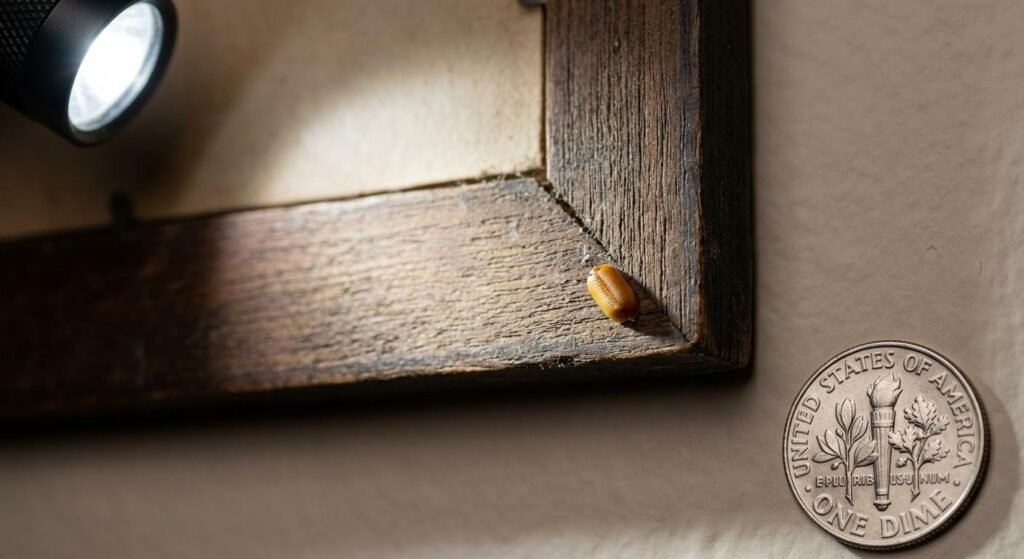
Brown-banded roach egg cases are usually yellowish, light brown, reddish-brown, or tan. They are small, often about 5 mm long, and may be glued to furniture or elevated surfaces.
Oklahoma State University Extension states that the brown-banded cockroach egg capsule is yellowish or reddish-brown and about 3/16 inch, or 5 mm, long. The female carries the capsule for 24–36 hours and then attaches it to an object such as furniture Oklahoma State University Extension.
Brown-Banded Roach Color by Stage
| Stage | Brown-Banded Roach Egg Case Color | Key Clue |
|---|---|---|
| Fresh | Yellowish, tan, or light reddish-brown | Small and often attached to a surface |
| Mature | Reddish-brown or light brown | Firm and sealed if active |
| Hatched | Dry, split, dull, or papery | Often still attached to furniture or walls |
Brown-banded egg cases can appear outside the kitchen. Check furniture, ceilings, upper cabinets, electronics, closets, and picture frames.
Smokybrown Roach Egg Case Color
Smokybrown roach egg cases are usually dark brown. They are larger than many indoor roach egg cases and are often associated with humid outdoor or semi-outdoor areas.
Oklahoma State University Extension states that smokybrown cockroach eggs are laid in a dark brown ootheca that is about 1/2 inch long, with an average of 20 nymphs hatching from each ootheca Oklahoma State University Extension.
Smokybrown Roach Color by Stage
| Stage | Smokybrown Roach Egg Case Color | Key Clue |
|---|---|---|
| Fresh | Dark brown | Often in humid protected areas |
| Mature | Dark brown to deeper brown | Large, firm, and intact if active |
| Hatched | Dark, dry, split, or hollow | Inspect attics, crawl spaces, garages, and humid exterior areas |
Smokybrown oothecae may be found near tree holes, leaf litter, attics, crawl spaces, garages, and greenhouses.
Australian Roach Egg Case Color
Australian roach egg cases are usually brown to dark brown. They may be up to 11 mm long and are often deposited in hidden cracks and crevices.
University of Florida IFAS describes the Australian cockroach ootheca as up to 11 mm long and notes that an ootheca may contain about 24 embryos. The same guide states that the ootheca is often dropped or glued in hidden cracks and crevices UF IFAS Australian cockroach profile.
Australian Roach Color by Stage
| Stage | Australian Roach Egg Case Color | Key Clue |
|---|---|---|
| Fresh | Brown to dark brown | Hidden near warm, dark, moist areas |
| Mature | Dark brown | Firm and intact if active |
| Hatched | Dark, dry, split, or papery | Check cracks, cupboards, sinks, greenhouses, and moist sites |
Australian roaches resemble American roaches, so body markings and location help confirm the species when adults are present.
Can Roach Eggs Be Black?
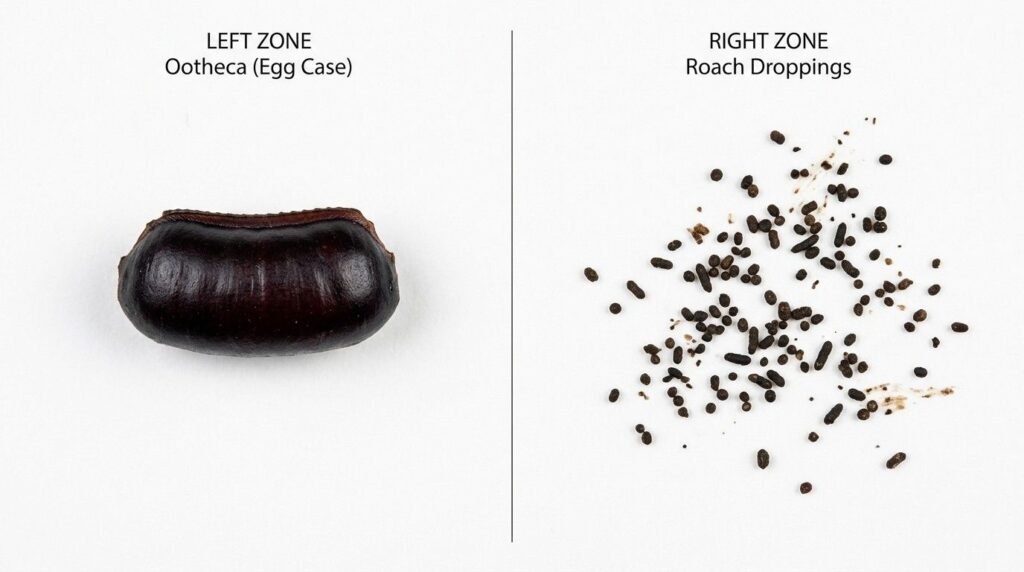
Roach egg cases can look black or nearly black, especially American, Oriental, and old or darkened oothecae. However, tiny black dots are usually not roach eggs.
A black roach egg case should still look like a capsule. It should have a defined shape, size, seam, and leathery shell. Tiny scattered black specks are usually droppings, not eggs.
Use this rule:
- Black specks: likely roach poop or debris.
- Black capsule with seam: possible dark ootheca.
- Black capsule with split seam: possibly hatched ootheca.
- Black pellet with pointed ends: may be mouse droppings, not roach eggs.
Can Roach Eggs Be White?
Roach egg cases are not usually white once hardened. Very newly forming oothecae may appear pale before the casing hardens, but homeowners usually find tan, brown, reddish-brown, or dark oothecae.
If you find tiny white eggs, they are more likely to be another pest such as bed bugs, termites, pantry pests, or mites. Roach oothecae are larger and capsule-shaped.
Compare with:
Does Color Tell You If Roach Eggs Are Alive?
Color alone cannot tell you if roach eggs are alive. A live ootheca can be light or dark depending on species. A dead ootheca can also be light or dark depending on drying, age, moisture, and damage.
Better signs of a potentially active egg case include:
- Closed seam
- Plump shape
- Firm body
- No hatch opening
- Fresh location near active roach signs
- Female German roach carrying the case
Signs of a hatched or inactive case include:
- Split seam
- Hollow body
- Flattened shape
- Papery texture
- Crumbled edges
- Tiny nymphs or empty shells nearby
If the case is intact and you are unsure, remove it as if it could be active.
Color vs Location: Which Matters More?
Location often matters more than color when identifying roach egg cases. Several species overlap in brown, reddish-brown, or dark brown shades.
| Location | Color Clue | Possible Species |
|---|---|---|
| Kitchen cabinet or bathroom vanity | Light tan to brown | German roach |
| Basement, drain, pipe chase, utility room | Dark brown or reddish-brown | American or Oriental roach |
| Furniture, picture frame, ceiling, electronics | Small tan or reddish-brown case | Brown-banded roach |
| Attic, crawl space, garage, leaf litter | Large dark brown case | Smokybrown or American roach |
| Greenhouse, sink, cupboard, warm moist area | Brown to dark brown case | Australian roach |
Color helps, but the discovery location tells you what roach species is most likely breeding there.
How to Inspect Roach Egg Case Color Safely
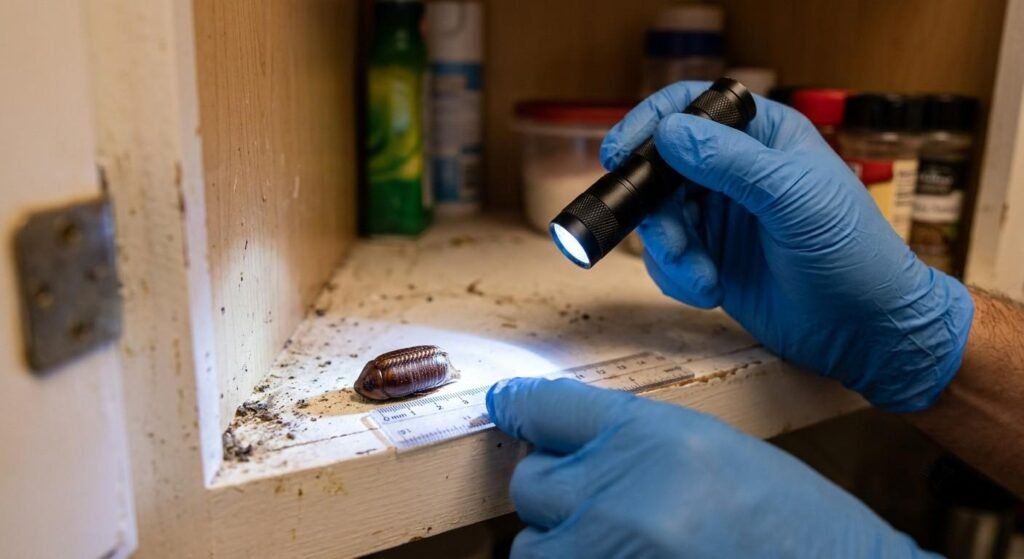
Roach egg cases should be inspected without crushing them into the surface. Use light, scale, and seam condition to evaluate the case.
Follow this process:
- Put on disposable gloves.
- Use a bright flashlight. Natural shadows can make brown cases look black.
- Take a close-up photo. Include a ruler, coin, or fingertip for scale.
- Check the color in good light. Identify tan, amber, reddish-brown, dark brown, or blackish tones.
- Inspect the seam. Closed means possibly active; split means likely hatched.
- Check body fullness. Plump means possibly unhatched; flat means possibly empty.
- Remove it with tape, tweezers, or a paper towel.
- Seal it in a plastic bag and dispose outdoors.
- Inspect nearby cracks for more oothecae, nymphs, and droppings.
For size-based identification, read How big are roach egg cases?.
What to Do If You Find a Fresh or Mature Roach Egg Case
If you find a fresh or mature egg case, assume it may still contain embryos unless it is clearly split and empty. Remove it safely and inspect the surrounding area.
Use this action plan:
- Pick up the ootheca with tape, gloves, tweezers, or a paper towel.
- Seal it in a plastic bag.
- Dispose of it outdoors.
- Vacuum nearby cracks, cabinets, and appliance gaps.
- Wipe droppings and stains with hot, soapy water.
- Place sticky monitors near the discovery area.
- Look for live adults, nymphs, and additional oothecae.
- Use baits and insect growth regulators where appropriate.
- Remove food residue, moisture, cardboard, and clutter.
For egg-stage control options, read what kills roaches and their eggs.
What to Do If You Find a Hatched Roach Egg Case
If you find a hatched egg case, the case itself will not hatch again, but the nymphs may already be hiding nearby. Treat the location as a possible active breeding zone.
Do these steps:
- Remove the empty case.
- Inspect the surrounding 6–10 feet.
- Look for tiny nymphs in cracks and appliance gaps.
- Clean droppings, shed skins, and debris.
- Place sticky monitors.
- Repeat inspections weekly.
- Treat adults and nymphs with a lifecycle-based plan.
A hatched ootheca is not “old dirt” until you prove there is no ongoing activity.
Common Color Identification Mistakes
Color mistakes are common because lighting, dust, moisture, and age can change how an ootheca appears.
Mistake 1: Calling Every Black Dot a Roach Egg
Tiny black dots are usually roach droppings, not eggs. Roach egg cases are capsule-shaped and several millimeters long.
Mistake 2: Assuming Dark Means Hatched
Some species naturally produce dark egg cases. American and Oriental oothecae may be dark while still active.
Mistake 3: Assuming Light Means Fresh and Safe
A light tan German roach ootheca may still contain dozens of embryos. Light color does not mean harmless.
Mistake 4: Ignoring the Seam
The seam tells you more than color. A split seam usually means hatching occurred. A sealed seam means the case may still be active.
Mistake 5: Confusing Roach Eggs With Other Pest Eggs
Termite, bed bug, and pantry moth eggs are much smaller and paler than roach oothecae. Roach egg cases are larger, brownish, and capsule-shaped.
Final Verdict: What Color Are Roach Eggs?
Roach egg cases are usually tan, amber, light brown, reddish-brown, dark brown, or blackish, depending on species and stage. Fresh oothecae are often lighter. Mature oothecae often darken as the case hardens and embryos develop. Hatched oothecae may look split, hollow, faded, papery, dry, or collapsed.
German roach egg cases are usually tan to brown. American roach egg cases are brown to dark brown or blackish. Oriental roach egg cases are dark reddish-brown to nearly black. Brown-banded roach egg cases are yellowish, tan, or reddish-brown.
The best identification method is not color alone. Confirm the ootheca by checking its capsule shape, size, seam, texture, fullness, and location.
Frequently Asked Questions
What color are roach eggs?
Roach egg cases are usually tan, amber, brown, reddish-brown, dark brown, or blackish. The exact color depends on species and whether the ootheca is fresh, mature, hatched, or old.
What color are fresh roach eggs?
Fresh roach egg cases are often lighter in color, such as pale tan, amber, light brown, yellowish-brown, or reddish-brown. They usually look plump and sealed.
What color are mature roach egg cases?
Mature roach egg cases are usually darker brown, reddish-brown, dark brown, or blackish-brown depending on species. Mature cases may still be active if the seam is closed and the case is full.
What color are hatched roach egg cases?
Hatched roach egg cases can look faded, dull, papery brown, dark dry brown, or lighter than active cases. The main sign is a split seam and hollow or flattened body.
Are roach eggs black?
Some roach egg cases can look nearly black, especially Oriental roach cases, dark American roach cases, or old oothecae. However, tiny black dots are usually droppings, not eggs.
Are roach eggs white?
Roach egg cases are not usually white when found in homes. If you find tiny white eggs, they may belong to bed bugs, termites, pantry pests, or another insect. Roach oothecae are larger and brownish.
Do roach eggs change color before hatching?
Yes, many roach egg cases darken as the case hardens and embryos mature. German cases may darken slightly, while American cases can turn very dark soon after deposition.
Does a dark roach egg case mean it already hatched?
No. A dark ootheca can still be active. Check the seam. A closed seam suggests the case may be unhatched; a split seam suggests nymphs already emerged.
What color are German roach eggs?
German roach egg cases are usually light tan, amber, yellowish-brown, or brown. They are usually lighter than American and Oriental roach oothecae.
What should I do if I find a roach egg case?
Remove it with gloves, tape, tweezers, or a paper towel, seal it in a plastic bag, dispose of it outdoors, clean the area, and inspect nearby cracks for more egg cases, nymphs, and droppings.