

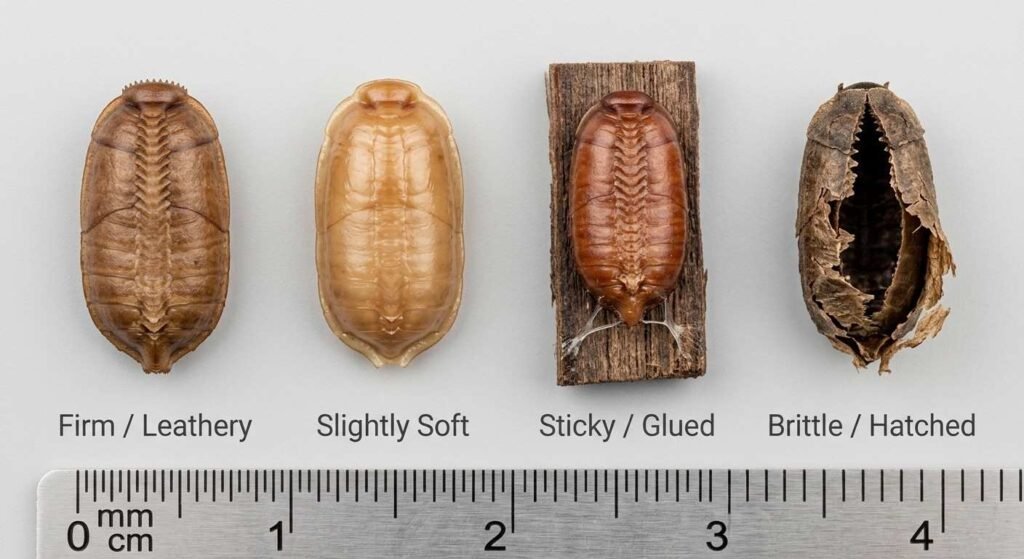
Roach eggs are usually hard or firm because the eggs are enclosed inside a protective capsule called an ootheca. A fresh ootheca may start slightly soft or pliable before the outer casing hardens, a mature ootheca usually feels leathery and firm, a glued ootheca may feel stuck to the surface, and a hatched or old ootheca may feel dry, hollow, papery, or brittle.
The most accurate answer is that roach egg cases change texture by stage. Fresh cases can be slightly soft. Active mature cases are firm and leathery. Some species attach egg cases with sticky secretions. Hatched or old cases become brittle after nymphs emerge.
If you found something that is tiny, wet, jelly-like, fuzzy, powdery, or completely soft, it may not be a roach egg case. True cockroach oothecae are usually capsule-shaped, brownish, and structured, not loose slime or scattered soft eggs.
Quick Texture Chart: Hard vs Soft vs Sticky vs Brittle
| Texture | What It Usually Means | Common Stage | What to Check |
|---|---|---|---|
| Firm or hard | Normal roach egg case with protective shell | Mature or active ootheca | Closed seam, plump body, brown capsule shape |
| Leathery | Healthy hardened egg case | Active or recently deposited ootheca | Smooth or ridged surface, capsule shape |
| Slightly soft | Newly formed, damp, damaged, or not fully hardened | Very fresh or compromised case | Color, seam, shape, and whether it keeps its form |
| Sticky or attached | Glued to a surface by species behavior or fresh secretion | Deposited ootheca | Whether it is cemented to furniture, walls, cabinets, or cracks |
| Dry and brittle | Old, hatched, dead, or dried-out case | Hatched or failed ootheca | Split seam, hollow body, flattened shell |
| Squishy or wet | Usually not a normal mature roach ootheca | Possible damaged case or misidentified material | Compare with eggs, larvae, droppings, mold, or food debris |
For a visual overview of shape and color, read what roach eggs look like.
Why Roach Egg Cases Are Usually Hard
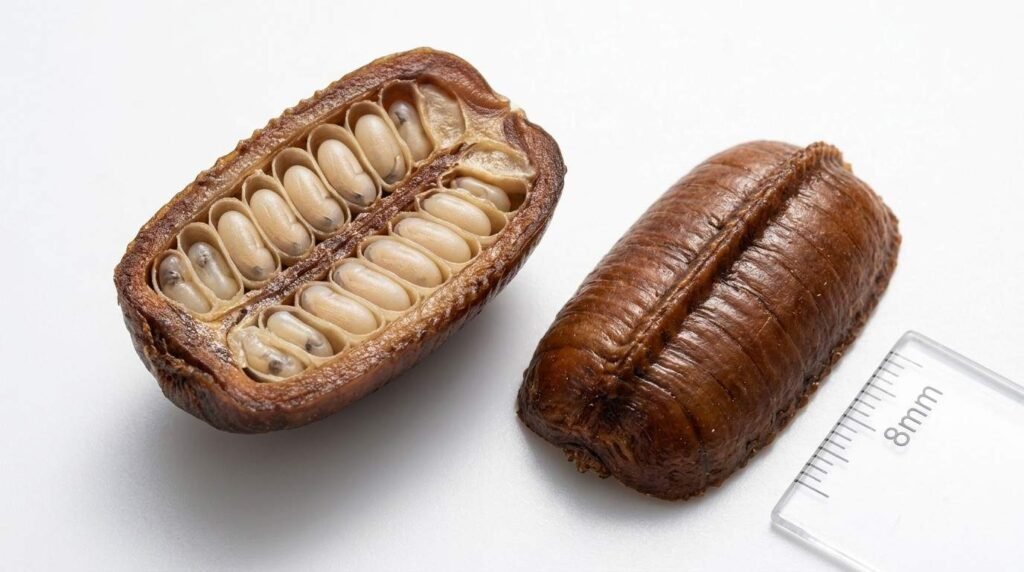
Roach egg cases are usually hard because the ootheca is built to protect multiple embryos at once. The outer casing works like a shield against drying, disturbance, predators, and some surface treatments.
The University of Florida IFAS Extension explains that cockroach eggs are deposited in groups inside a leathery case or capsule called an ootheca. German cockroach capsules may contain 30–48 eggs, while other cockroach capsules may contain 10–28 eggs University of Florida IFAS.
Orkin also describes oothecae as egg cases surrounded by a protein substance that gradually hardens into a strong protective casing Orkin cockroach egg facts.
This protective design is why a real roach egg case should not look like loose jelly, soft grains, or scattered white dots. Most roach egg cases look like tiny brown capsules.
Are Fresh Roach Egg Cases Soft?
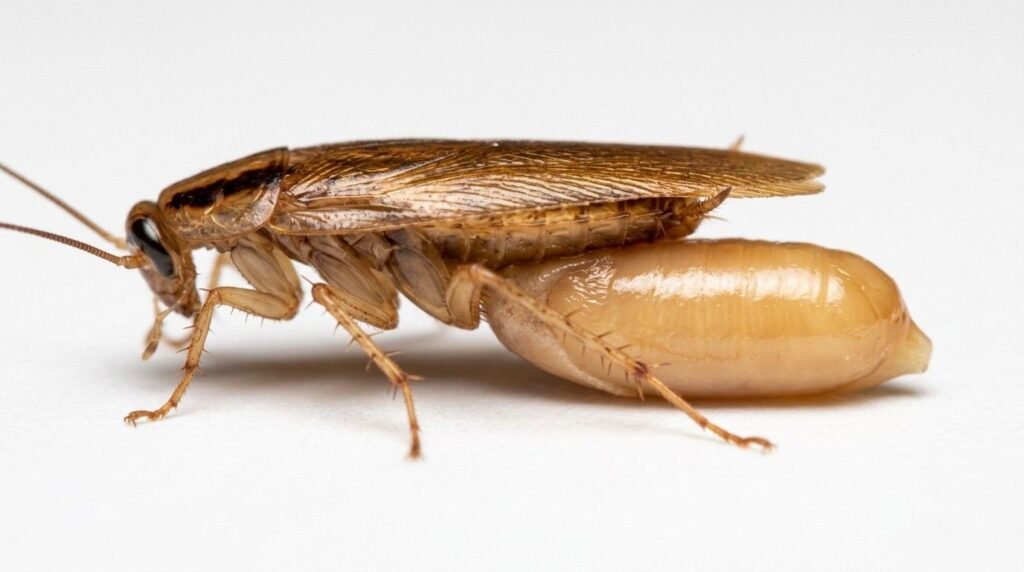
Fresh roach egg cases can be slightly soft or pliable before the casing fully hardens. However, homeowners usually find oothecae after they have already become firm, leathery, or hardened.
A newly formed ootheca may appear:
- Lighter in color
- Slightly glossy
- More pliable than an older case
- Smooth and sealed
- Attached to the female or recently deposited
A fresh ootheca should still have a defined capsule shape. If the object is shapeless, slimy, or completely mushy, it may be something else such as food debris, mold, insect larvae, a damaged egg case, or another pest’s eggs.
For color-stage differences, read What color are roach eggs?.
Are Mature Roach Egg Cases Hard or Leathery?
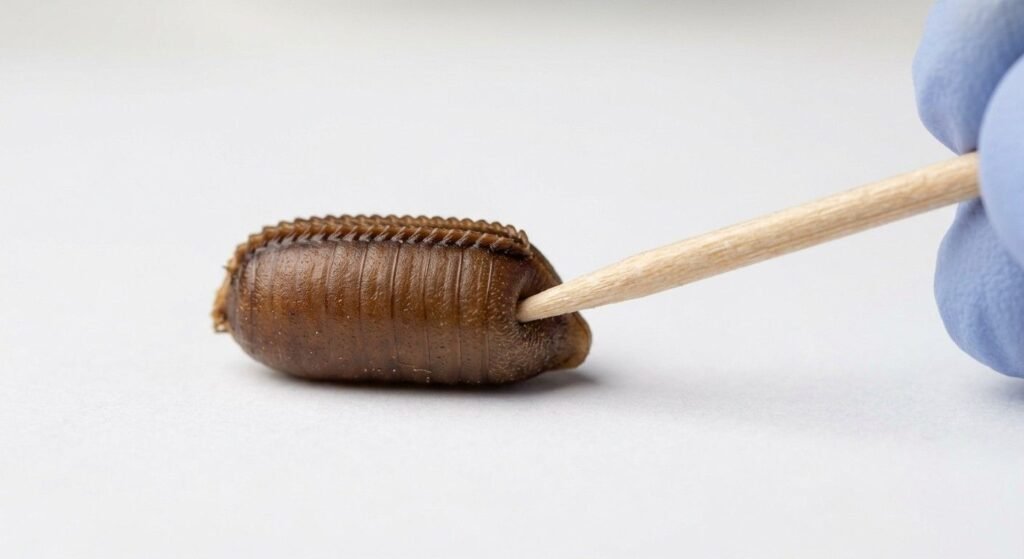
Mature roach egg cases are usually firm, hard, or leathery. They should hold their capsule shape and feel more like a tiny dry seed, bean, or protective shell than a soft egg.
A mature active ootheca usually has:
- A plump capsule body
- A closed seam or keel
- A firm or leathery shell
- Brown, tan, reddish-brown, or dark brown color
- Smooth or ridged surface texture
- No obvious opening where nymphs emerged
A closed, firm egg case may still contain embryos. Do not leave it in place just because it looks dry or small. Remove it safely and inspect the surrounding area.
Are Roach Egg Cases Sticky?
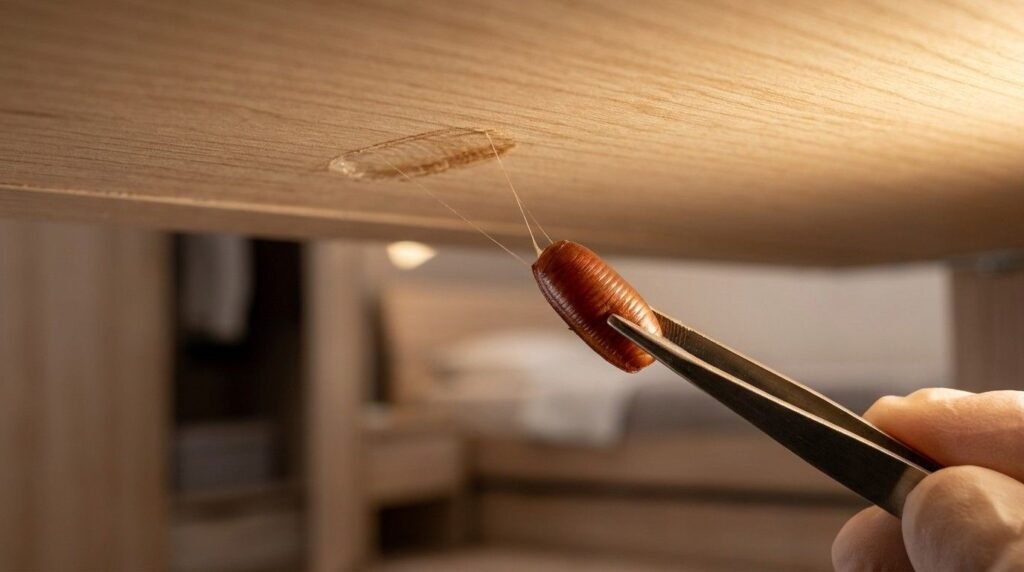
Roach egg cases are not usually sticky like glue on every surface, but some species attach or glue their oothecae to protected locations. The sticky part is usually the attachment secretion, not the whole egg case surface.
The University of Florida IFAS American cockroach profile explains that American cockroach females deposit the ootheca near food and sometimes glue it to a surface with a secretion from the mouth UF IFAS American cockroach profile.
Oklahoma State University Extension states that brown-banded cockroach females carry the egg capsule for 24–36 hours and then attach it to an object. Egg capsules may be glued to desks, tables, furniture, and even bedding Oklahoma State University Extension.
So, a roach egg case may feel stuck when you try to lift it from:
- Furniture undersides
- Cabinet walls
- Drawer tracks
- Picture frames
- Ceiling corners
- Upper walls
- Electronics
- Cardboard seams
- Appliance crevices
- Basement or utility-room surfaces
If the case is attached, do not scrape it aggressively across the surface. Lift it with tape, tweezers, a scraper, or a paper towel, then seal and discard it.
Are Hatched Roach Egg Cases Brittle?
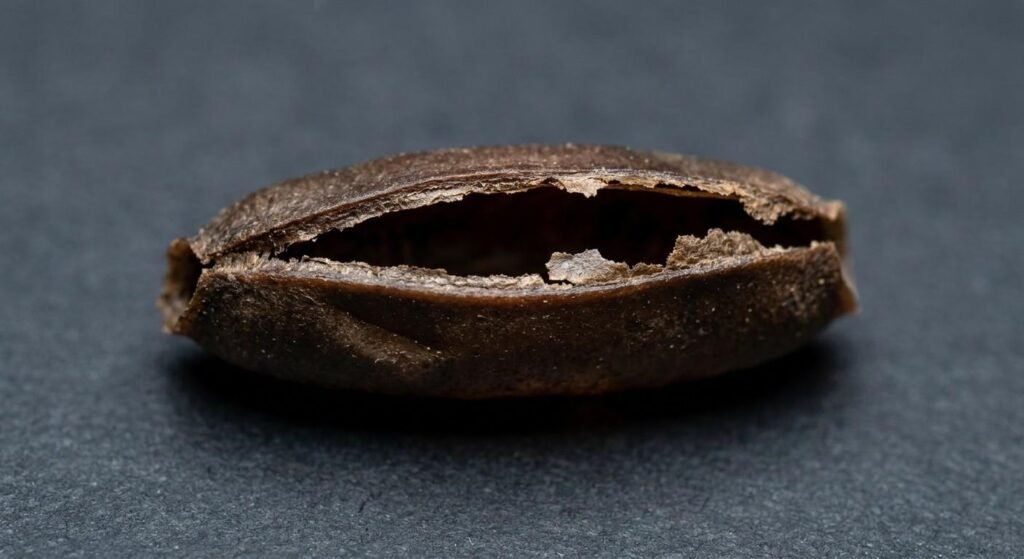
Hatched roach egg cases are often brittle, papery, dry, hollow, or flattened. Once nymphs emerge, the capsule may lose its firm, full shape and become a lightweight shell.
A hatched ootheca may look or feel:
- Split along the seam
- Hollow inside
- Flattened or collapsed
- Dry and papery
- Brittle at the edges
- Lighter, duller, or darker depending on age
- Crumpled when touched
The seam is the key sign. If the long ridge is open and the case feels empty, the ootheca likely hatched already.
Read the full guide here: What do hatched roach egg cases look like?
Are Dead or Failed Roach Egg Cases Brittle?
Dead or failed roach egg cases can become brittle, shriveled, or dry without fully hatching. A failed case may look collapsed but still have a sealed seam.
A dead or failed ootheca may show:
- Shriveled shape
- Closed seam
- Dry shell
- Moldy or dusty surface
- No clear hatch opening
- No nymphs nearby
A hatched case usually has an opened seam. A failed case may be dried or collapsed but still sealed. If you cannot tell, remove it as if it could still be active and inspect nearby for nymphs.
Roach Egg Case Texture by Species
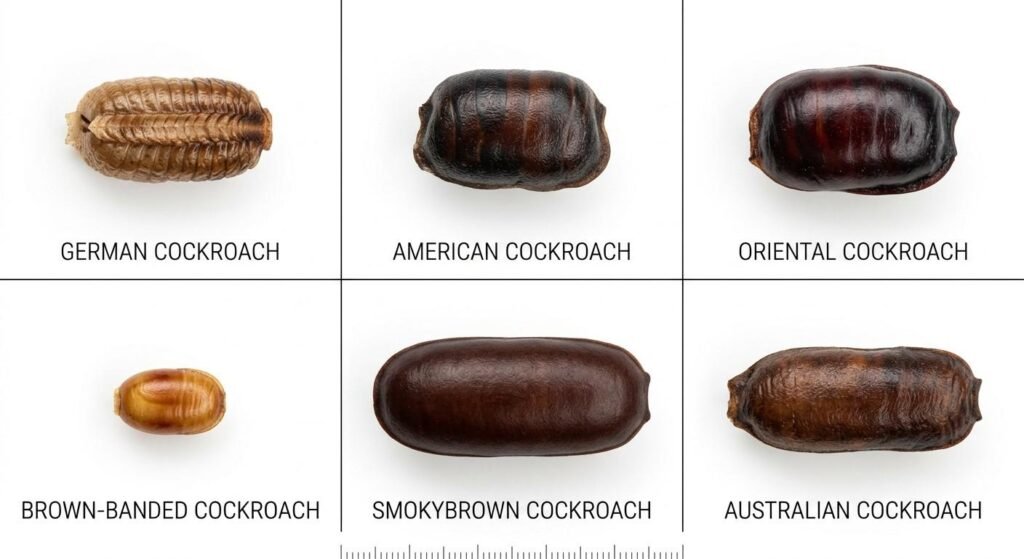
Roach egg case texture varies slightly by species, but most oothecae are firm, leathery, and capsule-shaped once hardened.
| Species | Typical Texture | Attachment Behavior | What It Means for Inspection |
|---|---|---|---|
| German cockroach | Firm, ridged, leathery | Female carries it until near hatch | Loose cases may be near hatch, hatched, or detached under stress |
| American cockroach | Firm, hardened, purse-shaped | May be glued near food or moisture | Check damp concealed areas and attached cases |
| Oriental cockroach | Firm, dark, slightly inflated | Deposited in protected damp areas | Dark brittle cases may be old or hatched |
| Brown-banded cockroach | Small, firm, often attached | Frequently glued to elevated or dry objects | Inspect furniture, walls, electronics, and bedrooms |
| Smokybrown cockroach | Firm, dark, larger capsule | Deposited in humid protected areas | Check attics, crawl spaces, garages, and exterior harborage |
| Australian cockroach | Firm, brown to dark brown | Often dropped or glued in hidden cracks | Check warm, moist, dark locations |
Rutgers NJAES explains that German cockroach females carry the ootheca until just before hatch, and that a typical German cockroach egg case contains about 40 eggs and measures about 8 mm by 3 mm by 2 mm Rutgers NJAES. University of Florida IFAS describes the Australian cockroach ootheca as up to 11 mm and often dropped or glued in hidden cracks and crevices UF IFAS Australian cockroach profile.
For size comparisons, read How big are roach egg cases?.
What Does It Mean If a Roach Egg Case Feels Hard?
A hard roach egg case is normal. It may be active, mature, recently deposited, or already hatched depending on seam condition and body fullness.
A hard case with a closed seam and plump body may still contain embryos. A hard case with a split seam may be hatched but still rigid. A very old case may be hard but brittle.
Use this rule:
- Hard + closed + plump: possibly active.
- Hard + split + hollow: likely hatched.
- Hard + glued to surface: possibly deposited by American, brown-banded, Australian, or another attaching species.
- Hard + dark + near damp areas: possibly American or Oriental roach case.
Do not judge only by hardness. Check shape, seam, color, and location.
What Does It Mean If a Roach Egg Case Feels Soft?
A soft roach egg case may be newly formed, damaged, water-soaked, dead, decomposing, or not a roach egg case at all. Mature oothecae are usually not squishy.
Softness can happen when:
- The ootheca is very fresh and not fully hardened.
- The case was crushed or damaged.
- Moisture softened an old case.
- The material is food debris or mold.
- You are touching another insect egg mass.
- The case is dead, failed, or decomposing.
If it loses shape immediately, smears, or feels like jelly, compare it with other pest evidence. Roach egg cases usually keep a capsule-like structure.
What Does It Mean If a Roach Egg Case Is Sticky?
A sticky or attached roach egg case usually means the female cemented it to a surface or the case is caught in grease, dust, moisture, or debris. Brown-banded cockroaches are especially known for attaching egg cases to objects.
Sticky or glued oothecae are commonly found:
- Under furniture
- On shelves
- Behind picture frames
- Inside closets
- In electronics
- Along upper walls
- On cardboard
- Near basement or utility-room surfaces
- Behind appliances
If a capsule is stuck to a surface, remove it carefully. Do not assume it is dead because it is attached.
What Does It Mean If a Roach Egg Case Is Brittle?
A brittle roach egg case is usually old, dry, hatched, or dead. Brittle texture often appears after the case loses moisture or after the nymphs have already emerged.
A brittle case is more concerning when you also see:
- Split seam
- Tiny roach nymphs nearby
- Black droppings
- Shed skins
- Musty odor
- Additional oothecae
- Live adults at night
An old brittle case still matters because it proves roaches reproduced in that location at some point. Clean the area and monitor for current activity.
Touch Test: How to Check Texture Safely
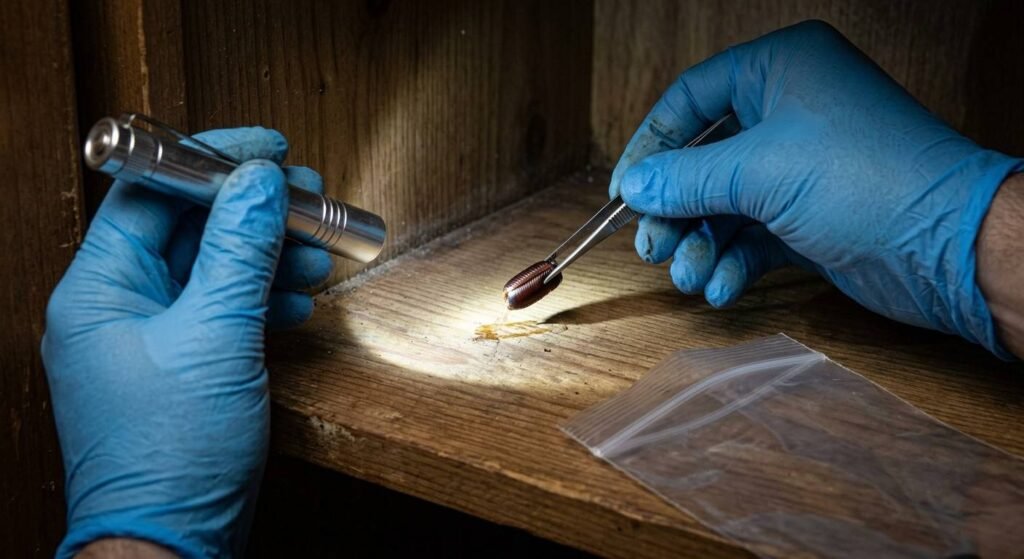
You can inspect texture without squeezing a roach egg case directly. Avoid crushing unidentified pest evidence with bare hands.
Use this safe method:
- Wear disposable gloves.
- Photograph the object first. Include a coin or ruler for scale.
- Use tweezers or tape. Do not use bare fingers.
- Check whether it lifts easily or is glued. Sticky attachment can be a clue.
- Look at the seam. Closed means possibly active; split means likely hatched.
- Check fullness. Plump means possibly active; hollow means likely hatched.
- Seal it in a plastic bag. Dispose outdoors.
- Clean the discovery area. Use hot, soapy water where appropriate.
- Inspect nearby. Look for nymphs, droppings, shed skins, and more cases.
Do not leave an intact ootheca in place to “see what happens.” If it is active, nymphs may hatch.
Roach Eggs vs Droppings: Texture Difference
Roach egg cases are firm capsules. Roach droppings are specks, smears, or pellets.
| Evidence | Texture | Shape | Meaning |
|---|---|---|---|
| Roach egg case | Firm, leathery, hard, sometimes brittle | Capsule, bean, purse, or pill | Reproduction or egg development |
| Roach droppings | Grainy, crumbly, smearable, or pellet-like | Specks, coffee grounds, ridged pellets | Roach feeding and movement |
| Hatched ootheca | Dry, hollow, papery, brittle | Split empty capsule | Nymphs likely emerged |
Tiny black dots are usually not roach eggs. Read Are black dots roach eggs or poop? for that comparison.
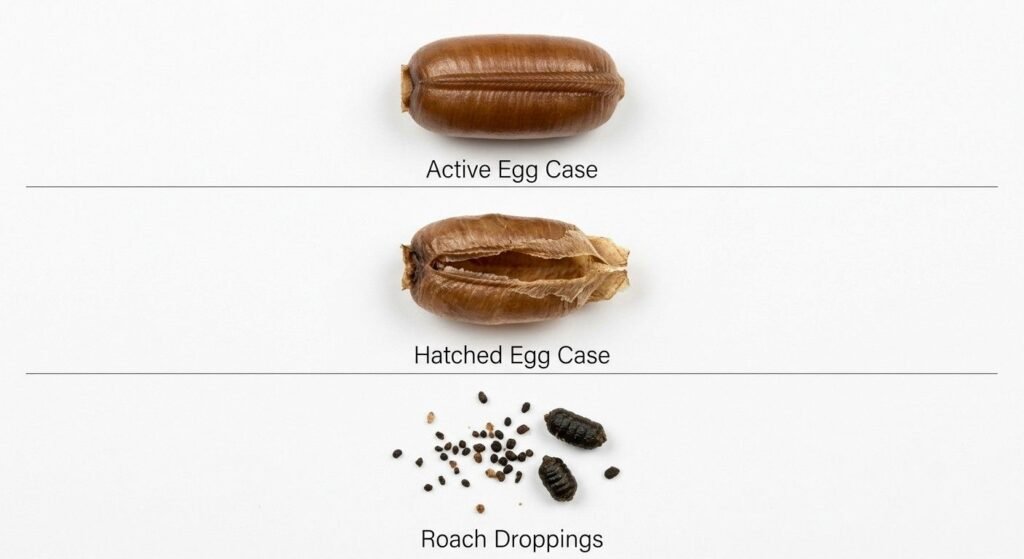
Roach Egg Cases vs Other Soft or Brittle Lookalikes
Many household materials can look like roach eggs if you only judge size or color. Texture helps separate them.
| Lookalike | Texture | How It Differs From Roach Egg Cases |
|---|---|---|
| Mouse droppings | Hard or crumbly | Pellet-shaped, often pointed at ends, not capsule with seam |
| Roach droppings | Grainy or smearable | Tiny specks or pellets, not a purse-shaped case |
| Carpet beetle larvae shells | Brittle and hairy | Bristly, hollow, larva-shaped, not smooth capsule |
| Pantry moth eggs | Tiny and delicate | Pale, microscopic-looking, found on food, not brown oothecae |
| Bed bug eggs | Smooth and tiny | White, about 1 mm, glued near beds, not brown capsule |
| Termite eggs | Soft-looking and pale | Tiny, white/translucent, hidden in colony, not brown capsule |
| Seeds or food debris | Hard or brittle | No seam, no roach signs nearby |
For lookalike comparisons, see:
- Roach eggs vs bed bug eggs
- Roach eggs vs termite eggs
- Roach eggs vs pantry moth eggs
- Roach eggs vs carpet beetle larvae shells
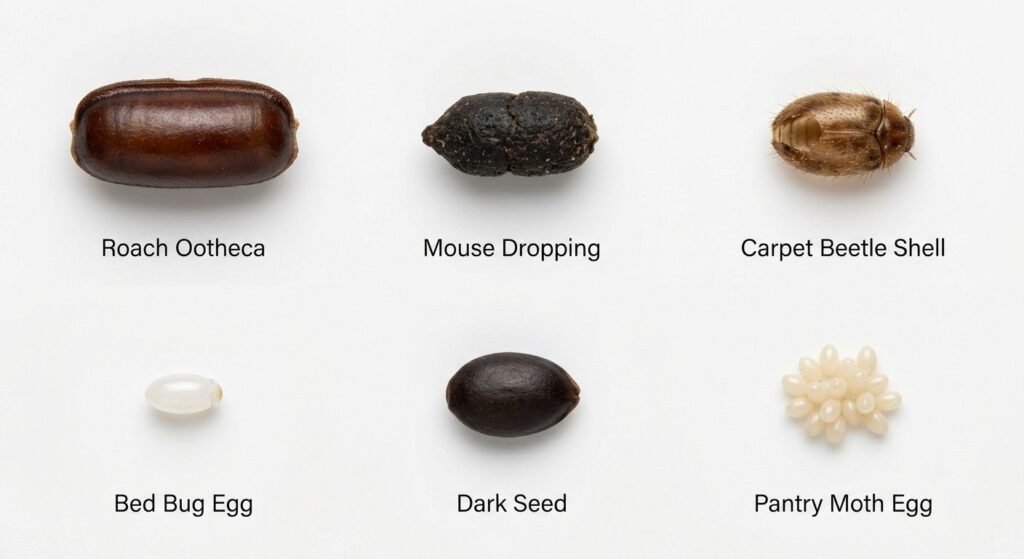
Should You Crush a Hard Roach Egg Case?
You can crush a roach egg case inside a sealed bag, but it is better not to crush it directly on a surface. Crushing it on a counter, cabinet, wall, or carpet can spread debris and make cleanup harder.
A safer method is:
- Pick it up intact.
- Seal it in a plastic bag.
- Crush it inside the bag if desired.
- Dispose of it outdoors.
- Clean the surface.
- Inspect the area for more cases.
If the ootheca was already hatched, crushing it will not stop nymphs because they may already be hiding nearby. That is why inspection after removal is essential.
What to Do After Finding a Hard, Sticky, Soft, or Brittle Egg Case
Any suspected roach egg case should trigger an inspection. Texture tells you what stage it may be in, but the response is similar: remove it, clean the area, and check for activity.
Use this action plan:
- Remove the case safely. Use gloves, tape, tweezers, or a paper towel.
- Seal it before disposal. Use a plastic bag and take it outdoors.
- Vacuum nearby cracks. Focus on cabinets, appliances, plumbing gaps, and baseboards.
- Clean droppings and residue. Use hot, soapy water where safe.
- Look for nymphs. Tiny baby roaches may hide near hatched cases.
- Check for more oothecae. One case often means more hidden evidence.
- Remove food and water sources. Clean crumbs, grease, leaks, and pet food.
- Place sticky monitors. Track whether roaches remain active.
- Use baits and insect growth regulators where appropriate. Target the lifecycle, not just adults.
- Repeat inspections weekly. Hidden egg cases can hatch later.
For treatment methods, read what kills roaches and their eggs.
Final Verdict: Are Roach Eggs Hard, Soft, Sticky, or Brittle?
Roach egg cases are usually hard, firm, or leathery after the ootheca hardens. A very fresh ootheca may be slightly soft or pliable. Some oothecae are sticky or glued because certain species attach them to protected surfaces. Hatched, old, dried, or failed oothecae may become brittle, hollow, papery, or collapsed.
The best identification method is to check texture together with shape, seam, color, size, and location. A real roach egg case should look like a structured brown capsule, not a loose soft egg or tiny black dot.
If you find any suspected ootheca, remove it safely and inspect the area for baby roaches, droppings, and additional egg cases.
Frequently Asked Questions
Are roach eggs hard?
Yes. Roach egg cases are usually hard, firm, or leathery once the ootheca has hardened. The hard casing protects multiple developing embryos inside.
Are roach eggs soft?
Freshly formed oothecae may be slightly soft before hardening, but mature roach egg cases are usually not soft or squishy. A very soft object may be damaged, water-soaked, dead, or not a roach egg case.
Are roach eggs sticky?
Some roach egg cases may be sticky or glued to surfaces because certain species attach their oothecae with secretions. Brown-banded and American cockroaches are examples of species that may attach egg cases to protected surfaces.
Are roach eggs brittle?
Hatched, old, dried, or failed roach egg cases can be brittle. A brittle case with a split seam is likely already hatched, but nearby nymphs may still be active.
What does a normal roach egg case feel like?
A normal roach egg case usually feels firm, dry, leathery, and capsule-like. It should hold its shape and may have ridges or a seam along one edge.
Does a soft roach egg case mean it is alive?
Not necessarily. Softness may mean the case is newly formed, damaged, wet, dead, or misidentified. A closed seam and plump body are better signs of a possibly active ootheca.
Does a brittle roach egg case mean it already hatched?
A brittle case may be hatched, old, or dead. A split seam and hollow body are stronger signs that nymphs already emerged.
Should I touch a roach egg case?
Avoid touching it with bare hands. Use gloves, tape, tweezers, or a paper towel. Seal it in a plastic bag and dispose of it outdoors.
Can roach egg cases stick to furniture?
Yes. Brown-banded roach egg cases are often attached to furniture, walls, desks, closets, electronics, and even bedding. Other species may also glue or deposit oothecae in protected spots.
What should I do if I find a sticky roach egg case?
Remove it carefully with tape, tweezers, or a scraper, seal it in a bag, dispose of it outdoors, clean the surface, and inspect nearby for more cases, droppings, and nymphs.