

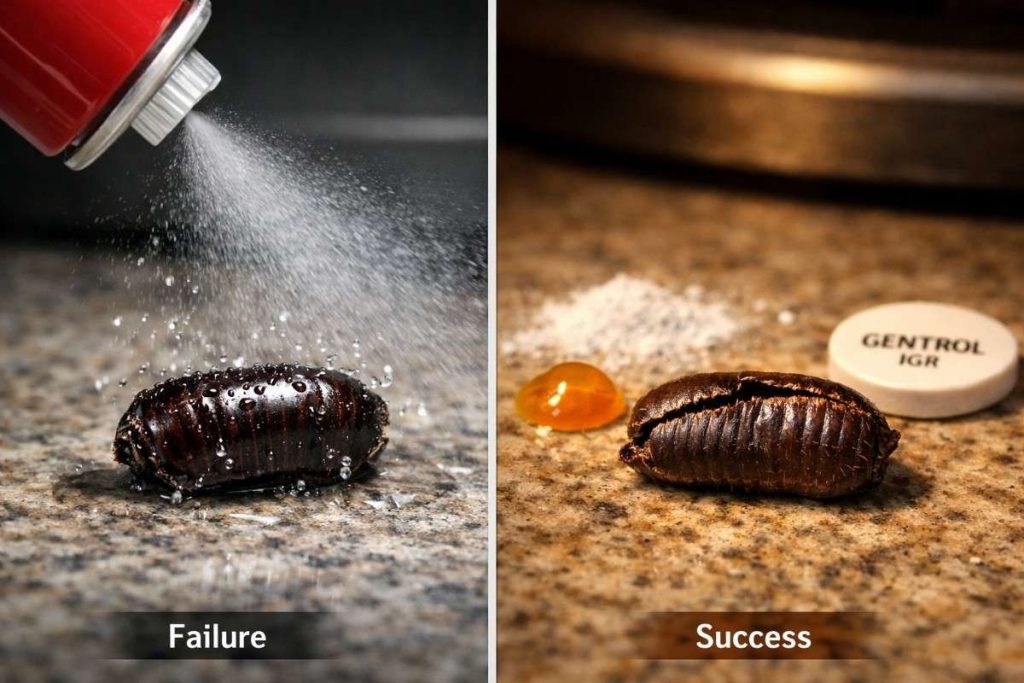
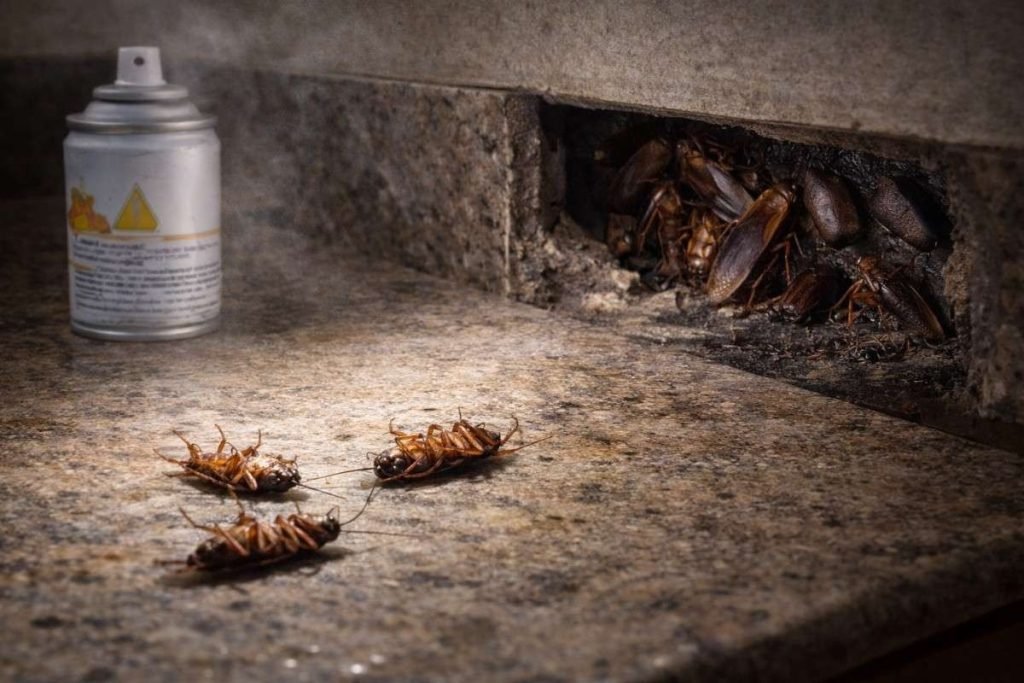
You sprayed. You bombed. You wiped out every visible cockroach in the kitchen. And three weeks later, dozens of tiny nymphs appeared behind the refrigerator because the eggs survived.
This is the most frustrating reality of cockroach control: most products that kill adult roaches don’t touch their eggs. The ootheca, the hardened protein-shelled egg case that female cockroaches produce is specifically engineered by evolution to resist chemical exposure, dehydration, and physical damage. A standard contact spray hitting an ootheca is like throwing water at a sealed jar.
So what kills roaches and their eggs? Not one single product. Effective cockroach elimination requires a multi-method approach that targets adults, nymphs, and oothecae simultaneously using the right combination of baits, dusts, insect growth regulators, and environmental controls.
This guide covers the nine methods that actually work, explains exactly why most people fail at roach control, and gives you a step-by-step elimination plan built on the same integrated pest management principles professionals use. Whether you’re dealing with German cockroaches (Blattella germanica) in an apartment kitchen or American cockroaches (Periplaneta americana) in a basement, every approach here targets the full egg-to-adult lifecycle.
Table of Contents
1. Why Roach Eggs Are So Hard to Kill
2. Gel Baits: The Most Effective Roach Killer Overall
3. Boric Acid: The Best Dual-Action Dust for Roaches and Eggs
4. Insect Growth Regulators (IGRs): Stopping Eggs From Developing
5. Diatomaceous Earth: The Mechanical Killer
6. Heat Treatment: The Only Method That Kills All Life Stages Instantly
7. Residual Sprays: What They Do and Don’t Kill
8. Natural Roach Killers That Actually Work
9. Professional Extermination: When DIY Isn’t Enough
10. What Doesn’t Kill Roach Eggs (Common Mistakes
11. The Complete Roach Elimination Plan: Step by Step
12. Species-Specific Treatment Guide
13. FAQs
14. Key Takeaways
Why Roach Eggs Are So Hard to Kill
Before covering what works, you need to understand why roach eggs destruction is fundamentally different from killing adults. The obstacle is structural.
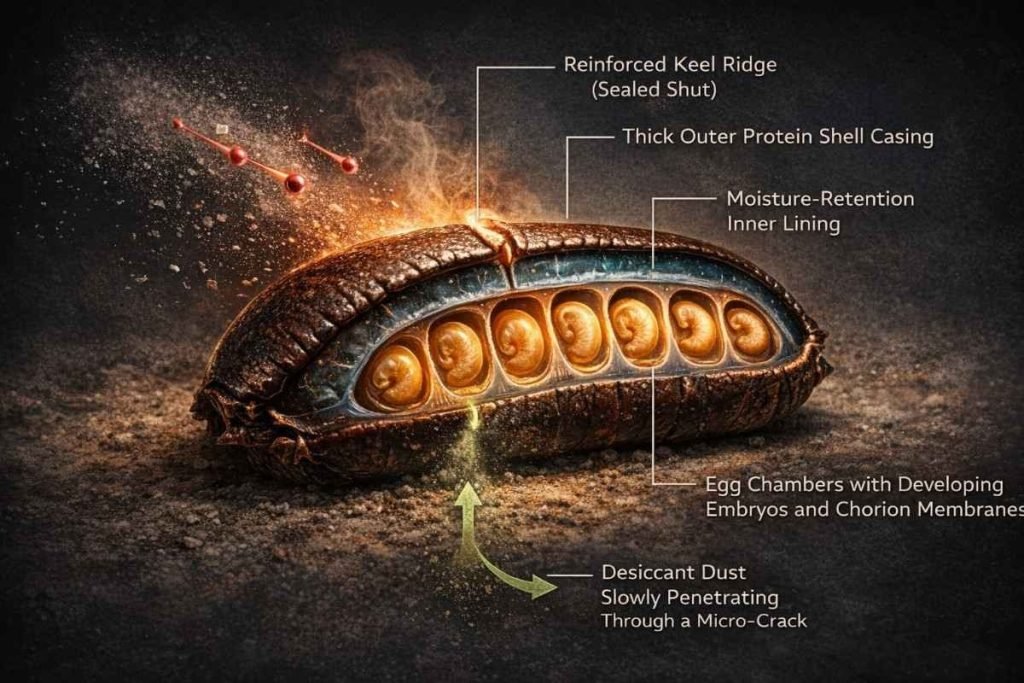
A cockroach ootheca isn’t a fragile, exposed egg like a bird’s. It’s a fortified capsule containing 14–48 individual egg chambers, each holding one developing embryo protected by its own membrane called a chorion. The entire assembly is sealed inside a rigid protein casing with a moisture-retention layer and a reinforced ridge (the keel) running along the top.
What the Ootheca Resists
This structure blocks most conventional insecticides through several mechanisms:
Chemical impermeability. The outer casing is dense enough to prevent liquid or aerosol insecticides from penetrating to the embryos inside.
Research from Purdue University’s Department of Entomology has confirmed that standard synthetic pyrethroids (cypermethrin, permethrin, and deltamethrin) applied directly to oothecae produce no measurable reduction in hatch rate.
Desiccation resistance. The moisture-retention layer maintains internal humidity even in dry environments, protecting embryos from the drying effects that kill exposed nymphs and adults.
Physical durability. The casing withstands moderate crushing force, and its smooth exterior resists adhesion by many dust-based products.
Concealed placement. Females deposit oothecae in cracks, crevices, wall voids, and other protected locations that treatment products may never reach. This is part of a broader predation risk and ootheca placement strategy shaped by millions of years of evolution.
The core problem: You can kill every adult cockroach in a room and still face a full-scale resurgence 2–6 weeks later when untreated oothecae hatch. A single German cockroach ootheca contains 30–48 nymphs. Five surviving egg cases mean 150–240 new cockroaches, each reaching reproductive maturity in as little as 60 days.
This is why cockroach elimination solutions must include at least one method that either destroys the ootheca directly, prevents embryonic development inside it, or kills nymphs immediately upon emergence. Targeting adults alone guarantees failure.
Gel Baits: The Most Effective Roach Killer Overall
If you’re choosing one product to anchor your roach control program, gel bait is the answer. It won’t penetrate the ootheca directly, but it’s the single most effective tool for eliminating the adults and nymphs that sustain the breeding cycle, and through a mechanism called horizontal transfer, it can wipe out cockroaches that never touch the bait directly.
How Gel Baits Work
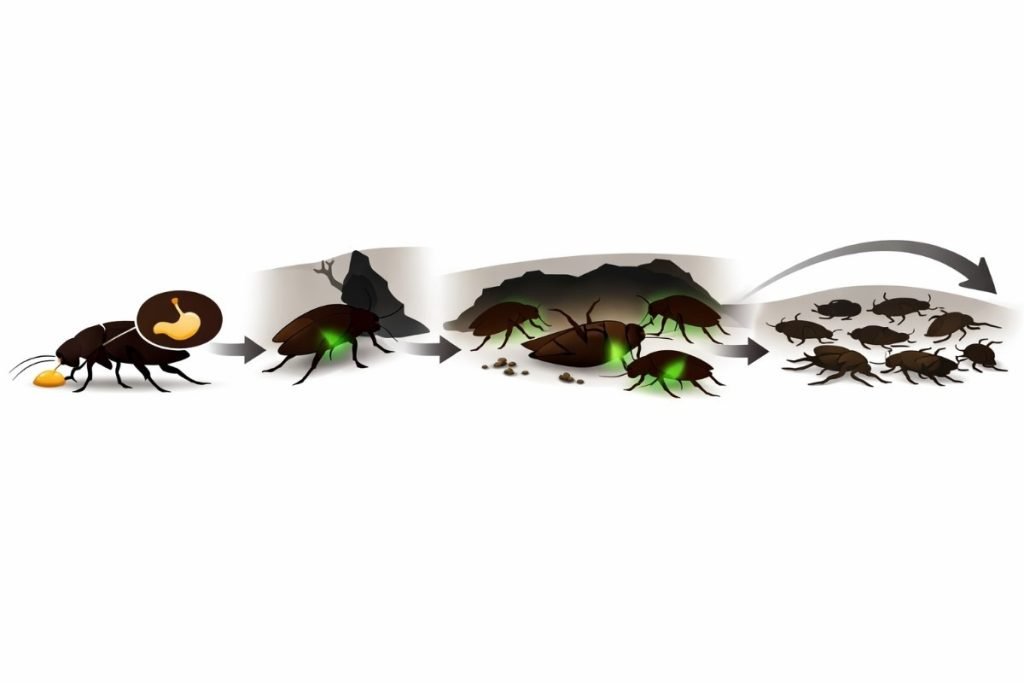
Gel baits combine a food-grade attractant with a slow-acting insecticide. A cockroach feeds on the bait, returns to its harborage area, and dies 24–72 hours later. During that interval, and here’s why this matters for colony elimination, other cockroaches consume the dead roach’s body and fecal matter, ingesting a secondary dose of the active ingredient.
This cascade effect, called horizontal transfer, means one bait placement can kill dozens of cockroaches that never directly contacted the product.
Best Gel Bait Active Ingredients
Not all gel baits perform equally. The active ingredient determines speed, efficacy, and resistance risk:
| Active Ingredient | Example Products | Kill Speed | Notes |
|---|---|---|---|
| Fipronil 0.05% | Advion Cockroach Gel Bait, Maxforce FC Magnum | 24–72 hours | Excellent horizontal transfer; industry standard |
| Indoxacarb 0.6% | Advion Evolution | 24–48 hours | Strong against pyrethroid-resistant populations |
| Hydramethylnon 2% | Maxforce FC Select, Combat Source Kill | 48–96 hours | Proven long-term track record |
| Imidacloprid 2.15% | Bayer Maxforce Impact | 24–48 hours | Neonicotinoid class; effective on German roaches |
| Abamectin 0.05% | Vendetta Roach Gel | 48–72 hours | Works through unique mode of action (GABA receptor antagonism) |
| Dinotefuran | Alpine Cockroach Gel Bait | 24–48 hours | Non-repellent; high palatability |
Why Gel Baits Beat Sprays for Long-Term Control
Three reasons gel baits outperform residual sprays:
1. Non-repellent formulation. Cockroaches actively eat gel baits because the attractant mimics food. Sprays, by contrast, often contain repellent chemicals that push cockroaches away from treated areas scattering them to untreated zones rather than killing them.
2. Colony-level impact. Through horizontal transfer, gel baits function as colony elimination methods rather than individual-kill products. A single bait placement in a high-traffic harborage can eliminate the entire local population, including nymphs too small to encounter spray residues.
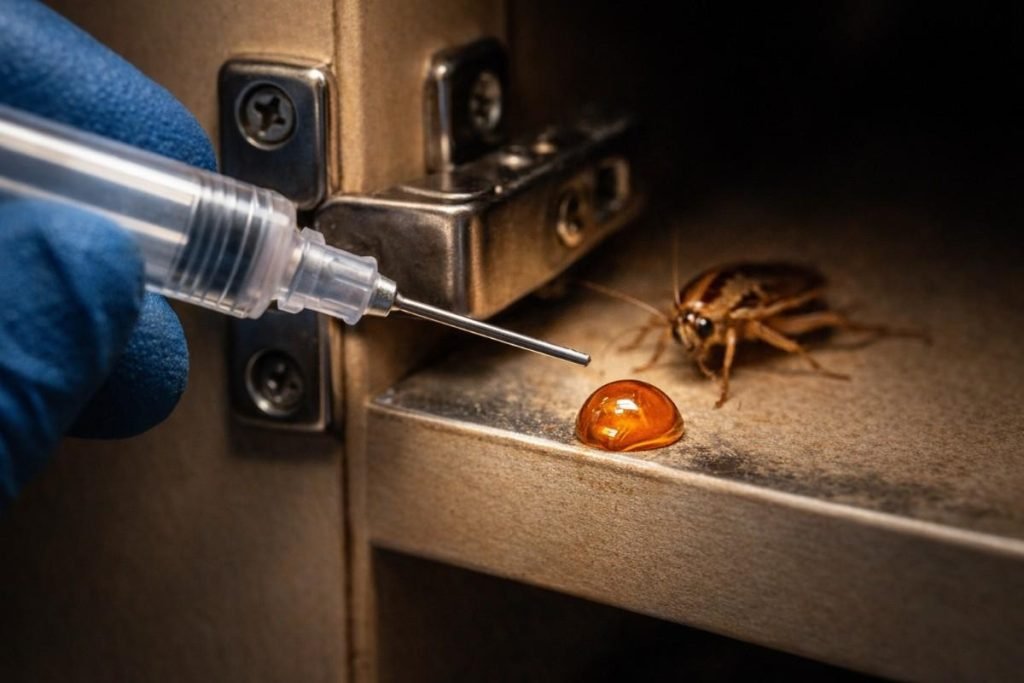
3. Targeted placement. Gel baits go directly into cracks, crevices, hinges, and voids where cockroaches actually live the same areas where females deposit oothecae. This means newly hatched nymphs encounter bait immediately upon emergence.
Gel Bait Placement Strategy
Where you place gel bait matters as much as which product you choose. Focus on:
Kitchen cabinets underneath shelving and inside hinge recesses
Behind refrigerator compressor housing and along the back wall
Under stove area particularly along the rear wall and near gas line penetrations
Dishwasher vicinity along the frame edges and near the motor housing
Bathroom vanity interior corners and along plumbing penetrations
Wall voids accessible through electrical outlet boxes (remove covers, apply bait inside)
Baseboards gaps every 12–18 inches along walls in affected rooms
Pro Tip: Apply gel bait in small pea-sized dots rather than thick lines. Multiple small placements create more contact points than fewer large ones. In my experience treating hundreds of infested apartments, switching from 10 large placements to 30 small ones per kitchen typically doubles the speed of population reduction.
Boric Acid: The Best Dual-Action Dust for Roaches and Eggs
Boric acid (orthoboric acid, H₃BO₃) is one of the oldest and most reliable cockroach control products available. It kills through two simultaneous mechanisms, and unlike most insecticides, it does affect ootheca viability over time.
How Boric Acid Kills Roaches
Mechanism 1: Stomach poison. When a cockroach ingests boric acid (through grooming contaminated legs and antennae), it disrupts the insect’s digestive system and metabolic processes. Death follows within 48–72 hours.
Mechanism 2: Cuticle disruption. Boric acid crystals are abrasive at the microscopic level. When cockroaches walk through boric acid dust, the particles scratch the waxy outer layer of the exoskeleton (cuticle), causing osmotic dehydration; the insect gradually loses moisture through the damaged cuticle and desiccates.
Does Boric Acid Kill Roach Eggs?
Partially through indirect mechanisms. Boric acid dust doesn’t penetrate the ootheca’s protein shell on contact. However, when applied in harborage areas where oothecae are deposited:
The dust compromises the egg case’s moisture-retention layer over sustained contact, reducing internal humidity and lowering embryo viability
Newly hatched nymphs emerging from the ootheca immediately encounter the dust, resulting in near-immediate ingestion and cuticle damage
Gravid females carrying oothecae (German cockroaches) or returning to check deposited cases ingest the dust and may die before producing additional egg cases disrupting the roach breeding cycle at the source
A 2019 study in the Journal of Economic Entomology found that German cockroach oothecae stored on surfaces treated with boric acid for 14+ days showed a 35–45% reduction in hatch rate compared to untreated controls.
Application Guidelines
Effective boric acid application follows specific rules:
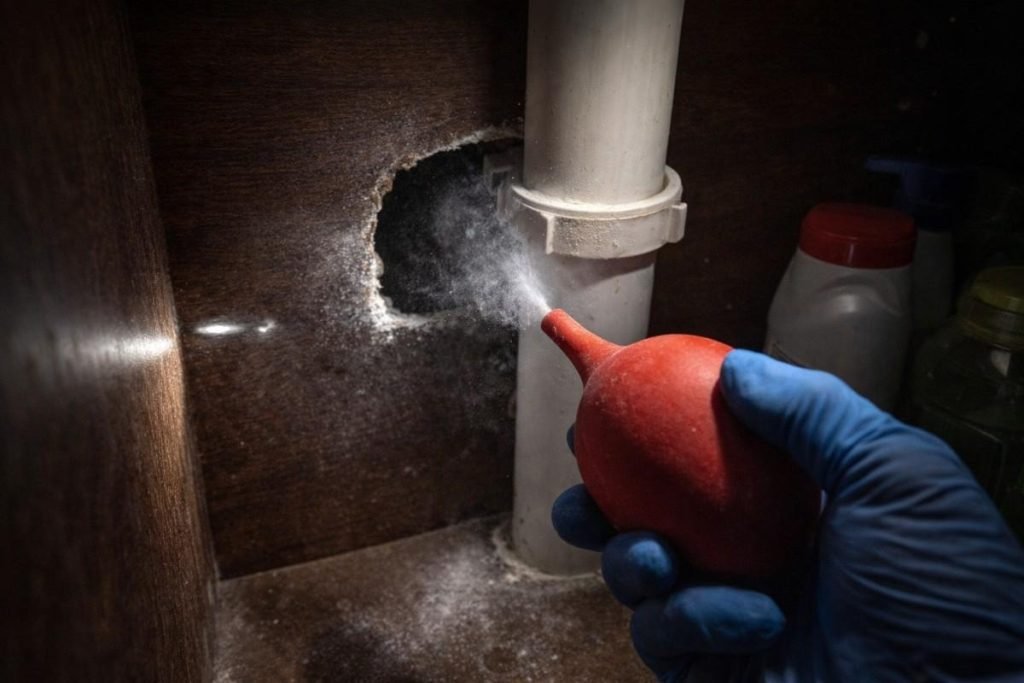
Apply as a thin, barely visible dust; if you can see heavy powder accumulation, you’ve applied too much (cockroaches avoid thick deposits)
Target wall voids, behind appliances, under cabinets, and inside electrical boxes
Use a squeeze-bulb duster for precise application into cracks and crevices
Keep away from food preparation surfaces while boric acid has low mammalian toxicity, it should not contact food
Reapply every 6–12 months or after cleaning disturbances boric acid maintains residual effectiveness indefinitely as long as it remains dry
Harris Roach Tablets and similar products use compressed boric acid combined with a food attractant, providing an alternative delivery method for areas where dust application isn’t practical.
Important: Boric acid and borax (sodium borate, borax decahydrate) are chemically related but not identical. Boric acid is more effective as an insecticide. Borax works but requires higher concentrations. Both are significantly safer for household use than synthetic pyrethroids, though neither should be ingested by children or pets.
Insect Growth Regulators (IGRs): Stopping Eggs From Developing
If gel baits are the best tool for killing adult cockroaches and nymphs, insect growth regulators are the best tool for preventing eggs from becoming viable adults. IGRs are the closest thing to a true “roach egg killer” that exists in the pesticide market.

How IGRs Work
Insect growth regulators mimic or disrupt natural hormones that control cockroach development. They operate through two primary mechanisms:
Juvenile Hormone Analogs (JHAs):
Products like hydroprene (Gentrol), methoprene, and pyriproxyfen (Archer IGR, NyGuard) replicate the effects of juvenile hormone a compound that normally keeps nymphs in an immature state until the correct developmental triggers initiate molting toward adulthood.
When exposed to JHAs:
– Nymphs fail to mature into reproductive adults, they may molt abnormally, develop twisted wings, or remain permanently stuck in a juvenile stage
– Adult females become effectively sterilized; oothecae produced by exposed females contain non-viable embryos
– Developing embryos inside oothecae exposed to IGR vapor may fail to complete the nymph molting sequence post-hatching, dying shortly after emergence
Chitin Synthesis Inhibitors (CSIs):
Products like novaluron, triflumuron, and diflubenzuron block the production of chitin the structural protein cockroaches need to form a new exoskeleton during each molt. Without chitin, nymphs cannot survive the molting process and die during the transition between instars.
IGR Products Worth Using
| Product | Active Ingredient | Form | Target |
|---|---|---|---|
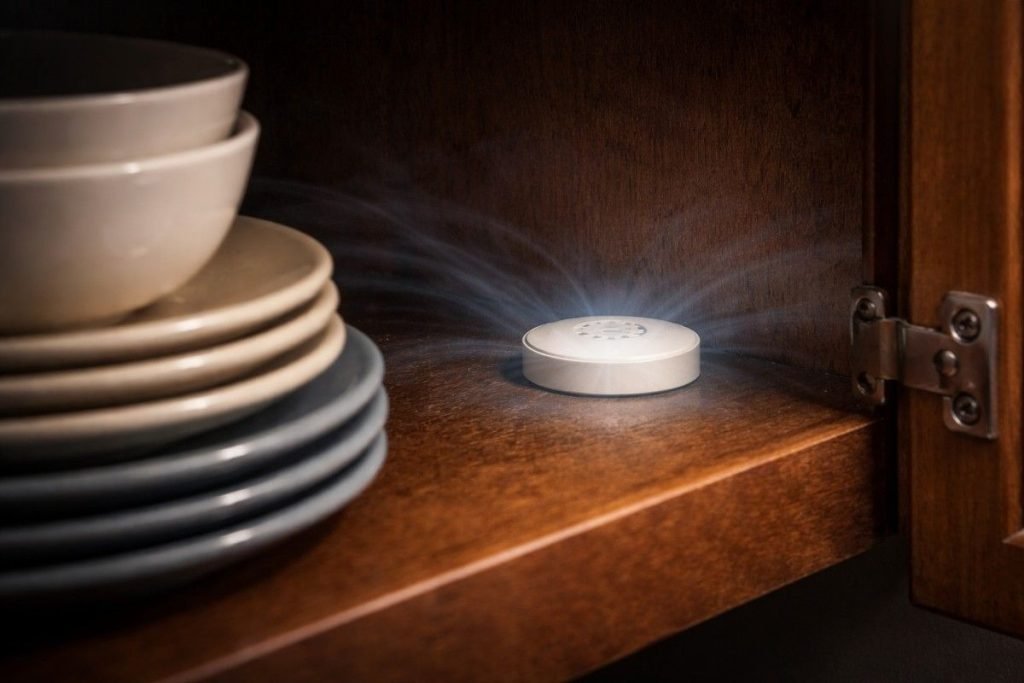
| Gentrol Point Source | Hydroprene 2% | Disc station | German roaches; sustained release |
| Gentrol IGR Concentrate | Hydroprene 9% | Liquid spray | Broad application in harborage areas |
| Archer IGR | Pyriproxyfen 1.3% | Liquid concentrate | Mix with non-repellent sprays |
| NyGuard IGR Concentrate | Pyriproxyfen 10% | Liquid concentrate | Long residual (up to 7 months) |
Why Every Roach Treatment Plan Needs an IGR
IGRs break the reproductive cycle in ways that kill-only products cannot:
– A gel bait kills roaches that eat it. But if even 5% of the colony survives treatment, those survivors can rebuild the population within weeks through their surviving oothecae.
– An IGR applied to the same area ensures that any surviving females produce non-viable eggs, and any nymphs that hatch from pre-treatment oothecae fail to reach reproductive maturity.
This reproductive cycle interruption creates a population collapse that kill-only products can’t achieve alone. Combined with gel baits, IGRs form what pest management professionals consider the gold standard for German roach control in residential settings.
Did you know? Gentrol Point Source discs release hydroprene vapor continuously for up to 90 days. A single disc placed in a cabinet void or behind an appliance bathes the surrounding area in IGR, affecting every cockroach and every ootheca within range without requiring direct contact. According to research published by the University of Nebraska–Lincoln Extension, adding IGRs to a bait-only program reduces cockroach population recovery rates by over 90% compared to baits alone.
Diatomaceous Earth: The Mechanical Killer
Food-grade diatomaceous earth (DE) is a popular non-toxic roach treatment, and it does work but with important limitations regarding eggs.
How DE Kills Cockroaches
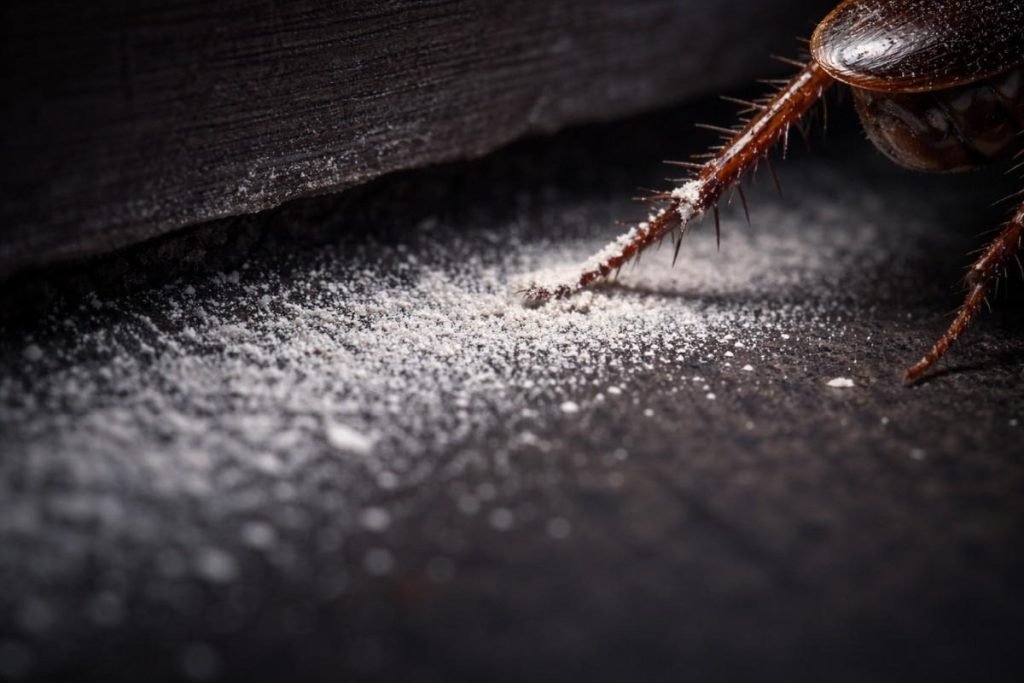
Diatomaceous earth is composed of fossilized diatom shells microscopic silica particles with razor-sharp edges at the microscopic level. When cockroaches walk through DE:
1. The particles scratch and abrade the waxy cuticle layer of the exoskeleton
2. The damaged cuticle can no longer retain moisture
3. The cockroach dies from osmotic dehydration within 24–72 hours
This is a purely mechanical kill no chemical toxicity is involved, which is why DE is popular as a pet-safe roach killer and child-safe pest control option.
Does Diatomaceous Earth Kill Roach Eggs?
Directly? No. DE cannot penetrate the ootheca’s hardened protein shell. The abrasive mechanism that works on the soft cuticle of adult cockroaches has minimal effect on the rigid egg case.
Indirectly? Yes, in two ways:
1. Nymph elimination at emergence. When DE is applied around and on top of deposited oothecae, newly hatched nymphs must walk through it immediately upon exiting the egg case. Baby cockroaches have thinner cuticles than adults, making them more vulnerable to desiccant damage.
2. Sustained moisture disruption. Like boric acid, prolonged contact between DE and an ootheca may gradually compromise the moisture-retention layer, reducing embryo viability over time. However, this effect is slower and less reliable than boric acid.
Application Best Practices
– Use only food-grade DE (not pool-grade, which is heat-treated and contains crystalline silica that poses respiratory risks)
– Apply as a thin, barely visible layer heavy accumulation repels cockroaches rather than encouraging contact
– Focus on dry locations DE loses effectiveness when wet
– Target crack-and-crevice areas, cabinet undersides, wall voids, and spaces behind appliances
– Wear a dust mask during application while food-grade DE isn’t toxic, inhaling fine silica particles irritates the respiratory system
CimeXa Insecticide Dust (amorphous silica gel) works through the same desiccant mechanism as DE but is engineered for superior cling and moisture absorption. Many pest professionals consider CimeXa more effective than traditional DE for crack-and-crevice cockroach treatment.
Heat Treatment: The Only Method That Kills All Life Stages Instantly
If there’s one method that truly kills roaches and their eggs in a single application, it’s heat treatment (thermal remediation).
How Heat Treatment Works
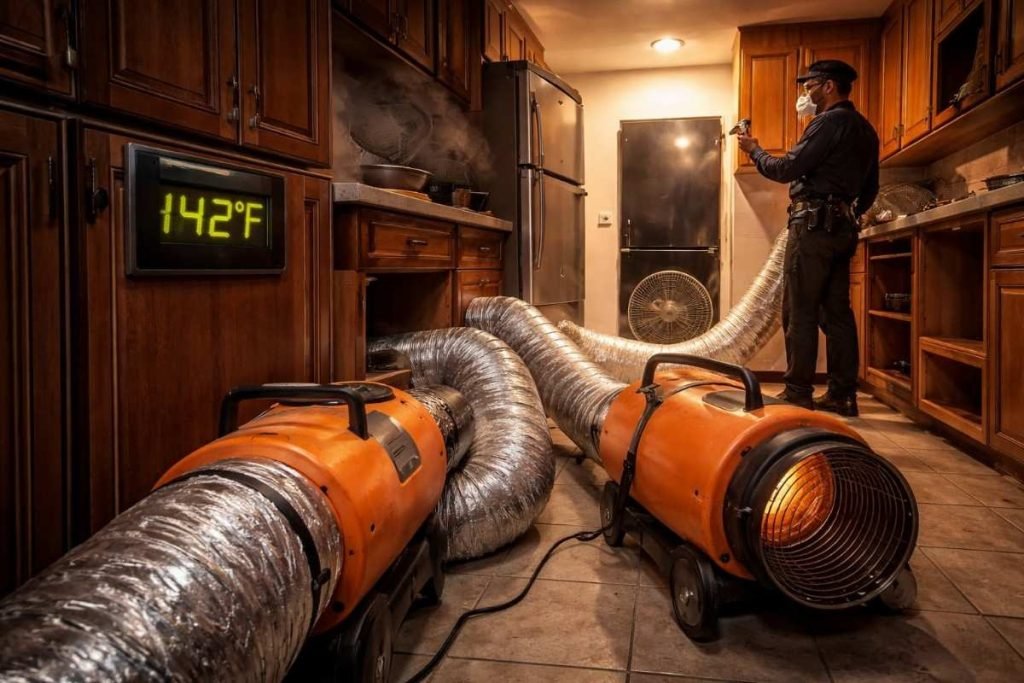
Professional heat treatment raises the ambient temperature in the infested space to 130–150°F (54–65°C) and maintains it for several hours. At these temperatures:
Adult cockroaches die within minutes
Nymphs at all instar stages die within minutes
Oothecae including the embryos inside are destroyed. The protein shell denatures, the internal moisture boils off, and embryonic development stops permanently
Heat is the only treatment method that penetrates the ootheca and kills developing embryos on the first application. No chemical product currently available achieves this.
Limitations of Heat Treatment
Despite its effectiveness, heat treatment isn’t practical for every situation:
Cost. Professional thermal remediation typically runs $1,500–$4,000 for a single-unit treatment, depending on square footage and severity
Equipment. Requires industrial heaters, temperature monitoring equipment, and trained technicians this is not a DIY method
Preparation. Heat-sensitive items (aerosol cans, medications, candles, certain electronics) must be removed before treatment
Re-infestation risk. Heat kills every cockroach present at the time of treatment but provides zero residual protection. If new cockroaches enter from adjacent units, exterior gaps, or carried-in items, the infestation restarts from scratch
For severe infestations in multi-unit housing, hotels, or commercial kitchens, heat treatment is sometimes combined with residual chemical applications to achieve both immediate knockdown and long-term prevention. This combined approach fits within a comprehensive integrated pest management program.
Cold treatment (cryonite) which uses CO₂ snow to freeze cockroaches on contact is sometimes used for targeted spot treatments. It kills adults and nymphs instantly but has limited penetration against oothecae and no residual activity.
Residual Sprays: What They Do and Don’t Kill
Residual insecticide sprays are the most commonly purchased cockroach product by homeowners and also the most commonly misused.
What Sprays Do Well
Quality non-repellent residual sprays create a treated surface that kills cockroaches walking over it for 30–90 days. The best professional-grade options include:
Demand CS (lambda-cyhalothrin 9.7%) microencapsulated for extended residual life
Suspend Polyzone (deltamethrin 0.2%) polymer-enhanced for outdoor durability
Temprid (imidacloprid + beta-cyfluthrin) dual active ingredient for resistance management
Alpine WSG (dinotefuran) fully non-repellent; cockroaches cannot detect treated surfaces
Phantom (chlorfenapyr) non-repellent with delayed mortality that allows horizontal transfer
These products are effective at creating perimeter barrier treatments and treating crack-and-crevice harboring areas to intercept cockroaches moving through treated zones.
What Sprays Cannot Do
Residual sprays do not kill cockroach eggs. The active ingredients in spray formulations, whether pyrethroids, neonicotinoids, or other chemical classes, cannot penetrate the ootheca’s protein casing in liquid or dried-residue form.
This means:
Spraying directly onto an ootheca does not reduce hatch rates
Oothecae deposited in treated areas will still hatch on schedule
The only value sprays provide against eggs is killing nymphs after they emerge and walk across treated surfaces
The Repellent Problem
Consumer-grade sprays from brands like Raid, Hot Shot, and Black Flag typically contain repellent pyrethroids (cypermethrin and permethrin). These products cause immediate knockdown of cockroaches directly sprayed, but the repellent residue creates a worse problem:
Cockroaches detect and avoid treated surfaces, migrating to untreated areas
The infestation scatters rather than concentrating in treatable harborage zones
Egg-bearing females relocate to new, untreated hiding spots spreading oothecae throughout the structure
Gel bait placed near repellent spray residues loses effectiveness because cockroaches avoid the entire area
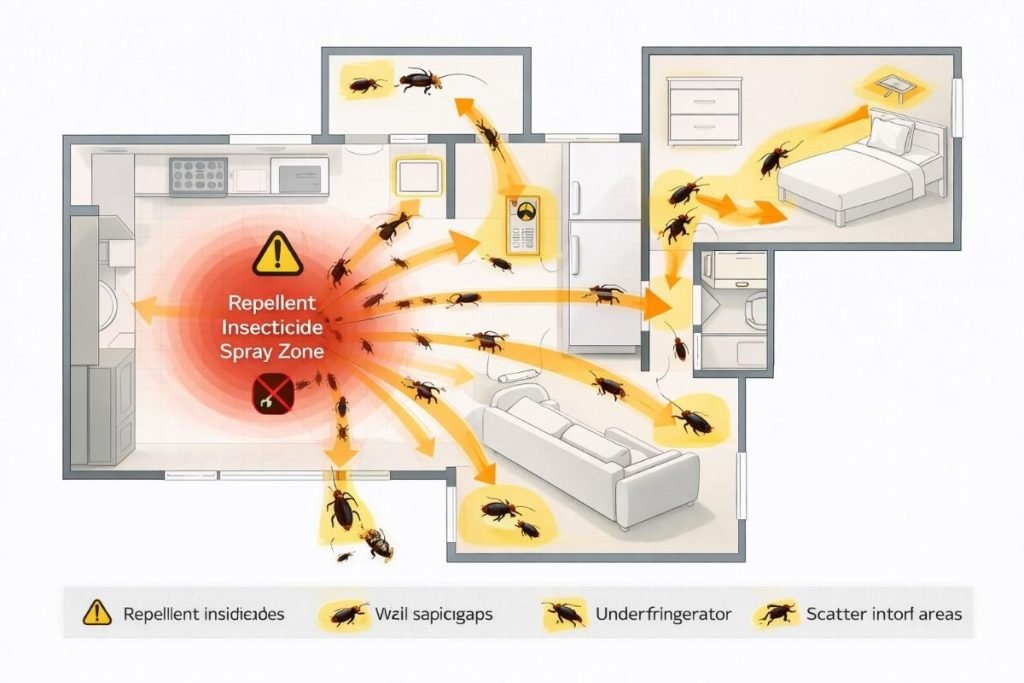
This is the most common DIY mistake I see. A homeowner sprays Raid behind the stove, then places gel bait in the same area. The repellent residue from the spray drives cockroaches away from the bait. Neither product achieves its intended effect, and the infestation worsens. If you’re using gel baits, do not use repellent sprays in the same treatment zone.
Natural Roach Killers That Actually Work
“Natural” doesn’t automatically mean “ineffective,” but it also doesn’t mean every Pinterest remedy works. Here’s an honest breakdown:
Methods With Proven Efficacy
Boric acid (99% orthoboric acid):
Already covered in detail above. While technically a chemical compound, boric acid is mineral-derived, low in mammalian toxicity, and widely considered the most effective natural roach killer available. It kills adults and nymphs through ingestion and cuticle abrasion, and it degrades ootheca viability over extended contact.
Diatomaceous earth (food grade):
Effective mechanical kill on adults and nymphs. No direct effect on oothecae, but kills emerging nymphs on contact. Safe around pets and children when applied properly.
Baking soda mixtures:
A mixture of baking soda and sugar (equal parts) works as a crude stomach poison. Cockroaches eat the sugar attractant, and the baking soda reacts with stomach acids to produce gas rupturing the digestive tract. Effective but slow, and far less reliable than boric acid or commercial gel baits.
Borax powder:
Sodium borate works similarly to boric acid but requires higher concentrations for equivalent efficacy. Can be mixed with sugar or flour as an attractant. Moderate effectiveness on adults; no direct impact on eggs.
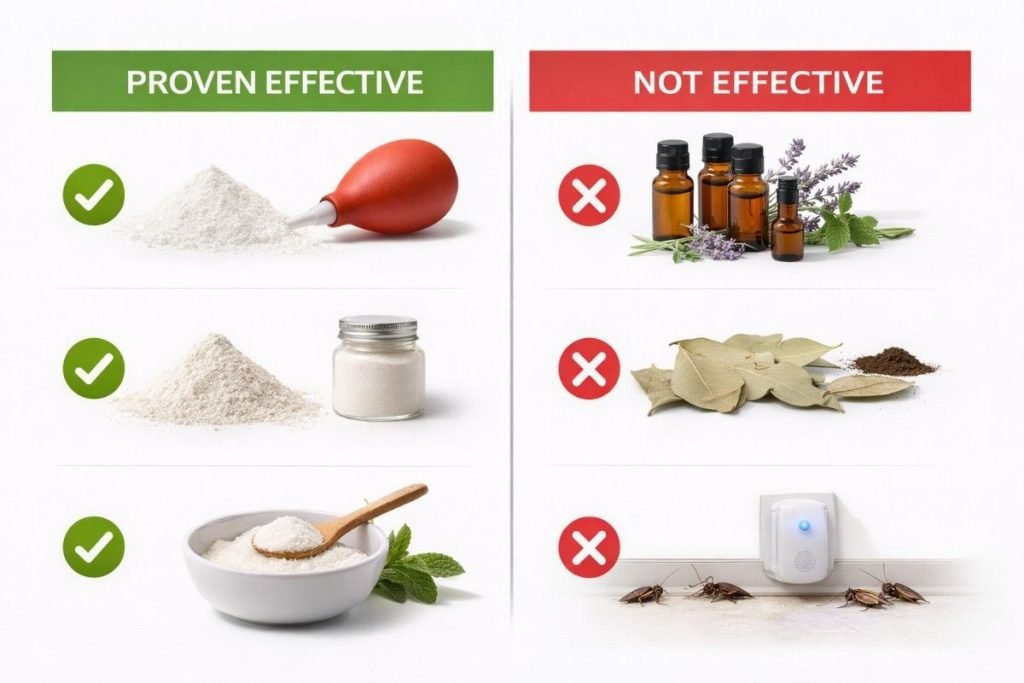
Methods With Limited or No Proven Efficacy
Essential oils (peppermint, tea tree, eucalyptus, lavender, cypress):
Essential oils function as repellents, not insecticides. They may temporarily deter cockroaches from specific areas, but they do not kill on contact, do not affect oothecae, and lose potency within hours as the volatile compounds evaporate.
A 2021 review published in Insects (MDPI) concluded that while certain essential oil compounds show insecticidal properties at high laboratory concentrations, real-world application at household-safe concentrations produces negligible mortality rates.
Bay leaves/catnip/cucumber slices/coffee grounds:
These are folk remedies with no peer-reviewed evidence supporting cockroach-killing efficacy. Some may produce mild repellent effects, but none will control an active infestation or affect egg viability.
Fabric softener spray:
Occasionally recommended online as a contact killer. The surfactants in liquid fabric softener can suffocate cockroaches sprayed directly, but this requires drenching each individual insect, provides zero residual protection, and has no effect on eggs. Impractical as a control method.
Ultrasonic devices:
Multiple independent studies, including a comprehensive 2015 analysis by the Federal Trade Commission, have found that ultrasonic pest repellers produce no measurable effect on cockroach behavior or population levels. Save your money.
Bottom Line:
If you want an effective, non-toxic approach, combine boric acid dust in wall voids and crevices with food-grade diatomaceous earth around harborage entry points and sticky traps for monitoring. Add an IGR like Gentrol Point Source for reproductive disruption. This combination provides pet-safe roach treatment with meaningful colony-reduction capability, though it works more slowly than professional chemical applications.
Professional Extermination: When DIY Isn’t Enough
Professional pest control becomes necessary when one or more of these conditions apply:
The infestation involves multiple rooms or multiple units in a shared building
You’re seeing daytime cockroach activity (a strong indicator of severe overcrowding)
DIY products have failed after two consecutive 30-day treatment cycles
The primary species is the German cockroach, and the population is visibly large
You’re dealing with cockroaches resistant to pesticides, indicated by survival despite correct product application
What Professionals Do Differently
A licensed certified pest control operator brings three advantages over DIY treatment:
1. Precise Species Identification
Treatment strategy varies significantly across cockroach species within the order Blattodea. An entomologist consultation or trained technician can identify whether you’re dealing with Blattella germanica, Periplaneta americana, Blatta orientalis, Supella longipalpa, or another species and tailor the product selection, placement strategy, and follow-up schedule accordingly.
2. Access to Professional-Grade Products
Many of the most effective cockroach products including Demand CS, Phantom, Temprid, Alpine WSG, and professional-grade IGR concentrates, are restricted to licensed applicators. These formulations offer superior residual activity, non-repellent properties, and resistance management capabilities that consumer products lack.
3. Structured Treatment Protocols
Professional integrated pest management programs follow a standardized sequence:
Inspection phase: Identify species, severity, harborage locations, and entry points
Identification phase: Determine if resistance factors are present
Preparation phase: Client prep instructions (cleaning, decluttering, access clearance)
Application phase: Multi-product treatment targeting all life stages
Monitoring phase: Sticky trap placement with scheduled assessment
Follow-up treatment: Reapplication at 2–4 week intervals (typically 2–3 rounds)
Documentation: Treatment logs, product records, and material safety data sheets
Pro Tip: When hiring a professional, ask specifically: “Does your treatment plan include an insect growth regulator?” If the answer is no, that’s a red flag. Any pest management program targeting German cockroaches without an IGR component is leaving the most important part of the cockroach reproductive cycle untreated.
The Complete Roach Elimination Plan: Step by Step
Here’s the full protocol, the same multi-pronged approach used by pest management professionals, adapted for homeowner execution:
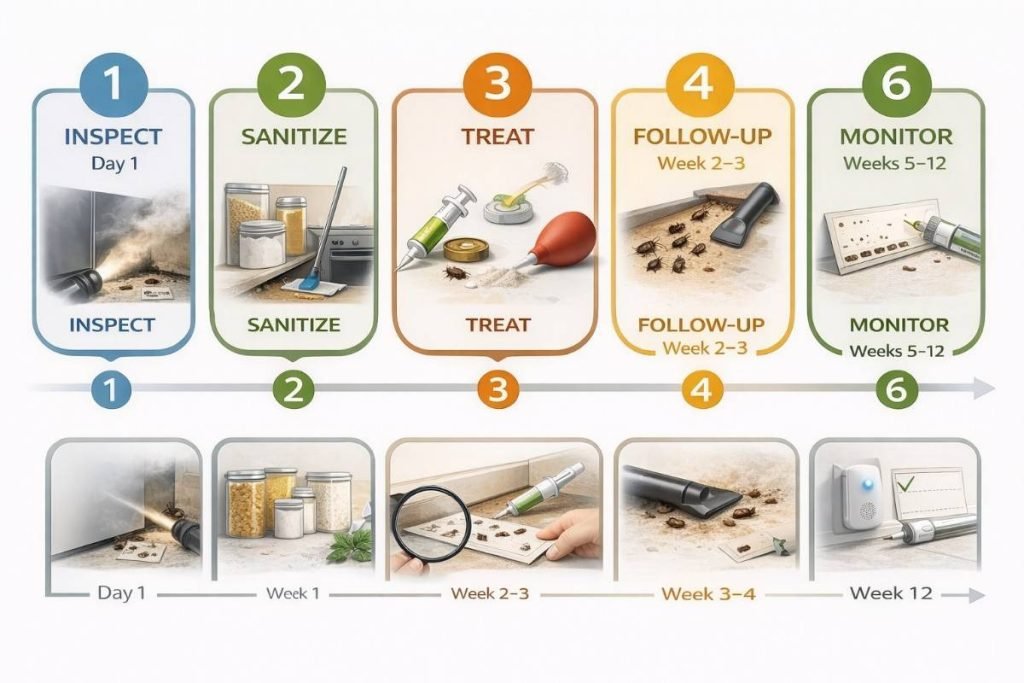
Phase 1: Inspection and Identification (Day 1)
Identify the species. Determine whether you’re dealing with German, American, Oriental, brown-banded, or another cockroach species. This dictates product selection and placement strategy.
Locate harborage areas. Using a flashlight, inspect at night:
Kitchen cabinets (empty completely and examine all joints, hinges, and shelf undersides)
Behind and underneath the refrigerator, stove, dishwasher, and microwave
Bathroom vanity, toilet base perimeter, and bathtub surround
All plumbing penetrations and utility closets
Baseboards gaps, door thresholds, and window frames
Place monitoring traps. Set sticky traps (3–5 per room) along walls and near suspected harborage. Check after 48 hours to identify the highest-activity zones.
Phase 2: Sanitation (Days 1–3)
Complete these tasks before applying any treatment products:
Remove all food from cabinets; store in sealed hard-sided containers
Deep-clean behind and under all appliances (grease buildup removal is critical)
Fix every water leak, even minor drips under sinks
Eliminate standing water in drip trays, pet bowls (overnight), and plant saucers
Remove cardboard boxes from storage areas and replace with plastic bins
Take trash out nightly; use trash cans with tight-fitting lids
– Clean roach droppings (fecal pellets that look like coffee ground appearance feces or pepper-like droppings) using a vacuum followed by disinfectant wipe-down
Phase 3: Treatment Application (Day 3–4)
Apply products in this order:
Step 1: IGR placement
Place Gentrol Point Source discs (or spray Gentrol IGR Concentrate) in every cabinet void, behind every appliance, inside wall cavities accessible through utility penetrations, and in bathroom vanities. This creates a continuous juvenile hormone analog exposure zone that sterilizes surviving adults and prevents nymphal maturation.
Step 2: Gel bait application:
Apply Advion Cockroach Gel Bait (or equivalent fipronil/indoxacarb-based bait) in pea-sized dots:
Inside cabinet hinges (every hinge)
Along the rear wall behind the refrigerator
Under the stove along the back edge
Inside electrical outlet boxes in the kitchen and bathroom
Along plumbing penetrations under all sinks
Inside dishwasher frame edges
Behind the toilet at the floor junction
Place dots every 12–18 inches in active harborage zones. Total application: 30–60 dots for a typical kitchen, 15–20 for a bathroom.
Step 3 Dust application:
Using a squeeze-bulb duster, apply a thin film of boric acid dust (or CimeXa) into:
Wall voids through gaps around plumbing pipes and electrical boxes
Underneath cabinet toe kicks
Inside the gap between the countertop and the wall
Behind switch plates and outlet covers
Expansion joints along baseboards
Step 4 Perimeter spray (optional):
If using a residual spray, apply a non-repellent formulation only (Alpine WSG, Phantom, or Demand CS). Treat:
Exterior foundation perimeter (3-foot band)
Door thresholds and window frames
Basement and crawl space entry points
Do NOT spray inside areas where gel bait has been placed
Phase 4: Follow-Up (Weeks 2–3)
Check sticky traps weekly. Record numbers and locations.
Reapply gel bait in areas where dots have been consumed.
If trap catches haven’t declined by 50%+ after 14 days, add additional bait placements in previously untreated areas.
Look for newly hatched nymphs (tiny, 1–3mm, light brown) their presence confirms oothecae hatching. This is expected and indicates the IGR + bait combination needs time to intercept nymphs before they mature.
Phase 5: Second Treatment (Week 3–4)
Full gel bait refresh in all original placement points.
Inspect for surviving oothecae vacuum and dispose of any found.
Verify IGR discs are still active (Gentrol Point Source lasts ~90 days).
Address any sanitation regressions.
Phase 6: Monitoring and Maintenance (Weeks 5–12)
Continue weekly trap monitoring.
Target: zero trap catches for three consecutive weeks before declaring elimination.
Maintain sanitation protocols permanently.
Replace IGR discs every 90 days as a preventive measure.
Seal entry points with caulk as a migration prevention method focus on plumbing penetrations, cabinet-to-wall gaps, and door sweeps.
Real-World Timeline: For a moderate German cockroach infestation (50–200 visible individuals), expect the following trajectory using this protocol: 50–70% population reduction by week 2, 85–95% reduction by week 4, and full elimination by week 8–12. Severe infestations (500+ individuals, multiple rooms) may require 12–16 weeks and professional assistance.
Species-Specific Treatment Guide
Different cockroach species demand different treatment emphasis. Here’s what to adjust:
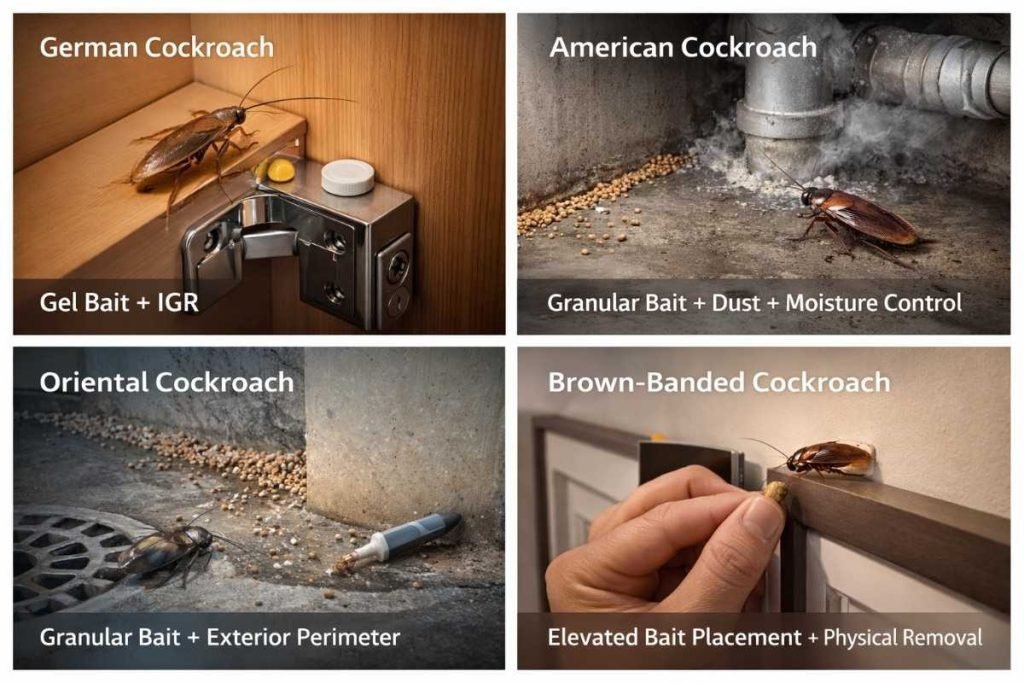
German Cockroach (Blattella germanica)
Primary threat: Indoor-only species; most common kitchen and bathroom invader
Egg challenge: Female carries the ootheca until hatching you can’t find and remove egg cases that are still attached to a living female
Best approach: Gel bait + IGR combination is the gold standard. Focus treatment inside cabinets, behind appliances, and within wall voids. IGR is non-negotiable for this species.
Critical note: German cockroach populations frequently develop insecticide resistance. If one gel bait product stops working after initial success, rotate to a different active ingredient class (e.g., switch from fipronil to indoxacarb). This is called resistance management.
American Cockroach (Periplaneta americana)
Primary threat: Large roaches entering from sewers, basements, and crawl spaces; deposits oothecae in damp, protected locations
Egg challenge: Oothecae are glued to surfaces in concealed areas wall voids, crawl spaces, behind water heaters
Best approach: Perimeter barrier spray (non-repellent) + granular baits in crawl spaces and basement corners + boric acid dust in wall voids. Moisture control is critical fix plumbing leaks and dehumidify below 50%.
Critical note: Sealing entry points (especially around floor drains, pipe penetrations, and door sweeps) prevents re-entry from exterior populations in city sewers.
Oriental Cockroach (Blatta orientalis)
Primary threat: Cool, damp environments basements, crawl spaces, floor drains, and mulch beds
Egg challenge: Oothecae deposited in moist, hidden locations; seasonal hatching pattern peaks in late spring
Best approach: Exterior perimeter treatment + granular baits around foundation. Reduce outdoor moisture sources (leaf litter, mulch depth, drainage issues). Apply boric acid inside basement cracks and floor drain perimeters.
Critical note: Oriental cockroaches are less responsive to gel baits than German cockroaches. Granular baits (like Niban FG or InTice 10) placed in crawl spaces and mulch beds often outperform gels for this species.
Brown-Banded Cockroach (Supella longipalpa)
Primary threat: Infests bedrooms, living rooms, and closets not just kitchens; prefers warm, dry locations
Egg challenge: Females glue oothecae to elevated surfaces behind picture frames, on closet shelving undersides, inside electronics. Egg cases are scattered widely throughout the home rather than concentrated in one area.
Best approach: Gel bait placed at elevated positions (top edges of cabinets, behind wall-mounted items, inside furniture joints) + thorough physical removal of found oothecae. Inspect entire home, not just kitchen and bathroom.
Critical note: Standard kitchen-focused treatment misses brown-banded cockroach harborage. If you’re finding small roaches in bedrooms and seeing tiny golden egg cases stuck to furniture, adjust your treatment footprint to cover the entire dwelling.
Frequently Asked Questions
What is the fastest way to kill roaches and eggs?
Professional heat treatment (thermal remediation at 130–150°F) is the only method that kills adults, nymphs, and eggs in a single application. For DIY, the fastest effective approach combines gel bait (kills adults/nymphs in 24–72 hours) with an IGR (prevents egg development) and boric acid dust (degrades ootheca viability over 1–2 weeks).
Does boric acid kill roach eggs?
Not on immediate contact. However, boric acid dust applied near oothecae gradually degrades the moisture-retention layer of the egg case, reducing hatch rates by 35–45% over 14+ days. More importantly, boric acid kills nymphs immediately upon emergence, preventing any surviving hatchlings from reaching adulthood.
Do roach bombs kill eggs?
No. Total-release foggers cannot penetrate the ootheca’s protein shell, and the aerosol mist doesn’t reach the cracks and crevices where egg cases are deposited. Research from North Carolina State University found bug bombs produce no significant cockroach population reduction, even against adults. They are the least effective product category for cockroach control.
Can roach eggs survive a pesticide spray?
Yes. Most contact sprays, including products containing pyrethroids, neonicotinoids, and organophosphates, cannot penetrate the ootheca’s outer casing. Only IGRs (which disrupt embryonic development hormonally), desiccant dusts (which compromise the egg case over time), and heat treatment (which denatures the protein shell) have documented effects on egg viability.
How do I prevent roach eggs from hatching?
Apply an insect growth regulator (hydroprene or pyriproxyfen) in all harborage areas. IGRs cause exposed females to produce non-viable oothecae and prevent nymphs from maturing. Physically remove any egg cases you find using a vacuum. Apply boric acid dust near known ootheca deposition sites to reduce viability and kill hatchlings on emergence.
Why do I still see roaches after treatment?
The most common reason is surviving oothecae hatching 2–6 weeks after treatment. This is normal and expected. Those nymphs should encounter gel bait, boric acid residue, or IGR exposure and die before reaching maturity. If you’re seeing large adult cockroaches 4 weeks or more after treatment, the initial application likely missed key harborage areas, or the products used were repellent formulations that dispersed the colony.
What kills roaches overnight?
Contact sprays and aerosols kill individual cockroaches within minutes, but they don’t address the colony or eggs. Gel baits produce death in 24–72 hours, with colony-level impact through horizontal transfer over 1–2 weeks. There is no product that eliminates an entire infestation overnight. Effective control requires 2–8 weeks of sustained multi-method treatment.
Key Takeaways
Killing roaches and their eggs requires understanding a fundamental truth: no single product does both jobs. The ootheca’s hardened protein shell defeats most conventional insecticides, which means effective cockroach control always requires a combination approach.
1. Gel baits are the most effective single product for killing adult cockroaches and nymphs. Products containing fipronil or indoxacarb (like Advion Cockroach Gel Bait) kill through ingestion and horizontal transfer, achieving colony-level elimination that sprays can’t match.
2. Insect growth regulators are the closest thing to a roach egg killer. IGRs like hydroprene (Gentrol) and pyriproxyfen (NyGuard) sterilize adult females, render oothecae non-viable, and prevent nymphs from maturing. Every serious treatment plan needs one.
3. Boric acid is the best dual-action dust treatment. It kills adults and nymphs through ingestion and cuticle abrasion, degrades ootheca viability over extended contact, and maintains residual effectiveness indefinitely in dry environments.
4. Heat treatment is the only method that destroys eggs on first contact. Professional thermal remediation at 130–150°F kills all life stages but costs $1,500–$4,000 and provides no residual protection against re-infestation.
5. Bug bombs, repellent sprays, essential oils, and ultrasonic devices are ineffective against cockroach eggs and provide minimal population-level control against adults. Avoid them entirely they waste money and often make infestations worse.
6. Follow-up treatment at 2–4 week intervals is mandatory. Surviving oothecae will hatch regardless of initial treatment. Without follow-up applications to intercept emerging nymphs, the infestation rebuilds within weeks.