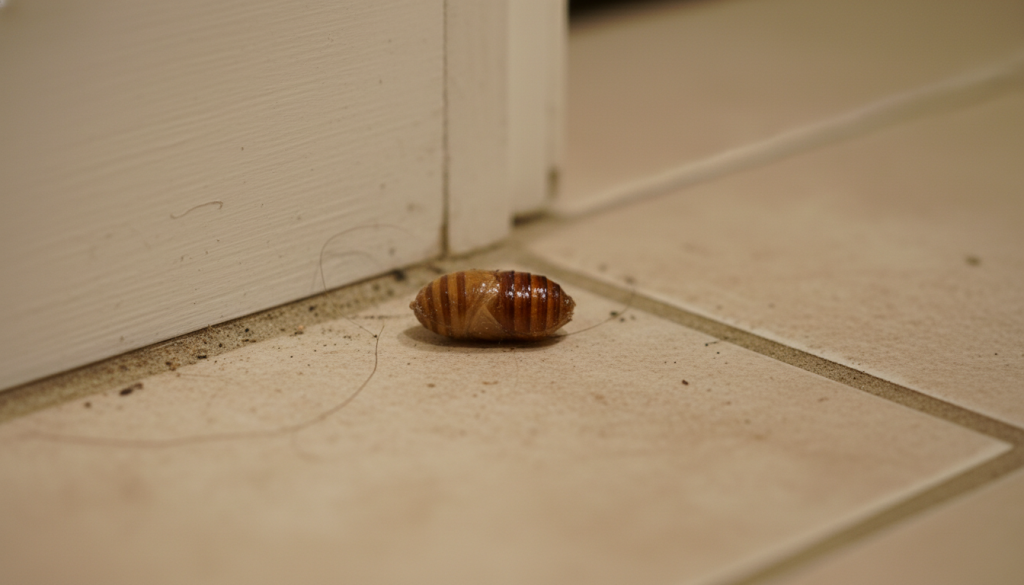
Black dots are usually roach poop, not roach eggs. Cockroach eggs are enclosed inside a brown capsule-shaped egg case called an ootheca, while roach poop appears as tiny black or dark-brown specks, stains, pellets, or smears near cockroach travel paths.
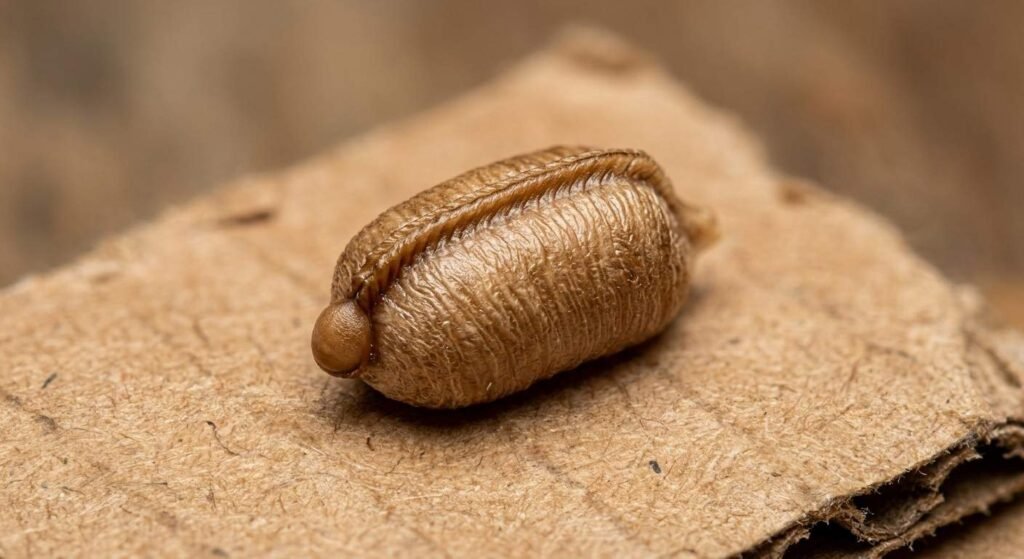
The fastest way to tell the difference is size and structure. Roach droppings from small species often look like black pepper or coffee grounds. Roach egg cases are larger, firm, brown capsules that usually measure about 5–10 mm long, depending on the species.
If you found scattered black dots in a cabinet, drawer, pantry shelf, under a sink, behind a refrigerator, or along a baseboard, you are most likely looking at cockroach droppings. If you found a single brown bean-shaped capsule with a seam or ridges, you may have found a roach egg case.
Quick Answer: Black Dots Are Usually Roach Poop, Not Eggs
Black dots are not normally roach eggs because cockroaches do not lay loose black eggs around the house. Female cockroaches produce an ootheca, which is a protective egg case that contains multiple developing embryos.
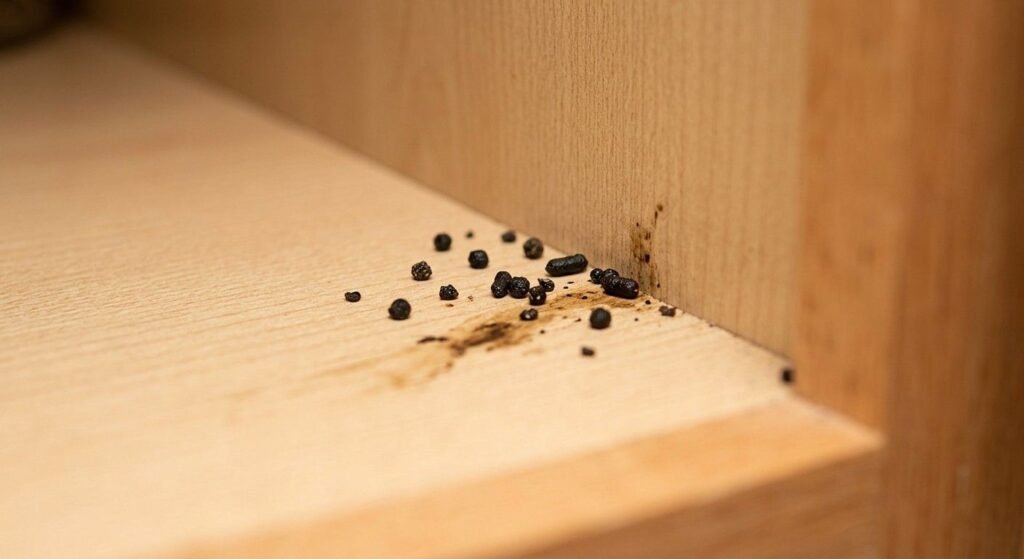
A black dot points more strongly toward roach feces when it is:
- Tiny and pepper-like
- Black or very dark brown
- Scattered in groups
- Found near corners, cracks, cabinet hinges, or appliance gaps
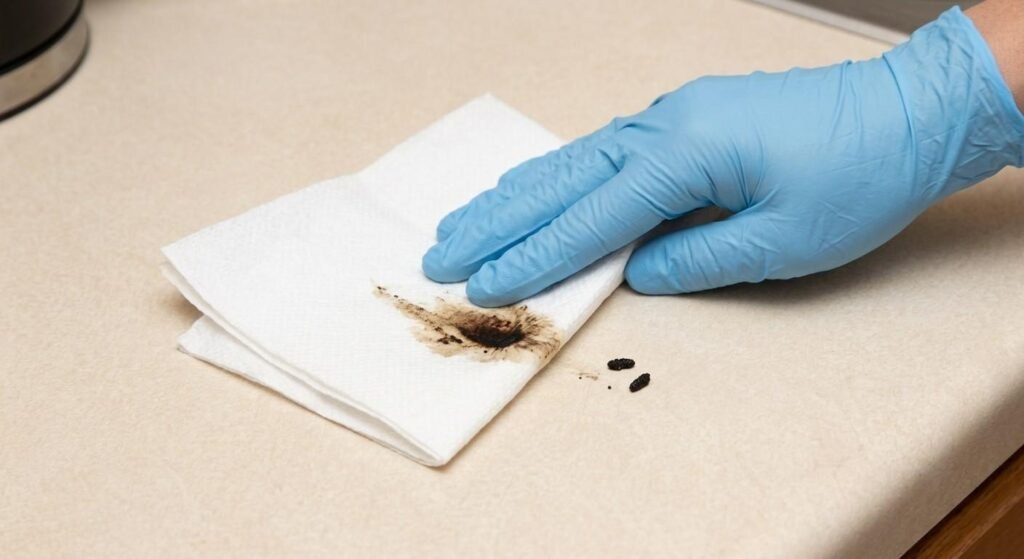
- Smearable with a damp paper towel
- Mixed with a musty odor, shed skins, or live roach sightings
A roach egg case points more strongly toward reproduction when it is:
- Brown, tan, reddish-brown, or dark brown
- Capsule-shaped, purse-shaped, or bean-shaped
- Firm or leathery
- Usually several millimeters long
- Found hidden in a crack, cabinet void, appliance gap, cardboard fold, or protected surface
For a complete visual guide, read our article on what roach eggs look like.
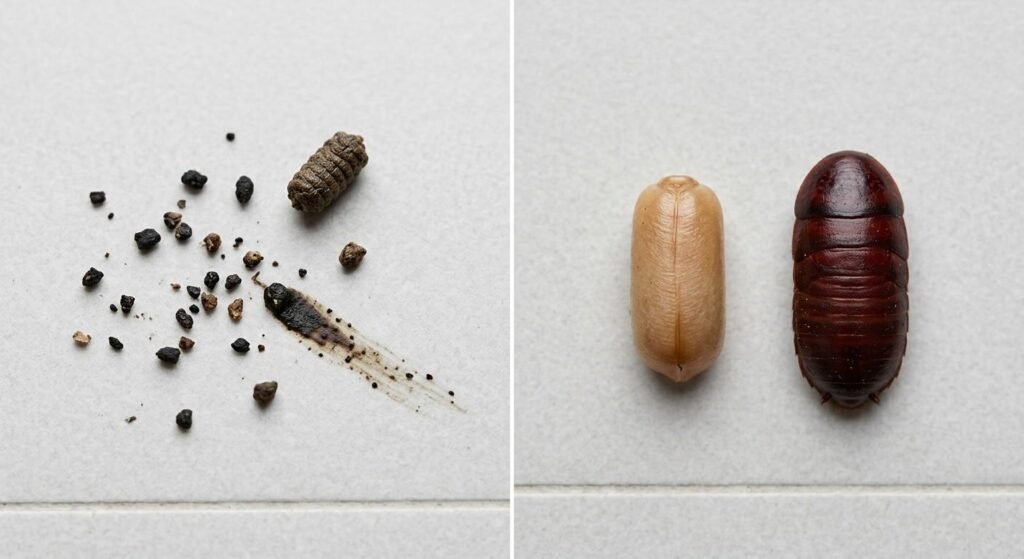
Roach Poop vs Roach Eggs: Fast Comparison Table
| Feature | Roach Poop / Droppings | Roach Eggs / Oothecae |
|---|---|---|
| What it is | Cockroach feces | Protective egg case containing embryos |
| Common appearance | Black specks, coffee-ground dots, pellets, stains, or smears | Brown capsule, bean, purse, or pill-shaped case |
| Typical size | Tiny specks for small roaches; larger ridged pellets for large roaches | Usually about 5–10 mm, depending on species |
| Color | Black, dark brown, or ink-like | Tan, brown, reddish-brown, dark brown, sometimes nearly black when old |
| Shape | Specks, dots, smears, or small ridged cylinders | Capsule-shaped with a seam or ridge |
| Pattern | Often scattered or clustered along travel paths | Usually found singly or in small numbers in hidden spots |
| Texture | Grainy, crumbly, sticky, smearable, or pellet-like | Firm, leathery, smooth, or ridged |
| Main meaning | Roaches are feeding and moving nearby | Roaches are reproducing or recently reproduced nearby |
| Best first action | Clean safely, inspect nearby harborages, monitor | Remove intact, inspect for more oothecae, treat lifecycle |
For a deeper side-by-side comparison, use our guide on roach eggs vs roach droppings.
What Do Roach Droppings Look Like?
Roach droppings look different depending on the cockroach species and size. Small roaches usually leave dark specks, while larger roaches leave more pellet-like droppings.
German Roach Droppings
German roach droppings usually look like black pepper, coffee grounds, or tiny dark specks. They commonly collect near cabinet hinges, drawer corners, sink plumbing, refrigerator motors, dishwasher edges, and food-prep areas.
German cockroaches are the most common indoor roach species in many homes and apartments. Rutgers NJAES explains that German cockroaches are mostly found in kitchens and bathrooms where food and water are available, especially around stoves, refrigerators, cabinets, drawers, and sinks Rutgers NJAES German cockroach fact sheet.
If the black dots are concentrated in a kitchen or bathroom, German roach droppings should be one of your first suspects.
American Roach Droppings
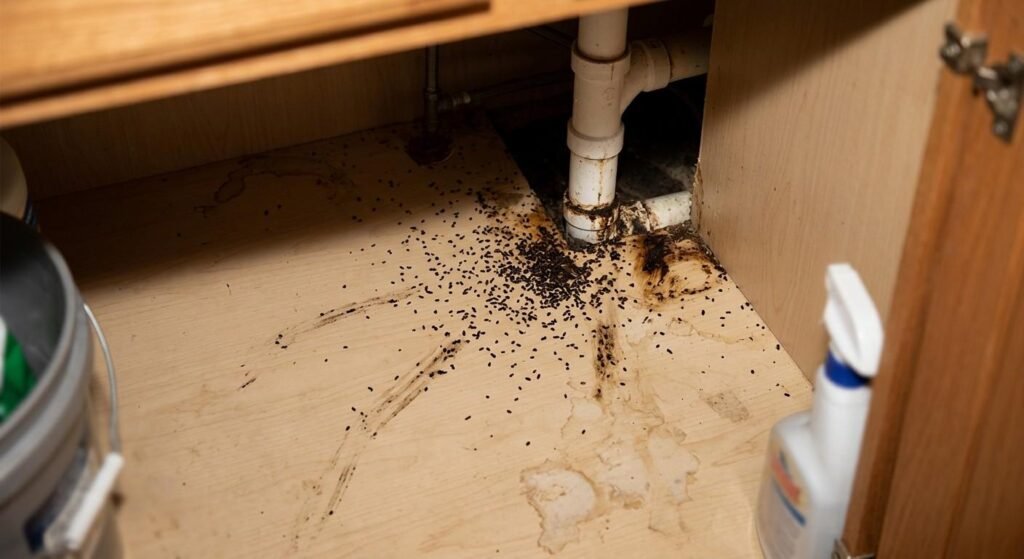
American roach droppings are usually larger than German roach droppings. They may look like dark cylindrical pellets with blunt ends and visible ridges.
American roaches prefer damp, warm areas such as basements, drains, utility rooms, sewers, crawl spaces, and plumbing areas. If you find larger dark pellets near a floor drain, basement wall, laundry room, or pipe chase, compare the shape carefully before assuming mouse droppings.
Brown-Banded Roach Droppings
Brown-banded roach droppings may look like small dark specks, similar to German roach droppings. Their location can be different because brown-banded roaches often hide in warmer, drier, higher areas.
Check upper cabinets, furniture, picture frames, closets, electronics, and ceiling-adjacent hiding spots if black specks appear away from sinks or drains.
Oriental Roach Droppings
Oriental roach droppings are usually associated with damp spaces. You may find dark specks or small pellets near basements, crawl spaces, drains, plumbing gaps, and cool wet areas.
If the dots are near moisture and you also see dark, slow-moving roaches, Oriental roaches may be involved.
What Do Roach Eggs Really Look Like?
Roach eggs are not loose black dots. Roach eggs are protected inside an ootheca, which is a capsule-like egg case produced by the female cockroach.
The University of Florida IFAS Extension explains that cockroach eggs are deposited in groups in a leathery case or capsule called an ootheca. The same guide notes that German cockroach oothecae may contain 30–48 eggs, while capsules of other cockroaches may contain 10–28 eggs University of Florida IFAS.
A roach egg case usually has these features:
- Shape: capsule-shaped, purse-shaped, bean-shaped, or pill-like
- Color: tan, brown, reddish-brown, or dark brown
- Size: usually several millimeters long
- Texture: firm, leathery, smooth, or ridged
- Structure: often has a seam or keel where nymphs emerge
- Placement: hidden in cracks, crevices, cabinets, appliances, cardboard, furniture, or damp protected areas
For more detail on ootheca biology, read what are roach eggs?
Species Guide: Which Roach Egg Case Did You Find?
Roach egg cases vary by species. Identifying the ootheca helps you understand how quickly the infestation can grow.
| Species | Egg Case Color | Egg Case Size | Eggs Per Case | Common Egg Location |
|---|---|---|---|---|
| German cockroach | Light tan to brown | About 6–9 mm | About 30–40 or more | Female carries it until near hatch; kitchens and bathrooms |
| American cockroach | Brown to dark reddish-brown, darkens with age | About 8 mm or more | About 14–16 | Damp hidden areas near food and moisture |
| Oriental cockroach | Dark brown to nearly black | About 8–10 mm | About 16 | Damp basements, drains, crawl spaces |
| Brown-banded cockroach | Reddish-brown | About 5 mm | About 10–18 | Furniture, ceilings, upper walls, electronics |
Rutgers NJAES states that a typical German cockroach egg case contains about 40 eggs and measures about 8 mm by 3 mm by 2 mm Rutgers NJAES. University of Florida IFAS states that American cockroach females lay about 16 eggs per egg case, and the egg case is brown when deposited and turns black in a day or two UF IFAS American cockroach profile.
If you found a light tan capsule and suspect German roaches, use our German roach eggs identification guide.
Why Black Dots Usually Mean Roach Poop
Black dots usually mean roach poop because roach feces is small, dark, and commonly deposited along movement routes. Roaches hide during the day and travel at night between harborages, food, and water.
Roach droppings often collect in predictable places:
- Cabinet corners
- Drawer tracks
- Under sinks
- Around pipe openings
- Behind refrigerators
- Behind stoves and dishwashers
- Pantry shelf corners
- Along baseboards
- Behind loose trim
- Near garbage cans
- Inside cardboard storage
- Around bathroom plumbing
The University of Florida IFAS cockroach management guide explains that cockroaches hide in dark sheltered places during the day and may be found around kitchen sinks, drain boards, cracks around cupboards, behind drawers, around pipes, behind frames, behind baseboards, and in bathrooms University of Florida IFAS.
The more black dots you find in these areas, the more likely you are looking at active roach traffic.
The Damp Towel Test: Does the Black Dot Smear?
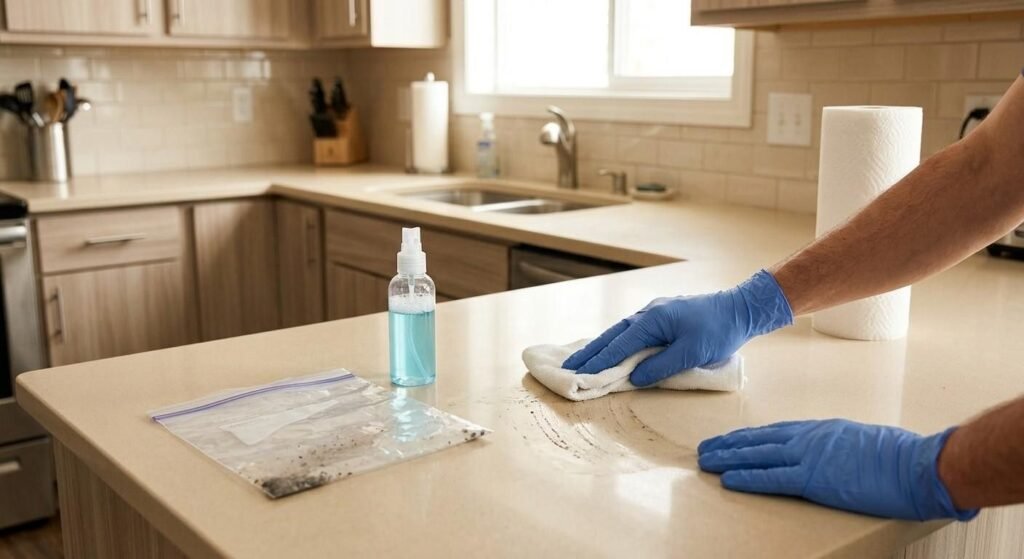
The damp towel test can help separate roach droppings from hard objects like seeds, oothecae, or debris. A roach dropping often smears dark brown or black when pressed with a damp white paper towel.
Use this test carefully:
- Put on disposable gloves.
- Lightly dampen a white paper towel.
- Press the towel onto one black dot.
- Check whether the mark smears, dissolves, crumbles, or stays solid.
- Dispose of the towel in a sealed trash bag.
- Wash the area with hot, soapy water or an appropriate cleaner.
A smear suggests fecal material. A solid capsule that keeps its shape is not poop and may be an ootheca, seed, insect case, or other debris.
Do not sniff, blow, or sweep dry droppings. Cockroach feces and body parts can contain allergens.
Are Black Dots on Kitchen Counters Roach Poop?
Black dots on kitchen counters can be roach poop, especially if they appear overnight near crumbs, sinks, appliances, or cabinet edges. Roaches are nocturnal, so fresh specks may show up after the kitchen has been quiet for several hours.
Check the nearest hidden zones:
- Gap behind the backsplash
- Underside of the counter lip
- Cabinet hinge corners
- Drawer tracks
- Appliance sides
- Sink plumbing holes
- Trash cabinet corners
- Coffee maker, toaster, or microwave area
If the black dots return after cleaning, roach activity is more likely than random dirt.
Are Black Dots in Cabinets Roach Eggs or Droppings?
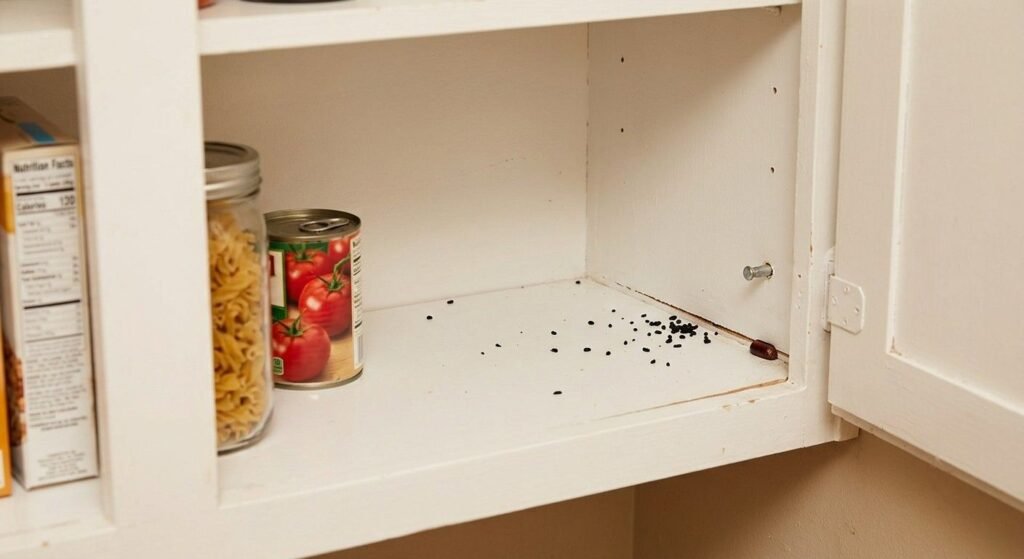
Black dots in cabinets are usually roach droppings, not eggs. Roach egg cases are larger brown capsules, while cabinet droppings often look like pepper scattered in corners, hinge pockets, shelf seams, and drawer tracks.
Cabinets are important because they provide three things roaches need: shelter, food residue, and darkness. Kitchen base cabinets under sinks are especially attractive because they also provide moisture.
If you find black dots inside cabinets, remove stored items and inspect:
- Back corners
- Shelf pin holes
- Hinges
- Drawer slides
- Under the sink
- Around plumbing gaps
- Cardboard food packaging
- Paper bags and reusable grocery bags
For a kitchen-focused inspection process, read how to find cockroach eggs in the kitchen.
Are Black Dots in the Bathroom Roach Poop?
Black dots in the bathroom can be roach poop when they appear near moisture, plumbing, drains, cabinets, or wall gaps. Bathrooms attract roaches because water is a major survival factor.
Inspect these bathroom spots:
- Under the sink
- Behind the toilet
- Around pipe openings
- Inside vanity drawers
- Behind loose baseboards
- Around bathtub or shower cracks
- Near floor drains
- Behind laundry baskets or stored paper products
If the black dots appear with a musty odor, live roaches, or shed skins, treat the bathroom as an active inspection zone.
When Black Dots Are Not Roach Poop
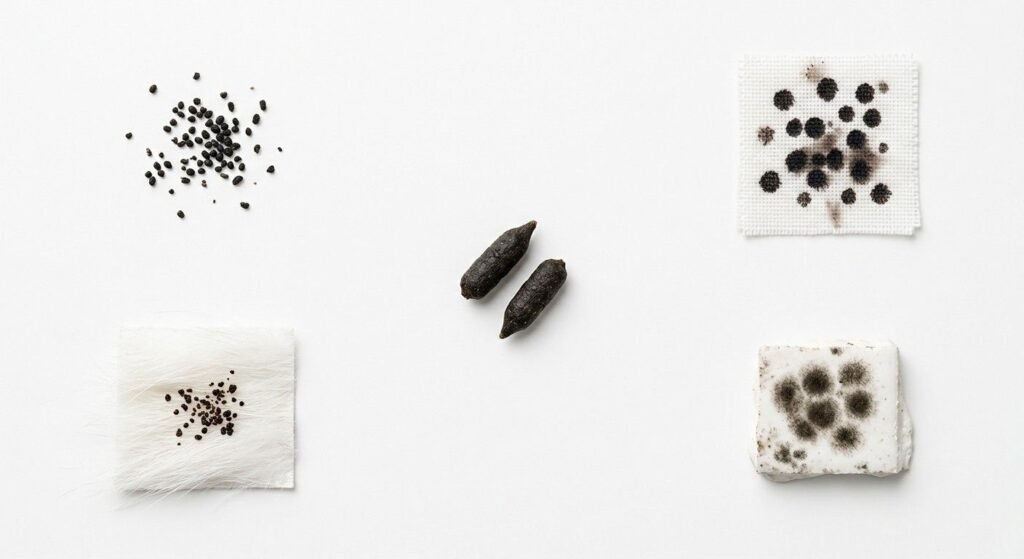
Black dots are not always roach poop. Several household pests and materials can leave dark specks.
| Black Dot Source | What It Looks Like | Where It Appears | Key Difference |
|---|---|---|---|
| Bed bug fecal spots | Dark ink-like dots or stains | Mattress seams, bed frames, headboards | Often bleeds into fabric and appears near bed bug hiding spots |
| Mouse droppings | Larger dark pellets | Pantries, under sinks, garages, storage | Usually larger than roach poop and often pointed at ends |
| Flea dirt | Black-red specks | Pet bedding, carpets, pet resting areas | Turns reddish-brown when wet because it contains digested blood |
| Fly specks | Small black spots | Windows, walls, light fixtures | Often found on vertical surfaces where flies rest |
| Mold or mildew | Dark spots or patches | Damp grout, caulk, walls, ceilings | Spreads as patches, not fecal pellets |
| Dirt or food debris | Irregular particles | Counters, floors, pantries | Does not return after source is cleaned |
Location is the best clue. Black dots near a mattress are not evaluated the same way as black dots under a kitchen sink.
Do Roach Droppings Mean an Infestation?
Roach droppings mean cockroach activity, but the amount and pattern reveal how serious the problem may be. A few isolated specks may come from a wandering roach. Repeated clusters in multiple locations suggest an established infestation.
Treat the situation as more serious when you find:
- Droppings in several rooms
- Droppings returning after cleaning
- Live roaches during the day
- Small nymphs near cracks or appliances
- Multiple egg cases
- A musty odor in cabinets
- Droppings mixed with shed skins and dead roaches
Daytime roach sightings are especially concerning because roaches usually hide during daylight. Seeing them in the open can mean crowding, food shortage, or heavy activity.
Are Roach Droppings Dangerous?
Roach droppings can be a health concern because cockroach feces, shed skins, saliva, and body parts contain allergens. The EPA states that droppings or body parts of cockroaches and other pests can trigger asthma, and that proteins in cockroach feces and saliva can cause allergic reactions or asthma symptoms in some people EPA asthma triggers guide.
The EPA also notes that cockroach feces, saliva, eggs, and cuticles left behind on surfaces contain allergenic substances, especially for people with asthma or respiratory conditions EPA cockroaches and schools IPM guide.
This is why cleanup should be careful. Avoid dry sweeping, blowing, or disturbing heavy droppings without protection. Use gloves, controlled vacuuming when appropriate, and wet cleaning.
How to Clean Roach Poop Safely
Roach poop should be cleaned in a way that removes allergens, fecal trails, and aggregation signals without spreading dust. The University of Florida IFAS guide states that vacuuming eliminates cockroach skins and feces that cause allergies, and that scrubbing feces with hot, soapy water decreases aggregation pheromone that attracts cockroaches to the area University of Florida IFAS.
Use this cleanup process:
- Wear gloves and a mask if droppings are heavy or dusty.
- Photograph the droppings first so you can track infestation zones.
- Vacuum carefully with a HEPA-filter vacuum if available.
- Avoid dry sweeping because it can push particles into the air.
- Wipe surfaces with hot, soapy water.
- Disinfect food-contact surfaces with an appropriate product after cleaning.
- Seal and discard vacuum contents outdoors.
- Remove nearby food debris, grease, cardboard, and moisture.
- Place sticky monitors near the area to confirm whether roaches return.
Cleaning removes evidence, but it does not always remove the roach population. Combine cleaning with inspection, exclusion, and treatment.
What to Do If You Find Roach Eggs
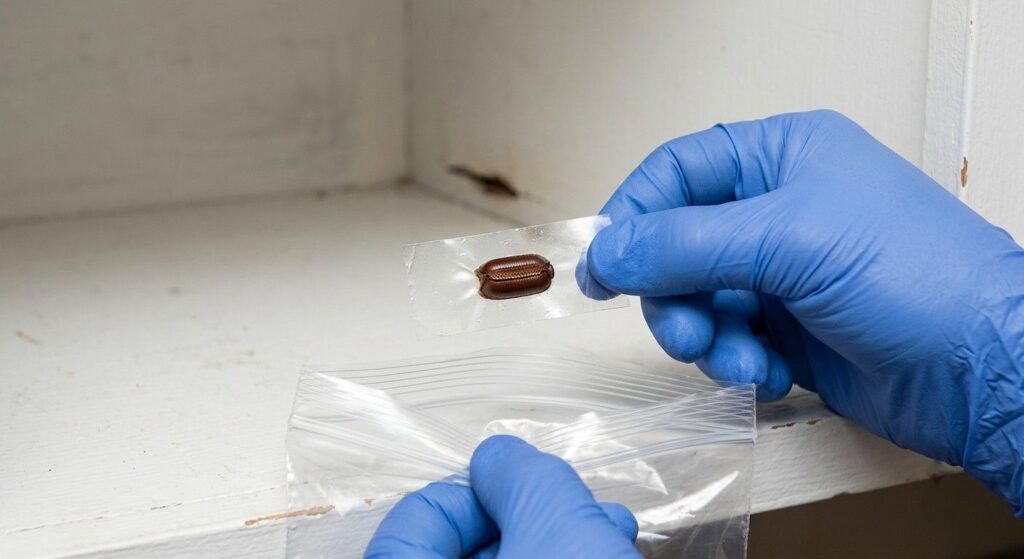
If you find a roach egg case instead of poop, remove it intact and inspect the surrounding area. A single ootheca can contain many developing roaches.
Follow this process:
- Do not crush it into the surface.
- Pick it up with tape, gloves, or a paper towel.
- Seal it in a plastic bag.
- Dispose of it outdoors.
- Vacuum the surrounding cracks and crevices.
- Look for more oothecae, nymphs, and droppings nearby.
- Use baits, monitors, and insect growth regulators where appropriate.
- Keep monitoring for several weeks because hidden oothecae may still hatch.
For egg-focused control options, read what kills roaches and their eggs.
How to Stop Black Dots From Coming Back
Black dots will keep returning until the roach harborage, food source, water source, and entry points are corrected. Cleaning alone removes droppings, but it does not remove the conditions that support roaches.
Use this prevention checklist:
- Store food in airtight containers.
- Clean crumbs and grease every evening.
- Wash dishes before bed.
- Empty trash daily during active infestations.
- Fix leaky faucets, pipes, and condensation problems.
- Seal gaps around plumbing and electrical lines.
- Remove unnecessary cardboard and paper clutter.
- Vacuum under appliances and furniture.
- Caulk cracks around baseboards and cabinets.
- Place sticky monitors near suspected harborages.
- Use bait placements instead of broad spraying when possible.
University of Florida IFAS describes integrated pest management as the most effective method of cockroach control and notes that chemical use alone is the least effective method University of Florida IFAS.
Final Verdict: Are Black Dots Roach Eggs or Poop?
Black dots are usually roach poop, not roach eggs. Roach poop appears as tiny black or dark-brown specks, stains, smears, or pellets along cockroach travel routes. Roach eggs are enclosed inside larger brown oothecae that look like firm capsules, beans, purses, or pills.
If the evidence is tiny, black, scattered, and smearable, treat it as roach droppings. If the evidence is larger, brown, capsule-shaped, and solid, treat it as a possible roach egg case.
The correct next step is inspection. Clean the dots safely, check nearby cracks and appliances, look for egg cases and nymphs, and use monitoring traps to confirm whether the roach activity is still active.
Frequently Asked Questions
Are tiny black dots cockroach eggs?
No. Tiny black dots are usually cockroach droppings, not eggs. Roach eggs are enclosed inside a larger capsule-shaped egg case called an ootheca.
What does roach poop look like?
Roach poop from small species often looks like black pepper, coffee grounds, tiny dark specks, or ink-like stains. Larger roaches may leave dark cylindrical pellets with blunt ends and ridges.
What does a roach egg case look like?
A roach egg case looks like a small brown capsule, bean, purse, or pill. It is usually firm or leathery and may have a seam or ridges. Most common oothecae are several millimeters long.
How can I tell roach poop from roach eggs fast?
Check size and shape. Tiny black specks are usually poop. Larger brown capsules are more likely egg cases. A damp paper towel may smear poop, while an ootheca usually stays solid.
Where do roaches leave black droppings?
Roaches leave black droppings near harborages and travel paths, including cabinets, drawers, appliance gaps, under sinks, plumbing openings, baseboards, pantries, bathrooms, and cardboard storage.
Does roach poop mean I have roaches?
Yes. Roach poop means roaches have been active in that area. If droppings return after cleaning or appear in multiple locations, an active infestation is more likely.
Can roach poop make you sick?
Roach droppings can contain allergens that trigger asthma or allergic symptoms in sensitive people. Roaches can also contaminate surfaces, so droppings should be cleaned carefully and food-contact areas should be sanitized.
Should I sweep up roach droppings?
Avoid dry sweeping heavy roach droppings because it can spread allergen particles into the air. Vacuum carefully with a HEPA-filter vacuum if available, then wipe surfaces with hot, soapy water.
Are black dots in my bed roach poop?
Black dots in bed areas may be bed bug fecal spots, dirt, lint, or other pest evidence. Roach droppings are more common near kitchens, bathrooms, food, water, and appliances. Inspect mattress seams and bed frames if the dots are near sleeping areas.
What should I do if I find both black dots and egg cases?
Finding both droppings and oothecae suggests active roach reproduction. Remove visible egg cases, clean droppings safely, inspect nearby harborages, use sticky monitors, and begin a lifecycle-based control plan with baits and sanitation.