

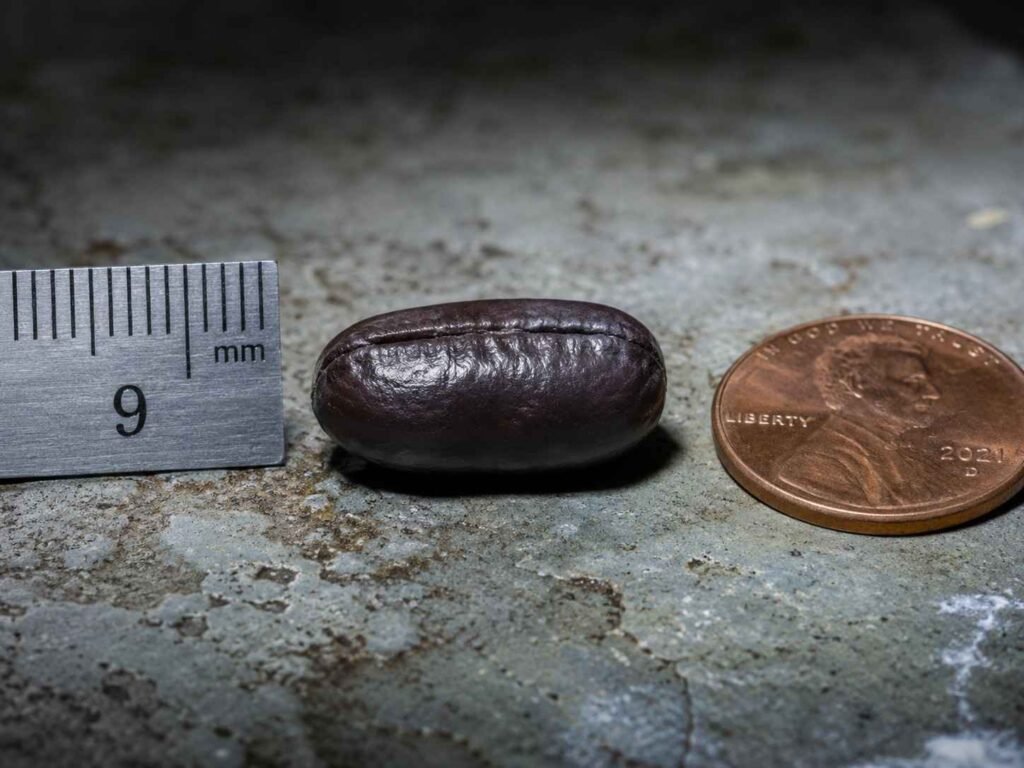
Oriental roach eggs are enclosed inside dark reddish-brown to nearly black egg cases called oothecae. An Oriental roach egg case is usually about 8–10 mm long, slightly inflated or capsule-shaped, and contains about 16 eggs.
Oriental cockroaches, also called water bugs or black beetles in some regions, prefer cool, damp, dark environments. Their egg cases are usually hidden near drains, damp basements, crawl spaces, floor-wall gaps, utility rooms, and moist debris rather than high, dry areas.
Finding one Oriental roach ootheca means reproduction may be happening near moisture. Even if the egg case looks old or dark, inspect the surrounding area because Oriental roach nymphs may already be hiding nearby.
Quick Facts About Oriental Roach Eggs
| Feature | Oriental Roach Egg Case Details |
|---|---|
| Scientific name | Blatta orientalis |
| Egg structure | Ootheca, a protective egg case |
| Size | Usually about 8–10 mm long |
| Color | Dark reddish-brown, dark brown, or nearly black |
| Shape | Capsule-shaped, slightly inflated, purse-like, or bean-like |
| Eggs per case | About 16 eggs |
| Hatching time | About 6–8 weeks or approximately two months |
| Texture | Firm, leathery, smooth to slightly ridged |
| Main hiding zones | Damp basements, drains, crawl spaces, plumbing leaks, floor-level cracks |
| Main clue | Dark egg case in a cool, moist, protected place |
Orkin describes Oriental cockroach oothecae as dark reddish-brown, 8–10 mm long, slightly inflated, and containing approximately 16 eggs Orkin cockroach egg facts. University of Missouri Extension states that Oriental cockroach egg development inside the ootheca takes approximately two months University of Missouri Extension.
For a general ootheca guide, read what roach eggs look like.
What Are Oriental Roach Eggs?
Oriental roach eggs are developing embryos sealed inside an ootheca. The ootheca is a protective capsule that keeps the eggs grouped together until nymphs are ready to hatch.
People often say “Oriental roach eggs” when they mean the egg case. You usually will not see loose individual eggs scattered around the home. Instead, you may find one dark capsule that contains multiple eggs inside.
The University of Missouri Extension explains that female cockroaches place eggs within a protective covering or egg case called an ootheca, and that the ootheca protects eggs before young cockroaches emerge University of Missouri Extension.
For the full biology of roach egg cases, read what are roach eggs?.
What Do Oriental Roach Egg Cases Look Like?
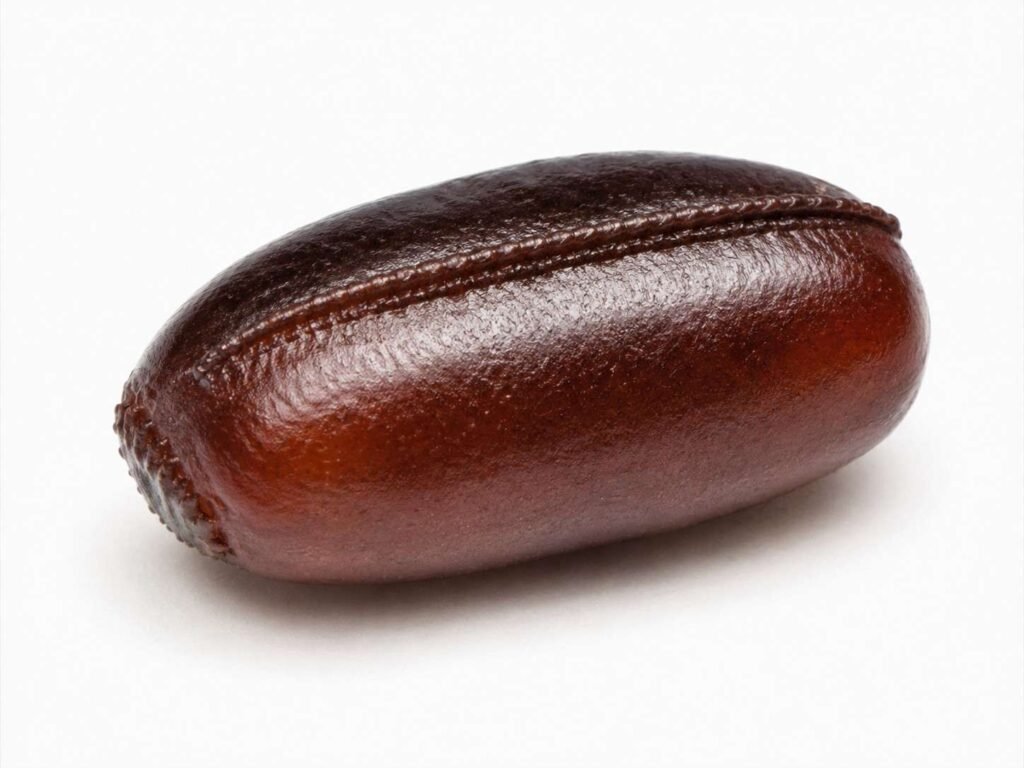
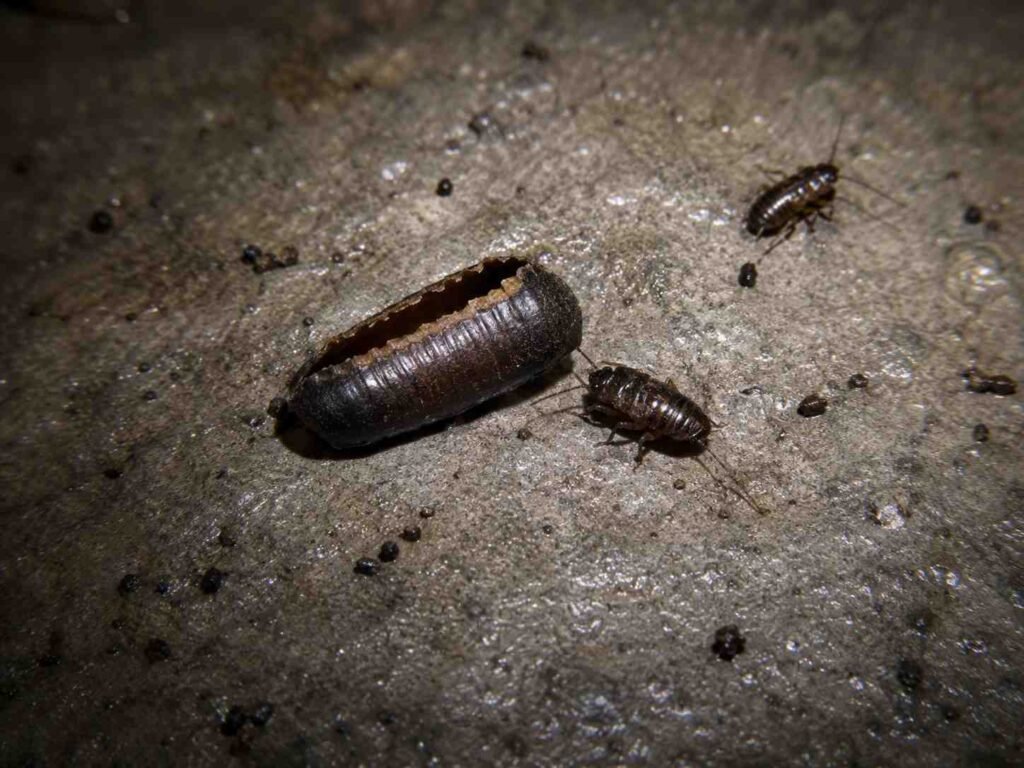
Oriental roach egg cases look like small dark capsules, dark beans, or tiny blackish-brown purses. They are darker than German roach egg cases and often darker than American roach egg cases.
An Oriental roach ootheca usually has these identification features:
- Color: dark reddish-brown, dark brown, or nearly black
- Size: about 8–10 mm long
- Shape: capsule-shaped, bean-shaped, purse-like, or slightly inflated
- Texture: firm, leathery, and protective
- Seam: visible ridge or keel where nymphs emerge
- Location: damp, dark, protected, usually floor-level or below-grade areas
The dark color can cause confusion. Oriental roach egg cases are often mistaken for dark seeds, large roach droppings, mouse droppings, or debris. The capsule shape and seam are the strongest identification clues.
Oriental Roach Egg Case Size
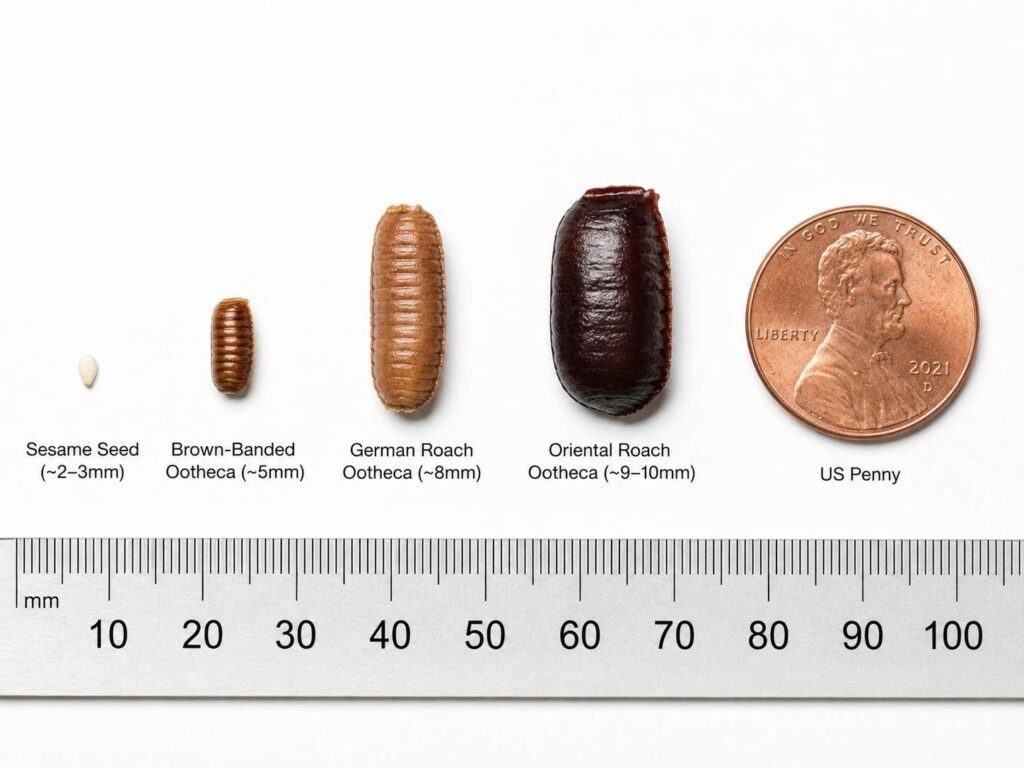
Oriental roach egg cases are usually about 8–10 mm long. That makes them similar in length to American roach oothecae but often darker and more inflated-looking.
Size comparison:
| Object or Egg Case | Approximate Size | Comparison |
|---|---|---|
| Sesame seed | 2–3 mm | Much smaller than an Oriental ootheca |
| Brown-banded roach egg case | About 5 mm | Smaller and usually found higher/drier |
| German roach egg case | About 6–9 mm | Similar length but lighter and narrower |
| American roach egg case | About 8 mm | Similar but often less inflated |
| Oriental roach egg case | About 8–10 mm | Dark, slightly inflated capsule |
For a full species chart, read How big are roach egg cases?.
Oriental Roach Egg Case Color
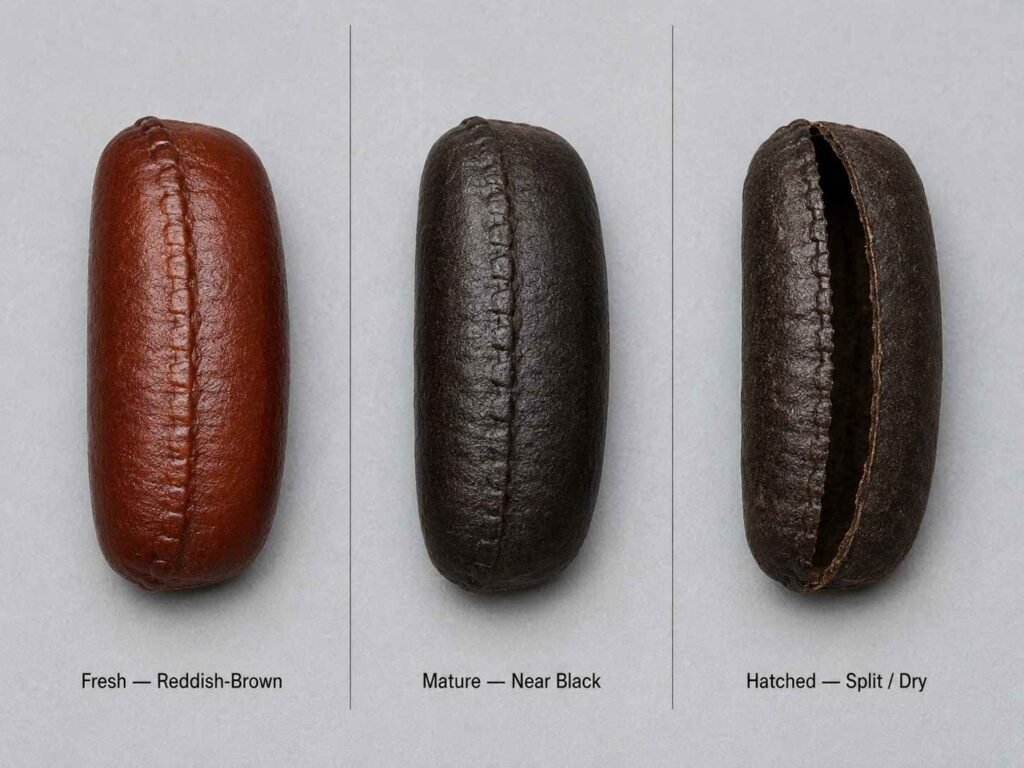
Oriental roach egg cases are usually dark reddish-brown to nearly black. Their naturally dark color is one reason they are often confused with droppings or dirt.
Color by stage:
| Stage | Oriental Roach Egg Case Color | What to Check |
|---|---|---|
| Fresh | Reddish-brown to dark brown | Firm capsule with closed seam |
| Mature | Dark brown to nearly black | Slightly inflated and sealed if active |
| Hatched | Dark, dry, split, hollow, or papery | Open seam shows nymphs emerged |
| Old or failed | Brittle, dusty, dark, shriveled | May be sealed but dead or dried out |
A blackish case is not automatically hatched. Oriental oothecae are naturally dark. The seam condition matters more than color.
For color-stage comparisons, read What color are roach eggs?.
How Long Do Oriental Roach Eggs Take to Hatch?
Oriental roach eggs usually take about 6–8 weeks to hatch, and University of Missouri Extension describes Oriental cockroach egg development inside the ootheca as approximately two months University of Missouri Extension.
Hatching time can vary with:
- Temperature
- Moisture level
- Egg-case condition
- Location of the ootheca
- Seasonal conditions
- Indoor vs outdoor harborage
Cooler conditions can slow development. Warm, damp, protected sites usually support better egg survival.
For a full timeline by species, read How long do roach eggs take to hatch?.
Where Do Oriental Roaches Hide Their Eggs?
Oriental roaches hide their egg cases in dark, damp, protected places. They prefer moisture more strongly than many other household roaches, so their oothecae are often found near water sources, drains, and low-level voids.
Common Oriental roach egg hiding places include:
- Damp basements
- Crawl spaces
- Floor drains
- Utility rooms
- Laundry rooms
- Around water heaters
- Around sump pumps
- Pipe chases
- Under sinks
- Behind toilets
- Around plumbing leaks
- Basement wall cracks
- Floor-wall junctions
- Garage corners
- Drain access points
- Outdoor mulch and leaf litter near foundations
- Under damp debris, stones, or wood near structures
University of Missouri Extension states that Oriental cockroaches are most commonly found in dark, damp basements around drains or plumbing leaks and may move along water pipes to upper floors of apartment buildings University of Missouri Extension.
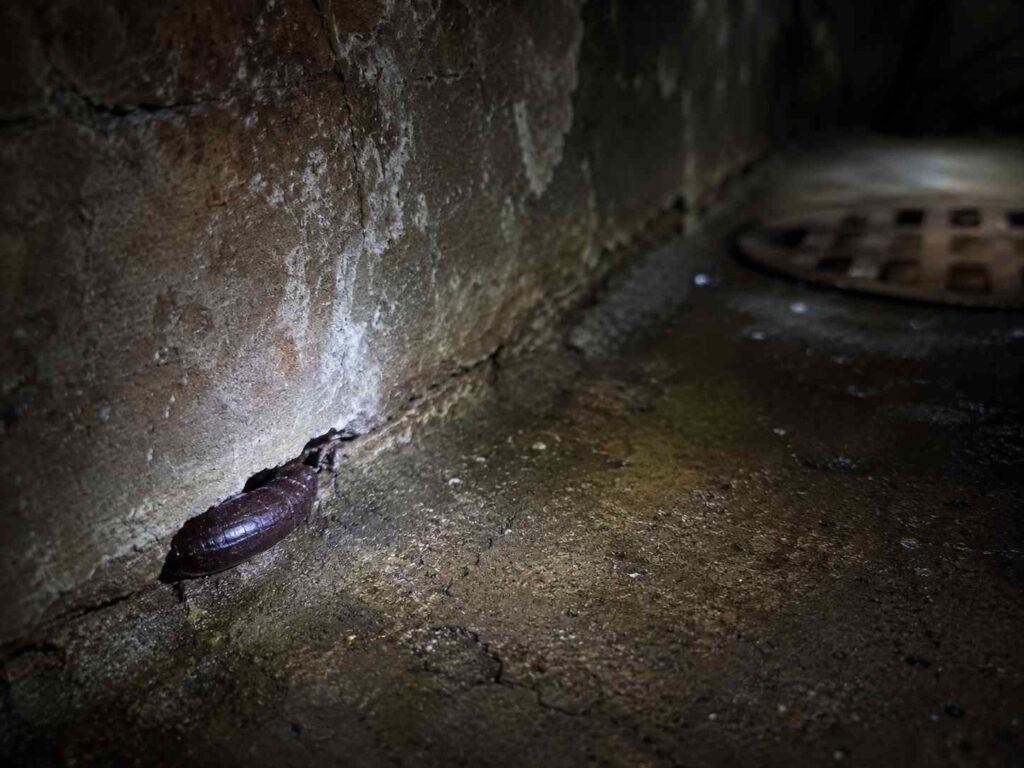
Oriental Roach Eggs in Basements
Basements are one of the most common Oriental roach egg zones because they provide darkness, moisture, and protected floor-level cracks. A dark ootheca near a basement drain, water heater, sump pump, or wall crack should be treated as possible Oriental roach evidence.
Inspect these basement areas:
- Floor drains
- Sump pump pits
- Water heater base
- Utility sink area
- Wall-floor seams
- Cracked concrete edges
- Storage boxes on the floor
- Damp corners
- Laundry appliance gaps
- Pipe entry points
If the basement has moisture problems, Oriental roaches can continue reproducing even when the upstairs living space looks clean.
Oriental Roach Eggs Around Drains and Plumbing
Oriental roaches often hide egg cases near drains and plumbing because these areas provide moisture and shelter. They may use pipe gaps, wall voids, and drain-adjacent cracks to move between areas.
Check these plumbing locations:
- Under bathroom sinks
- Under kitchen sinks
- Behind toilets
- Near floor drains
- Around laundry drains
- Behind washing machines
- Around basement pipe penetrations
- Near leaking supply lines
- Around condensation-prone pipes
If you find egg cases near plumbing, also check for water leaks. Moisture correction is a key part of Oriental roach control.
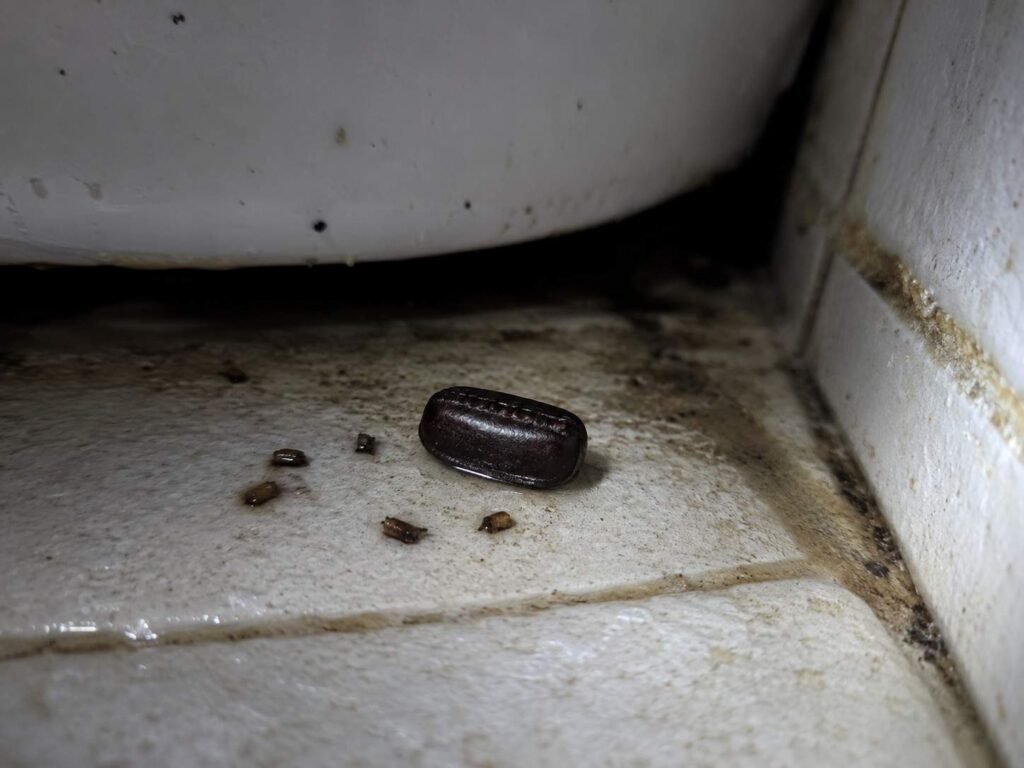
Oriental Roach Eggs Outdoors
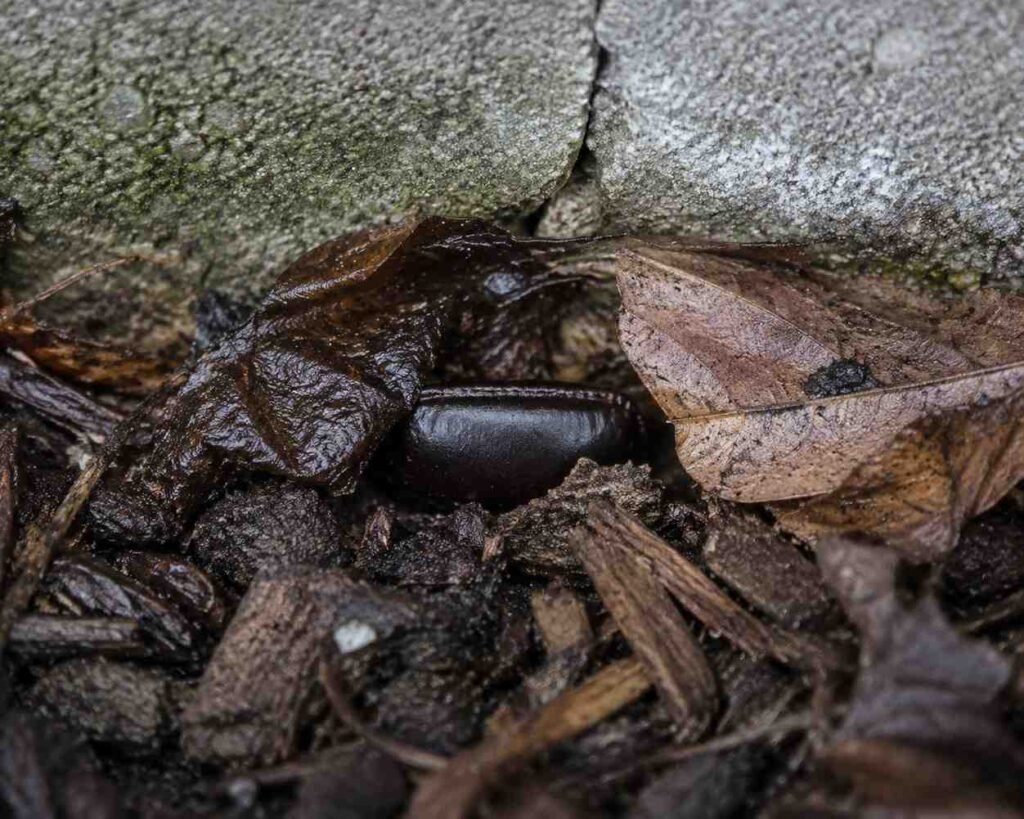
Oriental roach egg cases can also be hidden outdoors near structures. Outdoor populations may move indoors when conditions change or when they find moisture and shelter near the foundation.
Outdoor hiding places include:
- Mulch beds
- Leaf litter
- Ivy and dense ground cover
- Wood piles
- Under stones
- Under damp boards
- Near garbage storage
- Around foundation cracks
- Water meter boxes
- Drainage areas
- Moist crawl-space entries
Reduce outdoor harborage by pulling mulch back from the foundation, removing damp debris, sealing foundation gaps, and improving drainage.
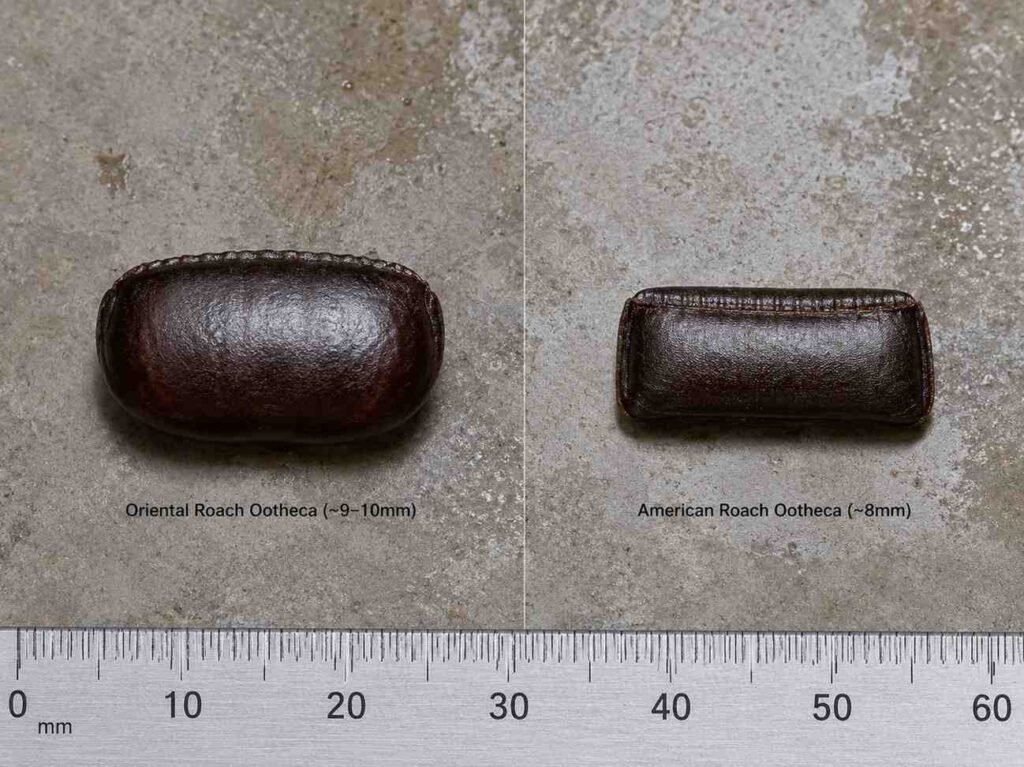
Oriental Roach Eggs vs American Roach Eggs
Oriental and American roach egg cases can look similar because both are dark and associated with damp areas. Oriental oothecae are usually darker, slightly more inflated, and more strongly associated with cool damp floor-level sites.
| Feature | Oriental Roach Eggs | American Roach Eggs |
|---|---|---|
| Size | About 8–10 mm | About 8 mm |
| Color | Dark reddish-brown to nearly black | Brown to dark brown or blackish-brown |
| Shape | Slightly inflated capsule | Purse-shaped capsule |
| Eggs per case | About 16 | About 14–16 |
| Hatching time | About 6–8 weeks or two months | About 6–8 weeks |
| Common location | Damp basements, drains, crawl spaces, cool moist areas | Basements, sewers, drains, utility rooms, damp concealed areas |
If the egg case is very dark and found near a damp basement floor or drain, Oriental roach activity is more likely.
For American roach details, read American Roach Eggs: Identification, Size, Color, and Hatching Time.
Oriental Roach Eggs vs German Roach Eggs
Oriental roach eggs and German roach eggs are easier to separate because they differ in color, location, and female behavior.
| Feature | Oriental Roach Eggs | German Roach Eggs |
|---|---|---|
| Size | About 8–10 mm | About 6–9 mm |
| Color | Dark reddish-brown to nearly black | Light tan to brown |
| Shape | Dark, slightly inflated capsule | Narrow, ridged, purse-shaped case |
| Eggs per case | About 16 | About 30–40+ |
| Female behavior | Deposits egg case in protected damp sites | Carries egg case until near hatch |
| Main location | Basements, drains, crawl spaces | Kitchens, bathrooms, cabinets, appliances |
Rutgers NJAES states that German cockroach females carry the ootheca until just before hatch, and that a typical egg case contains about 40 eggs Rutgers NJAES.
If the case is light tan and found in a kitchen cabinet, compare it with our German roach eggs guide.
Oriental Roach Egg Case vs Roach Droppings
Oriental roach egg cases are sometimes mistaken for droppings because they are dark. The difference is shape and structure.
| Feature | Oriental Roach Egg Case | Roach Droppings |
|---|---|---|
| Shape | Capsule, bean, purse, slightly inflated case | Specks, pellets, smears, or ridged droppings |
| Size | About 8–10 mm | Usually smaller or pellet-like |
| Texture | Firm, leathery, structured | Crumbly, grainy, or smearable |
| Color | Dark reddish-brown to black | Dark brown or black |
| Meaning | Reproduction | Roach movement and feeding |
If the evidence is tiny black dots, it is probably droppings, not eggs. Read Are black dots roach eggs or poop?.
Fresh vs Hatched Oriental Roach Egg Cases
Fresh or active Oriental roach egg cases are usually firm, full, dark, and sealed. Hatched cases are usually split, hollow, dry, or flattened.
| Case Status | What It Looks Like | What It Means |
|---|---|---|
| Fresh | Dark reddish-brown, firm, sealed | Recently deposited or early development |
| Mature | Dark brown to nearly black, full, sealed | Embryos may still be developing |
| Hatched | Split seam, hollow, dry, brittle | Nymphs likely emerged |
| Failed | Shriveled, sealed, dead-looking | May not hatch, but still remove it |
A dark Oriental ootheca may be active or hatched. The seam tells you more than the color. If the seam is open and the case is hollow, nymphs probably emerged.
Read What do hatched roach egg cases look like? for more visual signs.
What Baby Oriental Roaches Look Like After Hatching
Baby Oriental roaches are called nymphs. They are wingless and usually stay close to dark, damp harborage areas after hatching.
Look for:
- Small wingless roach-shaped insects
- Darkening nymphs near cracks or drains
- Activity around basement floors or damp areas
- Small droppings near the ootheca
- Shed skins as nymphs grow
- Movement at night near moisture
University of Missouri Extension states that Oriental cockroach nymph development takes 6–20 months depending on conditions, and adults can live 12–15 months University of Missouri Extension. This slower development means Oriental roach problems can persist for a long time in damp areas.
What to Do If You Find Oriental Roach Eggs
If you find an Oriental roach egg case, remove it and inspect the damp area around it. One ootheca can release about 16 nymphs, and more egg cases may be hidden nearby.
Follow this action plan:
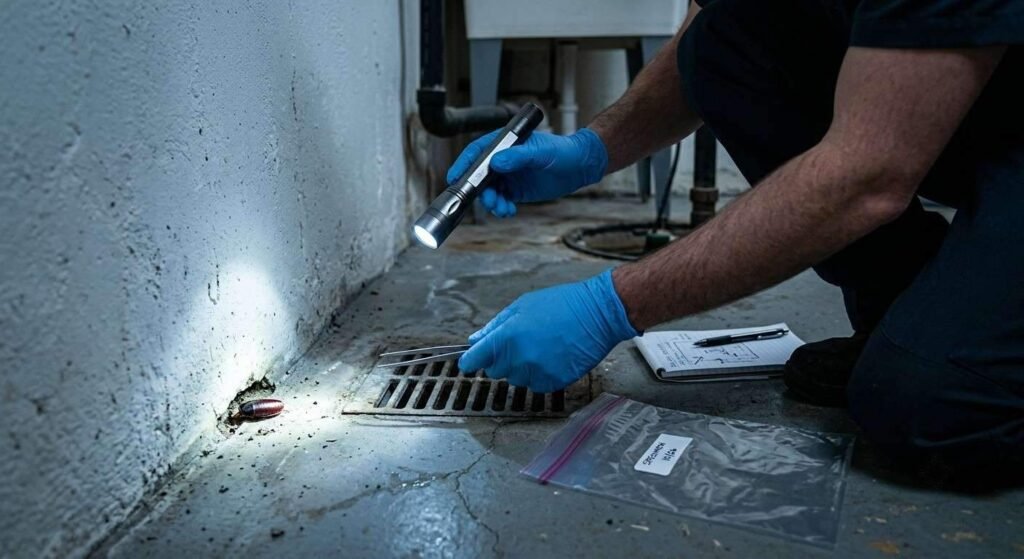
- Put on disposable gloves.
- Photograph the ootheca before removal.
- Pick it up with tape, tweezers, or a paper towel.
- Seal it in a plastic bag.
- Dispose of it outdoors.
- Vacuum nearby cracks, drains, floor edges, and debris.
- Clean droppings and stains with hot, soapy water.
- Inspect damp areas within 6–10 feet.
- Fix plumbing leaks, condensation, or drainage problems.
- Place sticky monitors near drains and floor-wall junctions.
- Use baits and lifecycle control where appropriate.
For egg-stage control options, read what kills roaches and their eggs.
How to Prevent Oriental Roach Eggs Indoors
Preventing Oriental roach eggs requires moisture control, exclusion, sanitation, and harborage reduction. These roaches are strongly tied to damp sites, so drying and sealing problem areas is critical.
Use this prevention checklist:
- Fix leaking pipes.
- Improve basement ventilation.
- Repair drainage around the foundation.
- Seal pipe gaps and foundation cracks.
- Keep floor drains clean.
- Remove damp cardboard and paper clutter.
- Store firewood away from the house.
- Pull mulch and leaf litter back from the foundation.
- Remove ivy or dense ground cover near entry points.
- Keep garbage areas clean and sealed.
- Reduce crawl-space moisture.
- Use sticky monitors in basements and utility rooms.
If Oriental roaches are entering from outdoors, indoor treatment alone may not solve the problem. Inspect the exterior moisture zones that connect to the basement, crawl space, or utility area.
Final Verdict: Oriental Roach Eggs
Oriental roach eggs are protected inside dark reddish-brown to nearly black oothecae that usually measure about 8–10 mm long and contain about 16 eggs. They are firm, capsule-shaped, slightly inflated, and commonly hidden in cool, dark, damp places such as basements, drains, crawl spaces, utility rooms, and plumbing gaps.
The most important identification clues are dark color, inflated capsule shape, damp location, and a seam along the case. A closed, full ootheca may still be active. A split, hollow, brittle case probably hatched already.
If you find one, remove it, inspect nearby moisture zones, clean droppings, place sticky monitors, and correct leaks or damp harborage conditions.
Frequently Asked Questions
What do Oriental roach eggs look like?
Oriental roach eggs are enclosed inside a dark reddish-brown to nearly black ootheca. The case looks like a small firm capsule, bean, or slightly inflated purse-shaped shell.
How big are Oriental roach egg cases?
Oriental roach egg cases are usually about 8–10 mm long, making them similar in length to American roach egg cases but often darker and slightly more inflated.
What color are Oriental roach eggs?
Oriental roach egg cases are usually dark reddish-brown, dark brown, or nearly black. Their dark color can make them look like dirt, seeds, or droppings.
How many eggs are in an Oriental roach ootheca?
An Oriental roach ootheca usually contains about 16 eggs. Some sources describe the range as about 16–18 eggs.
How long do Oriental roach eggs take to hatch?
Oriental roach eggs usually take about 6–8 weeks to hatch. University of Missouri Extension describes egg development inside the ootheca as approximately two months.
Where do Oriental roaches hide egg cases?
Oriental roaches hide egg cases in damp, protected places such as basements, drains, crawl spaces, floor cracks, pipe gaps, utility rooms, water heater areas, sump pump zones, and damp debris.
Are Oriental roach egg cases black?
They can look nearly black, especially as they mature or age. A blackish capsule may be an Oriental roach ootheca, but tiny black dots are usually droppings, not eggs.
How do I know if an Oriental roach egg case has hatched?
A hatched Oriental roach egg case usually has a split seam, hollow body, dry texture, and flattened or brittle appearance. Tiny nymphs or droppings may be nearby.
Are Oriental roach eggs dangerous?
The egg case itself is not dangerous because it bites or stings. The danger is that it can produce about 16 nymphs and indicates roach reproduction in damp areas that may also contain droppings, allergens, and contamination.
What should I do if I find Oriental roach eggs?
Remove the case, seal it in a bag, dispose of it outdoors, clean the area, inspect nearby damp hiding places, fix moisture problems, and use sticky monitors to confirm whether roaches remain active.