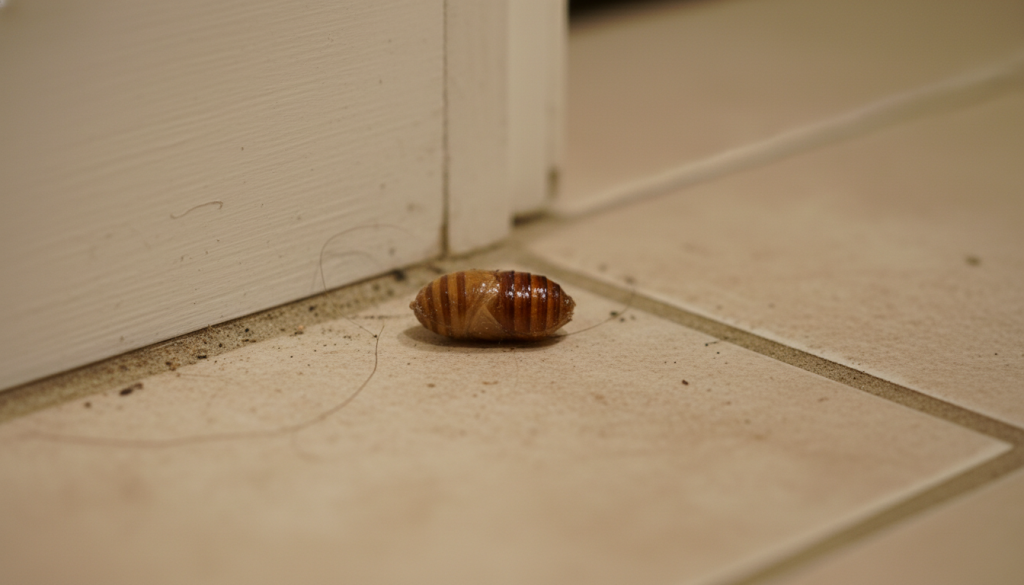
The German cockroach lays the most eggs per egg case among common indoor pest roaches, with each ootheca usually holding about 30–40 eggs and sometimes more. This is why German cockroaches are the fastest-growing indoor infestation risk in kitchens, bathrooms, apartments, restaurants, and food-handling spaces.
However, the answer changes if you compare lifetime egg production instead of eggs per case. Australian cockroach females can produce 20–30 oothecae in their lifetime, and each ootheca may contain about 24 embryos, giving them a high total reproductive potential in warm, damp environments. American cockroaches can also produce many egg cases over time, but each case contains fewer eggs than a German roach ootheca.
The practical answer for homeowners is simple: German cockroaches are the most reproductively dangerous indoor roach species because they combine high egg count, fast hatching, female egg-case carrying, short development time, and overlapping generations.
Quick Answer: Most Eggs by Category
| Category | Species | Why It Wins |
|---|---|---|
| Most eggs per egg case among common indoor roaches | German cockroach | About 30–40 eggs per ootheca, sometimes more |
| Fastest indoor population growth | German cockroach | High egg count plus short development cycle |
| High lifetime egg potential among peridomestic roaches | Australian cockroach | About 20–30 oothecae per female, with about 24 embryos per ootheca |
| Largest common indoor infestation threat | German cockroach | Thrives indoors near people, food, water, and heat |
| Most concerning kitchen breeder | German cockroach | Commonly nests in kitchens and bathrooms |
Rutgers NJAES states that a typical German cockroach egg case contains about 40 eggs and that a female produces 5–8 oothecae with a total of 200–250 eggs in her lifetime Rutgers NJAES. University of Florida IFAS describes the German cockroach ootheca as containing 30–40 eggs UF IFAS German cockroach profile.
For the full ootheca basics, read what are roach eggs?.
Roach Egg Count Chart by Species
Roach egg counts vary by species because each cockroach produces a different number of embryos per ootheca and a different number of oothecae during her lifetime.
| Cockroach Species | Eggs or Embryos Per Ootheca | Oothecae Per Lifetime | Approximate Lifetime Egg Potential | Main Infestation Setting |
|---|---|---|---|---|
| German cockroach | About 30–40, sometimes up to 48 | 5–8 | About 200–250 typical; higher under ideal conditions | Indoor kitchens, bathrooms, apartments, restaurants |
| American cockroach | About 14–16 | Often around 10 average; reports vary | About 150 young average in UF IFAS profile | Basements, sewers, drains, utility rooms |
| Oriental cockroach | About 16 | Varies | Lower than German in most indoor settings | Damp basements, drains, crawl spaces |
| Brown-banded cockroach | Up to 18 | Multiple cases | Moderate, but cases are hidden in drier rooms | Furniture, electronics, closets, high walls |
| Smokybrown cockroach | About 20 nymphs on average; some sources report about 26 eggs | About 10 average in UF material | About 200+ possible | Attics, leaf litter, tree holes, crawl spaces, humid areas |
| Australian cockroach | About 24 embryos | About 20–30 | Up to roughly 480–720 embryos under ideal conditions | Greenhouses, interiorscapes, warm damp outdoor areas |
The number that matters most depends on your question. If you mean eggs per case, German cockroaches usually lead among common household roaches. If you mean potential lifetime output, Australian cockroaches can be very high because females may produce many oothecae.
For a size-based chart, see How big are roach egg cases?.
Why German Cockroaches Are the Fastest Indoor Breeders
German cockroaches are the fastest indoor breeders because they produce many eggs per ootheca, carry the ootheca until near hatch, and mature quickly under warm indoor conditions.
A German roach female usually carries the ootheca on the end of her abdomen until the eggs are almost ready to hatch. This behavior protects the egg case and reduces the chance that the ootheca dries out, gets eaten, or is removed before hatch.
University of Florida IFAS states that German cockroach eggs are carried by the female until just before hatch, and nymphs may hatch while the female is still carrying the ootheca UF IFAS German cockroach profile. Rutgers NJAES states that the entire German cockroach life cycle is completed in about 100 days Rutgers NJAES.
This combination makes German roaches especially hard to control:
- High egg count per case
- Multiple oothecae per female
- Protected carrying behavior
- Short indoor lifecycle
- Warm kitchen and bathroom harborage
- Overlapping generations
- High nymph-to-adult survival indoors
For a species-specific guide, read German roach eggs.
German Cockroach Egg Production
German cockroaches produce the highest egg count per ootheca among the main indoor species. A typical German ootheca contains about 30–40 eggs, and some sources describe higher counts.
Key German roach egg facts:
- Eggs per ootheca: about 30–40, sometimes up to 48
- Ootheca size: about 6–9 mm long
- Ootheca color: light tan to brown
- Ootheca behavior: carried by female until near hatch
- Common location: kitchens, bathrooms, cabinets, appliances, sink areas
- Lifecycle speed: about 100 days from egg to reproductive adult under favorable conditions
The female’s egg-carrying behavior makes German cockroach eggs harder to find. You may see the female carrying the case before you ever find a loose ootheca.
Australian Cockroach Egg Production
Australian cockroaches can produce a high lifetime egg total because females may create many oothecae. Each Australian cockroach ootheca may contain about 24 embryos, and an adult female may produce about 20–30 oothecae in her lifetime.
University of Florida IFAS states that Australian cockroach oothecae may contain 24 embryos and that an adult female can lay about 20–30 oothecae in her lifetime UF IFAS Australian cockroach profile. NC State Extension reports that females produce 20–30 egg capsules and that usually 12–24 nymphs hatch from each capsule NC State Extension.
Australian cockroaches are not usually the main kitchen-apartment roach the way German cockroaches are. They are more often tied to warm, damp outdoor areas, greenhouses, interiorscapes, sinks, cupboards, plant material, and cracks or crevices.
For the full guide, read Australian cockroach eggs.
American Cockroach Egg Production
American cockroaches produce fewer eggs per case than German cockroaches, but they are long-lived and can produce multiple egg cases. Each American roach ootheca usually contains about 14–16 eggs.
University of Florida IFAS states that American cockroach females lay 16 eggs per egg case and produce one egg case a month for ten months on average. UF IFAS also notes that an adult female produces an average of 150 young in her lifetime UF IFAS American cockroach profile.
American roaches are often tied to basements, sewers, steam tunnels, drains, utility rooms, and damp concealed areas. They do not usually outbreed German roaches inside kitchen cabinets, but they can maintain large populations in sewer-connected or moisture-rich buildings.
For the full species guide, read American roach eggs.
Oriental Cockroach Egg Production
Oriental cockroaches usually produce about 16 eggs per ootheca. Their reproductive speed is slower than German cockroaches, and their development is strongly tied to damp, cool conditions.
University of Missouri Extension states that Oriental cockroach egg development inside the ootheca takes approximately two months, while nymph development takes 6–20 months depending on conditions University of Missouri Extension.
Oriental roaches are most common in damp basements, crawl spaces, drains, plumbing leaks, and cool moist floor-level areas. Their egg count is not as high as German roaches, but their damp harborage can keep infestations persistent.
For the full species guide, read Oriental roach eggs.
Brown-Banded Cockroach Egg Production
Brown-banded cockroaches produce fewer eggs per case than German cockroaches, but they can be difficult to find because they attach egg cases in dry, elevated, or furniture-based hiding spots.
Oklahoma State University Extension states that the brown-banded cockroach egg capsule is 5 mm long, yellowish or reddish-brown, and may contain up to 18 eggs. The female carries the capsule for 24–36 hours and then attaches it to an object, including desks, tables, furniture, and even bedding Oklahoma State University Extension.
Brown-banded roaches do not require as much moisture as German cockroaches. Their egg cases may be found in bedrooms, closets, picture frames, electronics, light switches, ceilings, and upper walls.
For a direct comparison, read German vs brown-banded roach eggs.
Smokybrown Cockroach Egg Production
Smokybrown cockroaches usually produce about 20 nymphs per ootheca on average, although some extension material describes about 26 eggs per case. Their egg cases are large, dark brown, and commonly associated with humid outdoor or attic-like environments.
Oklahoma State University Extension states that smokybrown cockroach eggs are laid in a dark brown ootheca that is 1/2 inch long, incubation averages 45 days, and an average of 20 nymphs hatch from each ootheca Oklahoma State University Extension. University of Tennessee Extension material describes the ootheca as about 0.4–0.6 inch long and containing approximately 26 eggs University of Tennessee Extension.
Smokybrown roaches prefer humid spaces such as tree holes, leaf litter, wood piles, attics, crawl spaces, gutters, and garages.
For the full species guide, read Smokybrown roach eggs.
Eggs Per Case vs Lifetime Egg Production
Eggs per case and lifetime egg production are different measurements. German cockroaches lead among common indoor roaches by eggs per ootheca. Australian cockroaches can produce a higher lifetime total in suitable warm, damp environments because females may lay many oothecae.
Eggs Per Ootheca
This measures how many embryos are inside one egg case.
- German cockroach: about 30–40+
- Australian cockroach: about 24
- Smokybrown cockroach: about 20–26
- Brown-banded cockroach: up to 18
- Oriental cockroach: about 16
- American cockroach: about 14–16
Lifetime Egg Potential
This measures how many total eggs one female may produce across all egg cases.
- German cockroach: usually about 200–250 eggs reported by Rutgers NJAES
- American cockroach: average around 150 young reported by UF IFAS
- Australian cockroach: potentially much higher in ideal conditions because UF IFAS reports 20–30 oothecae with about 24 embryos each
- Smokybrown cockroach: about 10 egg cases on average with about 20 eggs or nymphs each in UF/OSU materials
- Brown-banded cockroach: multiple smaller egg capsules, often hidden across furniture and rooms
For homeowners, the most important number is not the theoretical maximum. The most important number is how fast the species can build a hidden indoor population.
Which Roach Species Spreads Fastest Indoors?
The German cockroach spreads fastest indoors. It has a high egg count, fast lifecycle, strong indoor adaptation, and close association with kitchens, bathrooms, apartments, restaurants, and food preparation areas.
German roaches can build a major infestation because:
- They live entirely indoors with humans.
- Females protect oothecae by carrying them.
- Oothecae contain many eggs.
- Nymphs mature quickly.
- Multiple generations overlap.
- Food, warmth, and moisture are abundant in kitchens and bathrooms.
Australian, American, Oriental, and smokybrown roaches can produce many offspring, but they are more often tied to outdoor, damp, sewer, basement, greenhouse, or utility habitats. German roaches are the most dangerous species for fast indoor population explosions.
Which Roach Egg Case Should Worry You Most?
A German roach egg case should usually worry you most in a home, apartment, restaurant, or kitchen because it can hold about 30–40 eggs and may hatch quickly. Finding a German ootheca or an egg-bearing female means urgent action is needed.
However, any roach ootheca matters:
- A German ootheca can produce the largest indoor nymph burst.
- An American ootheca may signal damp building or sewer-connected activity.
- An Oriental ootheca may signal persistent moisture problems.
- A brown-banded ootheca may signal hidden cases in furniture and electronics.
- A smokybrown ootheca may signal attic, gutter, tree, or crawl-space harborage.
- An Australian ootheca may signal greenhouse, interiorscape, or warm damp building conditions.
For removal methods, read What kills roaches and their eggs?.
What to Do If You Find a Roach Egg Case
Any roach egg case should be removed and followed by inspection. Do not ignore an ootheca because even one case can release many nymphs.
Follow this action plan:
- Put on disposable gloves.
- Photograph the egg case before removing it.
- Note the location because location helps identify the species.
- Pick up the case with tape, tweezers, a paper towel, or a vacuum crevice tool.
- Seal it in a plastic bag.
- Dispose of it outdoors.
- Vacuum nearby cracks, crevices, and debris.
- Clean droppings and stains with hot, soapy water where appropriate.
- Inspect the surrounding 6–10 feet for more oothecae.
- Place sticky monitors near suspected harborages.
- Remove food, water, cardboard, clutter, and damp debris.
- Use baits and insect growth regulators where appropriate.
If the case is split, hollow, or papery, read What do hatched roach egg cases look like? and inspect for nymphs nearby.
Final Verdict: Which Cockroach Species Lays the Most Eggs?
The German cockroach lays the most eggs per egg case among common indoor roaches, with about 30–40 eggs per ootheca and sometimes more. It is also the fastest and most serious indoor reproductive threat because it matures quickly and thrives in kitchens, bathrooms, apartments, and restaurants.
The Australian cockroach can have very high lifetime egg potential because females may produce 20–30 oothecae with about 24 embryos each under suitable warm, damp conditions. But for most homes and apartments, German cockroaches remain the species most likely to create a fast-growing indoor infestation.
If you find any roach egg case, remove it, identify the species, inspect nearby hiding places, and start lifecycle-based control immediately.
Frequently Asked Questions
Which cockroach lays the most eggs per egg case?
The German cockroach lays the most eggs per egg case among common indoor pest roaches. A German ootheca usually contains about 30–40 eggs and sometimes more.
Which cockroach reproduces the fastest indoors?
The German cockroach reproduces the fastest indoors. It has a high egg count, a short lifecycle, and females carry the ootheca until near hatch.
Which cockroach has the highest lifetime egg potential?
Australian cockroaches can have very high lifetime egg potential because females may produce 20–30 oothecae with about 24 embryos each. However, they are more tied to warm damp outdoor, greenhouse, and interiorscape environments than typical kitchen infestations.
How many eggs does a German cockroach lay?
A German cockroach ootheca usually contains about 30–40 eggs. Rutgers NJAES reports that a female produces 5–8 oothecae with a total of 200–250 eggs in her lifetime.
How many eggs does an American cockroach lay?
An American cockroach ootheca usually contains about 14–16 eggs. UF IFAS reports that American cockroach females produce an average of about 150 young in their lifetime.
How many eggs does an Australian cockroach lay?
An Australian cockroach ootheca may contain about 24 embryos. UF IFAS reports that an adult female can lay about 20–30 oothecae in her lifetime.
How many eggs does a brown-banded cockroach lay?
A brown-banded cockroach ootheca can contain up to about 18 eggs. The female carries the case briefly and then attaches it to furniture, walls, desks, tables, or other objects.
Does one roach egg case mean infestation?
One roach egg case can indicate active or recent reproduction. Inspect nearby for droppings, nymphs, adults, shed skins, and additional oothecae.
Are bigger roach egg cases always more dangerous?
No. German roach egg cases are not the largest, but they usually contain more eggs than larger American or Oriental roach egg cases. Species matters more than size alone.
What should I do if I find a German roach egg case?
Remove it immediately, seal it in a bag, dispose of it outdoors, inspect nearby kitchen or bathroom harborages, place sticky monitors, and begin a roach control plan using sanitation, baits, and lifecycle-based treatment.