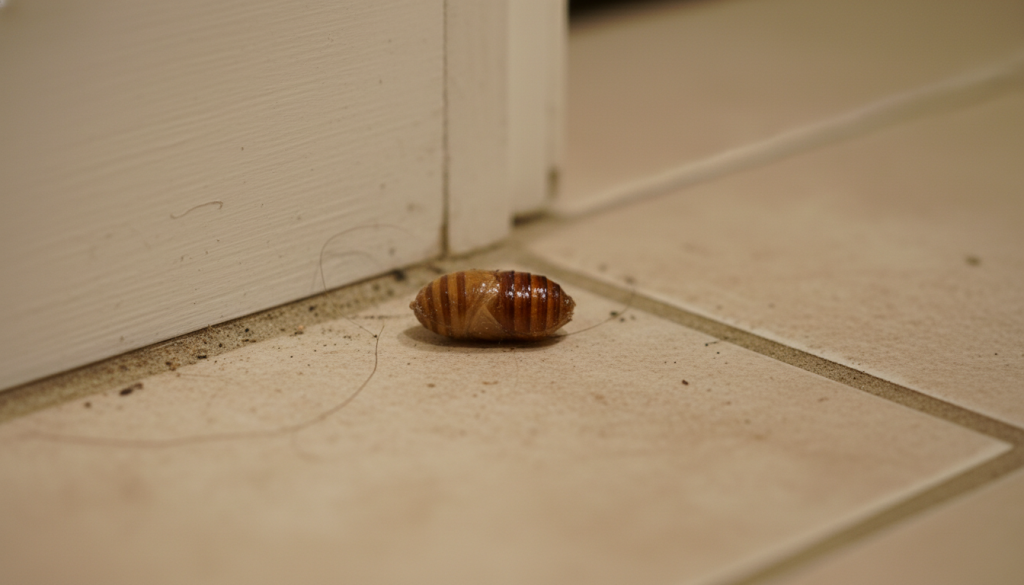
One German cockroach. One single gravid female. That’s all it takes to produce over 300 offspring in roughly six months, no second mating is required.
The reason cockroach infestations spiral from “I saw one” to “They’re everywhere” comes down to a simple biological reality: roaches don’t lay eggs one at a time. They produce hardened egg cases called oothecae, and each one holds anywhere from 14 to 48 developing embryos depending on the species.
So how many eggs do roaches lay, exactly? The answer varies dramatically across the five most common household cockroach species, and those differences directly determine how fast an infestation grows in your home.
This guide gives you the precise egg count per ootheca, the number of oothecae each female produces in her lifetime, and the total reproductive output for every major species, because understanding roach eggs production rate is the first step toward stopping population growth before it overwhelms you.
Table of Contents
1. Quick Answer: Roach Egg Counts at a Glance(
2. How Many Eggs Does a German Cockroach Lay?
3. How Many Eggs Does an American Cockroach Lay?
4. Oriental roach eggs Count
5. Brown-banded roach eggs Count
6. Smoky Brown, Australian, and Other Species
7. Full Species Comparison Table
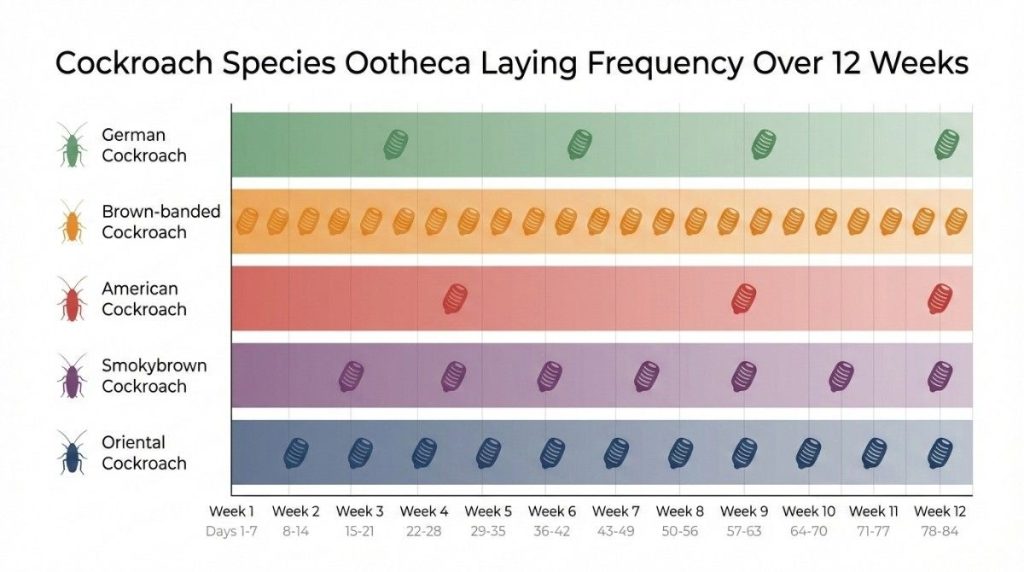
8. How Often Do Cockroaches Lay Eggs?
9. Total Lifetime Egg Production: The Numbers That Matter
10. Can One Roach Cause an Infestation? The Population Math
11. What Affects How Many Eggs a Cockroach Produces?
12. Where Do Cockroaches Lay Their Eggs in Homes?
13. How to Find and Destroy Roach Egg Cases
14. FAQs
15. Key Takeaways
Quick Answer: Roach Egg Counts at a Glance
If you need the short version, here it is:
German cockroach: 30–48 eggs per ootheca (average 37–38)
American cockroach: 14–16 eggs per ootheca (average 15)
Oriental cockroach: 16 eggs per ootheca
Brown banded cockroach: 14–18 eggs per ootheca (average 16)
Smoky brown cockroach: 20–26 eggs per ootheca
Australian cockroach: 20–24 eggs per ootheca
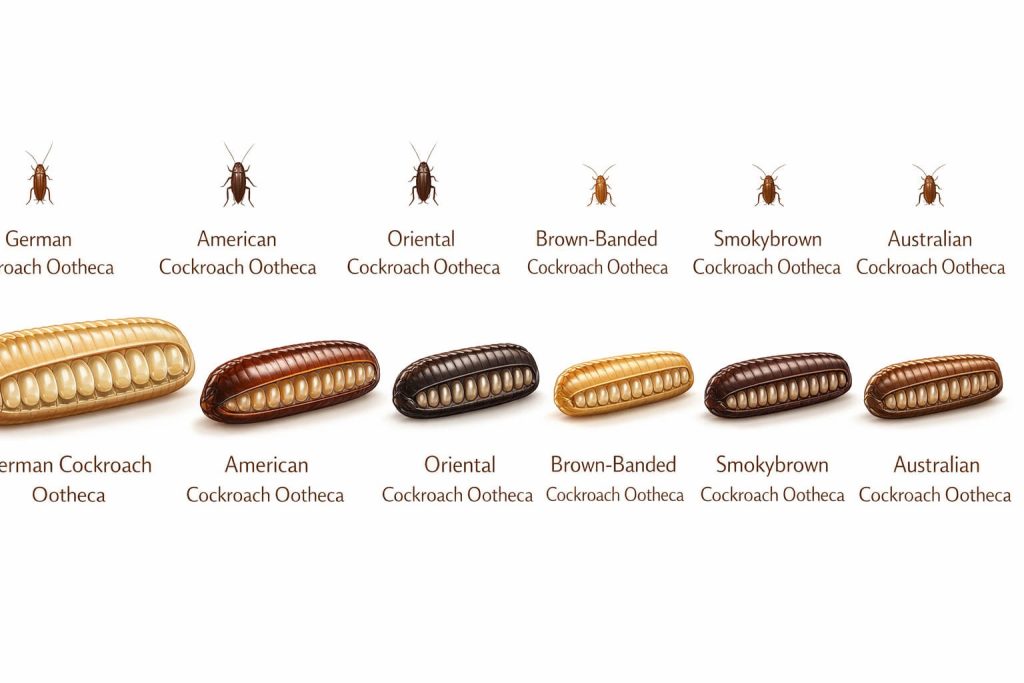
The German cockroach (Blattella germanica) is the most prolific breeder among common urban pest insects, producing the most eggs per case, the most cases per lifetime, and the highest total reproductive output of any domestic cockroach species.
But egg count per ootheca only tells part of the story. How often a female produces those cases and how many she creates over her entire lifespan are what truly drive the roach population growth rate in an infested home.
Below is the full breakdown for every species you’re likely to encounter.
How Many Eggs Does a German Cockroach Lay?
The German cockroach is the dominant indoor cockroach species worldwide. It’s also the one most likely responsible if you’re dealing with a kitchen or bathroom infestation. And unfortunately, it holds the record for cockroach fecundity rate among household species.
Eggs Per Ootheca
Each German roach eggs case contains 30 to 48 individual eggs, with most oothecae averaging around 37–38 embryos per capsule. That’s roughly double the egg count of an American cockroach ootheca.
The egg case itself is small, approximately 7–9 millimeters long, light tan to brown, and distinctly ridged with a visible keel (the suture line running along the top where nymphs eventually emerge).
Oothecae Per Lifetime
A single German cockroach female produces 4 to 8 oothecae during her adult life, which typically spans 20–30 weeks. Under optimal conditions, warm and humid with abundant food, some females push this number to 9 or even 10 cases.
Total Lifetime Egg Production
Here’s where the numbers get alarming:
Conservative estimate: 4 oothecae × 37 eggs = 148 eggs
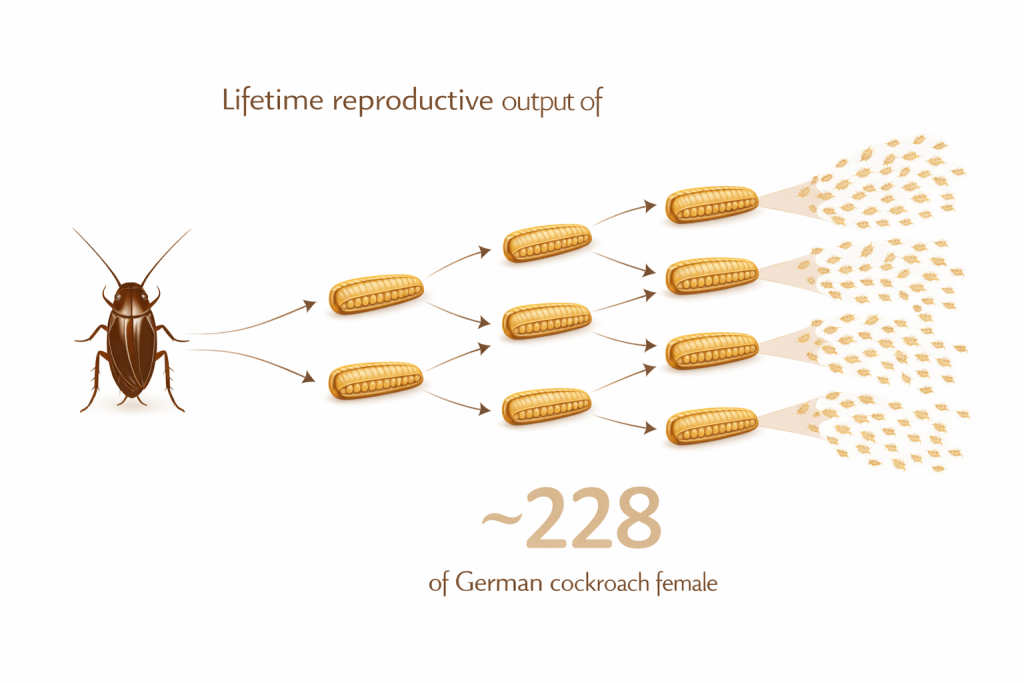
Average estimate: 6 oothecae × 38 eggs = 228 eggs
Maximum potential: 8 oothecae × 48 eggs = 384 eggs
A single German cockroach female can produce 150–384 eggs in her lifetime, with most producing approximately 200–250 under typical indoor conditions.
Why German Roaches Lay More Eggs
Three biological factors explain this species’ exceptional reproductive capacity:
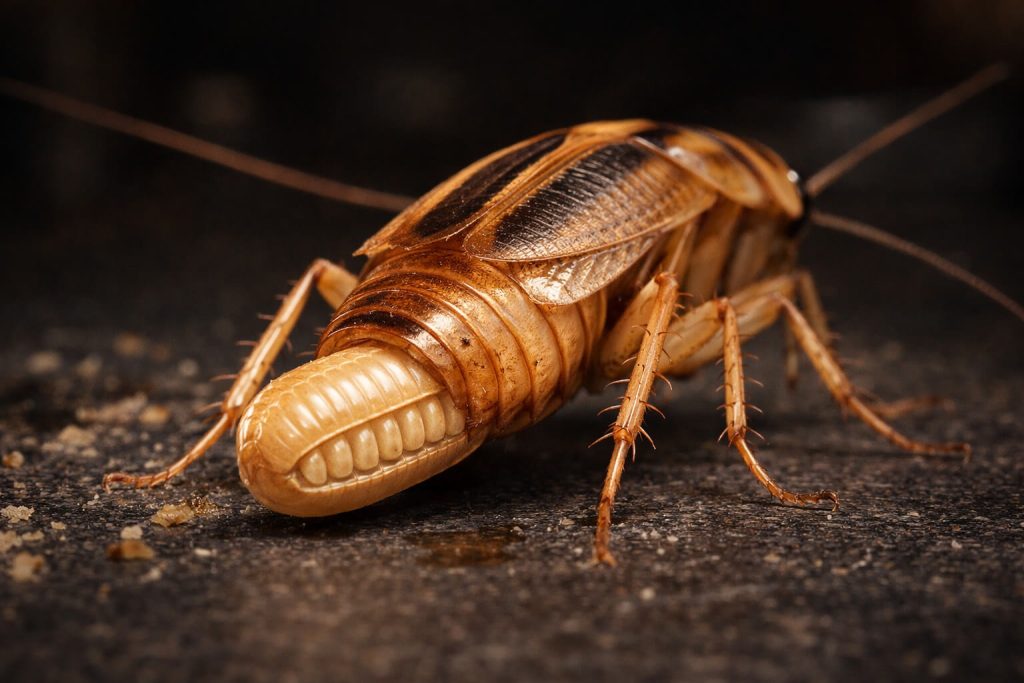
1. Egg-carrying behavior. The female retains the ootheca attached to her abdomen until 24–48 hours before hatching. This maternal protection of the ootheca ensures consistent warmth and humidity, maximizing the survival rate of every egg inside the case.
2. Faster reproductive cycle. German cockroaches reach sexual maturity in as little as 36 days after hatching, far faster than the 6–12 months required by American cockroaches. This means each generation starts producing its own oothecae sooner.
3. Higher clutch size. At 30–48 eggs per case, the German cockroach’s clutch size dwarfs every other common household species. Combined with high egg-laying frequency, this creates the highest reproductive output per female of any synanthropic cockroach.
Did You Know?
Researchers at North Carolina State University estimated that a single German cockroach female and her descendants could theoretically produce over 300,000 offspring in one year under ideal laboratory conditions. Real-world numbers are lower due to predation, resource limits, and mortality, but even at a fraction of that potential, population growth is staggering.
How Many Eggs Does an American Cockroach Lay?
The American cockroach (Periplaneta americana) is the largest common household cockroach in North America. Adults measure up to 53 mm, but their egg production per case is surprisingly modest compared to that of the German species.
Eggs Per Ootheca
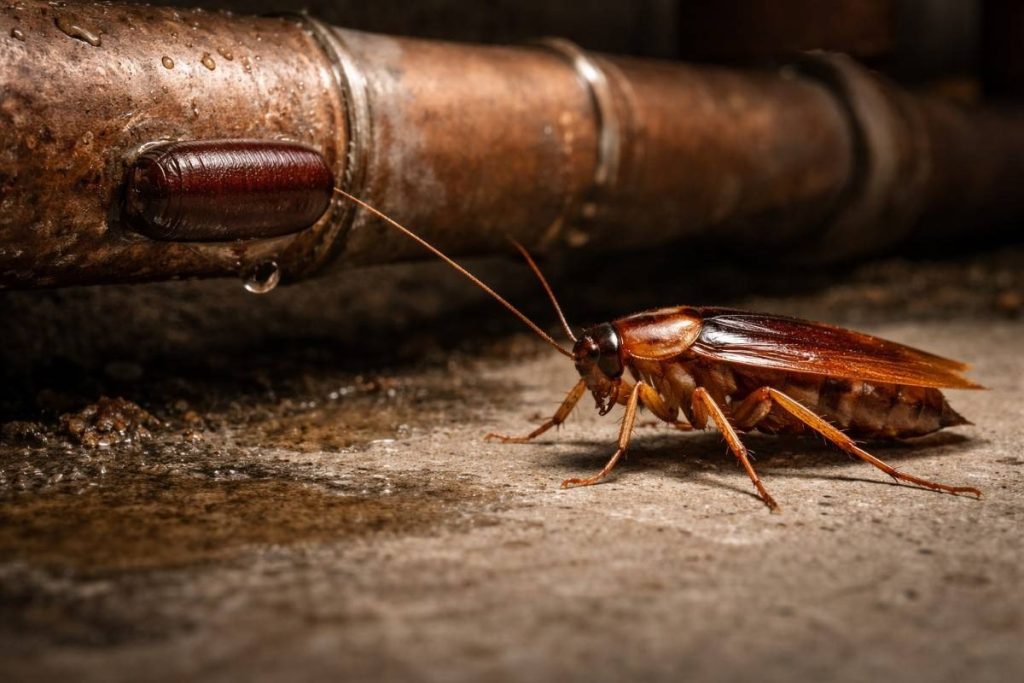
Each American cockroach ootheca contains 14 to 16 eggs, with an average of 15 embryos per egg capsule. The egg case is larger than a German cockroach’s, roughly 8–10 millimeters long and dark reddish brown to mahogany in color, with a purse-like shape.
Oothecae Per Lifetime
American cockroach females are more productive over time than their per-case numbers might suggest. Each female generates approximately 6 to 14 oothecae during her adult lifespan, which can extend 1 to 1.5 years.
Some entomological sources from the University of Florida’s Department of Entomology report females producing up to 90 oothecae under exceptional laboratory conditions, though 6–14 is the standard range in real-world environments.
Total Lifetime Egg Production
Conservative estimate: 6 oothecae × 14 eggs = 84 eggs
Average estimate: 10 oothecae × 15 eggs = 150 eggs
High-end estimate: 14 oothecae × 16 eggs = 224 eggs
The American cockroach compensates for a lower per-case egg count with more oothecae over a longer lifespan.
Key Behavioral Difference: Deposited vs. Carried
Unlike the German cockroach, the American cockroach female deposits the ootheca within one to two days of forming it. She glues it to a protected surface behind appliances, inside wall voids, or near plumbing using a sticky secretion from her collateral glands (specialized glands that produce the ootheca’s protein casing and adhesive).
This deposited approach means the eggcase must survive independently. It’s exposed to temperature fluctuations, humidity changes, predation, and pesticide contact without any maternal protection. The tradeoff? Females can begin producing the next ootheca immediately, without the energy cost of carrying the current one.
Oriental roach eggs Count
The Oriental cockroach (Blatta orientalis), sometimes called the “water bug” for its preference for cool, damp environments, falls in the middle of the cockroach reproductive capacity spectrum.
Eggs Per Ootheca
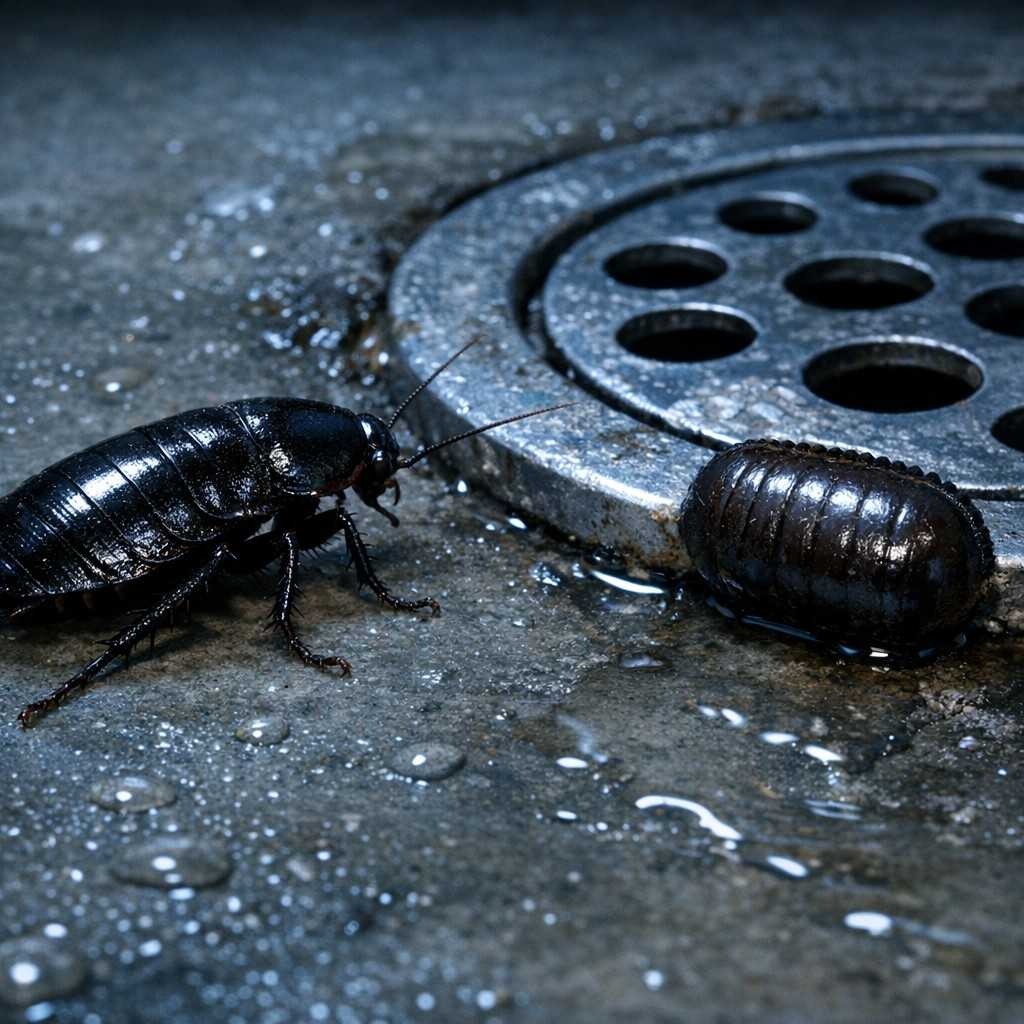
Each Oriental cockroach ootheca contains approximately 16 eggs. The egg case is notably larger than that of other species, about 10–12 millimeters long, dark brown to black, and inflated in appearance. It’s one of the easiest oothecae to identify by sight due to its distinctive size and color.
Oothecae Per Lifetime
Females produce approximately 8 oothecae over their adult lifespan, which averages 5–6 months in warm conditions.
Total Lifetime Egg Production
Typical estimate: 8 oothecae × 16 eggs = 128 eggs per female
That’s a lower total than German or American cockroaches, but still sufficient to sustain a growing infestation, especially because Oriental cockroaches tend to congregate in high-moisture areas like basements, crawl spaces, city sewers, and floor drains where conditions favor survival.
Seasonal Reproduction
One important distinction: Oriental cockroach breeding follows a stronger seasonal variation in roach reproduction than other indoor species. In temperate climates, egg production peaks in spring and early summer, slows dramatically in fall, and nearly stops in winter unless the cockroaches are living in a climate-controlled indoor environment.
This hemimetabolous insect often produces just one full generation per year in cooler regions, a sharp contrast to the German cockroach’s potential for four or more generations annually.
Brown Banded roach eggs Count
The brown-banded cockroach (Supella longipalpa) is the most commonly misidentified cockroach species in homes because of its smaller size and unusual egg placement behavior. It’s also a moderate egg producer.
Eggs Per Ootheca
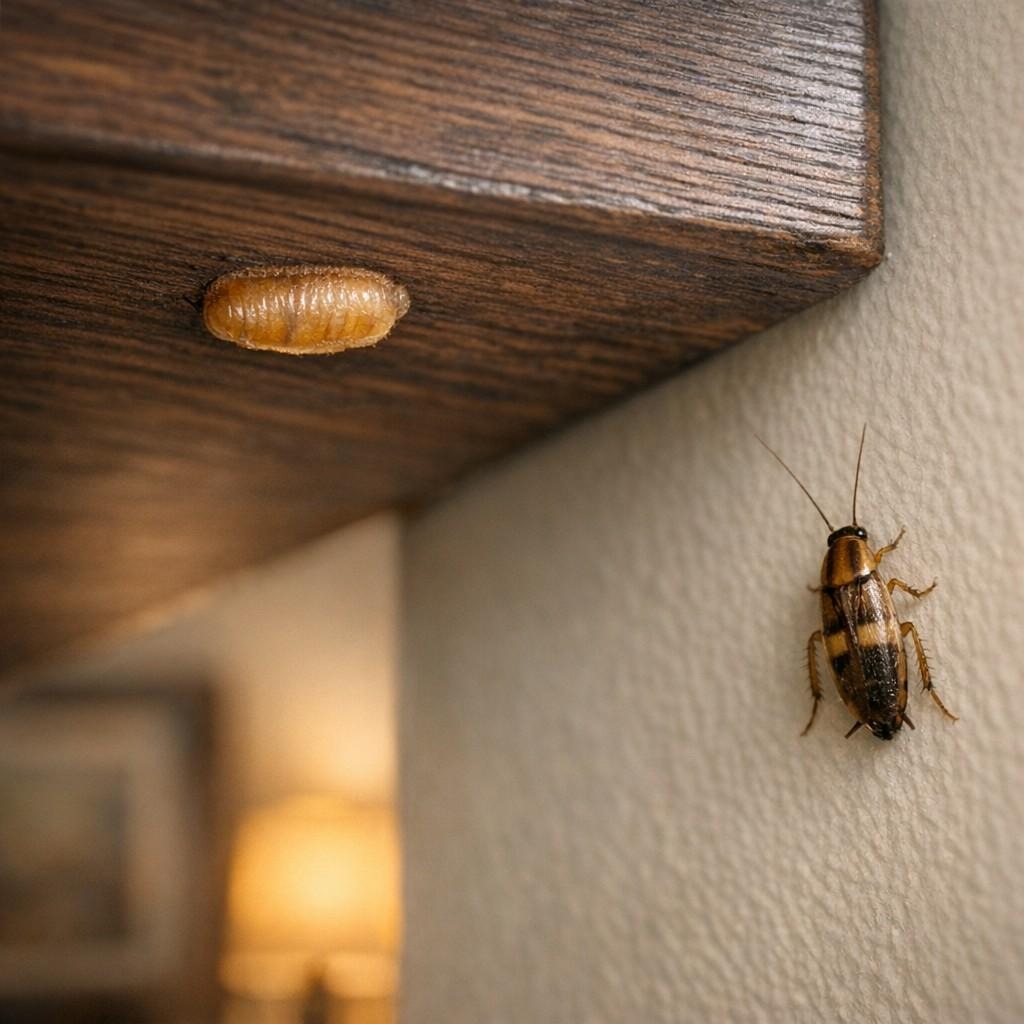
Each brown-banded cockroach ootheca holds 14 to 18 eggs, with an average around 16 embryos. The egg case is small, roughly 5 millimeters long, light tan to golden brown, and sometimes translucent enough to see the developing embryos inside if examined closely.
Oothecae Per Lifetime
Brown banded females are surprisingly prolific case producers, generating approximately 10 to 14 oothecae during their 3–6 month adult lifespan.
Total Lifetime Egg Production
Conservative estimate: 10 oothecae × 14 eggs = 140 eggs
High end estimate: 14 oothecae × 18 eggs = 252 eggs
Unique Egg Placement Strategy
What makes Supella longipalpa particularly tricky to manage is where it deposits oothecae. Unlike species that favor floor level, high moisture locations, the brown banded cockroach glues its egg cases to elevated surfaces.
Behind picture frames and wall decorations
Inside closet shelves and dresser drawers
On the undersides of furniture
Along ceiling wall junctions
Inside electronics and appliance housings
This placement keeps oothecae away from ground level moisture, floor dwelling predators, and many common pesticide applications, making the egg cases harder to find and harder to treat.
Smokybrown, Australian, and Other Species
Beyond the “big four” household cockroaches, several other species from the families Blattidae and Blaberidae are common in specific geographic regions.
Smokybrown Cockroach (Periplaneta fuliginosa)
Eggs per ootheca: 20–26 (average 20)
Oothecae per lifetime: 10–17
Total lifetime production: 200–440 eggs
Key trait: Requires very high humidity; common in the southeastern United States. Deposits oothecae in moist, protected locations near tree holes, gutters, and attic vents.
Australian Cockroach (Periplaneta australasiae)
Eggs per ootheca: 20–24 (average 22)
Oothecae per lifetime: 12–30
Total lifetime production: 240–720 eggs
Key trait: Found in tropical and subtropical regions. Prefers outdoor garden debris but enters homes during weather extremes. High total egg output rivals the German cockroach.
Asian Cockroach (Blattella asahinai)
Eggs per ootheca: 30–44
Oothecae per lifetime: 4–6
Total lifetime production: 120–264 eggs
Key trait: Nearly identical in appearance to the German cockroach but strongly attracted to light (German cockroaches avoid it). Primarily outdoor species in the Gulf Coast states.
Florida Woods Cockroach
Reproduction type: Ovoviviparous the female retains the ootheca internally and delivers live nymphs
Offspring per brood: 20–25 nymphs
Key trait: Slow moving, outdoor species with limited indoor invasion risk. Known for its strong defensive odor.
Madagascar Hissing Cockroach (Gromphadorhina portentosa)
Reproduction type: Ovoviviparous
Offspring per brood: 30–60 live nymphs
Broods per lifetime: 3–5
Key trait: Popular in the exotic pet trade. Not a household pest species but frequently referenced in cockroach reproduction discussions.
How Often Do Cockroaches Lay Eggs?
Egg laying frequency is the multiplier that turns a single cockroach into an infestation. Here’s how often each major species produces a new ootheca:
German cockroach: Every 3–4 weeks (approximately every 20–25 days)
American cockroach: Every 6–10 days during peak reproduction (but slower ootheca formation means approximately one every 4–5 weeks when accounting for the full development process)
Oriental cockroach: Every 7–10 days during warm months, with seasonal pauses
Brown banded cockroach: Every 5–7 days (one of the fastest ootheca producers, compensating for lower egg counts per case)
Smokybrown cockroach: Every 11–14 days
What “Frequency” Really Means for Your Home
Here’s a practical scenario to illustrate the roach breeding cycle impact:
Imagine you have five adult German cockroach females in your kitchen (a common number for an early stage infestation that hasn’t yet become visible).
Each female produces an ootheca every 3 weeks
Each ootheca contains ~38 eggs
In 12 weeks, those 5 females produce roughly 20 oothecae containing 760 developing eggs
At an 85% survival rate, that’s 646 nymphs, many of which will reach sexual maturity within another 6–10 weeks
By week 20, you’re not dealing with 5 cockroaches. You’re dealing with hundreds, and the second generation is already producing its own oothecae.
This exponential reproduction curve is exactly why pest control professionals emphasize early detection. The difference between catching an infestation at 5 females versus 50 is the difference between a targeted treatment and a full scale intervention.
Total Lifetime Egg Production: The Numbers That Matter
Here’s the metric that matters most for understanding cockroach infestation progression: how many total eggs one female cockroach can produce before she dies.
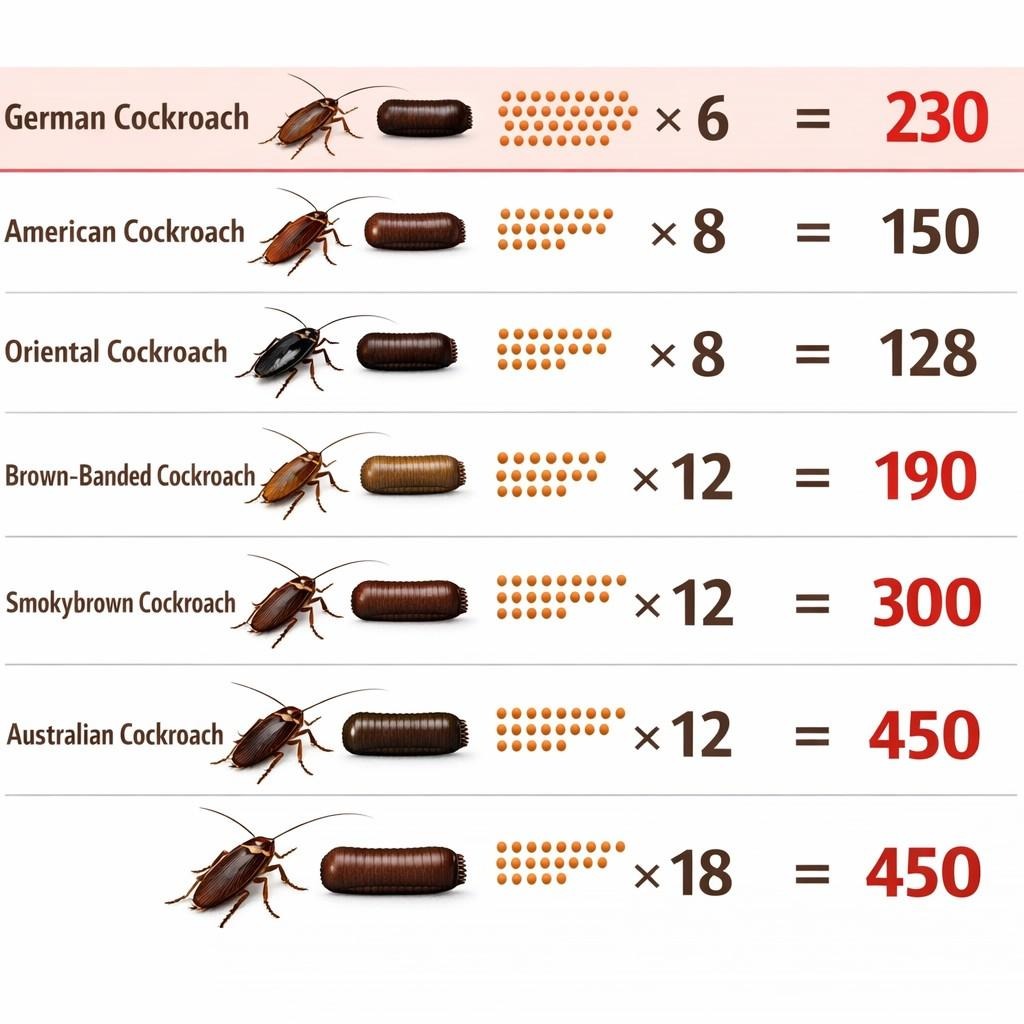
| Species | Lifetime Egg Range | Typical Estimate | Adult Lifespan |
|---|---|---|---|
| German cockroach | 150–384 | ~230 | 20–30 weeks |
| American cockroach | 84–224 | ~150 | 1–1.5 years |
| Oriental cockroach | ~128 | ~128 | 5–6 months |
| Brown banded | 140–252 | ~190 | 3–6 months |
| Smokybrown | 200–440 | ~300 | 6–12 months |
| Australian | 240–720 | ~450 | 4–8 months |
Why “Average” Numbers Understate the Problem
These lifetime totals describe a single female. A healthy infestation contains dozens to hundreds of reproductive females operating simultaneously.
Even a modest colony of 20 German cockroach females operating at average productivity produces approximately 4,600 eggs across their lifetimes. At standard indoor survival rates (70–85% hatch success), that’s roughly 3,200–3,900 nymphs, all within a single generation cycle of about 6 months.
The University of Nebraska–Lincoln Extension program estimates that a German cockroach infestation left untreated for one year can grow from a founding population of 10 adults to over 35,000 individuals.
Can One Roach Cause an Infestation? The Population Math
This is one of the most frequently searched questions about cockroach reproduction, and the honest answer depends on the sex of that single cockroach and what happened before you saw it.
If It’s a Gravid Female: Yes, Absolutely
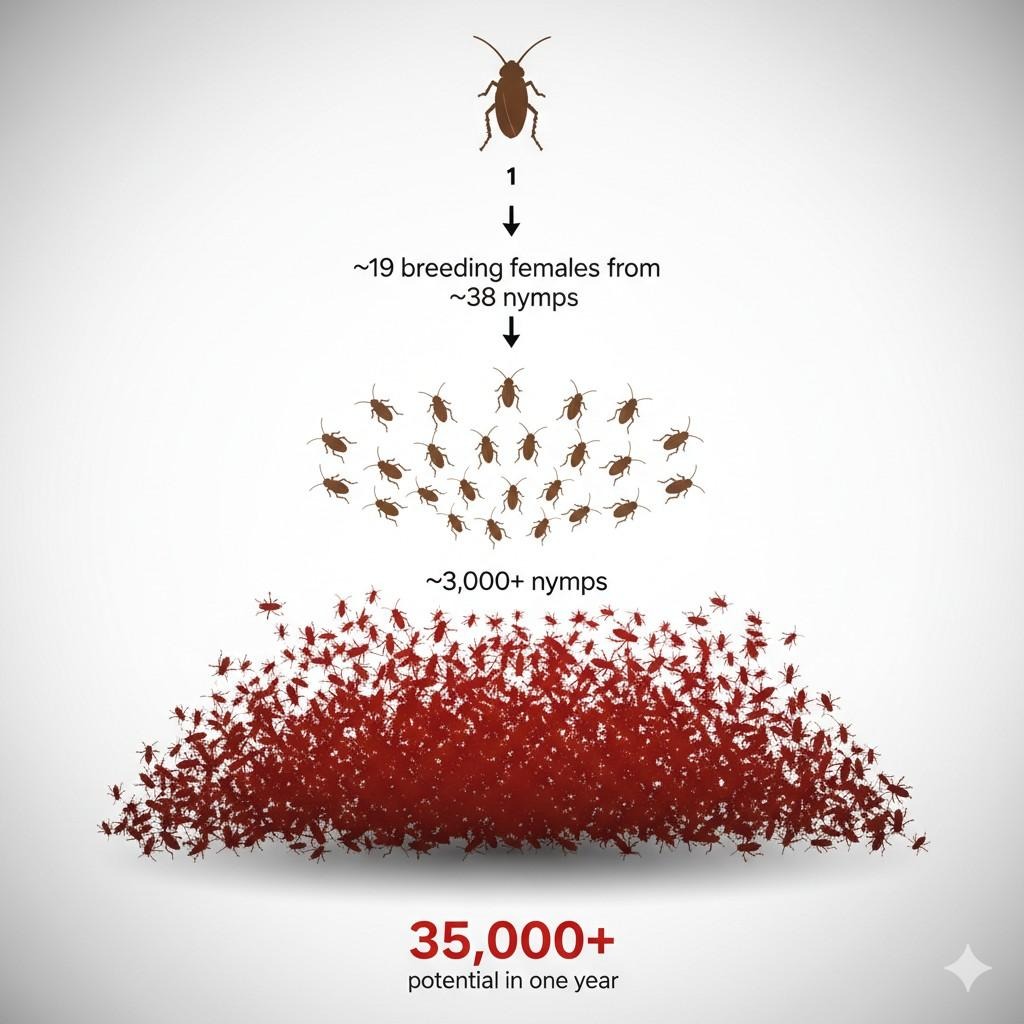
A single egg bearing female cockroach that enters your home carrying a mature ootheca can establish a self sustaining infestation. Here’s the math for a German cockroach:
Generation 1:
1 gravid female produces 1 ootheca → ~38 nymphs hatch
Approximately 50% female → 19 females reach maturity in ~60 days
Generation 2 (starting around month 3):
19 females × 6 oothecae each × 38 eggs = 4,332 eggs over the next 5 months
Even at 70% survival: ~3,030 nymphs
Generation 3 (starting around month 6):
Hundreds of new reproductive females producing their own oothecae
Population is now in the thousands
The Sperm Storage Factor
Making matters worse, female cockroaches can store sperm from a single mating and use it to fertilize multiple oothecae over weeks or months. A German cockroach female that mated once can produce all of her lifetime oothecae without mating again.
Some species go even further. Research published in the Journal of Zoology documented parthenogenesis in certain cockroach populations, females reproducing asexually through a process called automixis type thelytoky, producing viable offspring without any male involvement at all.
Important:
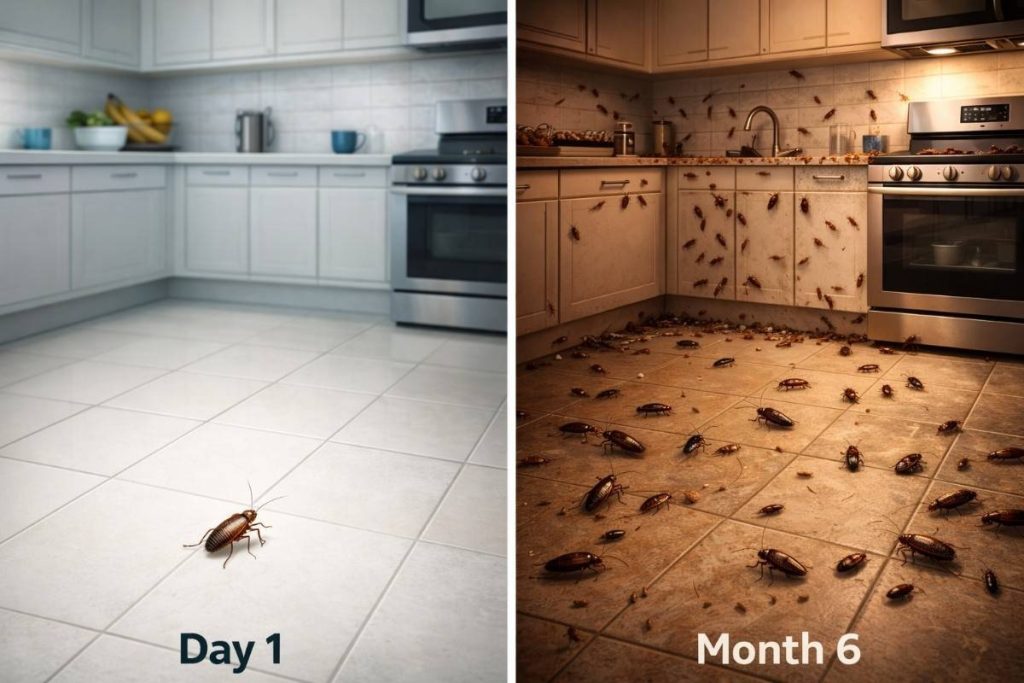
The widely repeated advice that “if you see one roach, there are probably 10 more” dramatically understates the reality. Pest management data consistently suggests that visible cockroaches represent roughly 5% of the actual population. If you see one, there may already be 20–50 hidden in wall voids, appliance motors, and structural crevices; many of them are egg bearing females.
What Affects How Many Eggs a Cockroach Produces?
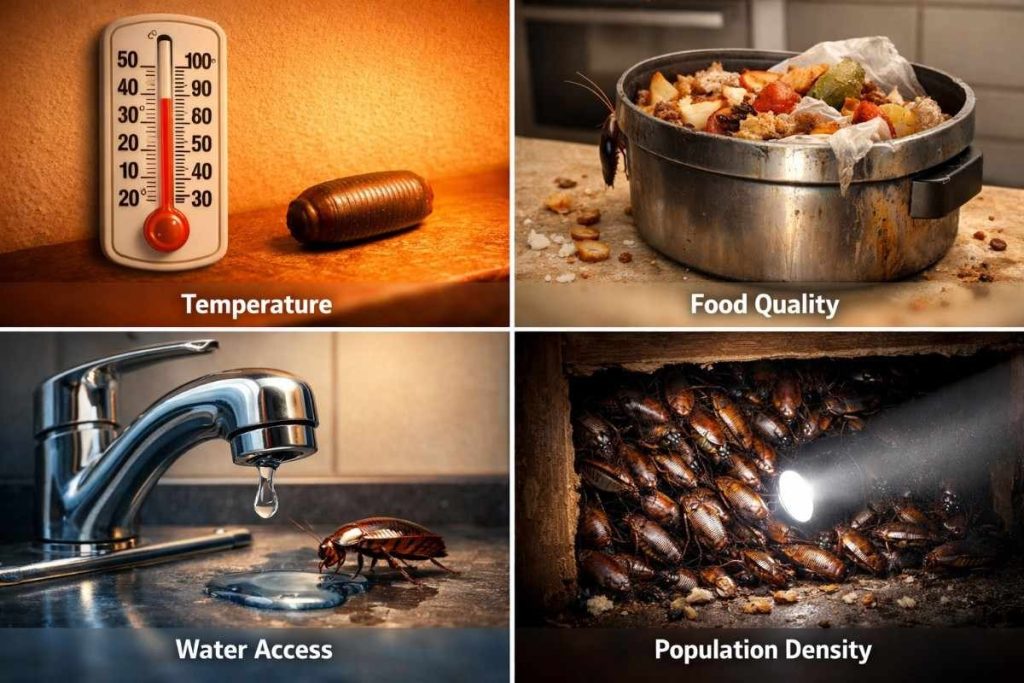
Roach eggs production isn’t fixed at the species level. Several environmental and physiological factors influence the actual number of eggs per ootheca and the total number of oothecae a female produces.
Temperature
Warmer temperatures (77–86°F / 25–30°C) accelerate ovarian development and ootheca formation. Cockroaches in climate controlled homes with consistent heating or cooling tend to reproduce at or near their maximum roach egg production potential year round, unlike outdoor populations that experience seasonal slowdowns.
Food Availability and Nutrition Quality
This is one of the most underappreciated variables. Research from Purdue University’s Department of Entomology has demonstrated that:
Females with access to high protein diets produce oothecae with significantly more eggs per case
Nutritional stress reduces both egg count per ootheca and the total number of cases produced
A female German cockroach fed a protein rich diet can produce up to 20% more eggs per ootheca than one on a carbohydrate heavy diet
The practical implication? Homes with accessible food waste, pet food left out overnight, and grease buildup behind stoves provide the nutritional resources that maximize cockroach reproductive output.
Water Access
Cockroaches need water even more than food. Females experiencing dehydration stress reduce ootheca production or produce cases with lower egg viability. Leaky pipes, condensation on cold water lines, and standing water in drip trays directly support maximum breeding capacity.
Population Density and Overcrowding
Interestingly, extreme overcrowding can reduce per female egg production. At very high population densities, competition for food and water creates physiological stress that lowers fecundity. However, this self regulation only kicks in at population levels far beyond what most homeowners would tolerate, typically thousands of individuals per harborage site.
Female Age
Roach eggs production follows a bell curve across the female’s adult lifespan:
The first clutch size is often slightly smaller than subsequent oothecae
Peak reproductive output occurs during the middle third of the adult lifespan
Final clutch sizes decrease as the female ages and ovarian function declines
This pattern holds across all major species within the order Blattodea.
Where Do Cockroaches Lay Their Eggs in Homes?
Knowing the egg count doesn’t help much if you can’t find the oothecae. Each species has evolved specific oviposition site preferences that reflect its environmental needs:
German Cockroach (Carried, Then Dropped Near Harborage)
Because the female carries the ootheca until just before hatching, the “drop site” is usually wherever she spends most of her time.
Inside cabinet hinges and door joints
Behind refrigerator compressor housings
Underneath dishwashers
Inside appliance motor cavities
Within electrical outlet boxes (warmth source)
American Cockroach (Deposited and Glued)
Behind hot water heaters
Along basement plumbing runs
Inside cardboard boxes in storage areas
In crawl space corners near moisture
Within wall voids accessible through gaps around pipes
Oriental Cockroach (Deposited in Damp Locations)
Floor drain openings
Mulch beds adjacent to foundations
Beneath concrete slabs with moisture intrusion
Inside crawl spaces with standing water
Under porches and in window wells
Brown Banded Cockroach (Glued to Elevated Surfaces)
Behind picture frames and mirrors
On closet shelving undersides
Inside bedroom furniture joints
Within electronics housings (TV cabinets, clock interiors)
Along ceiling wall junction lines
Pro Tip:
When searching for roach eggs cases, match your search pattern to the species. German cockroach oothecae are found low, warm, and near food. Brown banded oothecae are found high, dry, and away from kitchens. American cockroach oothecae are found low, damp, and near plumbing. Searching the wrong zones wastes time and misses active harborage areas entirely.
How to Find and Destroy Roach Egg Cases
Understanding cockroach clutch size and egg laying frequency makes one thing clear: killing adults alone won’t end an infestation. You must target the oothecae directly. Here’s a structured approach:
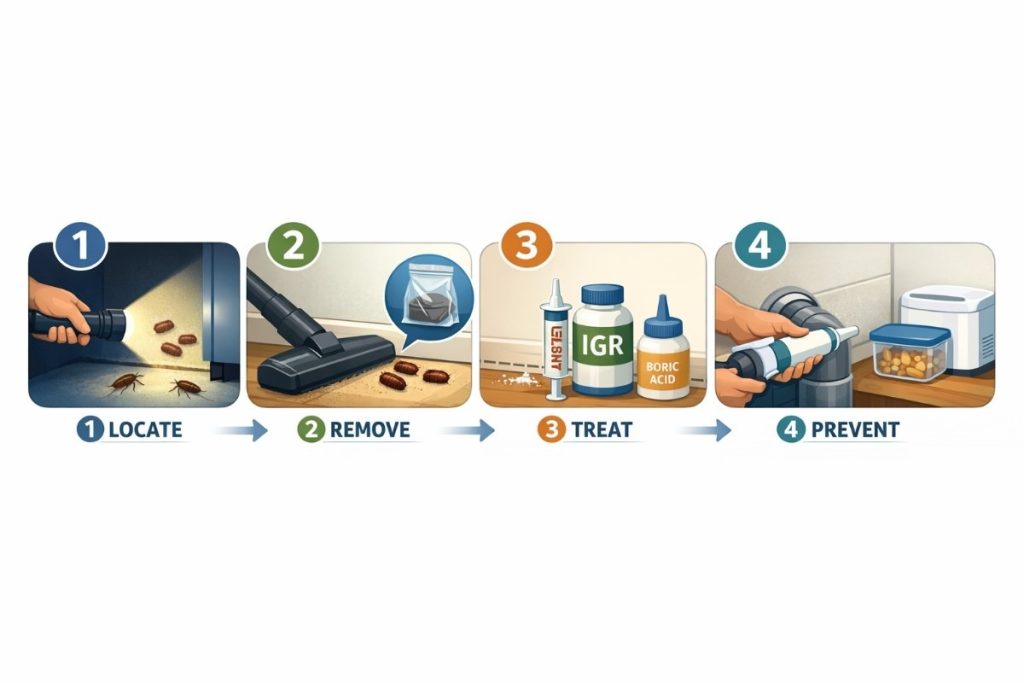
Step 1: Locate Active Harborage Areas
Use a flashlight and inspect during nighttime (when cockroaches are most active). Focus on:
Kitchen and bathroom cabinets (pull everything out)
Behind and underneath all appliances
Inside wall cavities accessible through utility penetrations
Cardboard boxes, paper bags, and cluttered storage areas
Furniture joints and undersides (especially for brown banded species)
Sticky monitor traps placed along walls and in suspected harborage zones help identify the highest activity areas before you begin treatment.
Step 2: Physical Removal
Vacuum all visible oothecae using a HEPA filtered vacuum. Dispose of the bag in a sealed plastic bag placed in an outdoor trash container.
Scrape glued egg cases off surfaces with a flat bladed tool. Brown banded and American cockroach oothecae are often firmly adhered.
Discard heavily infested items; cardboard boxes, old paper bags, and damaged food packaging frequently harbor hidden egg cases.
Step 3: Chemical Treatment Targeting All Life Stages
An effective integrated pest management (IPM) framework combines multiple product types:
| Product Type | Targets | Effect on Oothecae |
|---|---|---|
| Gel baits (fipronil, indoxacarb) | Adults and nymphs | Indirectly kill nymphs post hatch |
| Insect growth regulators (IGRs) | Nymphs and developing eggs | Disrupts embryonic development |
| Boric acid dust | Adults, nymphs, oothecae | Desiccant effect compromises egg case integrity |
| Diatomaceous earth | Adults, nymphs | Desiccant; limited direct ootheca impact |
| Non-repellent sprays | Adults, nymphs | Does not penetrate ootheca protein shell |
The critical insight: Most contact insecticides cannot penetrate the ootheca’s hardened chorion and outer protein casing. The egg capsule evolved specifically as a defense against environmental threats, including chemical exposure. That’s why IGRs and desiccant dusts are essential components of any treatment plan that targets the full cockroach biological cycle.
Step 4: Environmental Modification
Reduce the conditions that maximize roach eggs production:
Fix all water leaks even minor pipe condensation supports roach breeding
Store food in sealed containers eliminate the high protein food access that boosts per ootheca egg count
Reduce indoor humidity below 50% with dehumidifiers, especially in basements and crawl spaces
Seal entry points by caulking gaps around plumbing penetrations, door frames, and utility conduits
Eliminate cardboard storage replace with plastic bins (cardboard provides both harborage and a food source)
Step 5: Follow Up Treatment Cycles
Because oothecae can survive initial treatment and hatch days or weeks later, follow up applications are essential. Most pest control treatment cycles recommend:
Initial treatment targeting adults, nymphs, and accessible egg cases
Second treatment at 2–3 weeks to catch newly hatched nymphs from surviving oothecae
Third treatment at 4–6 weeks to break the breeding cycle of the second generation
Monitoring for 8–12 weeks to confirm population elimination
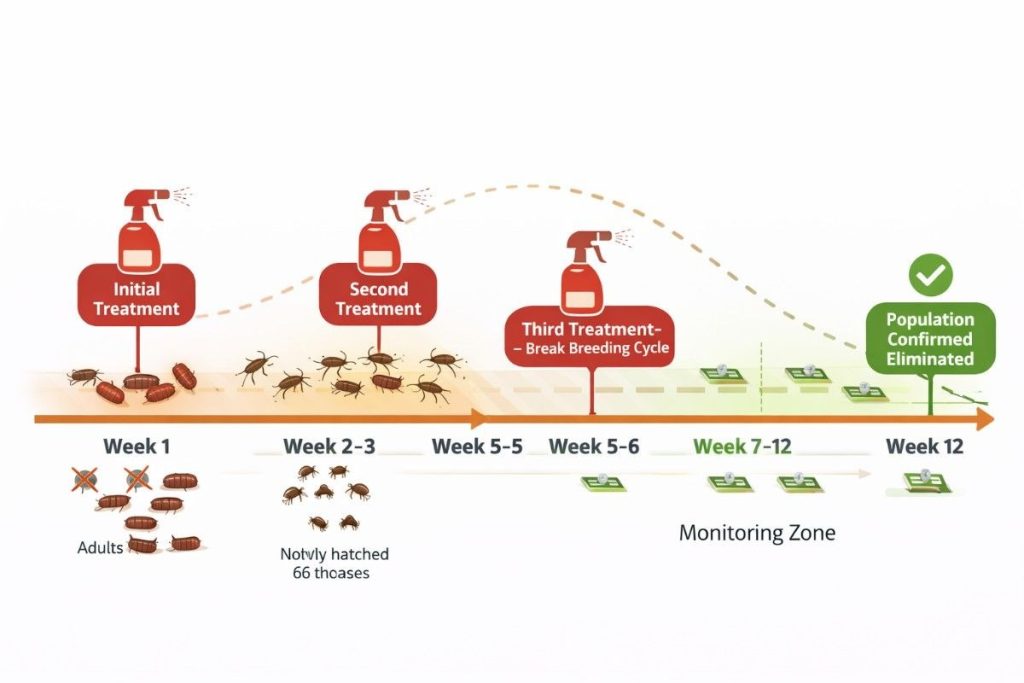
Skipping follow up treatments is the single most common reason DIY cockroach control fails. You can kill every visible adult and still face a full resurgence from oothecae that were already deposited in concealed locations before treatment began.
Frequently Asked Questions
Q: How many eggs do German cockroaches lay?
A: Each German cockroach ootheca contains 30–48 eggs, with an average of 37–38. A single female produces 4–8 oothecae in her lifetime, yielding a total of 150–384 eggs. This makes her the most prolific egg layer among common indoor cockroach species.
Q: How many baby roaches are in one egg case?
A: The number varies by species. German cockroach cases hold 30–48 nymphs; American cockroach cases contain 14–16; Oriental cockroach cases hold about 16; and brown banded cockroach cases carry 14–18. All nymphs emerge simultaneously when the ootheca hatches.
Q: Do cockroaches lay eggs every day?
A: No. Cockroaches produce a new ootheca every few weeks, not daily. German cockroaches generate a new egg case approximately every 3–4 weeks. Brown banded cockroaches are faster, producing one every 5–7 days. No species lays individual eggs on a daily basis.
Q: Can female roaches lay eggs without males?
A: In some species, yes. Certain cockroach populations can reproduce through parthenogenesis, a form of asexual reproduction. Additionally, females that have mated just once can store sperm in a structure called the spermatheca and use it to fertilize multiple oothecae over months.
Q: What is the fastest reproducing cockroach?
A: The German cockroach. Its combination of high per case egg count (30–48), fast reproductive cycle (new ootheca every 3–4 weeks), and short maturation time (~60 days from nymph to reproductive adult) gives it the fastest population doubling time of any common household species.
Q: How many roaches can one roach produce in a year?
A: A single German cockroach female can directly produce 150–384 eggs. When you include offspring from her daughters (who start reproducing at ~60 days old), a founding female and her descendants can theoretically generate over 35,000 individuals in one year under optimal conditions.
Q: What does a roach egg case look like?
A: Oothecae are small, ridged, capsule shaped cases ranging from 5 to 12 mm long. German cockroach cases are light tan and bean shaped. American cockroach cases are dark reddish brown and purse shaped. Brown-banded cases are small, golden, and often glued to elevated surfaces. All have a visible keel ridge along the top.