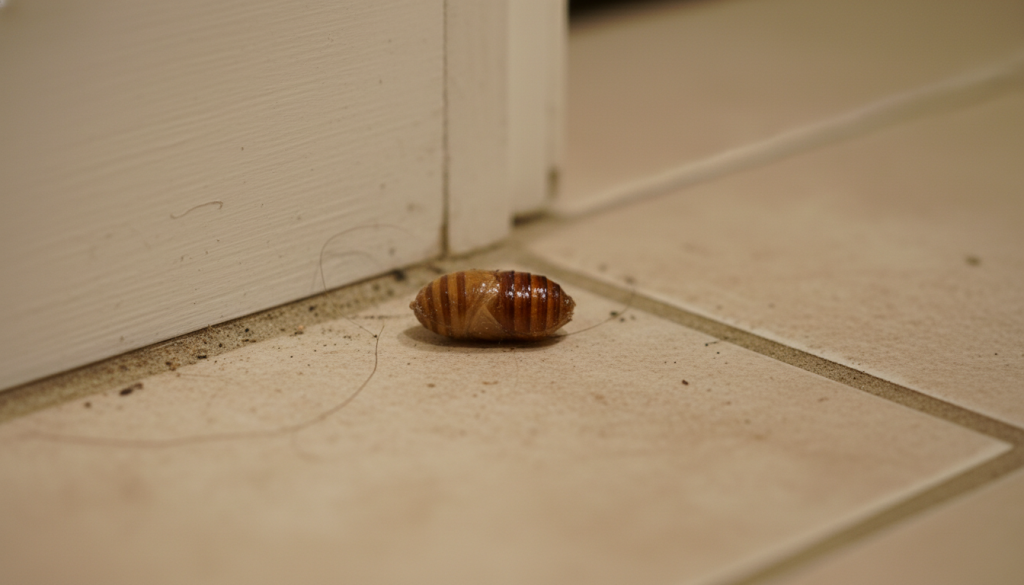
Roach eggs and termite eggs look different in structure, size, color, and location. Roach eggs are usually found inside a brown capsule-shaped egg case called an ootheca, while termite eggs are tiny white or translucent oval eggs hidden deep inside a termite colony.
The fastest identification rule is simple: a roach egg case is usually a visible brown capsule about 5–10 mm long, while a termite egg is a tiny pale oval that is usually hidden inside soil, wood galleries, or a protected nest chamber. If you found a brown, purse-shaped capsule behind an appliance or inside a cabinet, it is more likely a roach ootheca. If you found tiny pale eggs clustered inside damaged wood or soil, termite activity is more likely.
Correct identification matters because the treatment path is completely different. Roach egg cases usually point to an indoor cockroach breeding site near food, water, and shelter. Termite eggs usually point to a protected colony that may already be inside soil, wall voids, furniture, or structural wood.
Quick Comparison: Roach Eggs vs Termite Eggs
| Feature | Roach Eggs / Oothecae | Termite Eggs |
| Main structure | Multi-egg case called an ootheca | Individual eggs in protected colony clusters |
| Typical size | About 5–10 mm long, depending on species | Very small, often around 1 mm or less |
| Color | Tan, brown, reddish-brown, dark brown, or blackish | White, cream, translucent, or pale yellow |
| Shape | Capsule-shaped, purse-shaped, bean-shaped, or pill-like | Tiny oval, smooth, bead-like, or jellybean-like |
| Texture | Firm, leathery, sometimes ridged with a seam | Soft-looking, smooth, pale, and clustered |
| Egg count | One ootheca can contain 10–50 eggs depending on species | Eggs are laid in clusters and tended by workers |
| Common locations | Kitchens, bathrooms, cabinets, appliances, drains, cardboard, basements | Underground nests, mud tubes, wall voids, wood galleries, furniture, structural wood |
| Visibility | Often visible to the naked eye during inspection | Rarely seen because termites hide eggs inside the colony |
| Main warning sign | Active roach reproduction nearby | An established termite colony may be present |
For a full visual breakdown of cockroach egg cases, see our guide on what roach eggs look like.
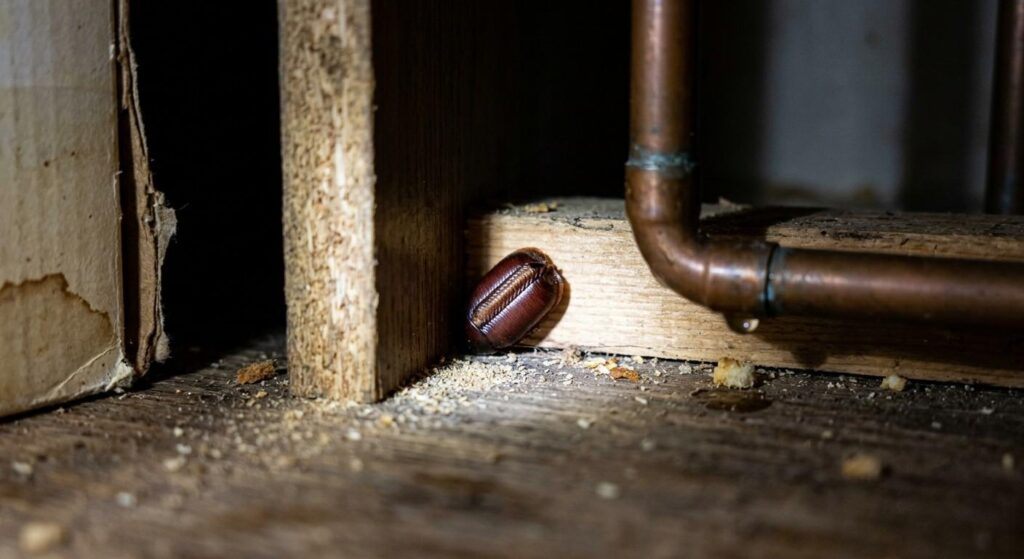
Roach Eggs Are Usually Brown Oothecae
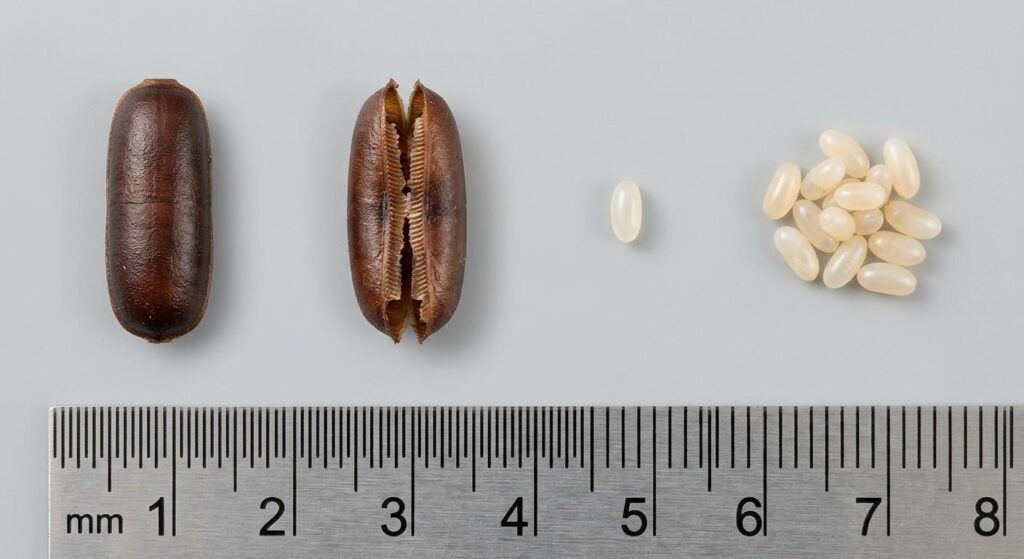
Roach eggs are usually protected inside a capsule called an ootheca. A cockroach ootheca is a hardened egg case that holds multiple developing embryos inside one visible structure.
Most homeowners do not find loose individual cockroach eggs. They find the ootheca, which may look like a tiny brown purse, bean, pill, seed, or capsule. This is why the phrase “roach eggs” usually refers to the egg case rather than separate eggs.
A roach ootheca usually has four identifying features:
- Brown color: tan, amber, reddish-brown, dark brown, or blackish, depending on species and age.
- Capsule shape: elongated, oval, purse-like, or slightly rectangular with rounded ends.
- Visible size: commonly 5–10 mm long, so it is much larger than most individual insect eggs.
- Protective seam: many oothecae show a ridge or seam where nymphs emerge after hatching.
If you need the basic biology behind the egg case, read our guide on what roach eggs are.
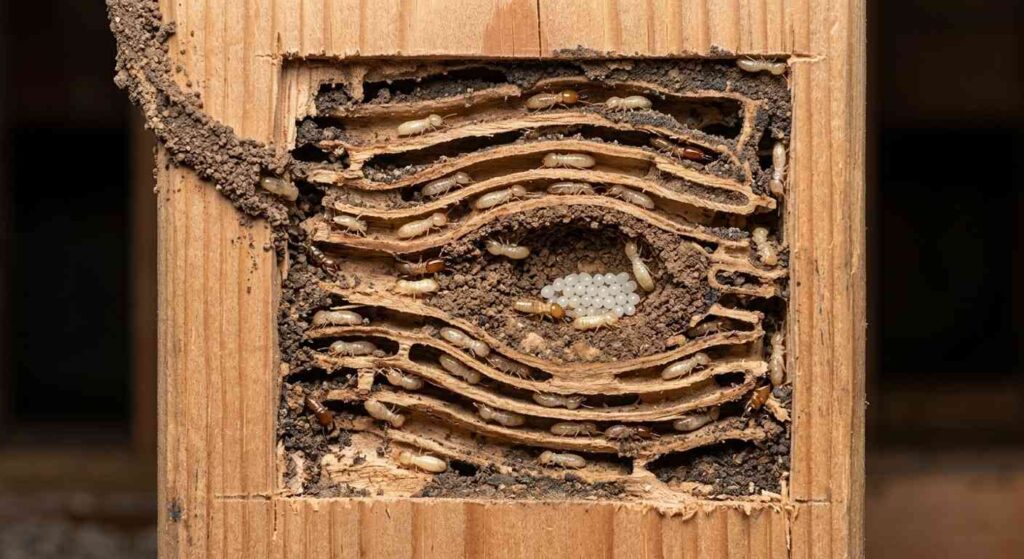
Termite Eggs Are Tiny Pale Eggs Hidden Inside Colonies
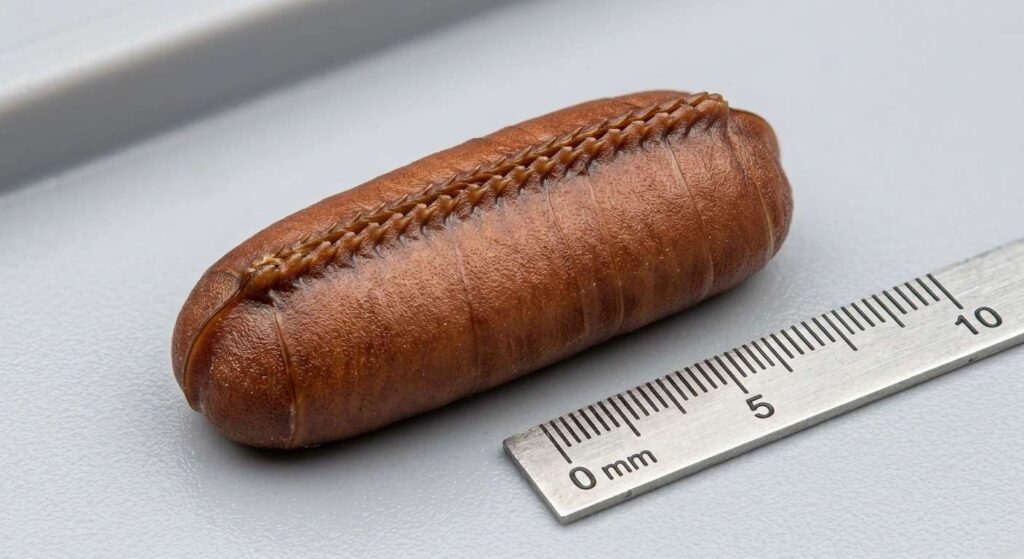
Termite eggs are tiny individual eggs laid by termite reproductives inside the colony. Unlike roaches, termites do not produce a large brown ootheca that homeowners commonly find behind appliances.
A termite egg is usually very small, white or translucent, and oval-shaped. Orkin describes termite eggs as very small, white, oval-shaped, and laid deep inside the nest, which is why people rarely see them in normal household inspections Orkin termite eggs guide.
Termite eggs are usually protected by the colony. Worker termites move eggs to incubation chambers and care for them until hatching. Oklahoma State University Extension explains that termite eggs are tended by worker termites during incubation, and the nymph hatches directly from the egg Oklahoma State University Extension.
This means visible termite eggs are uncommon. If you see tiny pale clusters inside wood, soil, or a mud-tube area, the more important issue is not the eggs alone. The important issue is that a termite colony may be close enough to the structure to expose its nursery area.
Size Difference: Roach Egg Cases Are Much Larger
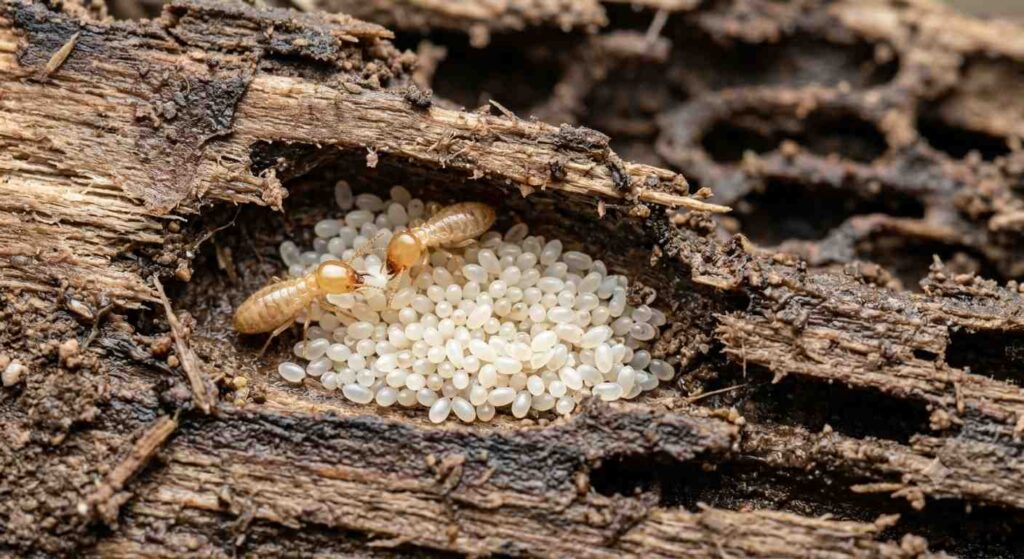
Roach egg cases are much larger than termite eggs. A roach ootheca is usually large enough to pick up with tape, gloves, or a paper towel, while a termite egg is much harder to identify without close inspection.
Common roach ootheca sizes include:
- German roach eggs: about 6–9 mm long.
- American roach eggs: about 8–10 mm long.
- Oriental roach eggs: about 8–10 mm long.
- Brown-banded roach eggs: about 5 mm long.
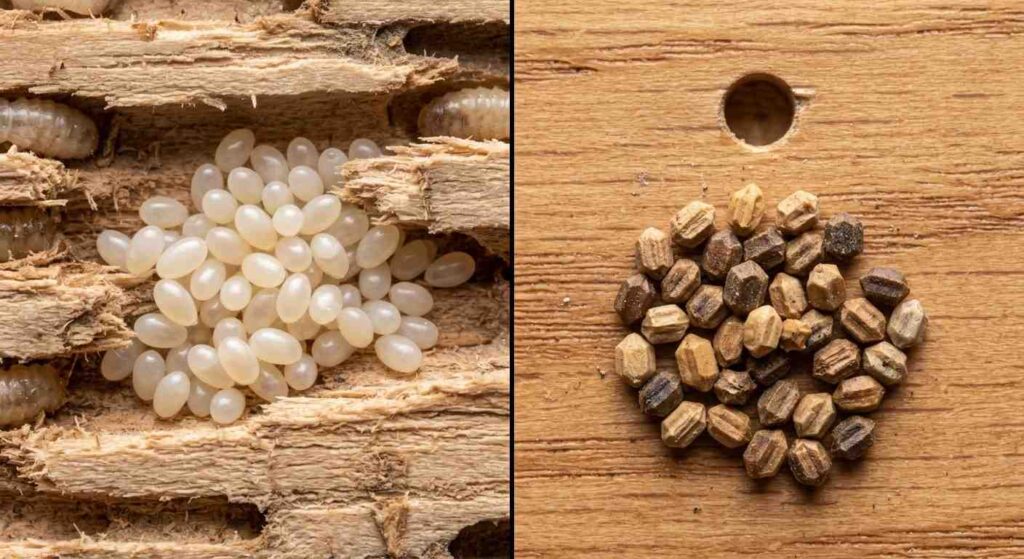
Termite eggs are much smaller. A termite egg is usually described as a tiny pale oval, often around 1 mm or less depending on species and development stage. Termite egg clusters may be more visible than a single egg, but even clusters are usually hidden inside a protected colony chamber.
Simple Size Rule
If the object is a brown capsule about the size of a rice grain, small bean, or seed, it is more likely a roach egg case. If the object is a tiny white or translucent oval in a cluster inside wood or soil, it is more likely associated with termites.
Color Difference: Roach Eggs Are Brown, Termite Eggs Are Pale
Roach eggs and termite eggs usually separate clearly by color. Roach oothecae are usually brown, while termite eggs are usually pale.
Roach egg cases may appear:
- Light tan
- Amber
- Brown
- Reddish-brown
- Dark brown
- Nearly black when old or species-specific
Termite eggs may appear:
- White
- Cream
- Translucent
- Pale yellow
- Light pearl-like or jelly-like in clusters
A dark brown capsule in a kitchen cabinet is not likely to be termite eggs. A pale cluster inside damaged wood is not likely to be a roach ootheca.
Use color together with size and location. Dust, aging, moisture, and lighting can make insect evidence look different from photos.
Shape Difference: Roach Eggs Look Like Capsules, Termite Eggs Look Like Tiny Ovals
Roach oothecae have a capsule-like structure because they are protective egg cases. The shape may look like a tiny leather purse, flattened bean, or ridged pill.
Termite eggs are individual oval eggs. A cluster of termite eggs may look like tiny pale beads, grains, or jelly-like ovals grouped together in a protected chamber. Termite eggs do not have the large purse-shaped casing seen in cockroach oothecae.
Roach Egg Shape Clues
A roach egg case often has:
- A firm capsule body
- A flattened or purse-shaped profile
- A seam or raised ridge
- Brown coloration
- A size large enough to notice without magnification
Termite Egg Shape Clues
Termite eggs often have:
- Tiny oval bodies
- Pale or translucent coloring
- A clustered layout
- A protected nest location
- No large brown capsule casing
Location Difference: Roach Eggs Are Found Near Food, Water, and Hiding Places
Roach egg cases are usually found in warm, dark, protected places near food and water. Kitchens and bathrooms are the most common indoor inspection zones because cockroaches need moisture, food residue, and tight hiding spaces.
Look for roach oothecae in these areas:
- Behind refrigerators, stoves, and dishwashers
- Under kitchen sinks and bathroom sinks
- Inside cabinet hinges, corners, and drawer tracks
- Behind microwaves, coffee makers, and small appliances
- Around pipe gaps, plumbing voids, and baseboards
- Inside cardboard boxes, paper bags, and cluttered storage
- Near drains, basement corners, and laundry rooms
- Inside furniture or elevated surfaces for brown-banded roaches
Rutgers NJAES explains that German cockroaches are mostly found in kitchens and bathrooms where food and water are available, with common harborages around stoves, refrigerators, cabinets, drawers, and sinks Rutgers NJAES German cockroach fact sheet.
If you are inspecting a kitchen specifically, use our step-by-step guide on how to find cockroach eggs in the kitchen.
Location Difference: Termite Eggs Are Hidden in Soil, Wood, or Nest Chambers
Termite eggs are usually hidden inside the colony, not left openly in rooms. Their exact location depends on termite type.
The University of California IPM program explains that subterranean termites build nests in soil and access wood through earthen shelter tubes, while drywood termites nest above ground in relatively dry wood such as lumber, furniture, fences, and dead limbs UC IPM termite management guide.
Common termite egg locations include:
- Underground nest chambers for subterranean termites
- Soil-connected colony areas near foundations
- Mud tubes or shelter-tube networks
- Wood galleries inside damaged lumber
- Wall voids where drywood termites are established
- Furniture, beams, flooring, or trim with hidden drywood activity
- Damp or decayed wood where moisture supports termite activity
Orkin notes that subterranean termite nests are often located 4–18 inches below ground, while drywood termite nests are typically concealed within structures, including walls and furniture Orkin termite eggs guide.
Simple Location Rule
Brown capsule behind an appliance usually points toward roaches. Pale clustered eggs inside damaged wood, soil, or a termite nest chamber point toward termites.
Reproductive Difference: Roaches Use Egg Cases, Termites Use Colony Nurseries
Roach reproduction and termite reproduction create different types of evidence. Cockroaches place or carry egg cases, while termites maintain nursery areas inside a social colony.
A German cockroach female carries her ootheca until just before hatch. Rutgers NJAES states that a typical German cockroach egg case contains about 40 eggs and measures about 8 mm by 3 mm by 2 mm Rutgers NJAES. American cockroach females deposit a hardened purse-shaped ootheca, and the University of Florida IFAS states that the American cockroach egg case contains about 16 eggs and measures about 8 mm long University of Florida IFAS.
Termites operate differently. A termite queen lays eggs inside the colony, and workers tend the eggs and young. Oklahoma State University Extension explains that a mature termite queen can lay thousands of eggs each year and that workers tend eggs during the incubation period Oklahoma State University Extension.
The practical difference is important. Finding a roach ootheca usually means you need to remove egg cases and treat the surrounding roach harborage. Finding termite eggs usually means you need to locate and treat the termite colony, not just remove visible eggs.
Roach Eggs vs Termite Eggs vs Termite Frass
Termite frass is often mistaken for termite eggs. This mistake is especially common with drywood termites because they push fecal pellets out of tiny openings in wood.
Termite eggs are pale, soft-looking, oval, and hidden inside colony chambers. Drywood termite frass looks like small, dry pellets or grains and may collect below kick-out holes in wood.
UC IPM explains that drywood termite fecal pellets can accumulate on horizontal surfaces below openings and are distinctive in appearance, with six longitudinal flattened sides UC IPM termite guide.
This distinction matters because a pile of hard pellets near wood is more likely termite frass than termite eggs. Roach droppings, on the other hand, often look like black pepper, coffee grounds, or small dark cylinders depending on the roach species.
If you found black specks and are not sure what they mean, read our guide: Are black dots roach eggs?
Are Termite Eggs Ever Found in Kitchens or Bathrooms?
Termite eggs are not usually found openly in kitchens or bathrooms. If termites are present near these rooms, their eggs are still more likely hidden inside wood, wall voids, subfloor areas, or soil-connected colony chambers.
Roach egg cases are much more likely in kitchens and bathrooms because cockroaches actively use these rooms for food, water, and shelter. A brown capsule near a sink, refrigerator, trash can, dishwasher, or cabinet hinge is more consistent with roach activity than termite activity.
However, termite activity can occur near kitchens and bathrooms when moisture problems exist. Leaking pipes, damp wood, damaged cabinets, wet subfloors, and foundation gaps can attract termites or support termite access.
Are Roach Eggs Ever Found in Wood?
Roach egg cases can be hidden in cracks, cardboard, furniture, and tight crevices, but cockroaches do not build wood-destroying colonies inside lumber the way termites do. A brown ootheca tucked behind wooden trim or inside a furniture gap can still be roach-related, especially if food, warmth, and moisture are nearby.
Termite eggs, by contrast, are directly tied to a colony that feeds on cellulose. If pale eggs or termite workers are exposed while opening damaged wood, termite activity is more likely than roach activity.
Use the surrounding evidence:
- Roach evidence: brown oothecae, roach droppings, musty odor, shed skins, live roaches, activity near food and water.
- Termite evidence: mud tubes, hollow wood, blistered wood, wing piles, frass pellets, live white workers, damaged galleries.
What to Do If You Find Roach Eggs
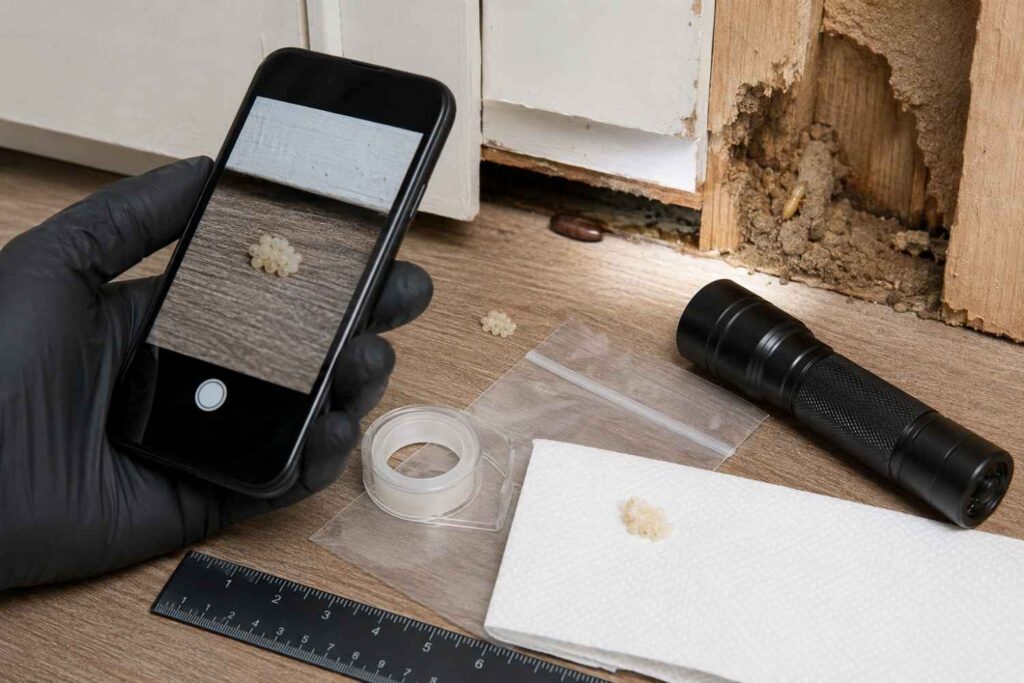
If you find a roach egg case, remove it carefully and inspect the surrounding area immediately. One ootheca can contain many developing roaches, and more egg cases may be hidden nearby.
Use this roach response plan:
- Photograph the object first so you can compare size, color, and shape.
- Pick it up with tape, gloves, or a paper towel instead of crushing it into a surface.
- Seal it in a plastic bag and dispose of it outdoors.
- Vacuum nearby cracks and crevices using a HEPA filter vacuum if available.
- Inspect appliances, cabinets, sinks, and cardboard storage for more egg cases.
- Remove food crumbs, grease, clutter, and standing water.
- Use roach baits, monitors, and insect growth regulators where appropriate.
- Continue monitoring for several weeks because hidden oothecae may still hatch.
For treatment options, read our guide on what kills roaches and their eggs. If the case looks light tan and you suspect German cockroaches, read our German roach eggs guide.
What to Do If You Find Termite Eggs
If you find possible termite eggs, do not treat the situation like a simple surface pest problem. Termite eggs usually indicate a protected colony, and killing a few visible eggs will not remove the queen, workers, soldiers, or hidden galleries.
Use this termite response plan:
- Do not disturb the area more than necessary. Disturbance can scatter evidence and make inspection harder.
- Take clear photos of the eggs, damaged wood, mud tubes, workers, frass, or wings.
- Check for structural signs such as hollow-sounding wood, blistering, mud tubes, or discarded wings.
- Avoid spraying household insecticide into random holes because it may not reach the colony.
- Reduce moisture sources by fixing leaks, drainage problems, and wood-to-soil contact.
- Contact a licensed termite professional for species identification and treatment planning.
UC IPM notes that a professional inspection is usually required to confirm termite infestation and that do-it-yourself pesticides for termites are generally not effective UC IPM.
Common Mistakes When Comparing Roach Eggs and Termite Eggs
Misidentification usually happens when people look at one feature instead of the whole evidence pattern. Size, color, shape, and location should be judged together.
Mistake 1: Calling Every White Speck a Termite Egg
White specks may be dust, drywall particles, insect debris, mold, larvae, ant brood, or food residue. Termite eggs are usually hidden in colony chambers, not scattered across open household surfaces.
Mistake 2: Calling Every Brown Capsule a Termite Egg
A brown capsule is more consistent with a roach ootheca than termite eggs. Termite eggs are usually pale, oval, and clustered inside protected areas.
Mistake 3: Confusing Termite Frass With Termite Eggs
Drywood termite frass looks like tiny hard pellets or grains. Termite eggs are pale and hidden in nursery areas. A pile of pellets below wood is more likely frass than eggs.
Mistake 4: Using Roach Spray for Possible Termites
Roach sprays are not termite colony treatments. A termite problem requires species identification, colony location, moisture correction, and professional-grade treatment options.
Mistake 5: Ignoring Roach Egg Cases Because They Look Empty
An empty ootheca can still prove that roaches have reproduced nearby. If the case is split, flat, or hollow, nymphs may have already emerged.
Final Verdict: How to Tell the Difference Fast
Roach eggs vs termite eggs can be separated quickly by structure, color, and location. Roach eggs are usually brown oothecae: visible capsule-shaped cases that may measure 5–10 mm long and appear in kitchens, bathrooms, cabinets, appliance gaps, drains, basements, or clutter. Termite eggs are tiny pale oval eggs hidden in colony nurseries inside soil, mud tubes, wall voids, furniture, or wood galleries.
If the object is brown, firm, capsule-shaped, and found near food, water, or appliances, treat it as a possible roach egg case. If the object is pale, tiny, clustered, and exposed inside damaged wood or soil, treat it as possible termite evidence and arrange a professional inspection.
The biggest difference is treatment scope. Roach egg cases require roach lifecycle control. Termite eggs require colony-level termite control.
Frequently Asked Questions
Are roach eggs bigger than termite eggs?
Yes. Roach egg cases are much bigger than termite eggs. A roach ootheca commonly measures 5–10 mm long, while termite eggs are tiny pale ovals that are often around 1 mm or less.
Are termite eggs brown?
Termite eggs are usually white, cream, translucent, or pale yellow. Brown capsules are more likely roach egg cases, insect debris, seeds, or other material.
Do termites lay eggs in an ootheca like roaches?
No. Cockroaches produce a protective egg case called an ootheca. Termites lay individual eggs inside protected colony areas where worker termites tend them.
Can termite eggs be seen with the naked eye?
Termite eggs may be technically visible, but they are very small and rarely seen because they are hidden inside soil nests, wood galleries, or colony chambers. Most homeowners find termite signs such as mud tubes, wings, frass, or damaged wood before they find eggs.
Can roach eggs be found inside wood?
Roach egg cases can be hidden in wooden furniture cracks, cabinet gaps, and crevices, but roaches do not create wood-feeding colonies inside lumber like termites. If damaged wood contains pale eggs and live white insects, termite activity is more likely.
What looks like termite eggs but is not?
Termite frass, ant eggs, larvae, mold, dust, drywall particles, foam debris, and food crumbs can be mistaken for termite eggs. Termite eggs are usually pale, oval, clustered, and hidden inside protected colony areas.
What looks like roach eggs but is not?
Seeds, mouse droppings, roach droppings, beetle cases, pantry pest debris, and old insect shells can look like roach eggs. A true roach ootheca usually has a brown capsule shape and may show a seam or ridges.
Should I crush roach eggs or termite eggs?
Do not crush unidentified eggs into wood, carpet, or fabric. For roach egg cases, pick them up, seal them, and dispose of them outdoors. For possible termite eggs, photograph the area and contact a termite professional because visible eggs may indicate a larger hidden colony.