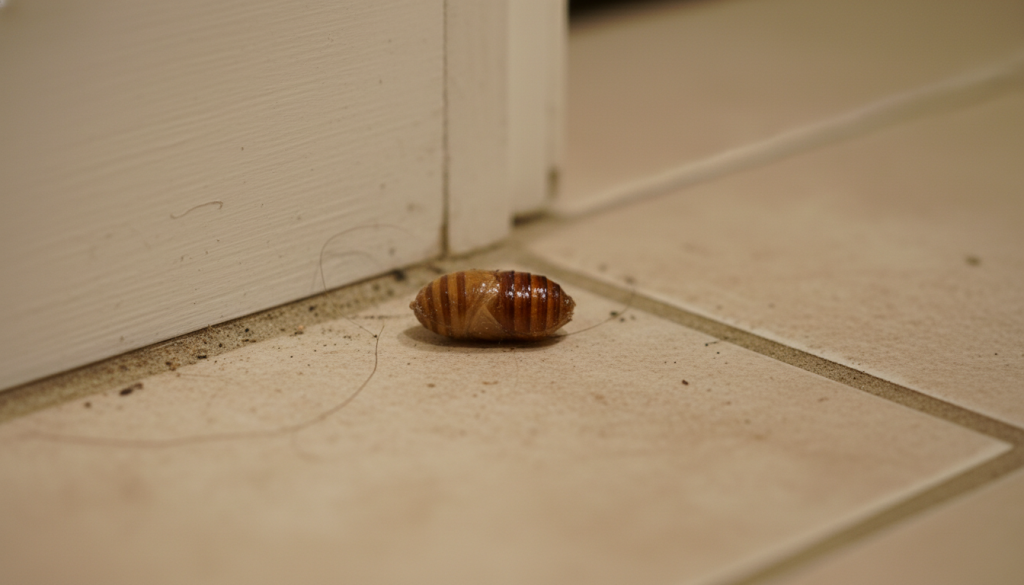
A single German cockroach egg case (ootheca) contains 30 to 48 individual eggs. One female Blattella germanica produces 4 to 8 oothecae in her lifetime, meaning a single gravid female can give rise to up to 300 or more nymphs. Under optimal indoor conditions, a single mated pair can theoretically generate tens of thousands of offspring within one year.
How Many German Roaches Are in One Egg Case?
If you have spotted a small, light-brown capsule tucked behind your refrigerator or under your kitchen sink, you have found a German cockroach ootheca, and you are likely dealing with the beginning of a serious infestation. Understanding exactly how many German roaches are in one egg case, how quickly those eggs develop, and what drives the explosive reproductive rate of Blattella germanica is the first step toward taking back your home.
German cockroaches are widely regarded as the most challenging household pest species in the United States. Their rapid breeding cycle, resistance to many pesticides, and preference for the warm, humid environments inside our homes make them uniquely difficult to control without accurate knowledge and a targeted treatment strategy.
This guide draws on entomological research from Rutgers University NJAES, NC State Extension, and decades of integrated pest management (IPM) data to give you the most authoritative, science-backed answer to this question and every related question you need answered to stop an infestation in its tracks.
What Is a German Cockroach Egg Case (Ootheca)?
Female cockroaches do not lay individual loose eggs the way many insects do. Instead, they produce a hardened protein structure called an ootheca a purse-shaped egg capsule that houses and protects all of their developing embryos until the nymphs are ready to emerge.
The word ootheca (plural: oothecae) comes from the Greek words for egg and container. In the case of Blattella germanica, the ootheca is a highly engineered biological structure that maintains the precise temperature, humidity, and oxygen levels needed for embryonic development.
What Does a German Cockroach Ootheca Look Like?
German cockroach egg cases are distinctive and, once identified, are easy to recognize on sight. Key physical characteristics include:
Near hatching: the ootheca may take on a subtle blue-green tint, according to NC State entomologists a key field-identification indicator
Size: approximately 6–9 mm long (roughly 5/16 inch), 3 mm wide, and 2 mm thick
Shape: elongated, slightly curved, purse- or bean-shaped capsule
Color: light tan to medium brown; darkens slightly as development progresses
Texture: smooth but firm with a visible keel ridge (seam) running along the top edge
Keel: the dorsal ridge is where the case splits open during hatching
KEY FACT:
| Unlike American cockroaches, which glue their oothecae to surfaces and abandon them, German cockroach females carry the ootheca attached to their abdomen for nearly the entire incubation period releasing it only 1 to 2 days before the eggs are ready to hatch. This behavior significantly increases hatching success rates. |
How Many Eggs Are Inside a German Cockroach Egg Case?
This is the central question and the answer is more alarming than most people expect.
A single German cockroach ootheca contains between 30 and 48 eggs, with 35–40 being the most commonly cited average in peer-reviewed entomological literature. Some sources report up to 50 eggs per case under optimal laboratory conditions, though field populations tend to average in the lower-to-mid range of this spectrum.
Each of those eggs occupies its own individual embryonic chamber within the ootheca, arranged in two parallel rows along the interior of the capsule. The eggs are not fertilized individually after formation in fact, a single mating event early in a female’s adult life is sufficient to fertilize all of the oothecae she will ever produce.
| Cockroach Species | Scientific Name | Eggs per Ootheca | Ootheca Size |
| German Cockroach | Blattella germanica | 30–48 eggs | 6–9 mm |
| American Cockroach | Periplaneta americana | 14–16 eggs | 8 mm |
| Oriental Cockroach | Blatta orientalis | 16 eggs | 12 mm |
| Brown-Banded Cockroach | Supella longipalpa | 14–18 eggs | 5 mm |
| Australian Cockroach | Periplaneta australasiae | 22–24 eggs | 11 mm |
| Smokybrown Cockroach | Periplaneta fuliginosa | 20–26 eggs | 11–14 mm |
Table 1: Eggs per ootheca comparison across common North American cockroach species. The German cockroach produces significantly more eggs per case than any other household species.
Can German Cockroaches Reproduce Without Mating?
Yes and this is one of the most alarming and poorly understood facts about this species. Blattella germanica is capable of parthenogenetic reproduction, meaning females can produce viable offspring without fertilization by a male under certain conditions. While parthenogenetic offspring are less common and typically less vigorous than sexually produced nymphs, this capability means that a single stray female introduced into a building can, in theory, seed an infestation entirely on her own.
The German Cockroach Lifecycle: From Egg to Infestation
Understanding the full lifecycle of Blattella germanica is essential for timing treatments effectively and understanding why infestations can spiral so rapidly.
Stage 1 Egg Stage (Inside the Ootheca)
Once the female forms the ootheca, embryonic development begins immediately. The eggs incubate inside the carried capsule for an average of 28 to 30 days at room temperature (around 70–75°F). Temperature plays a critical role in development speed:
- At 86°F (30°C): incubation completes in as few as 17 days
- At 70°F (21°C): incubation takes approximately 28–30 days
- At 60°F (16°C): development slows dramatically and viability decreases
- Below 45°F: eggs fail to develop and may die
This temperature sensitivity explains why German cockroaches are overwhelmingly an indoor pest and why modern HVAC systems that maintain warm, stable temperatures inadvertently create year-round breeding conditions.
| IMPORTANT | Cockroach eggs inside an intact, carried ootheca are almost entirely protected from topical pesticide sprays. Insecticides cannot penetrate the hardened protein casing to kill developing embryos which is why follow-up treatments 3 to 4 weeks after initial application are non-negotiable. |
Stage 2: Nymph Stage (6 Instar Molts)
When the eggs are ready to hatch, all 30 to 48 nymphs emerge from the ootheca within minutes of each other through the keel ridge. Newly hatched German roach nymphs are tiny (about 3 mm), dark brown to nearly black in color, and completely wingless.
Nymphs develop through 6 successive instars, shedding their exoskeleton (exuvia) at each stage. Development through all six instars takes between 54 and 215 days depending on temperature, humidity, and food availability, with 60 to 70 days being typical under warm indoor conditions.
- 1st instar: ~3 mm, nearly black, no wing pads
- 2nd–4th instars: gradual tan lightening, early wing pad development
- 5th instar: wing pads clearly visible covering first few abdominal segments
- 6th instar: full adult coloration, wings fully formed but rarely used
Stage 3 Adult Stage (Reproduction)
Upon completing the 6th molt, the German cockroach reaches sexual maturity. Adults are 13–16 mm long, tan to light brown, and identifiable by the two characteristic parallel dark stripes running down the pronotum (the shield-like plate behind the head). Adult females begin producing oothecae roughly one to two weeks after their final molt. A single female typically produces:
Adult lifespan: approximately 140 to 280 days (20 to 40 weeks)
4 to 8 oothecae over her lifetime
30 to 48 eggs per ootheca
Resulting in 120 to 320+ potential offspring from a single female
| Life Stage | Duration (Typical) | Key Facts |
| Egg (in ootheca) | 28–30 days (avg.) | Pesticide-resistant inside capsule |
| Nymph (1st–6th instar) | 54–215 days (avg. ~65) | 6 molts; shed exuvia at each stage |
| Adult (female) | 140–280 days | 4–8 oothecae per lifetime; single mating sufficient |
| Full Lifecycle (egg → egg) | ~95–100 days (optimal) | Can produce 3–4 generations per year indoors |
Table 2: German cockroach lifecycle at typical indoor temperatures (70–75°F).
Where Do German Roaches Lay Their Eggs?
Because female German cockroaches carry their oothecae almost until hatching, you are less likely to find deposited egg cases than you are with American or Oriental cockroaches. However, females do deposit the ootheca 24 to 48 hours before the eggs hatch. When they do, they choose harborage sites that are:
- Warm (70°F or higher)
- Humid (40–70% relative humidity)
- Dark and undisturbed
- Close to food and water sources
- Tight crevices that provide physical contact on multiple sides (thigmotaxis)
The most common locations where German cockroach egg cases are found include:
- Behind and beneath the refrigerator (motor heat creates ideal microclimate)
- Inside the motor housing of microwave ovens and toasters
- Within kitchen cabinet hinges and drawer slides
- Behind the toe kick board beneath lower cabinets
- Around loose pipe fittings under the sink
- Inside HVAC ductwork and near air handler units
- Between wall voids accessible through electrical outlet boxes
- Inside cardboard boxes (a major transport vector for introduced infestations)
- Along the seams of pantry shelving
| PRO TIP | An empty, sealed-looking ootheca does not mean it was never hatched. After nymphs emerge, the keel ridge reseals and the case reverts to its original appearance. Always crush or bag suspected egg cases do not assume an intact-looking case is inactive. |
How Fast Do German Cockroaches Multiply? (The Population Math)
The reproductive math behind a German cockroach infestation is genuinely staggering and understanding it makes clear why early intervention is so critical.
Single Female Lifetime Offspring
Assuming a female produces 6 oothecae with an average of 38 eggs each, and that 50% of hatchlings survive to reproduce (a conservative real-world estimate), a single female’s direct offspring number approximately 228 nymphs. If each of those surviving females does the same, the second generation adds over 5,000 potential offspring. By the third generation, the theoretical population exceeds 100,000 individuals all descended from one original female.
Annual Population Estimates
Under warm, stable indoor conditions typical of modern climate-controlled buildings:
- Generation time: approximately 95–100 days
- Generations per year: 3 to 4
- Starting from a single mated female, some entomological models project populations exceeding 10,000 to 30,000 individuals within 12 months under unchecked conditions
- Active populations are typically 80% nymphs and 20% adults at any given time
| WHY THIS MATTERS | Most DIY treatments address the visible adult population which represents only ~20% of the infestation. Without targeting egg cases and nymphs, and without follow-up treatments to catch newly hatched nymphs, populations rebound within weeks. This is why integrated pest management (IPM) protocols require minimum 3–4 week treatment intervals. |
Health Risks Associated with German Cockroach Infestations
Beyond the psychological distress of a cockroach infestation, Blattella germanica poses measurable public health risks that have been extensively documented by the Centers for Disease Control and the World Health Organization.
Disease Transmission
German cockroaches mechanically transmit a wide range of bacterial and parasitic pathogens through their saliva, feces, and body surfaces. Documented pathogen associations include:
- Salmonella (Salmonella typhimurium) food contamination
- Escherichia coli particularly antibiotic-resistant strains
- Shigella spp. associated with dysentery
- Clostridium linked to severe gastrointestinal illness
- Typhoid fever pathogens (Salmonella typhi)
- Cholera (Vibrio cholerae) in high-density urban settings
Allergens and Asthma
Cockroach frass (feces), shed exuvia (molted skins), egg case material, and body parts all generate potent aeroallergens. German cockroach allergens are among the leading triggers of childhood asthma in urban environments. The National Institute of Allergy and Infectious Diseases identifies cockroach allergen exposure as a primary driver of asthma-related hospitalizations in low-income housing.
How to Identify German Cockroach Eggs vs. Droppings and Shed Skin
Misidentification is extremely common and leads to ineffective treatment. Here is how to distinguish German cockroach evidence:
| Evidence Type | Appearance | Size | Meaning |
| Ootheca (egg case) | Tan/brown capsule, ribbed seam | 6–9 mm long | Active or past breeding site |
| Frass (droppings) | Black pepper-like specks; smear marks | < 1 mm | Active harborage nearby |
| Exuvia (shed skin) | Translucent, hollow roach shape | Varies by instar | Nymphs actively developing |
| Live nymph (1st instar) | Near-black, tiny, no wings | ~3 mm | Recent hatch; look for ootheca |
| Empty ootheca | Identical to unhatched appears sealed | 6–9 mm | Past hatch crush it regardless |
How to Get Rid of German Cockroach Eggs and Eliminate an Infestation
Controlling German cockroaches requires a systematic Integrated Pest Management (IPM) approach. No single product or method is sufficient given the speed of reproduction and the egg case’s resistance to pesticides.
Step 1 Sanitation and Harborage Reduction
Sanitation is not optional it is the foundation of every effective cockroach control program. Without reducing food, water, and harborage, chemical treatments will fail to produce lasting results.
- Deep clean under and behind all kitchen appliances weekly
- Store all dry food in airtight containers including pet food
- Fix all leaking pipes and eliminate standing water sources
- Remove cardboard boxes immediately after unpacking deliveries
- Seal cracks, gaps around pipes, and crevices with silicone caulk
- Declutter storage areas that create harborage opportunities
Step 2 Cockroach Gel Bait Application
Gel bait is the single most effective tool for German cockroach elimination and is the cornerstone of professional IPM programs. Effective commercial brands include Combat, Maxforce, and Advion. Application guidelines:
- Apply small pea-sized dots (not large blobs) in cracks and crevices near activity
- Place bait at 6-inch intervals along suspected runways
- Use 10–30 grams of bait per room in moderate infestations
- NEVER apply repellent pyrethroid sprays in the same areas as gel bait they will drive roaches away from the bait
- Replace bait every 3–4 months or when it dries out
Step 3 Insect Growth Regulators (IGRs)
IGRs such as hydroprene and pyriproxyfen disrupt cockroach development, preventing nymphs from reaching reproductive maturity. They do not kill cockroaches directly but break the reproductive cycle essential for long-term population suppression. Apply IGRs alongside bait, not instead of it.
Step 4 Desiccant Dusts in Void Spaces
Boric acid dust and diatomaceous earth applied inside wall voids, under appliances, and in other inaccessible harborage areas provide long-term residual kill. These desiccant dusts damage the cockroach’s exoskeleton, causing fatal dehydration. Apply as a fine, barely visible layer heavy piles are avoided by roaches.
Step 5 Follow-Up Treatment Schedule
This is the most commonly skipped step and the most important. Because egg cases are resistant to pesticides:
Consider professional pest control for moderate-to-severe infestations
Re-inspect and re-bait every 2–4 weeks for the first 3 months
A second treatment wave at 4–5 weeks catches newly hatched nymphs before they reproduce
Continue monitoring with pheromone sticky traps to track population decline
Long-Term Prevention: Stopping German Cockroaches Before They Start
German cockroaches are almost always introduced into new locations via infested cardboard boxes, used appliances, grocery bags, and shared plumbing in multi-unit buildings. Prevention strategies include:
Maintain humidity below 50% where possible using a dehumidifier
Inspect all secondhand appliances and furniture before bringing them inside
Unpack groceries immediately and discard paper bags and cardboard
In apartment buildings, request building-wide IPM programs unit-by-unit treatment is insufficient when roaches migrate through shared plumbing and utility chases
Install door sweeps and weather stripping on exterior doors
Use pheromone sticky traps quarterly as early-detection monitors
Frequently Asked Questions
How many roaches come from one egg case?
A German cockroach egg case (ootheca) contains 30 to 48 individual eggs. Under typical indoor conditions, nearly all of them hatch successfully because the female carries the ootheca for most of the incubation period, protecting it from environmental hazards and predators.
How many egg cases does one German cockroach produce in a lifetime?
A single female Blattella germanica produces 4 to 8 oothecae over her adult lifetime of roughly 140 to 280 days. This means a single female can produce between 120 and 384 offspring across her lifetime.
How long does it take for German cockroach eggs to hatch?
German cockroach eggs incubate for 28 to 30 days at typical room temperature (70–75°F). At warmer temperatures (86°F), hatching can occur in as few as 17 days. Cold temperatures significantly slow or prevent development.
Can German cockroach eggs survive pesticide treatment?
Yes. The hardened protein casing of the ootheca provides effective protection against topical insecticide sprays. Eggs inside a carried or freshly deposited ootheca are almost completely immune to contact pesticides. This is why follow-up treatment 3 to 4 weeks after initial application is critical it targets newly hatched nymphs that were in the egg case during the first treatment.
What kills German cockroach egg cases?
Physical destruction is the most reliable method crushing or bagging and disposing of discovered oothecae. HEPA-filter vacuuming is effective for removing egg cases from surfaces. Heat treatment above 120°F kills eggs within the ootheca. Insect Growth Regulators (IGRs) can render nymphs inside the case unable to reproduce when they do hatch, but do not kill the eggs directly.
How can I tell if a German cockroach egg case has already hatched?
Unfortunately, you often cannot tell by appearance alone. Empty oothecae reseal after the nymphs emerge and look nearly identical to unhatched ones. Always treat any discovered ootheca as potentially active crush it, vacuum it up, and dispose of it in a sealed plastic bag.
Conclusion: Why German Cockroach Egg Biology Demands Immediate Action
The answer to “how many German roaches are in one egg” up to 48 per ootheca, from a female that will produce up to 8 oothecae in her lifetime makes one thing clear: these insects are extraordinarily efficient reproducers. One overlooked egg case is not a minor problem. It is the starting point for a population that, left unchecked, can number in the tens of thousands within a single year.
Effective control demands that you address not just the cockroaches you can see, but the eggs you cannot. A rigorous IPM program combining gel bait, IGRs, desiccant dusts, sanitation, and scheduled follow-up treatments is the only approach that consistently eliminates active German cockroach infestations.
If your infestation is moderate to severe, or if DIY treatments have failed after two treatment cycles, engaging a licensed pest management professional with German cockroach-specific expertise is strongly recommended. The reproductive biology of Blattella germanica leaves no room for half-measures.
| Sources & Further Reading • Rutgers NJAES Fact Sheet FS1322: German Cockroach Biology and Control • NC State Extension: Cockroach Biology and Management • EcoGuard Pest Management: Cockroach Egg Identification Guide • Private Exterminator NYC: How Many Roaches Are in One Egg? • National Institute of Allergy and Infectious Diseases: Cockroach Allergens • CDC: Disease Vectors and Pests Cockroaches • World Health Organization: Vector Control Cockroaches |