Roach Eggs vs. Roach Droppings: How to Tell the Difference
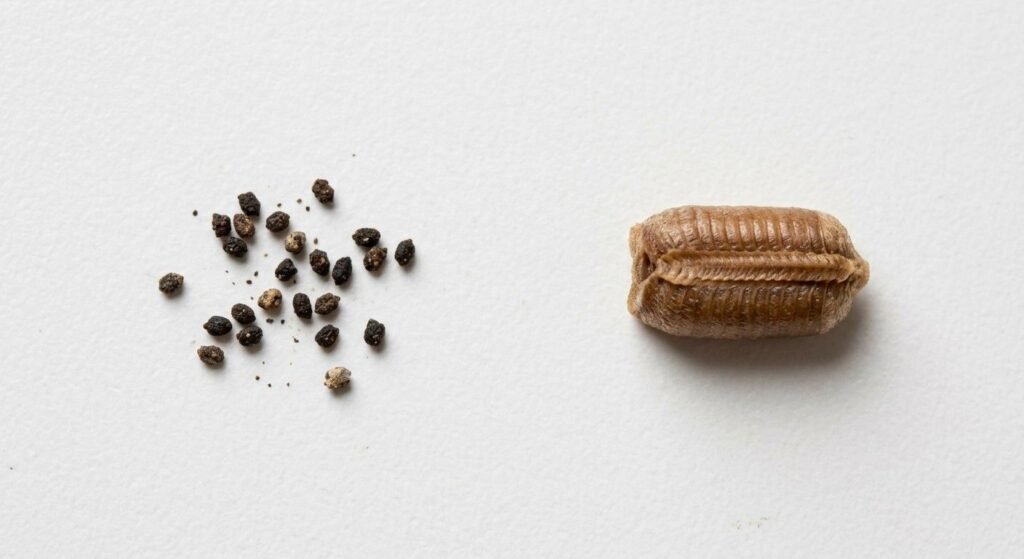
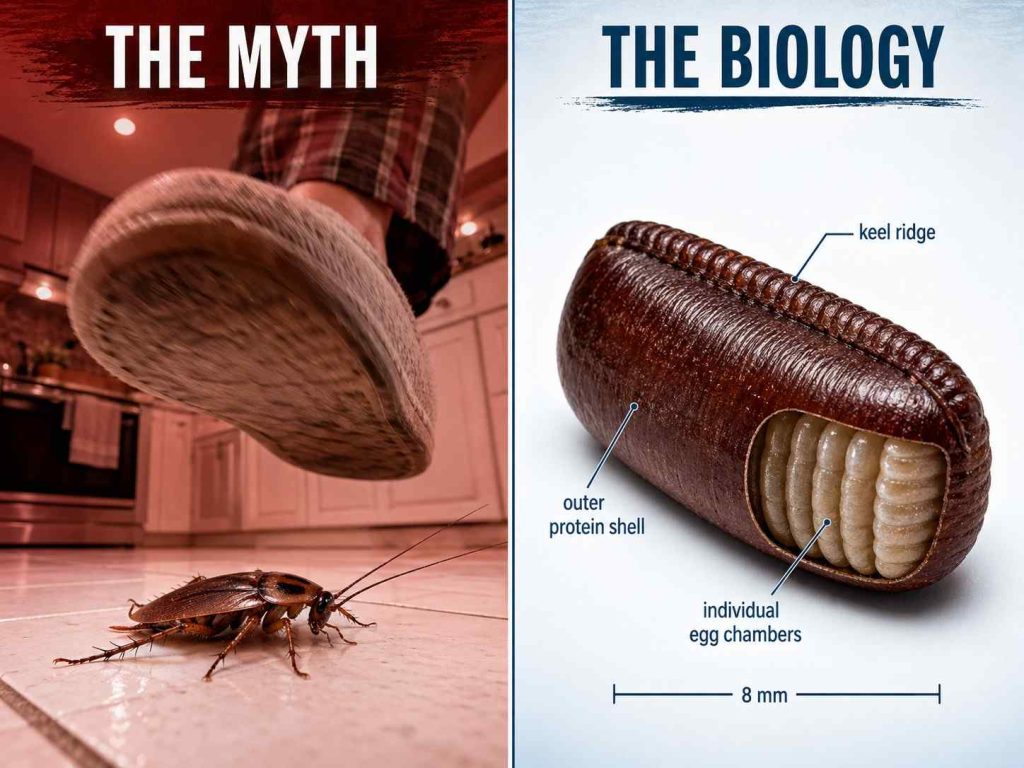
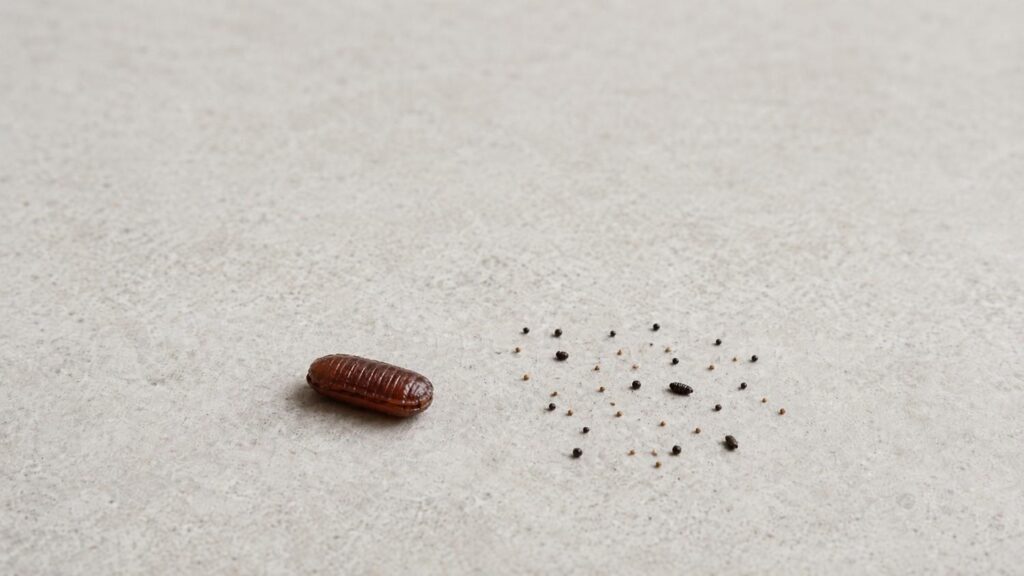
You found a small, dark object in your kitchen or bathroom, and now you need to know what it is. Is it a roach egg case, or is it roach droppings? The distinction matters. Roach eggs mean cockroaches are breeding indoors, while roach droppings mean cockroaches are actively feeding nearby. Both are warning signs, but each points to a different stage of an infestation and a different next step. This guide gives you a reliable, four-attribute method to tell roach eggs apart from roach droppings; species-by-species detail; a room-by-room inspection map; safe removal steps; and a treatment truth table showing what actually works on each. The Quick Answer: Is It an Egg Case or Droppings? A roach egg is a hard, leathery capsule called an ootheca. It is purse-, bean-, or pill-shaped, measures about 5–13 mm (roughly 1/4 to 1/2 inch), and has visible ridges or a seam along one edge. An ootheca is a single, uniform object that holds many embryos inside. Roach droppings are waste, also called frass. Droppings appear as tiny black specks resembling ground coffee or black pepper (small species like the German cockroach) or as small, ridged pellets with blunt ends (large species like the American cockroach). Droppings are scattered in clusters, rather than deposited as a single capsule. The fastest rule: if the object is a single, structured, brown, rigid capsule, it is an egg case. If it is many scattered dark specks, pellets, or smears, it is droppings. The 4-Attribute ID Method (Size · Shape · Texture · Pattern) Use these four attributes to identify any dark object you find. Check them in order. AttributeEgg case (ootheca)Droppings (frass)1. SizeOne larger object, 5–13 mm (~1/4–1/2 in); about a grain of rice to a small beanMany smaller units, specks <1 mm or pellets ~2–3 mm (~1/16–1/8 in)2. ShapeA single uniform capsule: purse, bean, or pill-shapedIrregular specks, cylinders, or smears; no consistent shape3. TextureHard, leathery, glossy; ridged sides; a seam or keel along one edgeMatte, granular; crumbles when dry; no seam4. Pattern/locationFound alone or in small numbers, glued or dropped in a hidden, protected spotScattered in clusters along travel routes: corners, hinges, baseboards, drawer interiors Decision shortcut: Structured and rigid = egg. Scattered and crumbly = droppings. What Roach Eggs (Oothecae) Look Like A roach egg is not a single exposed egg. Cockroaches lay their eggs inside a hardened protective case called an ootheca. The ootheca is made of a tanned protein shell that shields the embryos inside from drying out, from predators, and from most chemical sprays. Each ootheca holds multiple embryos arranged in two rows. Most household roach egg cases measure 5 to 13 mm long (about 1/4 to 1/2 inch). That is roughly the size of a grain of rice to a small dried bean. Fresh oothecae are tan, amber, or light reddish-brown. They darken as the embryos mature, often turning dark brown or nearly black before hatching. Anatomy of an Ootheca: Keel, Operculum, Ridges Three visible features define an ootheca: The University of Florida describes the German cockroach ootheca as 8 mm long, 3 mm high, and 2 mm wide, with each segment containing two eggs and a total of 30 to 40 eggs per case (UF/IFAS EDIS The German Cockroach, IN028). When embryos are nearly mature, a blue-green line shows through the case that is the developing eyes of the nymphs, signaling hatch within about one to two days. Viable vs. Empty Egg Cases Not every egg case you find is still a live threat. An empty (hatched) ootheca is evidence of past reproduction, while a viable ootheca is a pending hatch. Use this checklist to tell them apart. FeatureViable (live) oothecaEmpty (hatched) oothecaShapePlump, full, roundedDeflated, crumpled, or flattenedSeamClosed and intactSplit open along the keelColorGlossy; may show blue-green eyeliner near the hatch.Faded, dull, often lighter brownMeaningHatch pending removal and treatAlready hatched search for nymphs If you find a split, deflated case, the nymphs have already emerged and are hiding nearby. Finding a plump, intact case means hatching is approaching, and you have a short window to remove it. Why You Rarely See German Roach Egg Cases Loose Most species drop or glue their egg cases in hidden spots. The German cockroach is the exception. A gravid (egg-carrying) German female carries her ootheca attached to the tip of her abdomen until just 24 to 48 hours before it hatches (NC State Extension Biology and Behavior of the German Cockroach). She selects and maintains ideal conditions by moving with the case. This means a loose German egg case you find has usually either just hatched or was dropped right before hatching. Because females carry most cases to term, you will see fewer loose German oothecae than American or brown-banded ones, but each German case holds more eggs. What Roach Droppings (Frass) Look Like Roach droppings are the feces cockroaches leave behind as they travel and feed. In pest management, droppings are called frass. They are one of the most reliable signs of cockroach activity, because roaches defecate frequently wherever they go. Droppings vary by the size of the roach that produced them. They are consistently dark black to dark brown and matte, not glossy. The key is that they are irregular and scattered, never a single structured capsule. Specks, Pellets, and Smears: Three Dropping Types Cockroach droppings take three recognizable forms depending on species, size, and moisture: Key fact: Droppings stay consistently dark and matte. Fresh droppings may look slightly glossy, but they dry out, crumble, and never form a ridged capsule. If you can crush the object into powder, it is droppings, not an egg case. What Droppings Tell You About Infestation Severity The amount and spread of droppings read like a map of roach activity. A few isolated specks suggest early scouting. Small, clustered deposits mean many roaches are moving through the area. Heavy, layered droppings with a musty, oily odor indicate an established, large infestation. Droppings also serve a biological function for the roaches: they deposit aggregation pheromones in