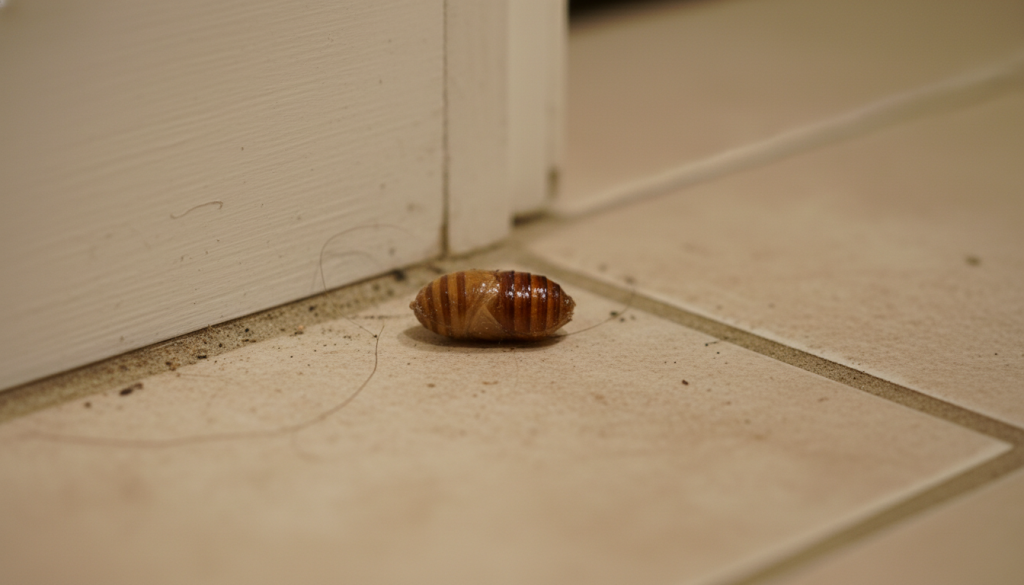
A single cockroach egg case, called an ootheca, can hold up to 48 embryos. Miss just one during treatment, and you’re right back where you started within weeks. So do roach eggs die in heat? Yes, they absolutely do. But here’s the critical detail most sources gloss over: it takes significantly higher temperatures and longer exposure times to kill eggs than it does to kill adult roaches.
After years of researching thermal pest control methods and consulting with licensed exterminators on real-world outcomes, I’ve found that the gap between “kills adults” and “kills eggs” is exactly where most DIY heat treatments fall apart. This guide breaks down the exact temperatures, durations, and methods that reliably destroy cockroach eggs backed by university entomology research and professional pest management standards.
You’ll learn the precise thermal death points for different species, which heat methods actually penetrate the ootheca, why some eggs survive treatment, and what to do if you find egg cases in your home today.
The Direct Answer: Yes, But Temperature and Time Are Everything
Here’s the bottom line: roach eggs die in heat, but only when exposed to temperatures at or above 150°F (65°C) for a sustained period, typically 45 to 60 minutes of continuous exposure at the egg’s actual surface.
That number matters more than most people realize. The widely cited 120°F (49°C) benchmark? That’s the lethal temperature for adult cockroaches, not their eggs. An adult roach exposed to 120°F dies within roughly 2 minutes, according to research referenced by the University of Florida’s IFAS Extension. But at that same temperature, the ootheca frequently survives. Its hardened outer shell insulates the developing embryos just long enough for them to remain viable.
This distinction between adult kill temperature and egg kill temperature is the single biggest reason DIY heat treatments fail. People heat a room to 120–130°F, see dead adults on the floor, and assume the job is finished. Weeks later, nymphs hatch from surviving egg cases tucked inside wall voids and crevices, and the infestation restarts.
💡 Pro Tip: Think of it this way: killing the adults is the easy part. The eggs are the real target. If your heat treatment doesn’t reach 150°F at the egg’s surface for at least 45 minutes, you haven’t solved the problem. You’ve only paused it.

| Target | Temperature | Required Exposure Time | Kill Rate |
| Adult cockroaches | 120°F (49°C) | 2 to 5 minutes | ~100% |
| Nymphs (first instar) | 125°F (52°C) | 5 to 10 minutes | ~100% |
| Roach eggs (ootheca) | 150°F (65°C) | 45 to 60 minutes sustained | ~100% |
| Gut bacteria (in adults) | >200°F (95°C) | Varies | Partial (see below) |
What Temperature Kills Cockroach Eggs? Exact Thresholds
Understanding the precise temperature threshold that kills cockroach eggs requires separating fact from oversimplification. Three factors determine whether high heat exposure actually destroys the embryos inside an ootheca: peak temperature, duration of exposure, and heat penetration to the egg’s physical location.
The 150°F Benchmark for Ootheca Destruction
Research from entomology departments, including data referenced by the University of Florida’s IFAS Extension, establishes 150°F (65°C) as the reliable lethal temperature for cockroach egg cases. At this thermal death point, sustained heat penetrates the chitin outer shell and protein matrix of the ootheca, denaturing the proteins essential for embryo development.
This isn’t a magic number that works instantaneously, though. The 150°F figure assumes sustained contact, meaning the air or surface temperature at the egg’s exact location must hold at 150°F for a continuous 45-to-60-minute window. Brief temperature spikes above the threshold don’t count.
For professional whole-structure heat treatment, technicians typically target 130–145°F throughout the structure while ensuring that wall voids, enclosed spaces, and hidden crevices reach at least 150°F at their deepest points. They verify this with thermocouple probes placed inside walls and beneath appliances, the areas where oothecae are most commonly deposited.
Why 120°F Kills Adults but Often Fails on Eggs
At 120°F, an adult cockroach dies because its open circulatory system cannot regulate its internal temperature. As an ectotherm, a cold-blooded insect, a roach has no physiological cooling mechanism. Heat causes rapid protein denaturation in organs, organ drying, and metabolic failure. Death comes within minutes.
The ootheca presents a fundamentally different engineering problem. The egg casing provides multiple layers of protection:
✔ A hardened chitin shell that slows heat penetration
✔ A protein matrix that functions as thermal insulation
✔ Individual egg chambers that compartmentalize each embryo independently
✔ Yolk reserves that buffer temperature changes around developing tissue
At 120°F, heat penetrates the outer shell too slowly to overwhelm these protective layers within any practical timeframe. Some embryos, particularly those nearest the center of the egg case, can survive even extended exposure at this temperature threshold.
Exposure Duration: The Variable Most People Ignore
Temperature alone doesn’t determine success. The concept of lethal dose time (LDt) borrowed from fumigation science applies directly to heat treatment for cockroaches. LDt accounts for both temperature intensity and exposure duration as a combined kill metric.
Here’s the practical breakdown:
| Temperature at Egg Surface | Duration | Estimated Egg Kill Rate |
| 120°F (49°C) | 60 minutes | 30 to 50% (unreliable) |
| 130°F (54°C) | 60 minutes | 60 to 80% |
| 140°F (60°C) | 45 minutes | 85 to 95% |
| 150°F (65°C) | 45 to 60 minutes | ~100% |
| 160°F+ (71°C+) | 30 minutes | ~100% |
The takeaway: higher temperatures shorten the required duration, while lower temperatures demand longer exposure, but below 140°F, even extended time often fails to achieve complete egg mortality. This is the temperature threshold where many DIY attempts stall.
💡 Pro Tip: When evaluating a professional heat treatment service, ask specifically what internal temperature they guarantee at wall void depth, not just ambient room temperature. A room thermometer reading 140°F means nothing if the eggs are buried inside a wall cavity where the temperature only reaches 115°F. Reputable providers will show you thermocouple probe placement and data logs.
Why Roach Eggs Are So Much Harder to Kill Than Adults
Understanding why the ootheca resists heat helps you choose the right pest elimination strategy. The cockroach egg case isn’t just a shell; it’s an evolutionary survival capsule refined over 300 million years of arthropod adaptation within the order Blattodea.
Inside the Ootheca: A Built-In Thermal Shield
The ootheca is produced by the female cockroach’s colleterial gland and hardened with proteins secreted through the oviduct and accessory gland. Once deposited, the egg casing undergoes a rapid hardening process called ootheca hardening that creates a remarkably resilient structure.
Here’s what the cross-section of an ootheca reveals:
✔ Chitin outer shell: The same tough biopolymer that forms the cockroach’s exoskeleton. Chitin is a poor heat conductor, meaning it actively slows thermal transfer to the interior.
✔ Keel: A ridged seam running the length of the capsule that nymphs eventually push open when hatching. Before hatching, this seal is remarkably airtight, trapping insulating air inside.
✔ Egg chambers: Individual compartments arranged in two parallel rows, each housing a single developing embryo. This segmented design means heat must reach every chamber independently; failure to penetrate the center leaves viable eggs.
✔ Protein matrix and yolk reserve surround each embryo, providing both nutritional support and a thermal buffering layer during embryogenesis.
Some species add yet another layer of defense. Certain female cockroaches coat the deposited ootheca with saliva, camouflaging it into surrounding surfaces and adding a thin additional insulating film that also helps the egg case adhere to surfaces.

The result: the ootheca behaves like a biological thermos. External temperature changes reach the developing embryos slowly and at reduced intensity.
How Heat Actually Kills the Embryo (Protein Denaturation)
When sufficient sustained heat finally penetrates the ootheca, it kills embryos through a cascade of irreversible biological failures:
1. Protein denaturation: Structural and enzymatic proteins unfold and lose function above approximately 140°F. This disrupts embryogenesis and halts cell division permanently.
2. Cell membrane disruption: Lipid bilayers in embryonic cells destabilize at extreme temperatures, causing irreversible leakage of cellular contents.
3. Organ drying. Moisture inside the individual egg chambers evaporates, dehydrating developing tissues beyond recovery.
4. Metabolism failure: Enzymatic pathways essential for embryo development permanently shut down as protein structures collapse.
This process is completely irreversible. Once the embryo’s proteins denature, the egg cannot recover even if temperatures return to normal ranges. That’s precisely why sustained exposure matters so much; the heat must fully penetrate to the center of the ootheca and hold long enough for denaturation to complete in every single chamber.
The Gut Bacteria Complication Most Sources Miss
Here’s something most pest control articles overlook entirely: even when heat kills cockroach embryos, certain cockroach gut bacteria are extraordinarily heat-resistant, and this has implications for long-term infestation control.
Research published through the Society for Applied Microbiology found that certain fat-body intracellular symbiotes, specialized bacteria living within cockroach tissue, can survive temperatures up to 95°C (203°F). These symbionts play critical roles in cockroach nutrition, vitamin synthesis, and developmental success.
Why does this matter for your treatment? Research from the University of Minnesota Extension demonstrates that these symbiotic bacteria transfer from mother to offspring during the reproductive cycle. If a heat treatment kills adults and most eggs but doesn’t achieve high enough temperatures to destroy these bacteria in all surviving biological material, the next generation of nymphs that hatch from any surviving ootheca may still carry viable gut bacteria, giving them a measurable developmental advantage and improving their nymph viability.
This is admittedly an edge case. But it underscores why professional-grade temperatures (150°F+ sustained) combined with follow-up monitoring are essential for complete, lasting infestation control. Partial treatment can leave behind more resilient survivors.
Every Heat Method Ranked What Actually Destroys Roach Eggs
Not all heat methods deliver equal results. Some reliably reach the kill temperature for ootheca. Others consistently fall short. Here’s an honest, method-by-method breakdown based on real-world effectiveness and practical limitations.

Professional Whole-Structure Heat Treatment
Effectiveness for eggs: ★★★★★ (Highest)
This is the gold standard for thermal extermination of cockroach infestations. Licensed technicians seal the structure, position industrial heating units, and raise the entire interior to 130–150°F for several hours. Air circulation fans ensure even heat distribution throughout every room, and thermocouple probes monitor temperatures at dozens of points, including inside wall voids, behind major appliances, and in deep crevices.
How whole-structure heat remediation works:
✔ Industrial propane or electric heating units raise the ambient temperature systematically
✔ High-volume fans force hot air into enclosed spaces, targeting potential cold spots
✔ Technicians monitor temperature with thermocouple probes and sometimes infrared camera detection
✔ Heat-resistant tarps seal doorways, windows, and structural openings
✔ Full treatment runs 6–8 hours, depending on structure size and infestation severity
What does heat treatment for cockroaches cost?
Professional whole-structure heat treatment typically runs $2,000–$6,000 for a standard residential home, depending on square footage, infestation severity, and geographic region. Commercial kitchen or multi-unit apartment treatments run higher, sometimes $8,000–$15,000 for large structures.
Why it works on eggs: The sustained, monitored high heat exposure eliminates the cold spots where oothecae could otherwise survive. Professional equipment achieves temperatures and durations that DIY methods almost never match. The air circulation fans and strategic probe placement ensure heat penetration into wall voids, the hiding places that matter most.

💡 Pro Tip: Ask your pest control provider whether they include post-treatment monitoring in their service. A reputable company, especially those following EPA Integrated Pest Management (IPM) guidelines, will schedule follow-up inspections 2–4 weeks after treatment to catch any nymphs that hatch from oothecae deposited in extremely deep harborages that heat may not have fully penetrated.
Does the Dryer Kill Cockroach Eggs?
Effectiveness for eggs: ★★★★☆ (High for infested fabrics and small items)
Yes. A standard household clothes dryer on its high heat setting produces 125–135°F internally, with some newer models reaching 150°F+ on maximum heat. A full cycle of 30–40 minutes on high heat generates enough sustained heat to kill adult cockroaches, nymphs, and in most cases, eggs attached to clothing, fabric, or soft items.
Best practices for using dryer heat to kill roaches:
✔ Run items on the highest heat setting your fabrics can tolerate
✔ Extend the cycle to at least 40 minutes for reliable eggcase destruction
✔ Don’t overload the drum; items need full heat exposure and adequate airflow
✔ Immediately seal treated items in clean plastic bags after the cycle to prevent re-infestation
✔ Inspect items before placing them back in closets or drawers
This method is ideal if you’ve found oothecae attached to clothing, bedding, towels, curtains, or inside fabric storage containers. It won’t help with eggs deposited inside walls, beneath appliances, or in structural crevices; those require different approaches.
Can you put clothes in the dryer to kill roaches? Absolutely. It’s one of the most accessible and effective DIY methods, but only for items that physically fit in the dryer and can tolerate high heat exposure.
Steam Cleaners for Ootheca in Crevices
Effectiveness for eggs: ★★★★☆ (High for targeted, accessible egg cases)
A quality steam cleaner produces vapor at 200°F+ (93°C), well above the lethal temperature for cockroach eggs. When directed at an ootheca for just 5–10 seconds, the superheated steam penetrates the chitin shell and destroys the embryos through rapid protein denaturation and tissue drying.
Where steam works best:
✔ Baseboard crevices and gaps
✔ Behind outlet covers (use caution near electrical wiring)
✔ Along cabinet hinges, shelf edges, and drawer tracks
✔ Bathroom tile grout lines where oothecae are commonly deposited
✔ Along the seams and joins of kitchen countertops
Limitations: Steam must make direct contact with the egg case. It dissipates rapidly over distance, so it won’t reach eggs hidden deep in wall voids or buried inside appliance motors. Think of steam as a targeted complement to a broader treatment strategy, not a standalone solution for a full infestation.

Hot Box Roach Treatment
Effectiveness for eggs: ★★★★☆ (High for isolated items)
Hot box treatment involves placing infested items (electronics, books, small furniture, decorative objects) inside a sealed, heated enclosure that raises the internal temperature above 150°F and holds it for a sustained period. Professional pest control companies offer portable hot boxes, and some effective DIY versions use insulated containers with controlled heating elements and temperature monitoring.
This method works particularly well for items you can’t toss in a dryer: gaming consoles, picture frames, books, corrugated cardboard boxes (a primary ootheca hiding spot for many species), and small appliances that can handle the thermal exposure.
Caution: Always verify an item’s heat tolerance before treatment. Electronics with lithium batteries, certain plastics, wax-based materials, and some adhesives may suffer damage at sustained high temperatures. When in doubt, use the freezer method instead.
Heat Gun for Roach Eggs: Effective or Risky?
Effectiveness for eggs: ★★★☆☆ (Moderate high risk, limited reach)
A heat gun can produce surface temperatures exceeding 1,000°F, which is far more than necessary for killing cockroach eggs, and that excess introduces real safety hazards:
✔ Fire hazard: Directing concentrated heat at wood, dust, insulation, or paper near wall voids can ignite materials
✔ Cosmetic damage: Scorched paint, melted caulk, warped trim, and bubbled finishes
✔ Limited penetration. The heat is intense but superficial. It may char the surface of an ootheca without fully heating the interior embryos if contact time is too brief.
If you choose to use a heat gun, keep it on a low setting (250–400°F), hold it 6–8 inches away from the target, and apply heat for 10–15 seconds per spot. Never use a heat gun inside wall voids, near insulation, or around any flammable material.
In almost every scenario, a steam cleaner is safer, more effective, and less likely to cause property damage for targeted egg case destruction.
The Hot Car Method: Fact vs. Fiction
Effectiveness for eggs: ★★☆☆☆ (Low unreliable)
You’ve probably encountered this advice: “Leave infested items in a hot car on a summer day to kill roaches.” While vehicles parked in direct sunlight can reach 130–170°F on dashboard surfaces, the temperature distribution throughout the car is extremely uneven. The floor, trunk, and shaded areas may only reach 100–115°F, well below the lethal threshold for ootheca destruction.
Do roaches die in the summer heat from a parked car? Sometimes adults do if they’re on the exposed dashboard. But eggs hidden in a bag on the back seat or in the trunk floor rarely experience lethal temperatures for a sufficient duration.
Unless you’re in a region where sustained interior car temperatures reliably exceed 150°F for multiple consecutive hours, this method is too inconsistent to trust for egg elimination. Cockroach egg cases can survive comfortably in the cooler pockets within the vehicle.
Verdict: Don’t rely on the hot car method for anything other than potentially killing exposed adults. For eggs, always use a more controlled heat source with verifiable temperatures.
Species-Specific Heat Resistance: Not All Roaches Are Equal
Different cockroach species produce oothecae with different dimensions, egg counts, and critically different thermal tolerances. Identifying which species is infesting your home determines how aggressive your heat-based pest management approach needs to be.
German Cockroach Egg Tolerance (Most Common Indoor Species)
The German cockroach (Blattella germanica) is the most prevalent indoor pest species worldwide and arguably the most challenging to eliminate with heat. Here’s why this species demands special attention:
✔ Females carry the ootheca attached to their abdomen until just 1–2 days before hatching. Unlike most species that deposit the egg case early, German cockroaches keep their eggs with them. This makes the eggs harder to locate and target independently.
✔ Each ootheca contains 30–48 eggs, the highest count among common household species.
✔ Females produce 4–8 oothecae per lifetime, potentially generating 200+ offspring from a single female during the roach reproduction cycle.
✔ German cockroaches gravitate toward warm, enclosed spaces near appliances, inside electronics, and around water heater closets, exactly the spots where heat treatment cold spots tend to occur.
✔ Research from Purdue University has documented German cockroaches developing cross-resistance to multiple pesticides, making non-chemical treatment options like heat even more strategically important.
Do German roach eggs die in heat? They do, but their thermal tolerance sits slightly above the general 150°F benchmark. Professional exterminators treating German cockroach infestations commonly target 155–160°F at harborage depth to ensure complete egg mortality with confidence.

American Cockroach Heat Resistance
The American cockroach (Periplaneta americana), often called a “palmetto bug” or “water bug,” is the largest common household species. Its ootheca is dark reddish-brown, approximately 8mm long, and typically deposited in warm, humid locations like basements, sewer access points, and water heater closets.
Key differences from German cockroaches:
✔ Each ootheca contains 14–16 eggs (significantly fewer per case)
✔ Females deposit the ootheca shortly after formation, often cementing it to surfaces with secreted saliva
✔ American cockroach oothecae are slightly less heat-resistant than German cockroach oothecae, likely due to thinner chitin walls relative to egg case volume
✔ The standard 150°F / 45-minute threshold is generally sufficient for reliable American cockroach egg kill
✔ Females can produce up to 20+ oothecae per year, so even with fewer eggs per case, the reproductive output remains substantial
Oriental, Brown-Banded, and Smokybrown Differences
Each cockroach species within the family Blattidae (and related families like Blaberidae) has evolved for different environmental niches. These evolutionary adaptations directly affect their temperature sensitivity and the heat resistance of their egg cases.
| Species | Eggs per Ootheca | Oothecae per Year | Carry or Deposit? | Relative Heat Resistance | Preferred Environment |
| German cockroach (B. germanica) | 30 to 48 | 4 to 8 | Carry until near the hatch. | Highest | Warm indoors (kitchens, bathrooms) |
| American cockroach (P. americana) | 14 to 16 | Up to 20+ | Deposit early | Moderate | Warm, humid (basements, sewers) |
| Oriental cockroach | 16 to 18 | ~8 | Deposit early | Lower (cold-adapted) | Cool, damp areas |
| Brown-banded cockroach | 14 to 18 | Up to 13 | Deposit (walls/ceilings) | Moderate | Warm, dry (upper cabinets) |
| Smokybrown cockroach | 20 to 26 | ~10 | Deposit | Moderate | Outdoors/attics, high humidity |
| Australian cockroach (P. australasiae) | 22 to 24 | ~12 | Deposit | Moderate | Semi-outdoor, tropical |
Oriental cockroaches are notably more cold-tolerant than other species; they can survive temperatures that would kill German cockroaches but are correspondingly less heat-resistant. Their eggs tend to die at slightly lower sustained temperatures (~140°F) because the ootheca evolved for cool, damp conditions rather than thermal extremes.
Brown-banded cockroaches deposit oothecae in unusual, elevated locations behind picture frames, inside light fixtures, on upper wall surfaces, and ceilings, making them easy to miss even during thorough treatment. Their ootheca deposition in crevices high up on walls is a distinctive behavior that many homeowners don’t expect.
💡 Pro Tip: Identify the species before choosing a treatment approach. A German cockroach infestation demands more aggressive heat protocols and temperatures than an Oriental cockroach problem. If you’re unsure which species you’re dealing with, a pest control professional can identify them from a single specimen or ootheca sample. This identification step alone can save you time and money.
Does Cold Kill Roach Eggs? The Alternative Approach
Heat isn’t the only temperature extreme that destroys oothecae. Cold treatment offers a viable alternative, and in certain situations, it’s actually more practical than heat.
Sealed Freezer Bag Method Temperature and Duration
Place infested items (books, small electronics, pantry goods, and fabric) in a sealed freezer bag and leave them in a standard household freezer (0°F / -18°C) for at least 5 full days. This extended duration ensures that cold penetrates completely to the center of any ootheca.
Why 5 days and not shorter? Cockroach eggs can tolerate brief cold exposure through a process called “gradual acclimation”; if temperatures drop slowly, embryos sometimes enter a dormancy-like state resembling diapause. A full 5 days at 0°F overwhelms this defense mechanism and causes internal organ freezing and destructive ice crystal formation within embryonic cells.
Important details:
✔ Remove as much air from the bag as possible before sealing. Air pockets act as insulation and slow the freezing process
✔ Use prolonged freezer exposure rather than repeated freeze-thaw cycles
✔ Don’t stack sealed bags on top of each other; lay them flat for maximum cold penetration
✔ Items with thick insulation (hardcover books, dense cardboard) may need 7 days for full effectiveness

Cryonite and Dry Ice Fumigation
Professional cryonite treatment uses liquid carbon dioxide sprayed directly onto cockroach harborage and ootheca locations. The CO₂ converts to dry ice particles on contact, flash-freezing surfaces to -110°F (-79°C). At this extreme temperature, even heavily protected oothecae die almost instantly; the cold causes respiratory openings to freeze and catastrophic cellular destruction far faster than the egg case’s insulation can compensate.
Dry ice fumigation operates on a similar principle for enclosed spaces and targeted treatment zones. However, this method carries a carbon dioxide poisoning risk in poorly ventilated areas. Cryonite and dry ice fumigation should only be performed by licensed professionals with proper gas monitoring equipment and ventilation protocols.
Both methods align with cold treatment protocols recognized by USDA pest management guidelines for agricultural and structural pest control.
Can Cockroach Eggs Survive Freezing?
Under natural outdoor conditions, in a typical cold winter, some species’ eggs can survive brief freezing if temperatures hover near 32°F (0°C). Oriental cockroaches and smokybrown cockroaches, both semi-outdoor species, produce oothecae adapted to withstand winter conditions in temperate climates.
However, sustained exposure below 0°F (-18°C) overwhelms even cold-adapted species. And no common cockroach species’ eggs survive the extreme temperatures produced by professional cryonite treatment. Do roaches prefer heat or cold? They strongly prefer warmth; the ideal temperature for cockroaches to thrive falls between 75 and 85°F, which is why cold treatment at the extremes is so effective against all life stages.
Quick comparison of heat vs. cold for egg elimination:
| Factor | Heat Treatment | Cold Treatment |
| Speed of kill | 45 to 60 minutes at 150°F | 5+ days at 0°F (freezer) |
| Equipment needed | Heaters, fans, thermocouple probes | Freezer or cryonite applicator |
| Coverage area | Whole-structure possible | Item-level or targeted only |
| DIY feasibility | Limited (hard to reach 150°F safely) | Moderate (freezer method is simple) |
| Cost (professional) | $2,000 to $6,000 | $500 to $1,500 (cryonite) |
| Best for | Structural infestations | Individual items, small-scale problems |
What to Do When You Find Cockroach Eggs (Step-by-Step Removal)
Finding even one ootheca means there are almost certainly more hidden nearby. A single female German cockroach completes the 4–6 week egg cycle repeatedly throughout her lifespan, depositing multiple egg cases in sheltered locations. Here’s a systematic approach to finding and destroying them.
How to Find and Identify Ootheca
Cockroach egg cases are small, typically 5–13 mm long depending on species, and range from tan to dark reddish-brown. They have a distinctive purse-shaped or pill-capsule appearance with a ridged keel along one edge. The egg incubation period varies by species but typically spans 4–6 weeks.
Check these common hiding spots first:
✔ Inside corrugated cardboard folds and seams a primary ootheca hiding location due to the warmth and textured surface
✔ Behind and beneath refrigerators, stoves, and dishwashers, appliance warmth creates ideal incubation conditions
✔ Inside water heater closets and along hot water pipes
✔ Along baseboard crevices, door frame gaps, and cabinet hinges
✔ Inside electronics routers, gaming consoles, cable boxes, and clock radios
✔ Behind outlet covers and switch plates, the warm air currents from wall voids attract egg-laying females
✔ In bathroom vanity gaps and beneath sinks, where moisture and warmth combine

Why Crushing Egg Cases Can Backfire
Your first instinct when finding an ootheca might be to crush it. Be careful. If the egg case is near its hatching date, close to the end of the 4–6 week egg cycle, crushing it can release partially developed nymphs that scatter immediately. A single German cockroach ootheca can release up to 48 tiny first instar nymphs that disperse into the nearest crack within seconds.
A better approach for safe ootheca removal:
1. Pick up the ootheca with a paper towel or tissue; don’t handle it with bare fingers, as some species coat egg cases with allergenic proteins
2. Submerge it in a container of soapy water for at least 30 minutes; this suffocates the embryos by blocking the ootheca’s microscopic air channels
3. Alternatively, seal it in a zip-lock bag and place it in the freezer for 5+ days using the sealed freezer bag method
4. Or flush it directly; water pressure and sewage conditions effectively destroy the embryos
5. Dispose of any paper towel or tissue you used; don’t leave biological material behind
Never leave a crushed ootheca on the ground and walk away. If any live nymphs emerged from the broken capsule, they’d have scattered into hiding before you returned with a broom.
The Post-Hatch Defense: IGR + Borax + Residual Pesticide
Even the most thorough heat treatment should be paired with chemical safeguards against nymphs that might emerge from overlooked egg cases. This three-layer approach, recommended by pest management professionals, including EcoGuard Pest Management, targets different stages of the cockroach life cycle:
1. Insect Growth Regulator (IGR) Disrupts nymph development so any survivors can’t reach reproductive maturity. IGRs like hydroprene or pyriproxyfen mimic juvenile hormones, preventing normal molting and metamorphosis. They don’t kill on contact; they ensure the next generation never successfully breeds. This breaks the roach reproduction cycle at its most vulnerable point.
2. Borax dusting is applied in thin layers inside wall voids, beneath appliances, and along baseboards. Nymphs walk through the fine powder, which damages their exoskeleton and causes dehydration over hours to days. Borax remains effective for months as a long-lasting residual treatment, continuing to kill nymphs long after heat has dissipated.
3. Diatomaceous earth works through a similar mechanism as borax, damaging the waxy protective layer of the cockroach exoskeleton and clogging spiracles (the breathing openings on the insect’s body), causing desiccation. Food-grade diatomaceous earth is a non-chemical treatment option considered safe for use around kitchens and food storage areas.
4. Residual pesticide A targeted spray applied to known harborage areas provides immediate knock-down of any nymphs that emerge from surviving oothecae. Always follow EPA label instructions and application guidelines for any chemical pesticide product.
💡 Pro Tip: Apply IGR before heat treatment when possible. The insect growth regulator remains active after heat dissipates, creating a chemical safety net for any eggs that survive the thermal exposure. This layered combination approach reflects modern Integrated Pest Management (IPM) principles using multiple control strategies in coordination rather than relying on any single method. Both the CDC and USDA recommend IPM as the most effective framework for persistent household pest management.
7 Mistakes That Let Roach Eggs Survive Heat Treatment
I’ve seen these errors repeatedly in DIY attempts and in substandard professional jobs alike. Avoiding them dramatically improves your egg kill rate and prevents the frustrating cycle of re-infestation.
1. Ignoring cold spots. Every structure has areas where heat doesn’t fully penetrate: inside thick walls, beneath heavy appliances, behind dense insulation, and in structural voids. These cold spots become refuges for oothecae. Professional treatments use air circulation fans and thermocouple probes to identify and eliminate them. DIY setups rarely account for this.
2. Insufficient duration. Hitting 150°F for 10 minutes is not the same as sustaining it for 60. Protein denaturation inside the ootheca’s compartmentalized egg chambers takes time to complete. Cutting the treatment short is the number one reason eggs survive heat exposure.
3. Not monitoring temperature at the egg’s actual location. A room thermometer reading 145°F on a shelf tells you absolutely nothing about the temperature inside a wall void 3 inches behind it. Without thermocouple probes or infrared camera detection, you’re guessing, and guessing doesn’t kill eggs.
4. Skipping wall voids entirely. Cockroaches deposit oothecae in crevices, cracks, and structural voids specifically because these locations offer protection from environmental extremes. If heat doesn’t penetrate wall voids, the eggs inside them survive. Heat penetration into wall voids requires forced airflow, not just ambient room temperature.
5. No residual treatment for post-hatch nymphs. Heat kills what it reaches in the moment, but it leaves zero residual protection afterward. Any ootheca that survived even one out of dozens will eventually hatch. Without borax, IGR, or diatomaceous earth in place, those emerging nymphs restart the infestation within weeks.
6. Wrong species assumptions. Treating a German cockroach infestation with temperatures barely sufficient for Oriental cockroach eggs is a recipe for failure. German cockroach oothecae require the highest temperatures of any common indoor species. Species identification matters.
7. Failing to remove harborage materials before treatment. Corrugated cardboard, stacked newspapers, cluttered storage boxes, and dense paper accumulations create insulated pockets that heat struggles to penetrate. Remove or reduce harborage materials before treatment to give heat direct access to hidden oothecae. This single preparation step can dramatically improve treatment effectiveness.

DIY Heat Treatment vs. Professional Extermination: Which Makes Sense?
This decision hinges on the scale of your infestation, the cockroach species involved, your budget, and whether you’ve already attempted treatment unsuccessfully.
When DIY heat methods work well:
✔ You’ve found a small number of oothecae in accessible locations, not buried inside walls
✔ The infestation is limited to one area or a few items (a single appliance, a piece of furniture, clothing)
✔ You can combine heat with chemical follow-up treatments (IGR + borax + diatomaceous earth)
✔ You’re dealing with a non-German cockroach species that’s easier to control
✔ You’re using it as an early intervention before a small problem becomes a large one
When you need professional help:
✔ You’re seeing roaches in multiple rooms or finding oothecae in more than 2–3 separate locations
✔ You have a confirmed German cockroach infestation; their carry behavior, high reproductive output, and pesticide cross-resistance make DIY control extremely difficult
✔ The infestation involves wall voids, structural crevices, or multi-unit buildings like apartments, where roaches migrate between units
✔ DIY methods have already failed once; repeat infestations almost always indicate hidden oothecae in locations you can’t reach without professional equipment
✔ You’re dealing with a commercial kitchen, restaurant, or food service environment where health codes and liability demand professional documentation
Cost comparison at a glance:
| Approach | Typical Cost | Egg Kill Reliability | Best For |
| DIY dryer + freezer | $0 to $50 | Moderate (items only) | Small-scale, isolated egg cases |
| DIY steam cleaner | $50 to $200 (equipment) | Moderate-high (accessible areas) | Targeted crevice treatment |
| Professional heat treatment | $2,000 to $6,000 | Very high | Whole-structure infestation |
| Professional IPM program | $300 to $1,200/year | High (ongoing) | Long-term prevention and control |
The most effective approach for serious infestations combines professional whole-structure heat remediation with an ongoing IPM program that includes residual pesticide applications, IGR deployment, habitat modification, and regular monitoring. This layered strategy aligns with what the CDC, EPA, and USDA integrated pest management guidelines recommend for persistent household arthropod infestations in both residential and commercial settings.
Conclusion
Roach eggs do die in heat, but only when you apply the right temperature for the right duration at the right location. The core facts worth remembering:
✔ 150°F (65°C) sustained for 45–60 minutes is the reliable kill threshold for cockroach oothecae
✔ 120°F kills adults but frequently fails on eggs; the ootheca’s chitin shell and protein matrix provide substantial thermal insulation
✔ German cockroach eggs are the most heat-resistant among common indoor species and demand the most aggressive treatment temperatures
✔ No single method is foolproof on its own; the most reliable strategy combines heat (or cold) with residual chemical protection using an insect growth regulator, borax, and diatomaceous earth
✔ Professional heat treatment remains the most effective option for whole-structure infestations, while DIY methods like the dryer, steam cleaner, and freezer work well for individual items and accessible egg cases
If you’ve found even one ootheca in your home, assume there are more. Search every common hiding spot listed above, choose the heat method that matches your infestation scale, and back it up with residual protection against the nymphs that will emerge from any egg case you missed.
The cockroach’s 300-million-year evolutionary track record has earned a grudging respect. These insects are among the most resilient arthropods on the planet. But with verified lethal temperatures, sufficient exposure time, and a disciplined layered treatment approach, even their most heat-resistant eggs don’t survive.
Found this guide helpful? Share it with anyone dealing with a cockroach problem and explore our related guides on [INTERNAL LINK: “complete cockroach elimination” → comprehensive roach treatment strategy guide] for the full treatment playbook.
Frequently Asked Questions
How long does it take for roaches to die in heat?
Adult cockroaches die within 2–5 minutes when exposed to 120°F (49°C). Eggs require much longer, at least 45–60 minutes of sustained exposure at 150°F (65°C) because the ootheca’s chitin shell and protein matrix insulate the embryos and slow heat penetration to the interior chambers.
Are roach eggs heat-resistant?
Yes. The ootheca (egg case) has a hardened chitin outer shell and a protein matrix that insulates developing embryos from temperature extremes. While not invulnerable, this casing allows cockroach eggs to survive temperatures up to approximately 130°F for extended periods. Sustained heat above 150°F overwhelms the case’s protective capacity, destroying the embryos through irreversible protein denaturation.
Can ootheca survive professional heat treatment?
In rare cases, yes, if the ootheca is located in a deep wall void, structural cavity, or cold spot where treatment temperatures didn’t fully penetrate. This is precisely why reputable pest control companies use thermocouple probes to monitor temperatures at harborage depth and schedule follow-up inspections 2–4 weeks after treatment to catch any surviving nymphs.
Do roaches die in summer heat?
Normal summer outdoor temperatures (80–100°F) do not kill cockroaches or their eggs. Most cockroach species actually thrive in warm environments, with their ideal temperature range falling between 75 and 85°F. Only sustained exposure to extreme heat above 120°F for adults and above 150°F for eggs reaches lethal levels. Summer weather alone will not resolve a cockroach infestation.
Does a hair dryer or heat gun kill cockroach eggs?
A standard hair dryer typically doesn’t produce enough concentrated, sustained heat to penetrate an ootheca and kill the embryos inside. A heat gun can destroy eggs on direct contact due to its much higher output (500–1,000°F+), but it poses serious fire hazards and property-damage risks. A steam cleaner producing 200°F+ vapor with focused delivery is a safer, more effective choice for targeted egg case destruction.
What should you do if you find cockroach eggs in your house?
Don’t crush them; this can release live nymphs if the eggs are close to maturity. Instead, pick up the ootheca with a paper towel, seal it in a zip-lock bag, and either freeze it for 5+ days or submerge it in soapy water for 30 minutes. Then systematically inspect all common hiding spots behind appliances, inside cardboard, along baseboards, and inside electronics for additional egg cases. Apply an insect growth regulator and borax dust as a preventive layer against nymphs from any oothecae you missed.