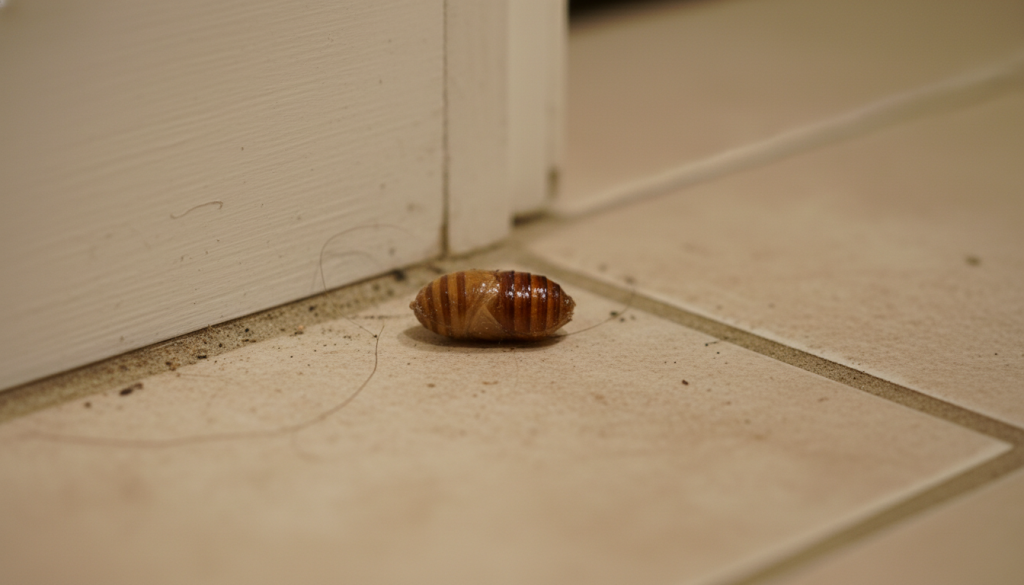
You open a dresser drawer you haven’t touched in months, and there it is, a small, brown capsule tucked between folded sweaters. Your stomach drops. Is that a roach egg case? And more importantly, have roaches been breeding inside your wardrobe this entire time?
The question “Do roaches lay eggs in clothes?” ranks among the most common and most anxiety-inducing pest concerns homeowners face. The answer isn’t a clean yes or no. It’s a qualified “sometimes,” and the conditions that tip the scale matter enormously.
In this guide, you’ll learn exactly when and why cockroaches target clothing, which storage setups put you at the highest risk, and precisely how to protect every garment in your home. You’ll also discover what to do if you’ve already found egg cases among your belongings because acting fast makes all the difference.
The Short Answer: It Depends on the Conditions
Cockroaches can lay eggs in clothes, but clothing is not their preferred nesting site. Roaches choose egg-laying locations based on a specific set of environmental priorities: darkness, warmth, humidity, proximity to food and water, and minimal disturbance. Your wardrobe checks some of those boxes, but rarely all of them.
The critical distinction most articles miss is this: roaches are far more likely to deposit egg cases near clothes than on them. The back corner of a wooden dresser drawer, the gap behind a closet shelf, or the flaps of a cardboard storage box; these are the real targets. The clothes inside just happen to be collateral.
That said, certain conditions dramatically raise the odds of finding cockroach eggs in clothing:
Clothes stored in cardboard boxes for weeks or months
Garments left in dark, undisturbed wooden dressers
Piles of dirty laundry sitting on the floor overnight
Clothing stored in humid areas like basements or garages
Fabric with food stains, grease, or body oils
When multiple risk factors overlap, clothes transform from an unlikely egg-laying site into a genuinely vulnerable one.
Key Takeaway: Clothing itself doesn’t attract cockroaches. The storage conditions surrounding your clothes are what create the opportunity for egg deposition.
Why Roaches Might Target Your Clothing
To understand when roaches lay eggs in clothes, you need to think about what a female cockroach is searching for when she’s ready to deposit her ootheca (egg case). She’s running a biological checklist, and your closet might accidentally satisfy it.
Darkness and Seclusion
Female cockroaches are nocturnal and strongly prefer depositing eggs in dark, secluded spots where the ootheca won’t be discovered or disturbed. A tightly packed dresser drawer, the inside of a storage box, or a cluttered closet floor creates exactly this kind of protected environment.
Research from the University of Florida Entomology Department confirms that cockroaches exhibit strong negative phototaxis; they actively avoid light and seek the darkest available harborage for both sheltering and egg deposition.
Rough and Porous Surfaces
Cockroaches prefer laying eggs on rough, textured surfaces where the ootheca can be glued securely. This is why cardboard, raw wood, and paper are top choices. Fabric, particularly textured cotton, wool, or linen, provides enough surface grip for an egg case to adhere.
Smooth synthetic materials like polyester or nylon offer less adhesion, making them slightly less attractive. But in a dark drawer full of folded cotton shirts, a female roach finds plenty of suitable texture.
Odor Absorption
Here’s a factor most people don’t consider. Porous materials like cardboard, wood, and natural-fiber fabrics absorb and retain odors, including cockroach pheromones. Once a roach deposits pheromone traces in a dresser drawer or storage box, other cockroaches detect those chemical signals and are drawn to the same location.
This explains why roaches in clothing storage areas tend to cluster rather than spread evenly throughout a home. The pheromone trail concentrates activity in specific spots.
Proximity to Resources
Clothing alone doesn’t provide food or water. But clothes stored near kitchens, bathrooms, or laundry rooms sit within easy foraging distance of both. A closet sharing a wall with a bathroom, where pipes provide moisture, is significantly more vulnerable than one in a dry, central hallway.
Dirty laundry adds another layer of risk. Sweat, body oils, food crumbs, and organic residue on soiled garments offer trace nutrition that cockroaches can detect and exploit.
Where Cockroaches Actually Prefer to Lay Eggs
Before you panic about your entire wardrobe, perspective helps. Clothing ranks low on the cockroach egg-laying preference list. Understanding what they prefer puts the clothing risk in context.
The Roach Egg-Laying Hierarchy
Based on pest control field observations from companies like Pestech Pest Solutions and Chem-Free Organic Pest & Lawn Services, here’s how cockroaches rank potential egg-laying sites:
1. Cracks and crevices: Wall gaps, baseboard joints, cabinet hinges, door frame edges
2. Behind and under appliances: refrigerators, stoves, dishwashers, washing machines
3. Cardboard and paper Boxes, grocery bags, newspaper stacks, book spines
4. Wood surfaces: Raw wood shelving, wooden drawer interiors, furniture joints
5. Near plumbing, under sinks, behind toilets, along pipe runs
6. Inside electronics: Clock radios, cable boxes, gaming consoles (especially German cockroaches)
7. Stored clothing and fabrics Primarily when boxed, piled, or left undisturbed
Clothing falls near the bottom. Roaches reach it when their preferred locations are either occupied, treated, or unavailable. In a severe infestation where the population has outgrown prime harborage areas, secondary sites, including your wardrobe, come into play.
Pro Tip: If you’re finding egg cases in your clothes, the infestation is likely more established than you think. Clothing is a secondary target, which means primary harborage areas are probably already saturated. Inspect behind appliances and inside cabinets before focusing solely on your closet.
High-Risk vs. Low-Risk Clothing Storage
Not all clothing storage carries equal risk. The way you store your garments determines whether your wardrobe is an easy target or a fortress.
Clothing Storage Risk Comparison
| Storage Method | Risk Level | Why |
|---|---|---|
| Clothes in cardboard boxes (garage/attic) | 🔴 High | Cardboard attracts roaches, boxes stay undisturbed, dark + enclosed |
| Clothes in wooden dresser drawers (rarely opened) | 🔴 High | Wood grain provides texture for gluing oothecae, dark interior |
| Piles of dirty laundry on the floor | 🟠 Medium-High | Food residue + body oils + darkness at night attract foraging roaches |
| Clothes in back of closet (rarely worn) | 🟠 Medium | Undisturbed, dark, but typically lacks moisture and food |
| Seasonal clothes in sealed plastic bins | 🟢 Low | Airtight seal prevents access; smooth plastic deters egg attachment |
| Hanging clothes in an open, used closet | 🟢 Low | Regular disturbance, air circulation, and light exposure deter egg laying |
| Clothes in vacuum-sealed bags (Space Bags) | 🟢 Very Low | Complete physical barrier; no air, moisture, or access |
The Cardboard Problem
Cardboard deserves special emphasis. It’s a triple threat:
Provides food: Cockroaches consume the starch in cardboard adhesive and the cellulose in the paper itself.
Absorbs pheromones: Once marked, cardboard boxes become long-term roach attractants.
Creates perfect harborage The corrugated interior of cardboard walls offers narrow, dark channels ideal for egg deposition.
If your clothes are stored in cardboard boxes, especially in garages, attics, basements, or storage units, the risk of finding roach eggs in stored clothing jumps dramatically. Replacing cardboard with sealed plastic containers is one of the single most impactful steps you can take.
How to Check Clothes for Roach Eggs
Suspecting cockroach eggs in your wardrobe is stressful. A systematic inspection removes the guesswork.
What You’re Looking For
A cockroach ootheca (egg case) is a small, pill-shaped or purse-like capsule, roughly 5–10 mm long. Color ranges from light tan to dark reddish-brown, depending on the species:
German cockroach (Blattella germanica): Light tan, about 6–9 mm, with visible ridges
American cockroach (Periplaneta americana): Dark reddish-brown, 8–10 mm
Brown-banded cockroach (Supella longipalpa): Reddish-brown, 5–7 mm, often glued to elevated surfaces
Egg cases can resemble small dried beans, dark seeds, or even rodent droppings at first glance. The distinguishing feature is the keela ridged seam running along one edge of the capsule.
Step-by-Step Inspection Process
1. Grab a bright flashlight. Cockroach egg cases blend into dark wood and fabric. Good lighting is essential.
2. Start with high-risk storage. Check cardboard boxes, wooden dresser drawers you rarely open, and any clothing piled on floors or in corners.
3. Examine garment seams and folds. If an ootheca is attached to clothing, it’s most likely tucked into a seam, crease, pocket, hem, or the fold between stacked items. Check behind labels and inside cuffs.
4. Inspect the storage container itself. Remember, egg cases are more commonly deposited on the drawer, box, or shelf than on the clothes. Check:
Back corners of drawers
Joints and seams of wooden furniture
Inside cardboard flaps and corrugated walls
Undersides of shelves
5. Look for supporting evidence. Roach egg cases rarely appear in isolation. Look for:
Fecal droppings (tiny dark specks resembling ground pepper)
Shed exoskeletons (translucent husks)
A musty, oily odor
Live or dead cockroaches
6. Check adjacent areas. Expand your search to baseboards, walls, and any cracks near the storage location. The primary harborage may be behind the furniture, not inside it.
Important: If you find even one ootheca, assume there are more. A single German cockroach female produces 4–8 egg cases in her lifetime, and she doesn’t deposit them all in the same spot. Broaden your inspection to every room with confirmed activity.
What to Do If You Find Cockroach Eggs in Clothing
Discovering roach eggs in your clothes feels violating, but panic doesn’t help. Here’s a calm, effective action plan.
Immediate Steps
1. Remove and isolate affected items.
Pull all clothing from the infested drawer, box, or closet. Place items into sealed plastic bags to prevent any nymphs from scattering if eggs hatch during handling.
2. Physically destroy visible egg cases.
Scrape oothecae off surfaces with a stiff card or putty knife. Crush them and place the remains in a sealed bag for disposal. Vacuum the storage area thoroughly using a crevice attachment, then immediately seal and discard the vacuum bag (or empty the canister into a sealed bag if bagless).
3. Wash all potentially exposed clothing.
This is the most effective way to kill any eggs that may be attached to fabric.
Hot water wash: Wash garments on the hottest setting the fabric can tolerate. Water temperatures above 130°F (54°C) kill cockroach eggs.
High-heat dryer cycle: Run items through a full high-heat dryer cycle (at least 30 minutes) for additional thermal kill.
Dry cleaning. For delicate items that can’t withstand hot water, professional dry cleaning eliminates eggs through chemical solvent exposure.
4. Treat the storage area.
Apply a thin dusting of boric acid or diatomaceous earth (such as Safer Brand Diatomaceous Earth) into drawer joints, crevices, and corners. These desiccant dusts kill nymphs as they emerge from any missed egg cases.
For stronger intervention, insect growth regulators (IGRs) like Gentrol Point Source stations disrupt cockroach development and prevent surviving nymphs from reaching reproductive maturity.
Can Freezing Kill Roach Eggs in Clothes?
Yes. Sustained cold exposure destroys cockroach embryos. Place sealed bags of affected clothing in a chest freezer at 0°F (-18°C) for at least five days. This method works well for items that can’t be washed in hot water: leather accessories, structured garments, or items with embellishments.
Brief refrigerator temperatures won’t achieve the same result. You need sustained below-zero exposure.
How to Protect Your Wardrobe From Roaches
Prevention is always easier than remediation. These strategies create an environment where cockroaches have zero reason and zero opportunity to target your clothing.
Storage Upgrades
Replace all cardboard boxes with sealed plastic bins. Clear bins with snap-locking lids eliminate food sources (cardboard), block physical access, and let you see contents without opening.
Use vacuum-sealed bags for seasonal clothing. Products like Space Bags remove air and create an impenetrable barrier. No roach can access clothing stored this way.
Add silica gel packets to drawers and bins. Silica gel absorbs moisture, reducing humidity inside storage spaces and making them less hospitable for egg deposition.
Line wooden drawers with smooth contact paper. This reduces the rough texture cockroaches prefer for gluing oothecae.
Closet and Drawer Maintenance
Keep closets organized and clutter-free. Packed, disorganized spaces create undisturbed harborage. Roaches thrive in clutter.
Rotate clothing regularly. Wear or at least handle stored items periodically. Disturbance deters egg laying.
Vacuum closet floors and drawer interiors monthly. This removes cockroach fecal matter, shed skins, and pheromone traces that attract more roaches.
Avoid leaving dirty laundry on the floor. Use a hamper with a lid, and wash clothes promptly, especially items with food stains or heavy perspiration.
Environmental Controls
In my experience advising on pest prevention, the homeowners who keep closets roach-free share three habits:
1. They control moisture aggressively. Fix leaky pipes near closets, run dehumidifiers in basements where clothes are stored, and ensure bathroom exhaust fans work properly.
2. They eliminate nearby food sources. No open food in bedrooms, no crumbs on nightstands, and no snack wrappers in trash cans near wardrobes.
3. They seal gaps. Caulking the crack between a closet baseboard and the wall, or sealing the gap where a pipe enters through a closet floor, removes the entry route cockroaches use to reach clothing areas.
Pro Tip: Cedar blocks and lavender sachets are popular closet additions. While there’s limited scientific evidence that these repel cockroaches specifically, they do address moth prevention and contribute to a clean, dry closet environment. Don’t rely on them as your sole roach deterrent, but they’re a worthwhile supplement to physical exclusion and sanitation.
Can You Bring Roach Eggs Home on Clothes?
This concern keeps travelers and apartment dwellers awake at night, and it’s legitimate. Cockroach eggs can hitchhike into your home through clothing, luggage, and personal belongings.
How Hitchhiking Happens
Traveling: Staying in a hotel or rental with cockroach activity can result in an ootheca being deposited inside your suitcase, on folded clothes, or in shoe crevices. The egg case may not hatch for weeks, meaning you won’t notice the problem until nymphs appear at home.
Moving from an infested building, packing clothes in cardboard boxes from a roach-infested apartment, is one of the most reliable ways to transport an infestation to a new address. Egg cases glued inside box flaps, on clothing folds, or behind furniture survive the move easily.
Shared laundry facilities Communal laundromats, and apartment laundry rooms can expose clean clothes to cockroaches that inhabit the space. While the risk of egg transfer during active use is low, leaving clean laundry sitting in baskets overnight raises it.
Workplace or school. If cockroaches are present in a locker, break room, or shared storage area, they can deposit eggs on bags, jackets, or stored clothing items.
Preventing Hitchhikers
When traveling or moving, use this checklist:
Inspect hotel room drawers and closets before unpacking
Keep suitcases on luggage racks, never on the floor or bed
Store dirty travel clothes in sealed plastic bags inside your suitcase
Upon returning home, wash all travel clothes in hot water before putting them away
When moving, use sealed plastic bins instead of cardboard boxes
Inspect all belongings before bringing them into a new home
According to Ian Chi of Simple Pest Management, bringing cockroaches home through belongings is among the top three causes of new infestations in previously clean homes. The other two? Migrating through shared walls in multi-unit buildings and entering through gaps around utility lines.
Species That Are Most Likely to Infest Closets
Not all cockroach species pose equal risk to your wardrobe. Knowing which ones target the bedroom and closet areas helps you assess your specific situation.
Brown-Banded Cockroach (Supella longipalpa)
The brown-banded cockroach is the species most likely to deposit cockroach eggs in dresser drawers, closets, and bedroom furniture. Unlike German cockroaches (which concentrate near kitchens and bathrooms), brown-banded roaches spread throughout a home and prefer elevated, warm, dry locations.
Their egg-laying behavior is distinctive:
Females glue oothecae to ceilings, upper walls, and the undersides of furniture
They cluster multiple egg cases in the same area
Bedroom furniture, picture frames, and closet shelving are common targets
If you’re finding egg cases in your wardrobe, brown-banded cockroaches should be your first suspect, especially if the cases are small (5–7 mm), reddish-brown, and attached to surfaces above floor level.
German Cockroach (Blattella germanica)
German cockroaches primarily infest kitchens and bathrooms, but will expand into bedrooms and closets when populations outgrow primary harborage areas. They’re the most prolific breeders, each female producing 30–50 eggs per ootheca across 4–8 cases in her lifetime.
Finding German cockroach egg cases in clothing storage usually signals an advanced infestation that has saturated preferred areas and is expanding into secondary sites.
American Cockroach (Periplaneta americana)
American cockroaches favor basements, crawl spaces, and utility areas. They’re less likely to infest bedroom closets directly, but clothing stored in basement storage areas, garages, or near ground-floor plumbing can be affected. Their larger egg cases (8–10 mm, dark reddish-brown) are easier to spot.
Frequently Asked Questions
Do roaches lay eggs in clean clothes?
It’s unlikely but possible if clean clothes are stored in dark, undisturbed locations for extended periods. Roaches aren’t attracted to cleanliness or dirtiness itself; they target the storage environment. Clean clothes in a sealed plastic bin are safe. Clean clothes in a neglected cardboard box are not.
Will washing clothes kill roach eggs?
Yes. Washing in hot water above 130°F (54°C) followed by a high-heat dryer cycle effectively kills cockroach eggs. Cold-water washing alone is less reliable. For delicate items, professional dry cleaning or sustained freezing at 0°F for five days works as an alternative.
Do roaches eat clothes and fabric?
Cockroaches don’t consume fabric the way moths or carpet beetles do. However, they may nibble on food stains, body oils, starch residue, or organic matter present on clothing. The fabric itself isn’t a food source, but soiled garments can attract foraging roaches.
What attracts roaches to my closet?
Darkness, warmth, minimal disturbance, and proximity to moisture or food sources. Closets near bathrooms or kitchens face a higher risk. Cardboard storage, wooden shelving, clutter, and dirty laundry piles all increase attraction.
Can roach eggs survive in a washing machine?
A full hot-water wash cycle destroys roach eggs. The combination of high temperature, agitation, and detergent breaks down the ootheca’s protective casing. However, a quick cold rinse may not be sufficient. Use the hottest setting your fabric allows.
How do I know if roaches are living in my dresser?
Look for fecal droppings (tiny dark specks), shed exoskeletons, a musty odor, and egg cases in drawer corners and joints. Pull drawers out completely and inspect the back panel, runners, and the cabinet interior behind the drawers. These hidden areas are far more likely to harbor roaches than the drawer front.
Should I throw away clothes with roach eggs on them?
No, you don’t need to discard clothing. Hot-water washing, high-heat drying, dry cleaning, or sustained freezing all eliminate cockroach eggs from fabric. Save disposal for items that are already damaged or heavily contaminated beyond practical cleaning.
Key Takeaways
The answer to “Do roaches lay eggs in clothes?” is nuanced: they can, but they usually don’t choose clothing as a first option. Here’s what you need to remember:
Clothing storage conditions matter more than the clothes themselves. Dark, undisturbed, cardboard-packed, or wooden storage spaces create egg-laying opportunities. The fabric is incidental; the environment is the attraction.
Cockroaches prefer crevices, cardboard, and wood over fabric. Clothes become targets primarily in advanced infestations or when stored in high-risk conditions for extended periods. Finding egg cases in your wardrobe suggests a bigger problem elsewhere in the home.
Cardboard boxes are the biggest clothing storage risk factor. Replacing them with sealed plastic bins eliminates the food source, pheromone-absorbing surface, and enclosed harborage that draw cockroaches to stored clothing.
Hot-water washing and high-heat drying kill roach eggs on contact. You don’t need to throw away affected clothing. Wash on the hottest setting the fabric allows, run a full dryer cycle, and the eggs are destroyed.
Prevention comes down to three actions: seal, clean, and rotate. Seal storage containers, clean closets and drawers regularly, and rotate or handle stored clothing periodically so nothing stays undisturbed long enough to become a harborage site.
If you’ve spotted signs of cockroach activity anywhere near your wardrobe, don’t wait. Inspect your storage areas tonight with a flashlight, swap cardboard for plastic bins this week, and wash any clothing that’s been sitting untouched for more than a month. Every day you delay is another day a female cockroach could deposit her next egg case right between your favorite sweaters.