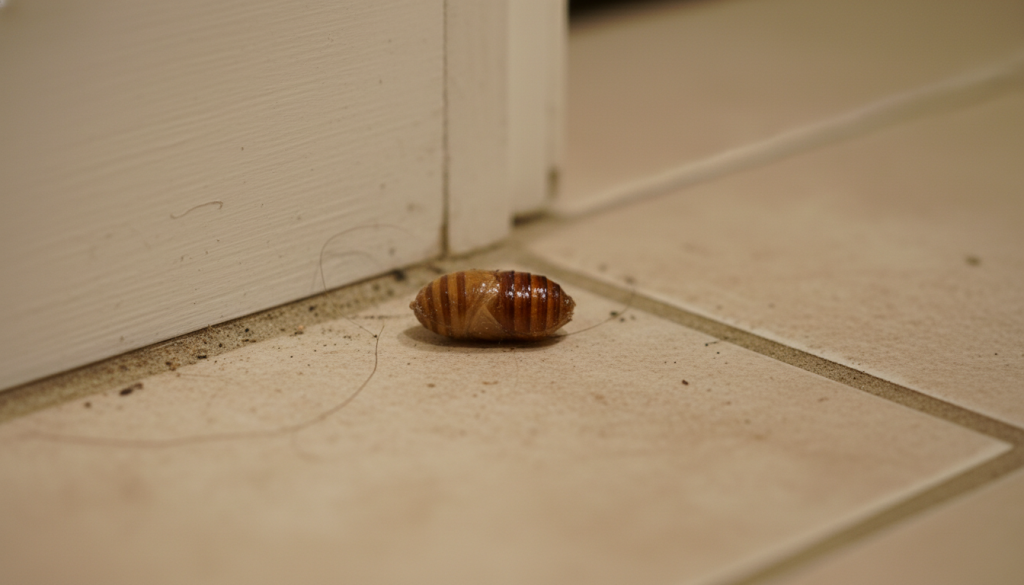
Many people assume cockroaches work like honeybees: breed once, produce offspring, then die. It sounds logical. It’s also completely wrong.
So, do roaches die after laying eggs? The short answer is no. Female cockroaches survive the egg-laying process and go on to produce multiple egg cases throughout their adult lives. A single German cockroach female (Blattella germanica) can generate over 300 offspring across her lifetime without slowing down until natural senescence finally catches up.
That biological reality is precisely why cockroach infestations grow so explosively. Understanding the truth behind roach reproduction isn’t just interesting trivia; it’s essential knowledge if you’re trying to eliminate these pests from your home.
In this guide, you’ll learn exactly what happens after a roach lays eggs, how long females actually live post-reproduction, and why busting this myth could change your entire approach to pest control.
The Short Answer: Roaches Don’t Die After Laying Eggs
Female cockroaches are iteroparous organisms. That’s the scientific term for animals that reproduce multiple times throughout their lives. They are not semelparous organisms that breed once and die, like salmon or certain species of spider.
After producing and depositing an ootheca (egg case), a female cockroach continues living, eating, and foraging as normal. Within weeks, her body begins developing another batch of eggs. This cycle repeats until she reaches the end of her natural adult lifespan, which can range from a few months to over two years depending on the species.
According to entomological research from the University of Florida Entomology Department, a healthy female German cockroach produces between 4 and 8 oothecae in her lifetime. Each case holds 30–50 eggs. That’s potentially 400 offspring from one female, all while she remains very much alive.
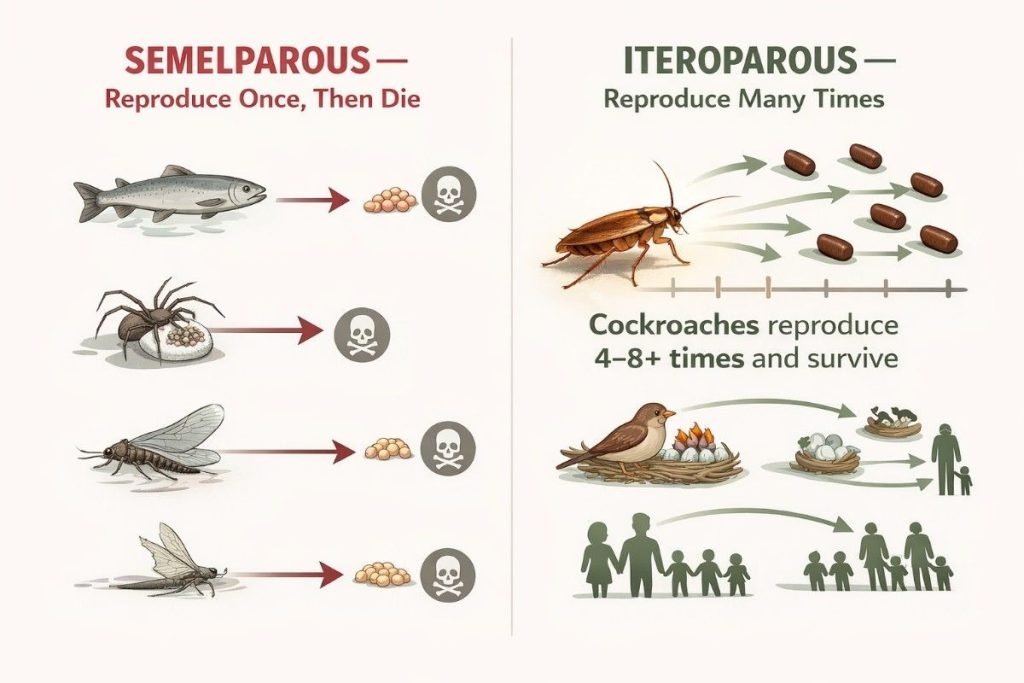
Key Takeaway: Cockroaches are built for continuous reproduction. Laying eggs doesn’t weaken or kill them. It’s a repeatable biological function, not a one-time event.
Why People Believe Roaches Die After Egg Laying
This myth persists for a few understandable reasons. Once you know where the confusion starts, it’s easier to separate fact from fiction.
The Honeybee Comparison
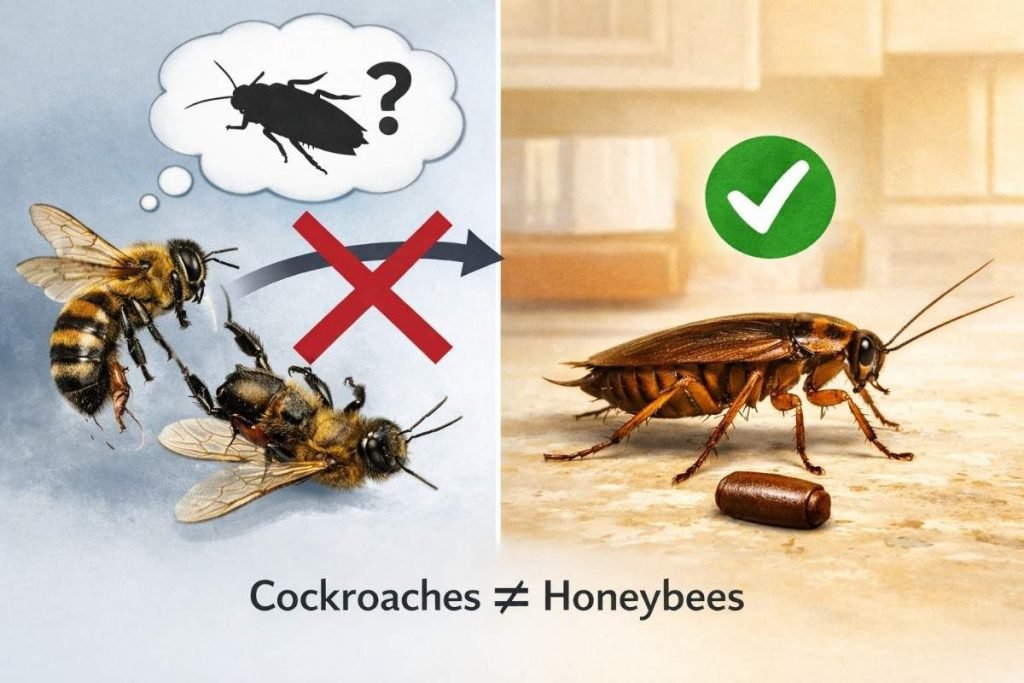
Honeybees offer one of nature’s most dramatic examples of post-reproductive death. Male drones die immediately after mating. This biological pattern is well-known, and people naturally extend it to other insects, including cockroaches. But cockroaches and bees have fundamentally different reproductive strategies.
Bees are eusocial insects with specialized reproductive roles. Cockroaches are solitary breeders, where every female is independently reproductive. The comparison simply doesn’t apply.
The “Squishing Releases Eggs” Myth
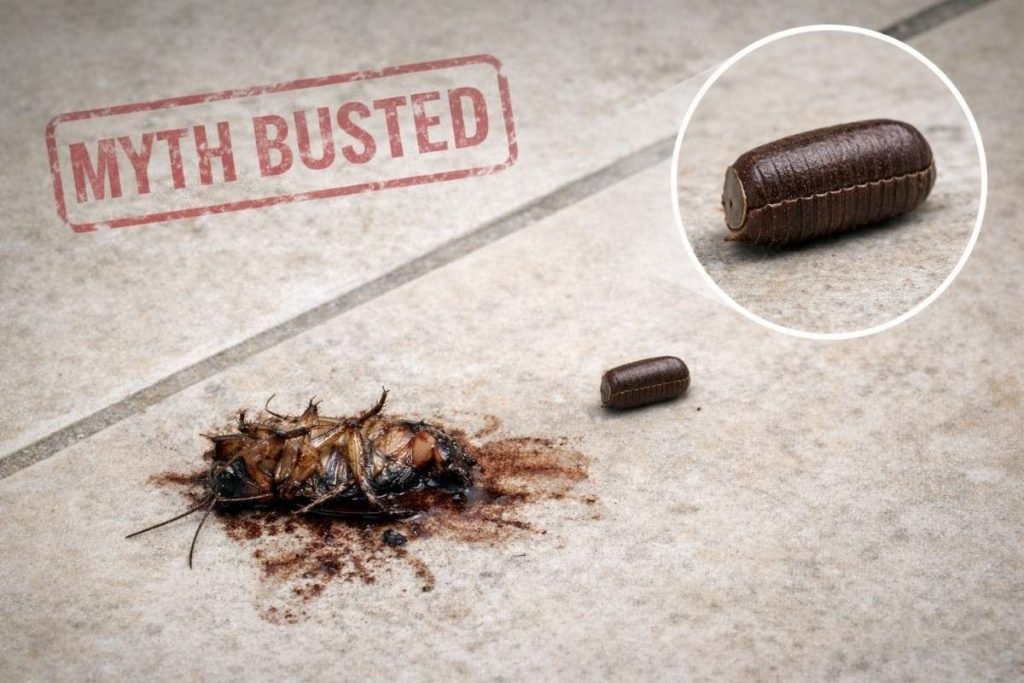
Another persistent misconception claims that stepping on a cockroach causes it to release eggs everywhere, spreading the infestation. While a female carrying an ootheca might drop it under stress, the eggs don’t scatter like seeds. They remain contained inside the protective capsule.
Squishing a roach doesn’t create dozens of baby roaches on your shoe. However, it’s still smart to check for and dispose of any detached egg cases near a crushed female.
Finding Dead Roaches Near Egg Cases
Homeowners sometimes discover dead cockroaches near deposited egg cases and draw a cause-and-effect conclusion. In reality, those roaches likely died from other causes, pesticide exposure, dehydration, or old age, after having already deposited their eggs during normal activity.
How Cockroach Reproduction Actually Works
Understanding cockroach reproduction reveals why these pests are so resilient. The process is efficient, fast, and designed for maximum population growth.
Step-by-Step Reproductive Cycle
1. Mating: A male cockroach transfers a spermatophore (sperm packet) to the female during copulation. Females of many species can store sperm in a specialized organ called the spermatheca, allowing them to fertilize multiple batches of eggs from a single mating event.
2. Egg development: Fertilized eggs develop inside the female’s body. Her collateral glands secrete proteins that form the tough outer casing of the ootheca around the egg cluster.
3. Ootheca formation: The completed ootheca emerges from the female’s body. Depending on the species, she either carries it externally, deposits it immediately, or glues it to a surface in a sheltered location.
4. Incubation: Embryos develop inside the protective capsule for 28–56 days, depending on species and environmental conditions like temperature and humidity.
5. Hatching nymphs emerge from the ootheca and begin their own development through 6–13 molts (instars) before reaching adulthood.
6. Repeat. The female begins developing another egg batch, typically within 30–90 days of the previous one.
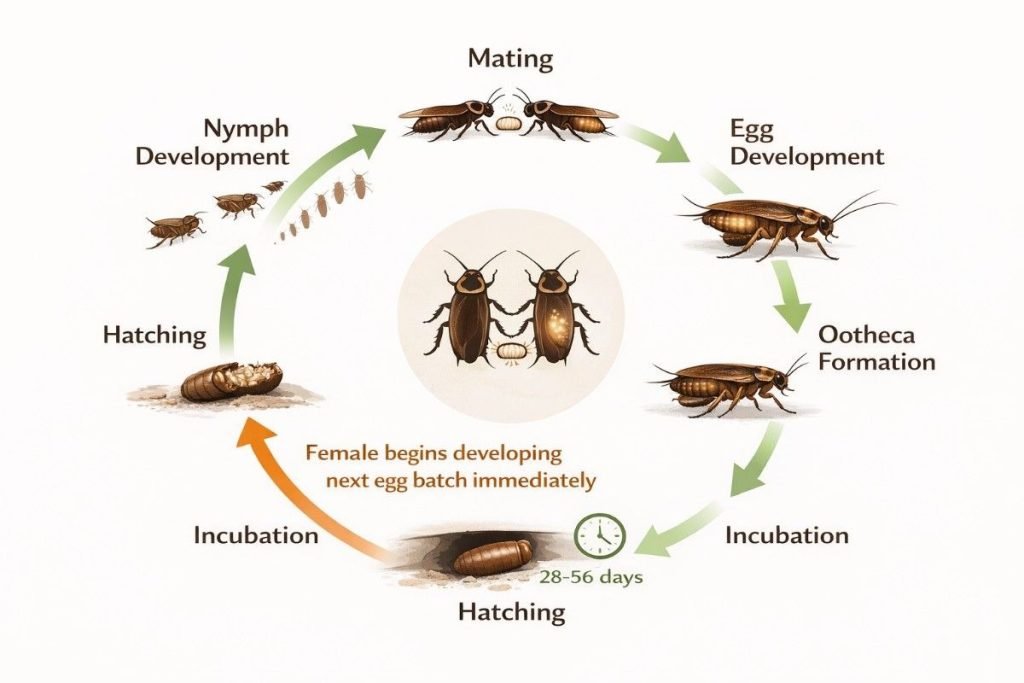
Oviparous vs. Ovoviviparous Species
Not all cockroaches handle their eggs the same way:
– Oviparous species (American, Oriental, and Brown-banded cockroaches) deposit or glue their egg cases in hidden locations and walk away. There’s minimal maternal investment after oviposition.
– Ovoviviparous species (German cockroaches) carry the ootheca attached to their abdomen until just before hatching, sometimes for weeks. This behavior gives German cockroach nymphs a higher survival rate because the mother protects the eggs during development.
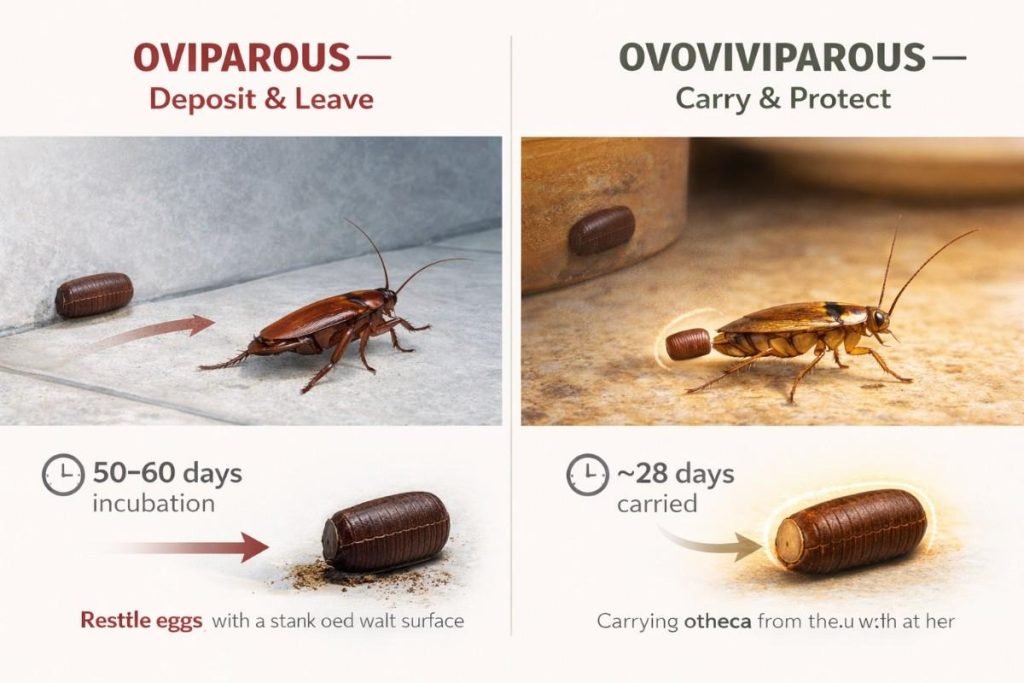
Pro Tip: German cockroaches carry their egg cases for roughly 28 days before dropping them. If you spot a roach with a small brown capsule protruding from her abdomen, you’re looking at an active breeder, and eliminating her is a high-priority action.
How Many Times Can a Roach Lay Eggs?
This is where the pest control implications become staggering. A single female cockroach doesn’t produce one egg case and stop. She produces many over and over throughout her adult life.
Reproductive Output by Species
| Species | Oothecae Per Lifetime | Eggs Per Ootheca | Total Offspring Potential | Time Between Egg Cases |
|---|---|---|---|---|
| German cockroach | 4–8 | 30–50 | 120–400 | ~30 days |
| American cockroach | 6–14 | 14–16 | 84–224 | ~30–60 days |
| Oriental cockroach | 8–10 | 16–18 | 128–180 | ~30–60 days |
| Brown-banded cockroach | 10–20 | 10–18 | 100–360 | ~30 days |
| Smokybrown cockroach | 10–32 | 20–26 | 200–832 | ~11–14 days |
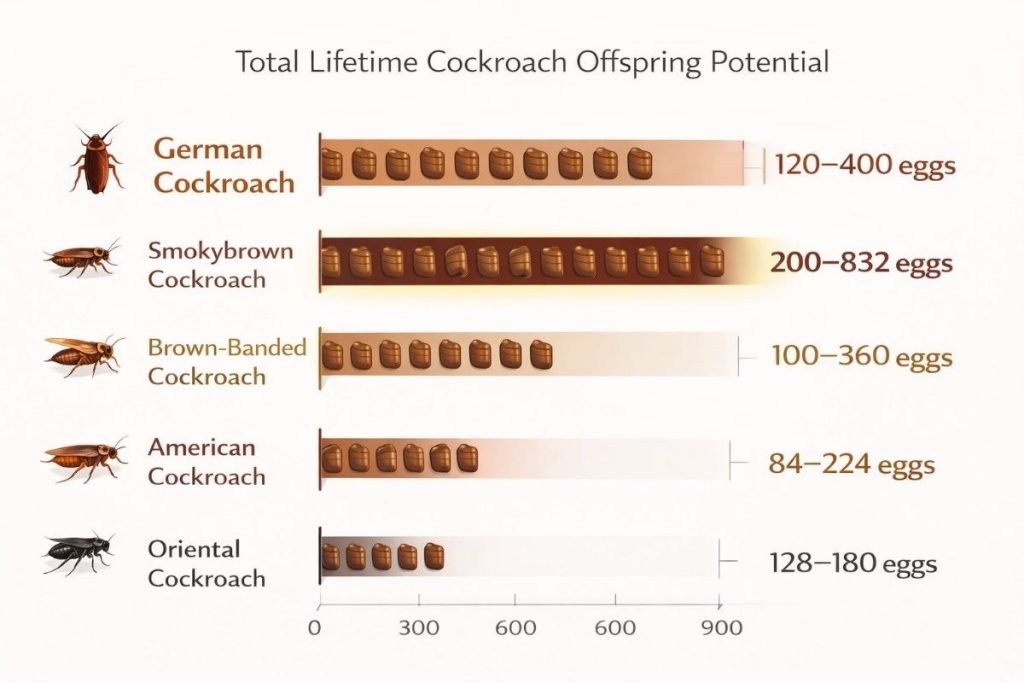
The numbers are eye-opening. A single Smokybrown cockroach (Periplaneta fuliginosa) could theoretically produce over 800 offspring in her lifetime. Even the “modest” American cockroach (Periplaneta americana) can generate well over a hundred nymphs.
Dr. Alice Sinia, an entomologist with Orkin Canada, has noted that the German cockroach’s short breeding interval and high egg count per case make it the most problematic household species for exactly this reason. Its population growth potential far exceeds most other domestic cockroach species.
The Exponential Growth Problem
Consider a scenario starting with just one mated female German cockroach:
– Month 1: She produces one ootheca with 40 eggs.
– Month 2: 40 nymphs hatch. She produces a second ootheca.
– Month 3–4: The first generation of nymphs begins reaching maturity. Some are female and start their own reproductive cycles.
– Month 6: You now have multiple breeding females producing overlapping generations.
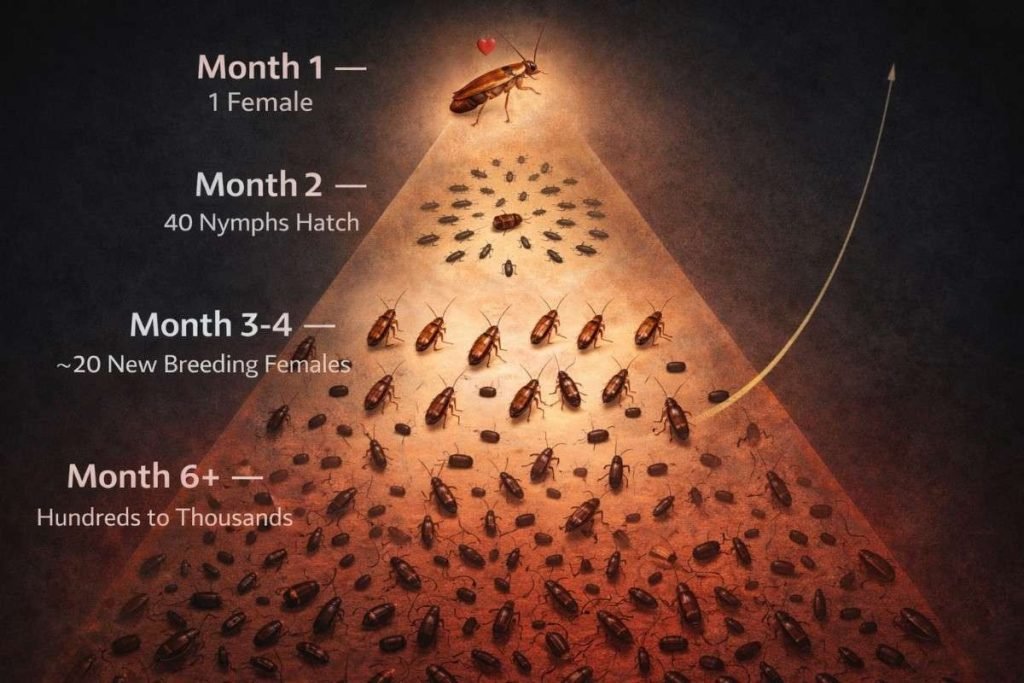
Research from Oklahoma State University Extension estimates that under ideal conditions, a single pair of German cockroaches can theoretically produce thousands of descendants within one year because of this generational overlap. Real-world conditions (limited food, predation, and environmental stress) reduce that number significantly, but even a fraction of that potential creates a serious infestation.
Cockroach Lifespan After Reproduction: Species Comparison
Since roaches don’t die after laying eggs, how long do they actually live? The answer varies dramatically by species.
Adult Lifespans
| Species | Adult Lifespan | Time From First Eggs to Natural Death |
|---|---|---|
| German cockroach | 100–200 days | Continues reproducing throughout life |
| American cockroach | 1–2 years | Reproduces for most of adult life |
| Oriental cockroach | 34–180 days | Shorter reproductive window |
| Brown-banded cockroach | ~80 days (female) | Active reproduction until death |
| Smokybrown cockroach | 2–6 months | High output, moderate lifespan |
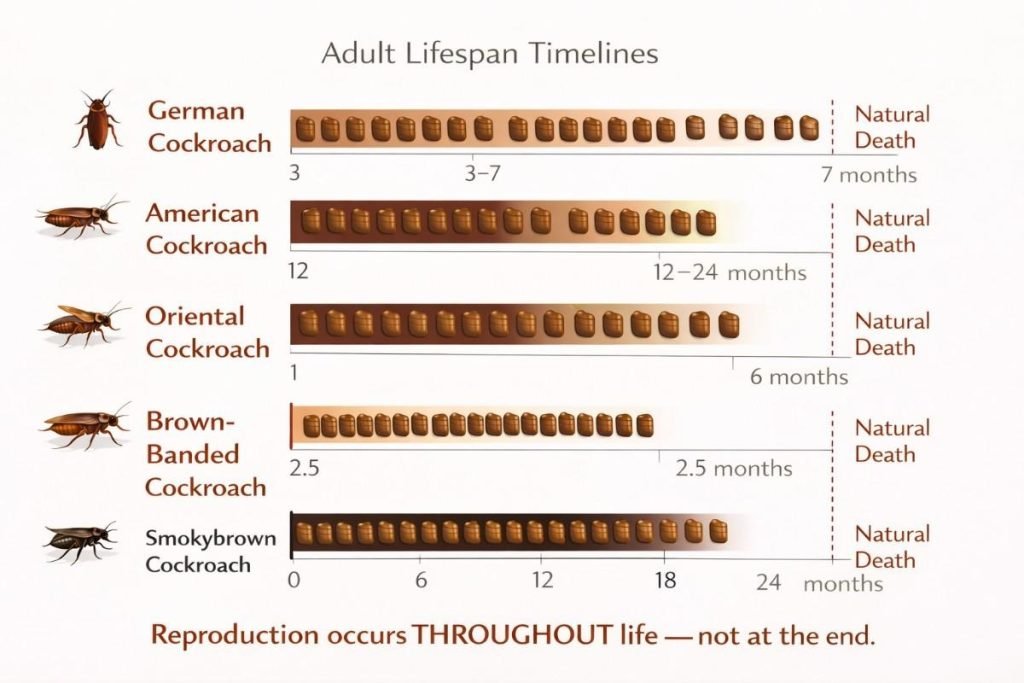
The American cockroach stands out with the longest adult lifespan, up to two years in favorable conditions. That’s two full years of foraging, mating, and producing egg case after egg case.
German cockroaches live shorter adult lives (roughly 100–200 days), but their faster breeding cycle and higher eggs-per-case count more than compensate. They produce offspring at a rate that outpaces most other household species.
What Finally Kills a Cockroach?
If egg laying doesn’t cause death, what does? Cockroaches die from the same factors that end most organisms’ lives:
– Senescence (natural aging): Cellular degradation eventually shuts down organ function.
– Starvation: Roaches can survive about a month without food, but eventually succumb.
– Dehydration: They can survive only about one week without water. Making moisture control a powerful tool.
– Predation: Spiders, centipedes, and other household predators feed on cockroaches.
– Pesticide exposure: Contact insecticides, baits, and residual treatments.
– Environmental extremes Temperatures below freezing or above 120°F (49°C) are lethal.
Do Male Roaches Die After Mating?
Since we’ve addressed the females, it’s fair to ask about males too. Male cockroaches do not die after mating. Like females, they are iteroparous and can mate multiple times throughout their adult lives.
Male cockroaches engage in courtship behavior, including wing-raising displays and pheromone signaling, to attract females. After successful copulation, the male resumes normal activity: foraging, sheltering, and seeking additional mating opportunities.
In most cockroach species, males tend to have slightly shorter lifespans than females, but this difference is related to general biology and metabolic rates, not reproductive exhaustion. Males of Blattella germanica typically live around 100–150 days as adults, while females average slightly longer.
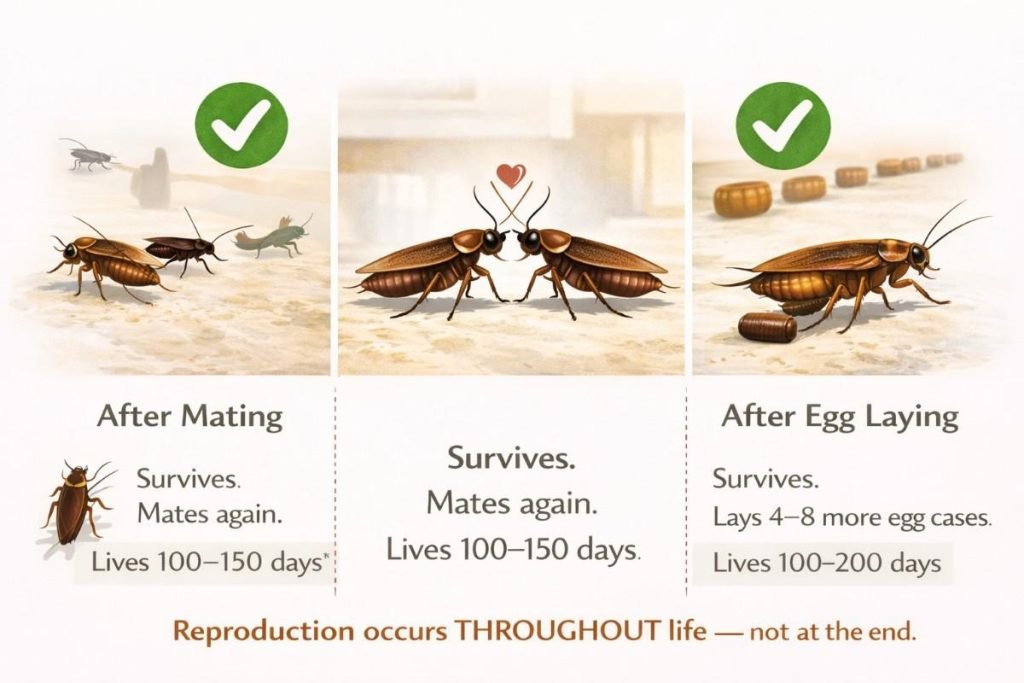
Key Takeaway: Neither male nor female cockroaches dies as a result of reproduction. Both sexes survive mating and continue their normal activities for weeks or months afterward.
What Actually Happens After a Roach Lays Eggs
So if females don’t die, what exactly do they do after depositing an ootheca? The post-egg-laying behavior varies by species, and each pattern has implications for how infestations spread.
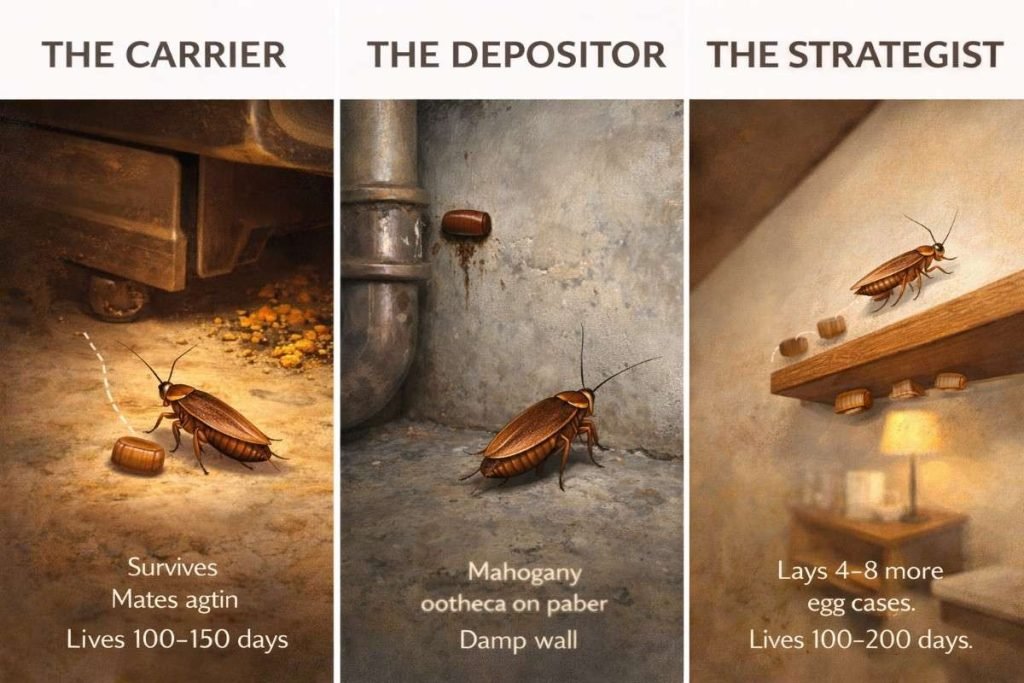
German Cockroaches: The Attentive Carriers
German cockroach females carry their ootheca until roughly 24–36 hours before hatching. They then drop the capsule in a warm, sheltered location, often inside a crack, behind an appliance, or under a piece of furniture. The female immediately resumes foraging and begins developing her next egg batch.
This carrying behavior is one reason German cockroaches are so successful indoors. The eggs receive consistent temperature regulation and protection from predators during their entire development period.
American Cockroaches: The Depositers
American cockroach females (Periplaneta americana) produce an ootheca and glue it to a surface within a day or two. They sometimes cover it with debris for camouflage. After depositing, the female shows no further parental careshe walks away and returns to her routine.
The egg case incubates independently for 50–60 days. During that time, the mother is already developing her next batch of eggs.
Brown-Banded Cockroaches: The Strategists
Brown-banded cockroach females (Supella longipalpa) exhibit unique behavior by gluing egg cases to upper walls, ceilings, and the undersides of furniture. They cluster multiple oothecae in the same area, creating concentrated hatching zones in locations people rarely inspect.
After depositing, these females show no further interest in the eggs. They continue their typical nocturnal foraging and may deposit the next egg case within 30 days.
Post-Laying Activity Summary
Regardless of species, female cockroaches share a consistent post-egg-laying pattern:
– Resume foraging within hours of oviposition
– Seek food and water to replenish energy reserves
– Begin developing the next egg batch internally
– Show no parental care toward deposited eggs or hatched nymphs
– Continue this cycle until natural death from aging or environmental factors
Why This Matters for Pest Control
Understanding that cockroach mortality after egg laying doesn’t happen fundamentally changes how you should approach an infestation. If you treat roach control as a one-shot event, you’re guaranteed to fail.
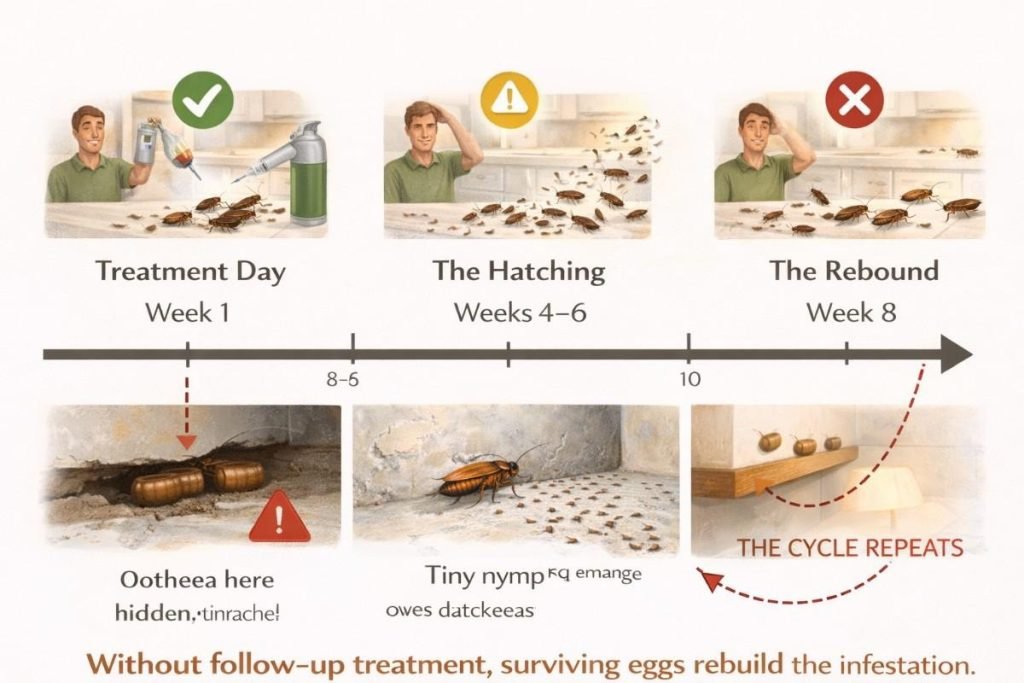
The Single-Treatment Trap
Many homeowners spray visible roaches, see fewer insects for a few days, and assume the problem is solved. But here’s what they’re missing:
– The females they killed may have already deposited egg cases that will hatch in 4–8 weeks.
– Females that survived the treatment continue producing new oothecae.
– Nymphs hidden in wall voids and deep crevices weren’t exposed to the initial treatment.
This is why recurring infestations are so common. According to pest management data from Pestech Pest Solutions, approximately 75% of a cockroach population at any given time consists of nymphs, individuals that are developing, not yet breeding, and often hidden from surface treatments.
The Lifecycle-Based Approach
Effective cockroach control targets every life stage simultaneously:
– Adults Gel baits (Vendetta Plus, Maxforce FC) and residual sprays.
– Nymphs: Boric acid, diatomaceous earth, and baits are placed in harborage areas.
– Eggs: Insect growth regulators (IGRs) like Gentrol to disrupt embryonic development, plus physical removal of visible oothecae.
– Future reproduction Follow-up treatments timed to the hatching cycle (4–8 weeks after initial treatment).
Pro Tip: Since female roaches survive egg laying and keep breeding, eliminating reproductive females is your highest-value target. Focus bait placement near known egg-laying sites, behind appliances, under sinks, and inside cabinet corners, where breeding females are most active.
How to Break the Cockroach Reproductive Cycle
Knowing that roaches don’t die after laying eggs shifts your strategy from “kill the bugs you see” to “collapse the breeding population.” Here’s how to do it.
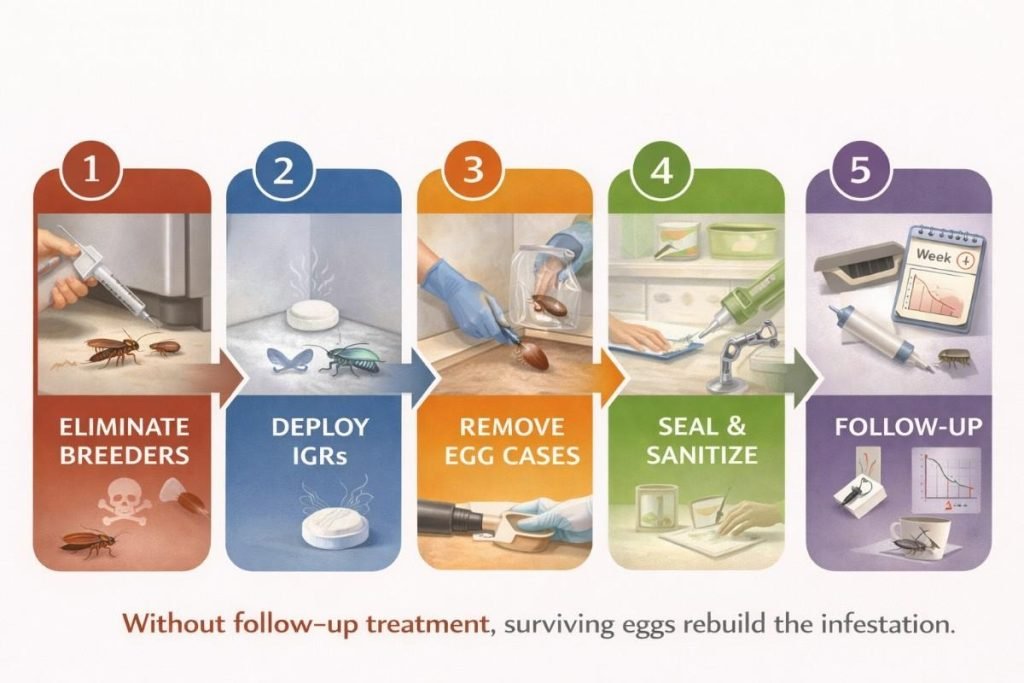
Step 1: Eliminate Breeding Females
Gel baits are your most effective weapon against reproductive females. Products containing fipronil or indoxacarb attract foraging adults, poison them, and create a secondary kill effect when other roaches consume contaminated remains or feces.
Place bait dots in locations where females deposit oothecae:
– Behind refrigerators and stoves
– Under bathroom and kitchen sinks
– Inside cabinet hinges and corners
– Along baseboards near moisture sources
– Behind wall-mounted mirrors and frames
Step 2: Deploy Insect Growth Regulators
Hydroprene-based IGRs (like Gentrol Point Source stations) disrupt the cockroach reproductive cycle at a hormonal level. Exposed females produce malformed oothecae with nonviable eggs. Exposed nymphs fail to develop into fertile adults.
Place IGR stations in rooms with confirmed activity. Replace them according to the manufacturer’s schedule, typically every 90 days.
Step 3: Remove Existing Egg Cases
Inspect harborage areas with a flashlight and vacuum or scrape away every ootheca you find. Seal the vacuumed material in a plastic bag and dispose of it in an outdoor bin immediately.
Step 4: Seal Entry Points and Reduce Resources
Prevention stops new breeding cycles before they start:
– Seal cracks around baseboards, pipes, and door frames with caulk.
– Fix leaks. Cockroaches need water more than food. Eliminate dripping faucets and condensation.
– Remove food sources. Clean counters nightly, store food in airtight containers, and empty trash daily.
– Reduce clutter. Cardboard boxes and paper piles provide ideal egg-laying shelter. Replace them with sealed plastic bins.
Step 5: Schedule Follow-Up Treatments
Time your second treatment to coincide with the hatching window of any eggs that survived the first round:
German cockroach eggs: Retreat at 4 weeks.
American cockroach eggs: Retreat at 6–8 weeks.
Ongoing monitoring: Place sticky traps in high-risk areas and inspect weekly.
The University of Kentucky Entomology department recommends a minimum of two follow-up inspections after initial treatment, spaced 2–4 weeks apart, to catch emerging nymphs before they reach reproductive maturity.
Important: A female German cockroach reaches sexual maturity in as little as 36 days after hatching. If emerging nymphs aren’t intercepted quickly, they begin their own reproductive cycles, and the infestation rebounds.
When to Call a Professional
Consider contacting a licensed exterminator from companies like Rentokil-Terminix or Clegg’s Pest Control if:
– You’ve found oothecae in multiple rooms
– DIY treatments haven’t reduced activity after 6 weeks
– You see roaches during daylight hours (indicating severe overcrowding)
– The infestation involves wall voids, ductwork, or multi-unit buildings
Professional technicians use targeted crack-and-crevice injection, commercial-grade IGRs, and treatment rotation protocols designed to overcome insecticide resistance, a growing issue in German cockroach populations, as documented by researchers at Purdue University and NC State University.
Frequently Asked Questions
Do roaches die immediately after laying eggs?
No. Female cockroaches survive egg laying and continue reproducing throughout their adult lives. They are iteroparous organisms built for multiple breeding cycles, not a single reproductive event.
How long do roaches live after laying eggs?
German cockroaches live 100–200 days as adults, producing eggs throughout. American cockroaches can survive 1–2 years after reaching maturity. Egg laying does not shorten their lifespan.
Do roaches release eggs when you squish them?
This is a myth. A female carrying an ootheca may drop the intact egg case when crushed, but eggs don’t scatter individually. Always check for and destroy any detached egg cases near a killed roach.
Do male cockroaches die after mating?
No. Male cockroaches survive mating and can mate multiple times. Their adult lifespans are slightly shorter than females on average, but reproduction itself doesn’t cause death in either sex.
How many eggs does a cockroach lay in its lifetime?
It varies by species. German cockroaches produce 120–400 eggs across 4–8 oothecae. American cockroaches produce 84–224 eggs across 6–14 oothecae. Brown-banded cockroaches can produce up to 360 eggs total.
Do cockroaches care for their eggs after laying them?
Most species show no parental care. The exception is the German cockroach, which carries its ootheca externally until shortly before hatching, providing protection during development. After the nymphs emerge, no cockroach species provides further care.
Why do roach infestations come back after treatment?
Because females survive initial treatments and continue breeding, protected egg cases hatch weeks later. Without follow-up treatments timed to the 4–8 week hatching window, the next generation matures and restarts the cycle.
Key Takeaways
The question “Do roaches die after laying eggs?” has a clear, research-backed answer: no, they don’t. Here are the critical points to remember:
– Female cockroaches survive egg laying and reproduce continuously. A single German cockroach female can produce 4–8 egg cases containing 30–50 eggs each, potentially over 300 offspring in her 100–200-day adult life.
– Male roaches also survive mating. Neither sex dies from reproduction. Both continue foraging and breeding until natural death from aging, starvation, dehydration, or pest control intervention.
– This biological reality is why single treatments fail. Surviving females keep producing eggs, and protected oothecae hatch weeks after initial treatment. Effective control requires targeting every life stage with follow-up treatments timed to the hatching cycle.
– Breaking the reproductive cycle is the real goal. Combine gel baits for breeding adults, IGRs to disrupt egg viability, physical removal of oothecae, and sanitation measures to deny food, water, and shelter.
– Know when to call a professional. If DIY methods haven’t reduced activity within 6 weeks, or if you’re finding egg cases in multiple areas, a licensed pest control technician can deploy commercial-grade tools and resistance management strategies that outperform consumer products.
Every day a breeding female cockroach stays alive in your home, she’s working toward her next egg case. Don’t wait for the population to double. Start with a thorough inspection tonight, apply a multi-method control plan this week, and schedule your follow-up treatment on the calendar right now. The reproductive clock is always ticking. Make sure you’re ahead of it.