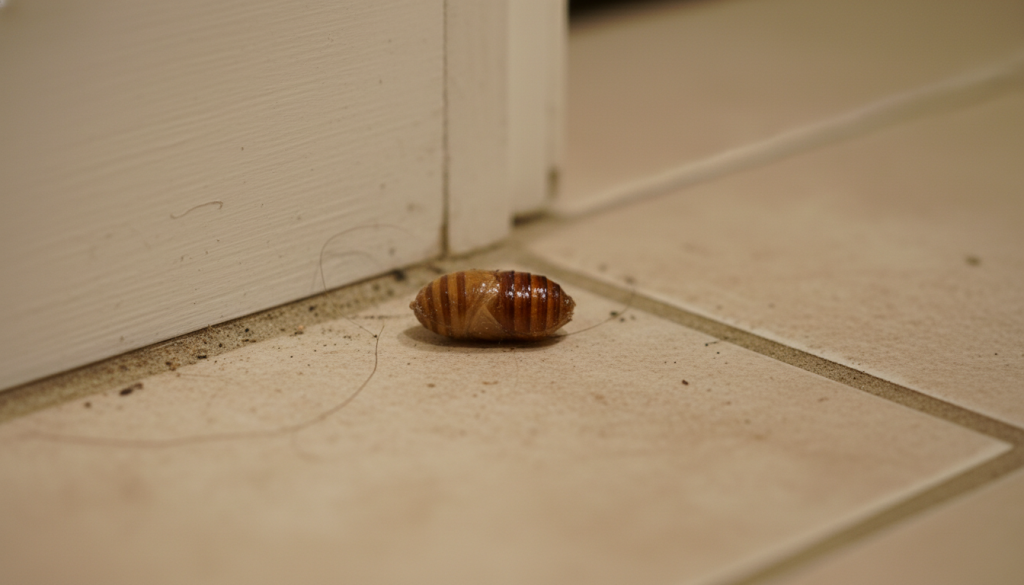
If you’ve ever spotted a small, dark, capsule-shaped object tucked into the fold of a stored garment, you already know the unsettling feeling that follows. Cockroach eggs on clothes are not just a theoretical risk; they are a documented, real-world pathway through which roach infestations spread from one room, apartment, or building to another.
Understanding whether cockroach eggs can survive on fabric, how long they remain viable, and what kills them before they hatch is critical knowledge for any homeowner, renter, or pest management professional. In this comprehensive guide, I’ll walk you through the biology of cockroach reproduction, the specific conditions that allow roach eggs to survive on clothing, and the most effective methods to eliminate them permanently.
What Is a Cockroach Egg Case? Understanding the Ootheca
Before we can answer whether cockroach eggs survive on clothes, you need to understand what you’re actually dealing with.
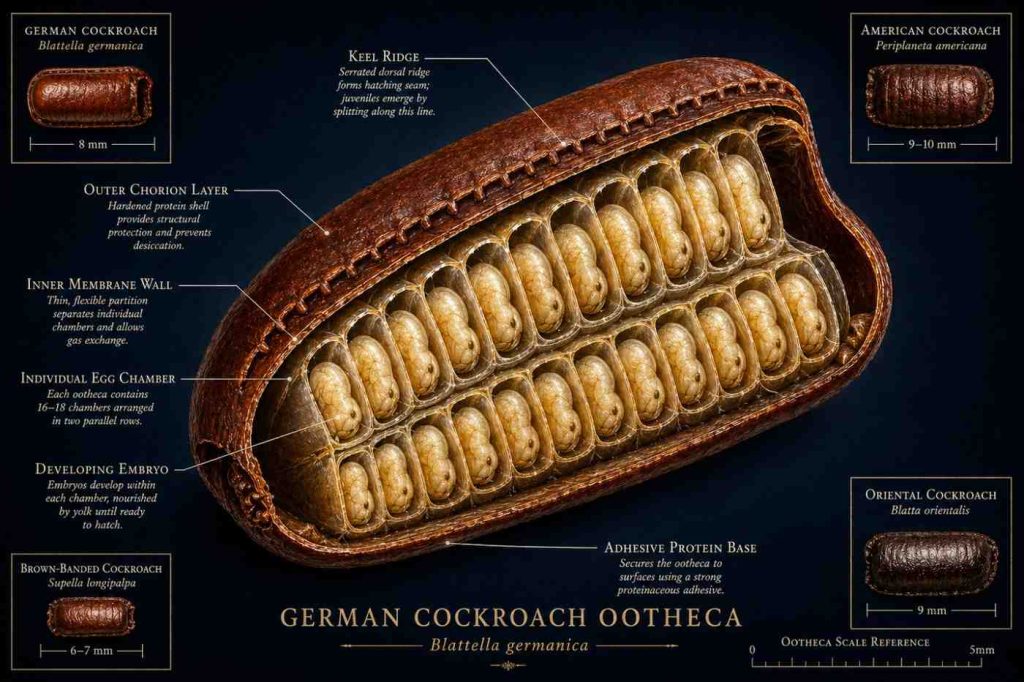
The ootheca (plural: oothecae) is the egg case produced by a gravid female cockroach. It is not a single egg; it is a hardened, protective capsule that houses multiple embryos arranged in two symmetrical rows inside individual egg chambers. The word comes from the Greek “oon” (egg) and “theke” (case or container), and it is the defining reproductive structure of the Order Blattodea.
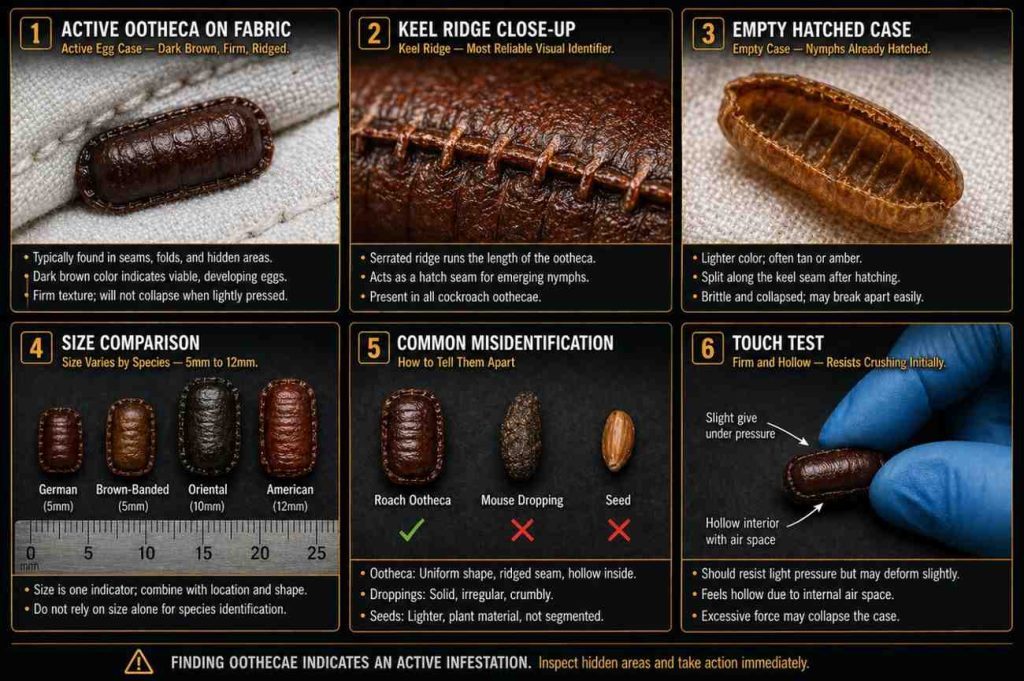
Each ootheca has a distinct keel, a ridge running along the top, which is one of the most reliable visual identifiers when distinguishing a roach egg case from other household debris.
What Does a Cockroach Egg Case Look Like?
The appearance of an ootheca varies by species, but common characteristics include:
Color: Dark brown to reddish-brown, sometimes appearing almost black when newly deposited
Shape: Elongated, purse-shaped, or rectangular capsule with a ridged seam along one edge
Size: Ranges from approximately 5mm (Blattella germanica) to 12mm (Periplaneta americana)
Texture: Smooth to slightly leathery outer surface made of a hardened protein coat
Contents: Anywhere from 12 to 50 embryos, depending on species
> Key Takeaway: The ootheca is engineered by nature for survival. Its hardened outer shell, the chorion, is resistant to dehydration, mild chemicals, and physical disturbance. This is precisely why cockroach egg survival on textiles and other surfaces is not just possible, but surprisingly common.
Species-Specific Egg Case Differences: Why It Matters for Clothing Infestation
Not all cockroach species deposit their oothecae the same way. This distinction is critically important when assessing the risk of roach egg transfer via clothing.
German Cockroach (Blattella germanica)
The German cockroach is the species most likely to be responsible for cockroach eggs found on clothes. Here’s why:
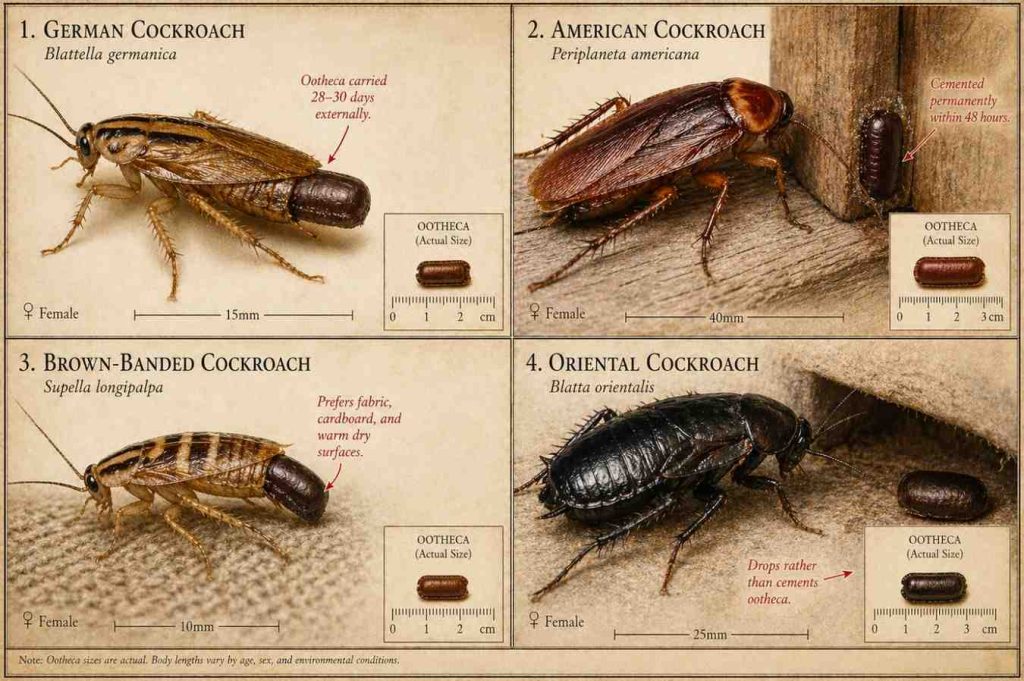
The gravid female carries her ootheca attached to her body, protruding from her abdomen, for almost the entire egg incubation period of 28 to 30 days. She only deposits it 1 to 2 days before hatching. This oothecophore behavior (carrying the egg case externally) means that.
1. The ootheca spends most of its development period on a living, mobile host
2. The female can deposit it in warm, enclosed spaces, including inside folded clothing
3. The egg case is dropped in a protected location, not glued permanently to a hard surface
A single German cockroach ootheca contains 30 to 40 eggs, and a female can produce 4 to 8 oothecae during her lifetime, potentially yielding up to 300 offspring. Their fecundity (reproductive output) is among the highest of any household pest species.
American Cockroach (Periplaneta americana)
The American cockroach behaves differently. The female deposits her ootheca within hours or days of formation, cementing it to a surface using an adhesive secretion produced by her accessory glands. This oothecal attachment mechanism creates a strong bond with substrate surfaces.
An American cockroach ootheca contains approximately 14 to 16 eggs (some sources document up to 16 per case, with females producing 6 to 14 cases in a lifetime). The incubation period runs 50 to 55 days under optimal conditions.
Clothing risk: Because the American roach glues its ootheca to surfaces, the risk of egg transfer to clothing depends on whether the fabric is stored near deposition sites, such as against a wall, in a box, or in a pile on the floor.
Brown-Banded Cockroach (Supella longipalpa)
The brown-banded cockroach is a particularly important species in the context of clothes infestations. Unlike most roaches that prefer kitchens and damp areas, the brown-banded roach actively prefers warm, dry environments, including bedroom closets, wardrobes, and stored clothing.
The female deposits her purse-shaped ootheca by gluing it to rough surfaces, including fabric, cardboard, and the undersides of furniture. Each case contains approximately 14 to 18 eggs with an incubation period of 35 to 80 days.
Oriental Cockroach (Blatta orientalis)
The Oriental cockroach produces a relatively large, dark reddish-brown egg capsule containing 16 to 18 eggs. The female drops her ootheca in protected areas rather than firmly cementing it, making these egg cases more easily transferred by accidental contact with fabric or clothing left on the floor.
Can Cockroach Eggs Actually Survive on Clothes?
This is the central question, and the answer requires nuance.
Yes, cockroach eggs can survive on clothes. However, the survival rate, duration, and risk level depend on multiple interacting factors: species, fabric type, environmental conditions, and whether the eggs are attached or simply resting on the surface.
How Cockroach Eggs Get Onto Clothing
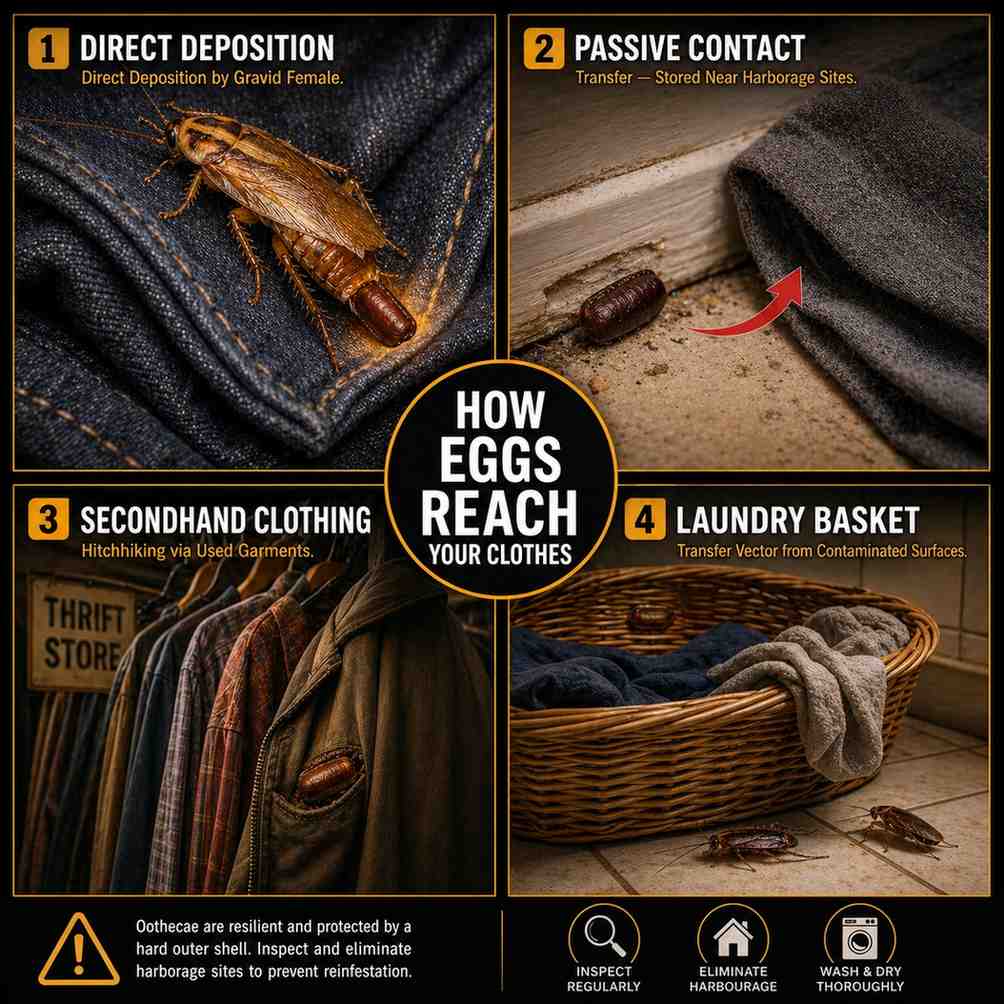
Roach egg transfer to clothing happens through several pathways:
1. Direct deposition by a gravid female
A female cockroach seeking a warm, dark, enclosed space may deposit her ootheca directly into a pile of clothing, inside a shoe, or within a folded garment stored in an infested area. This is especially common with German cockroaches and brown-banded cockroaches.
2. Passive transfer via contact
When clothing is stored near egg deposition sites along baseboards, inside cardboard boxes, or in closets, an ootheca can adhere to fabric through its natural adhesive secretion or simply become lodged in fabric fibers.
3. Hitchhiking through secondhand clothing
Secondhand clothing pest risk is a well-documented but underappreciated pathway for cockroach dispersal. Garments from infested homes, thrift stores, or storage units can carry viable oothecae to new environments. This is a genuine pest hitchhiking mechanism that pest management professionals encounter regularly.
4. Transfer via laundry baskets and bags
Laundry baskets kept on the floor in infested spaces are prime egg transfer vectors. An ootheca inside the basket can migrate to clothing during transport.
> Pro Tip: If you live in a building with a shared laundry facility, inspect your laundry basket carefully before transferring clean clothes back into it. Shared laundry rooms are a frequently overlooked roach dispersal pathway.
Fabric Type and Egg Attachment: Does It Matter?
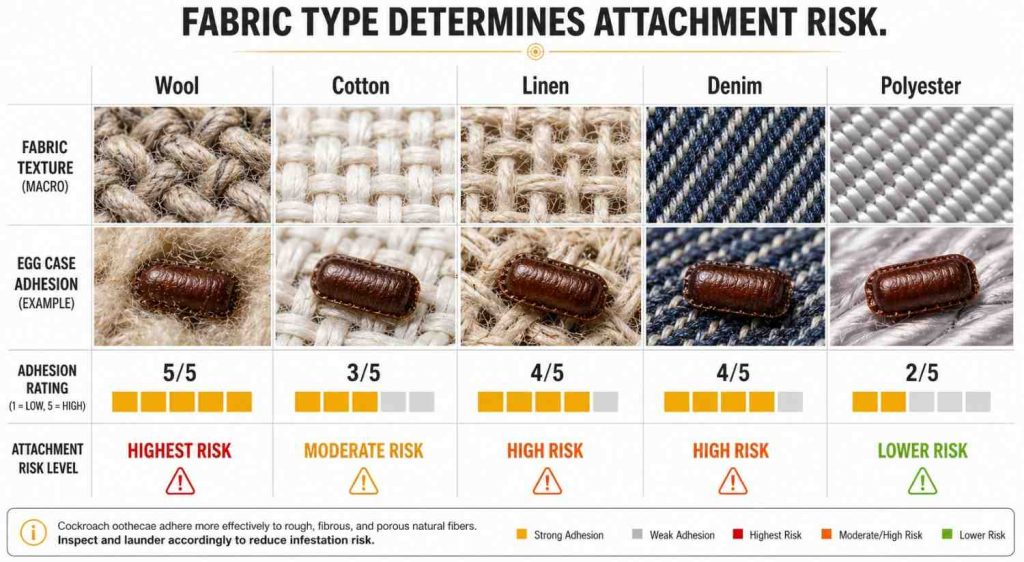
Yes, significantly. The substrate adhesion of a cockroach ootheca depends on surface texture and porosity.
Woolen and textured fabrics provide more surface area for the adhesive secretion to grip, making detachment during handling less likely.
Cotton fabrics offer moderate adhesion enough for egg cases to remain attached during light handling.
Synthetic fiber fabrics (polyester, nylon) have smoother surfaces, which reduces adhesion but doesn’t eliminate the risk of eggs resting in folds or seams.
Stored clothing (especially in bags, boxes, or compressed stacks) provides the darkness, warmth, and physical protection that oothecae require for successful incubation.
Cockroach Egg Viability: How Long Can Eggs Survive on Fabric?
Egg viability refers to the capacity of embryos within the ootheca to complete development and produce viable nymphs. Several environmental variables determine whether eggs on clothing will ultimately hatch.
Temperature and Egg Incubation
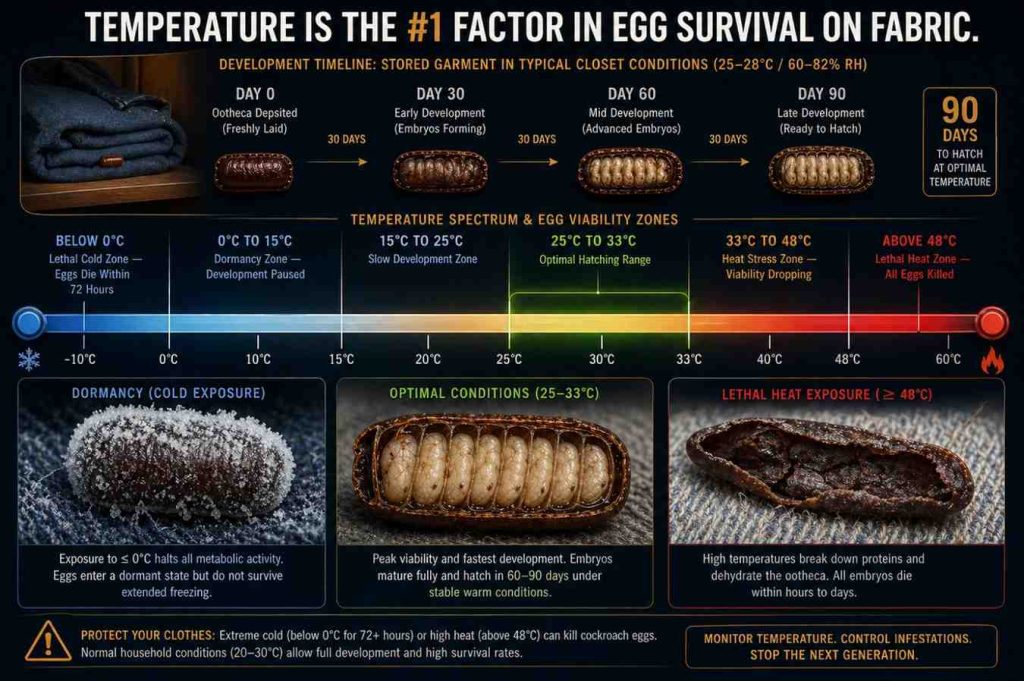
Temperature is the single most important variable in cockroach egg survival and hatching.
Optimal hatching temperature: 25°C to 33°C (77°F to 91°F)
Minimum viable temperature: Approximately 15°C (59°F) below this, development slows dramatically.
Lethal cold threshold: Sustained exposure below 0°C (32°F) will kill most eggs within several hours to days, depending on species
Lethal heat threshold: Temperatures above 48°C (118°F) for sustained periods kill cockroach eggs. This is the scientific basis for using a clothes dryer as a kill method.
Roach egg dormancy is a critical concept here. At lower temperatures, embryonic development doesn’t stop immediately; it slows. This means oothecae in cool closets or storage areas can remain dormant for extended periods and resume development when temperatures rise.
Humidity Tolerance
Cockroach eggs require a degree of ambient humidity to complete development. The ootheca’s outer chorion resists desiccation (drying out), but extreme dryness over extended periods will ultimately compromise egg viability.
High-humidity environments (above 70% relative humidity) support faster development and higher hatching success
Low-humidity environments extend incubation periods but may not fully prevent hatching in species with robust oothecae.
Fabric naturally retains some moisture, which means stored clothing can inadvertently provide a favorable egg incubation microenvironment.
Roach Egg Dormancy on Stored Clothing
This is a scenario I encounter frequently in real-world pest management situations. A homeowner packs away seasonal clothing, winter coats, blankets, and stored textiles in plastic bags or boxes in a basement or closet. If the home has even a low-level roach infestation, oothecae can be deposited on or inside these stored items.
Months later, when the clothing is retrieved, the oothecae may still be viable. The warming of the environment can trigger the hatching of first instar nymphs, newly emerged cockroaches at their earliest developmental stage, directly from stored fabric.
This is one of the primary reasons that stored clothing infestation is a persistent problem in urban pest management.
How to Identify Cockroach Eggs on Clothing
Knowing what to look for can prevent a full-scale infestation before it starts.
Visual Identification Checklist
Look for the following when inspecting clothing for roach eggs:
Small, dark brown capsules ranging from 5mm to 12mm in length
Ridged or keeled seam running along the length of the capsule
Attached to seams, folds, or rough fabric textures, often in corners or interior pockets
Clusters or single cases of German roaches may deposit cases near each other over time
Empty oothecae hatched egg shells that appear collapsed, lighter in color, with an open keel indicating nymphs have already emerged.
> Important Note: An empty ootheca on clothing doesn’t mean the problem is over. It means nymphs have already hatched, potentially in your wardrobe, bedroom, or home. Immediate action is required.
Distinguishing Roach Eggs from Other Debris
A common mistake is misidentifying roach oothecae as:
Dried bean or seed fragments (similar shape but organic, non-ridged)
Mouse droppings (rounder, tapered, no visible keel)
Fabric pills or lint clumps (softer, easily crushed)
Roach egg cases have a distinctive, firm, hollow feel when pressed; they resist crushing initially and then collapse. This tactile test, combined with the visual keel ridge, is the most reliable field identification method.
What Kills Cockroaches Eggs on Clothes? Proven Elimination Methods
This section is where the practical value lies. Here is a prioritized, evidence-based breakdown of every effective method for roach egg removal from clothing and fabric.
Method 1: Heat Treatment via Clothes Dryer
Heat is the most reliable and accessible kill method for cockroach eggs on fabric.
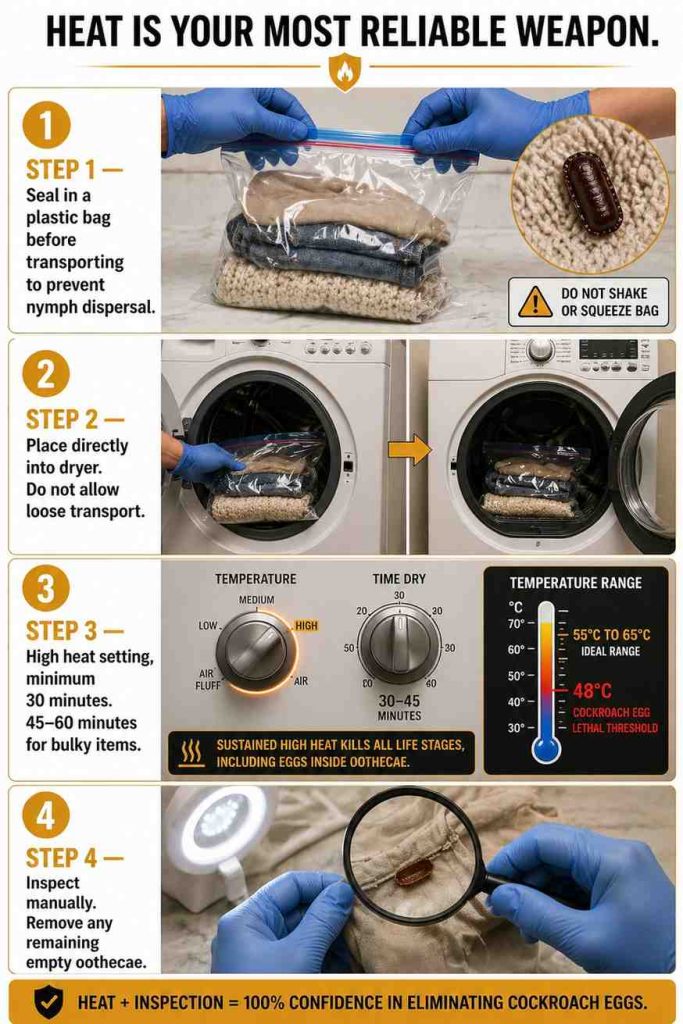
The science is clear: cockroach eggs die when exposed to sustained temperatures above 48°C (118°F). A standard residential clothes dryer operating on a high-heat setting reaches internal temperatures between 55°C and 65°C (130°F and 150°F), well above the lethal heat threshold for cockroach embryos.
Protocol:
1. Place suspected or confirmed infested clothing in a sealed plastic bag before transporting to the dryer (to prevent nymph dispersal)
2. Run the dryer on the highest heat setting for a minimum of 30 minutes
3. For bulky items (coats, blankets), extend to 45 to 60 minutes to ensure heat penetration throughout the fabric
4. After drying, inspect for any remaining empty oothecae and remove them manually
> Pro Tip: The washing cycle alone does not guarantee egg death; the mechanical agitation and detergent can disrupt adhesion and remove some eggs, but it is the dryer heat that provides the lethal kill. Always follow washing with a full high-heat drying cycle.
Method 2: Hot Water Washing
Washing infested clothing in hot water (60°C / 140°F or above) will kill cockroach eggs through thermal exposure combined with mechanical disruption.
Check garment care labels before using hot water.
For delicate fabrics that cannot tolerate hot water washing, use the dryer-only method described above.
Hot water washing is most effective when the eggs are not yet firmly adhered; newly deposited oothecae show weaker substrate adhesion.
Method 3: Freezing
Sustained cold can kill cockroach eggs, though it requires longer exposure times than heat.
Temperature required: Below -18°C (0°F)
Duration required: Minimum 72 hours (3 days) of sustained freezing
Method: Seal clothing in an airtight plastic bag, remove as much air as possible, and place in a deep freezer
This method is particularly useful for delicate fabrics, woolen items, or antique textiles that cannot tolerate heat treatment. It is also commonly used in museum pest management for textile collections.
Limitation: A standard household refrigerator freezer may not consistently reach or maintain -18°C. Use a dedicated chest freezer or verify the temperature with a thermometer.
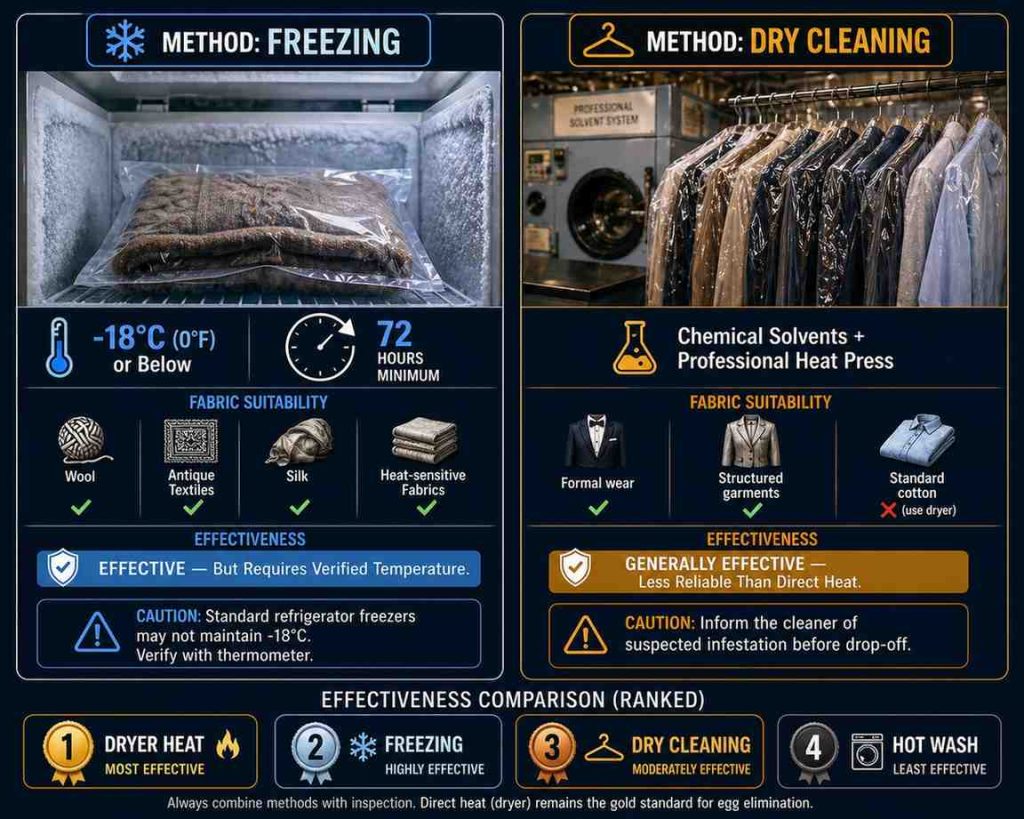
Method 4: Dry Cleaning
Dry cleaning vs. roach eggs is a question worth addressing carefully.
Professional dry cleaning uses chemical solvents (typically perchloroethylene or hydrocarbon solvents) rather than water and heat. The solvent process, combined with the heat of professional pressing and drying are generally effective at killing cockroach eggs, but effectiveness varies based on the following:
The specific solvent and process used
Whether eggs are in deep fabric folds inaccessible to solvent penetration
The temperature of the finishing press
In my professional assessment, dry cleaning should be considered a secondary option, adequate but less reliable than direct heat treatment through a residential dryer. If you opt for dry cleaning, inform the cleaner of the suspected infestation so they can take appropriate precautions and inspect for oothecae post-cleaning.
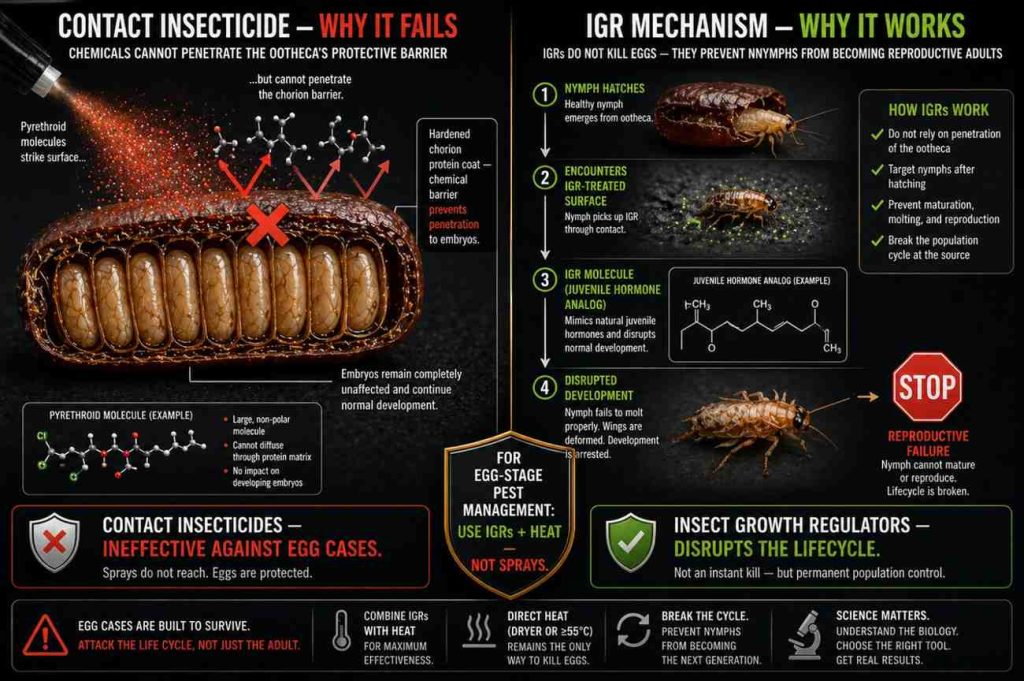
Method 5: Insecticides and IGRs: What Works and What Doesn’t
This is where a significant common misconception needs to be corrected.
Contact insecticides (pyrethroids, organophosphates) and most residual pesticides are largely ineffective against cockroach eggs inside an intact ootheca. The hardened protein coat of the chorion acts as a chemical barrier, preventing penetration to the embryos inside.
What pest control professionals use instead:
Insect Growth Regulators (IGRs) are compounds like hydroprene or pyriproxyfen that mimic juvenile hormones. IGRs do not kill eggs directly but disrupt postembryonic development when nymphs hatch, preventing them from reaching reproductive maturity. IGRs are a cornerstone of professional integrated pest management (IPM) programs targeting roach populations.
Fumigants, whole-structure fumigation with gases like sulfuryl fluoride can penetrate oothecae and achieve egg kill, but this is a professional-level intervention not appropriate for treating individual garments.
> Important Note: Do not spray insecticides directly on clothing you intend to wear. Chemical residues pose health risks, and the treatment is unlikely to be effective against eggs anyway. Heat treatment is always the superior option for fabric decontamination.
Preventing Cockroach Eggs on Clothes: A Practical IPM Strategy
Elimination matters, but prevention is the goal of any sound pest management approach. Here is a practical, layered strategy for protecting your clothing from roach egg infestation.
Storage Practices
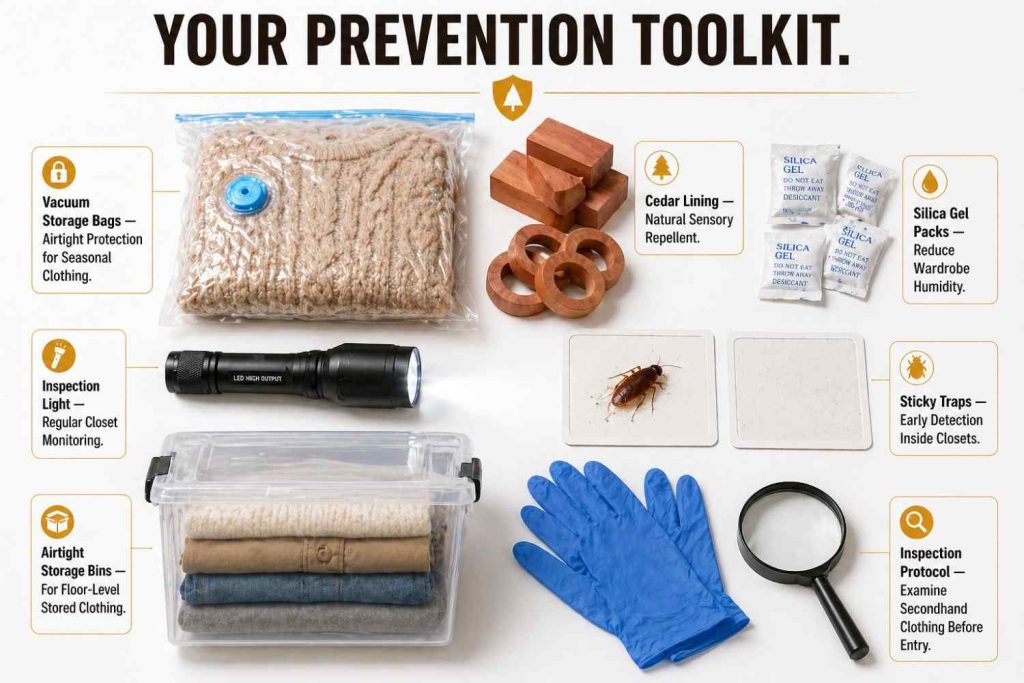
Store clothing in sealed, airtight containers or vacuum storage bags rather than open boxes or hanging in unsealed closets
Never store clothing directly on the floor in areas with any history of roach activity.
Inspect secondhand or thrift store clothing carefully before bringing it into your home. Examine seams, pockets, and folds under good lighting.
Wardrobe Environment Management
Cedar lining in wardrobes and drawers acts as a natural repellent. Cedar oil (cedrol) disrupts the sensory environment that cockroaches prefer, though it does not kill eggs. Cedar is a preventive tool, not a treatment.
Maintain wardrobe interiors at lower humidity levels using silica gel packs or small desiccant bags.
Regularly inspect stored clothing, especially seasonal items not accessed for months.
Whole-Home Pest Control
Treating clothing in isolation is insufficient if the underlying infestation is not addressed. A comprehensive integrated pest management (IPM) approach includes:
1. Inspection and monitoring sticky traps placed in high-risk areas (under appliances, in closets, along baseboards) to assess infestation levels
2. Sanitation eliminates food sources, moisture, and harborage sites
3. Exclusion of sealing cracks, gaps, and entry points
4. Targeted chemical treatment gel baits and IGRs applied by licensed pest management professionals in appropriate locations
5. Follow-up monitoring to confirm elimination and catch reinfestation early
The Public Health Dimension: Why Roach Eggs on Clothes Matter Beyond the “Ick” Factor
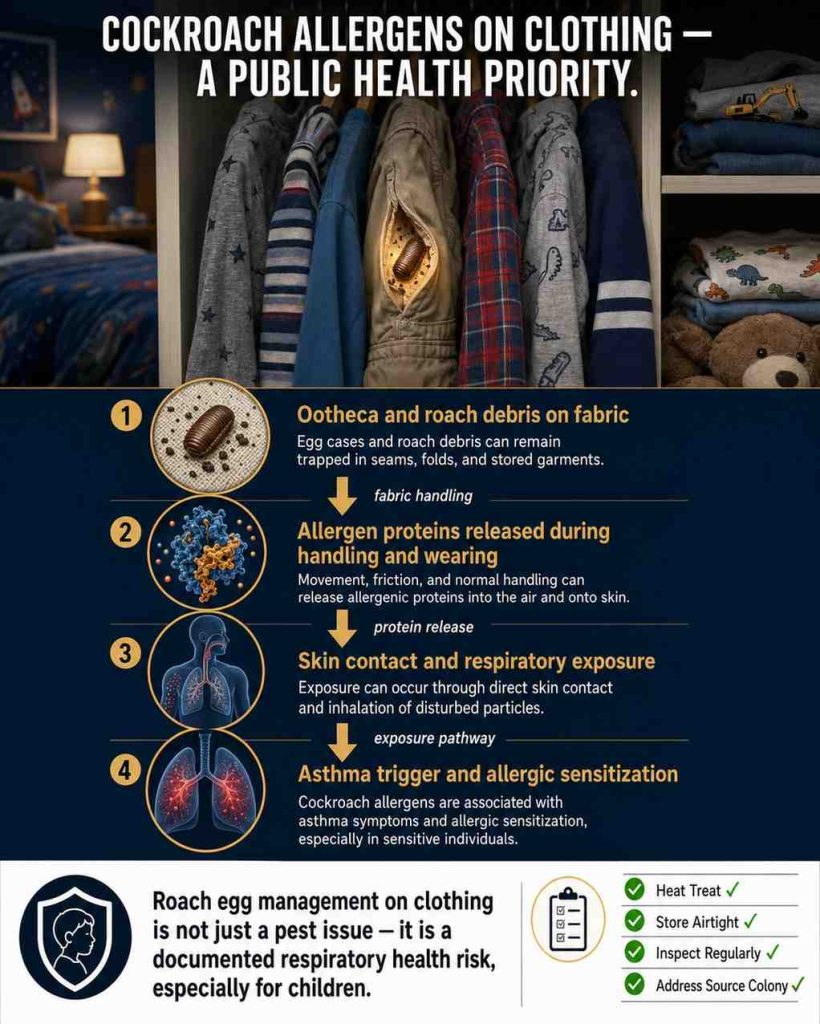
Cockroaches are not merely a nuisance pest. They are documented public health pests that produce allergens linked to asthma exacerbation, particularly in children living in urban environments.
Cockroach allergens, proteins derived from roach saliva, feces, shed exoskeleton (from molting and postembryonic development), and egg case material accumulate in household dust and on fabric surfaces. Studies published in the Journal of Allergy and Clinical Immunology have established a clear link between cockroach allergen sensitization and increased asthma morbidity in urban pediatric populations.
Clothing that has harbored cockroach oothecae, nymphs, or adult roaches carries these allergen-producing proteins into living spaces and bedrooms and against the skin of individuals who may already be sensitized.
This is not a minor consideration. It elevates roach egg management on clothing from a pest control issue to a public health priority.
Conclusion
Cockroach eggs on clothes represent one of the most overlooked pathways through which roach infestations spread, persist, and resist elimination. The biology is clear: oothecae are engineered for survival, capable of remaining dormant in stored fabric for weeks or months before hatching into first instar nymphs that begin a new infestation cycle.
The key takeaways from this guide:
Cockroach egg survival on clothing is real, driven by species behavior, fabric type, temperature, and humidity.
Heat is your most effective weapon; a high-heat dryer cycle for 30+ minutes kills roach eggs reliably.
Contact insecticides don’t penetrate oothecae. Use IGRs as part of a professional IPM strategy instead.
Prevention requires airtight storage, regular inspection, and whole-home pest management.
The health stakes are real; cockroach allergens on clothing pose documented public health risks.
If you suspect a cockroach infestation in your home, do not treat the clothing problem in isolation. Contact a licensed pest management professional for a comprehensive inspection and targeted treatment plan. The sooner the source colony is eliminated, the sooner you can be confident that what’s in your wardrobe stays clean and stays that way.
FAQ
Can cockroach eggs survive on clothes in a washing machine?
Cockroach eggs can survive a standard cold or warm washing machine cycle. The ootheca’s hardened outer shell resists water penetration and mechanical agitation. While washing may dislodge some egg cases through disruption of adhesion, only hot water washing at 60°C (140°F) or above, followed by a high-heat dryer cycle, reliably kills the embryos inside.
How long does it take for cockroach eggs on clothes to hatch?
Cockroach egg incubation periods vary by species. German cockroach eggs hatch in approximately 28 to 30 days, American cockroach eggs in 50 to 55 days, and brown-banded cockroach eggs in 35 to 80 days. Temperature significantly affects this timeline; warmer conditions (25°C to 33°C) accelerate development, while cooler temperatures slow or pause it.
What do cockroach eggs look like on fabric?
Cockroach eggs on fabric appear as small, dark brown, capsule-shaped cases measuring 5mm to 12mm in length. They have a distinctive ridged seam (keel) running along one edge. They are typically found tucked into fabric folds, seams, or pockets and feel firm and hollow when gently pressed. An empty, collapsed case indicates the eggs have already hatched.
Does dry cleaning kill cockroach eggs?
Dry cleaning can kill cockroach eggs in most cases, as professional solvent processes combined with heat pressing expose eggs to lethal conditions. However, it is less reliably lethal than a direct high-heat dryer treatment, as solvent penetration into deep fabric folds may be incomplete. Inform the dry cleaner of the suspected infestation before dropping off garments.
Can cockroach eggs spread infestation to a new home through clothing?
Yes. Cockroach eggs on clothing are a documented pathway for spreading infestations between locations. This is particularly common with secondhand clothing, garments stored in infested spaces, and clothing transported in shared laundry facilities. A single viable ootheca can introduce a new roach colony to a previously uninfested environment after hatching.
How do I remove cockroach eggs from clothes safely?
The safest removal method is to place clothing in a sealed plastic bag, then run it through a clothes dryer on the highest heat setting for 30 to 45 minutes. This kills all viable eggs. After drying, manually inspect and remove any remaining empty oothecae using gloved hands or tape. Dispose of the egg cases in a sealed bag in an outdoor bin.
Are cockroach eggs on clothes dangerous to human health?
Cockroach egg cases and associated roach debris contain allergen proteins linked to asthma and allergic reactions, particularly in sensitized individuals and children. Clothing that has been in contact with cockroach oothecae, nymphs, or adults can carry these allergens against the skin. This makes prompt decontamination of infested clothing a public health concern, not just a pest management issue.