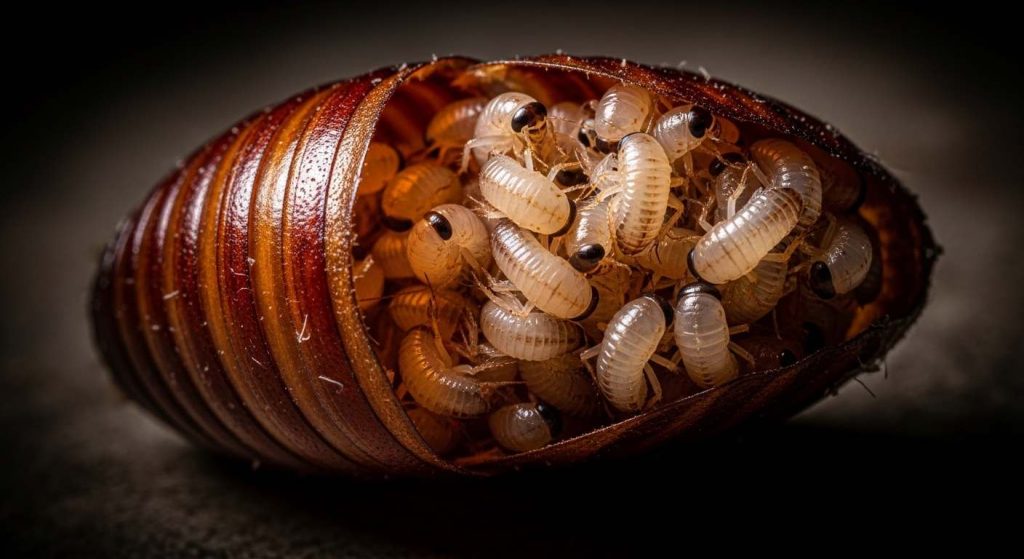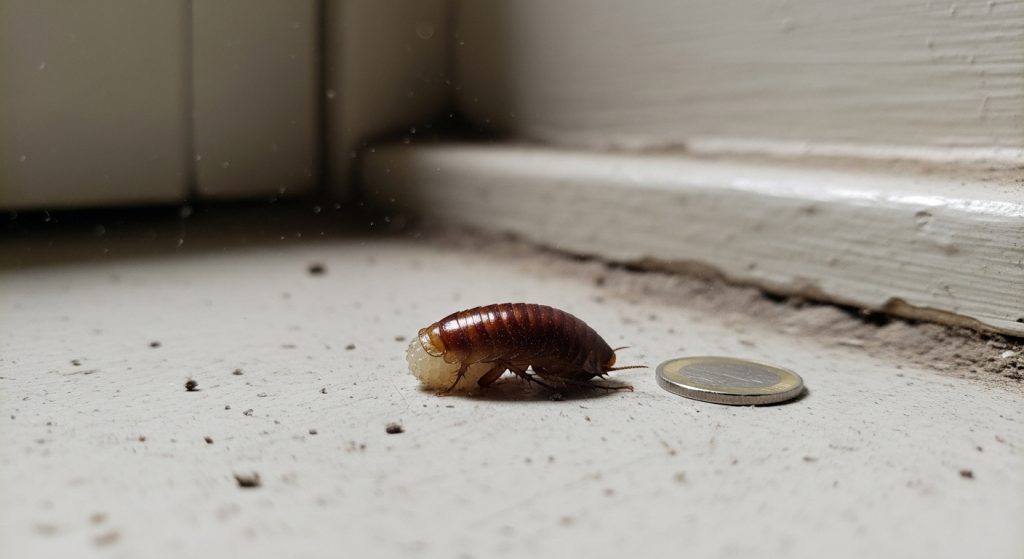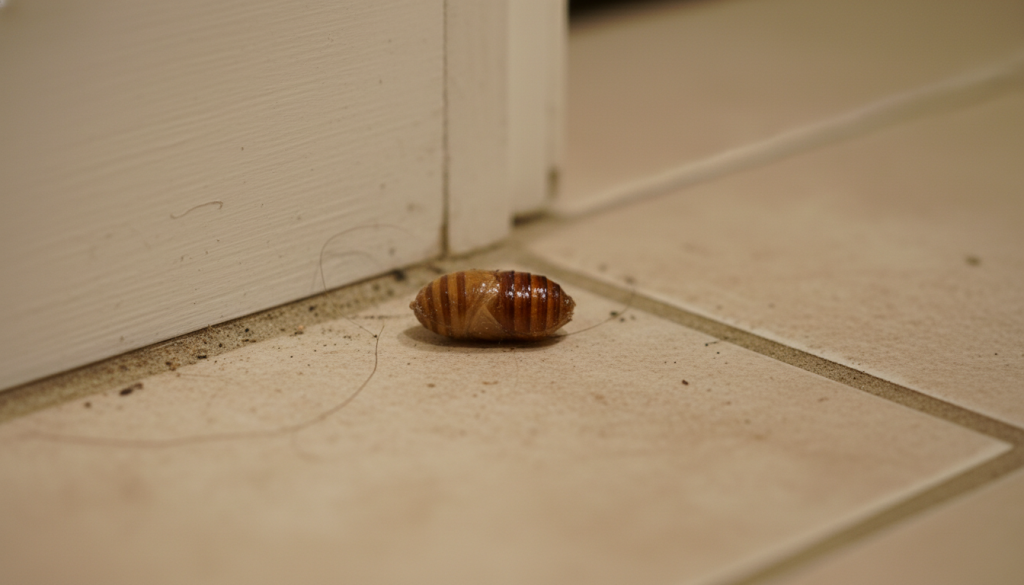
Roach eggs

Author name: James

What Kills Roaches and Their Eggs
Articles

What Kills Roaches and Their Eggs? 9 Proven Methods

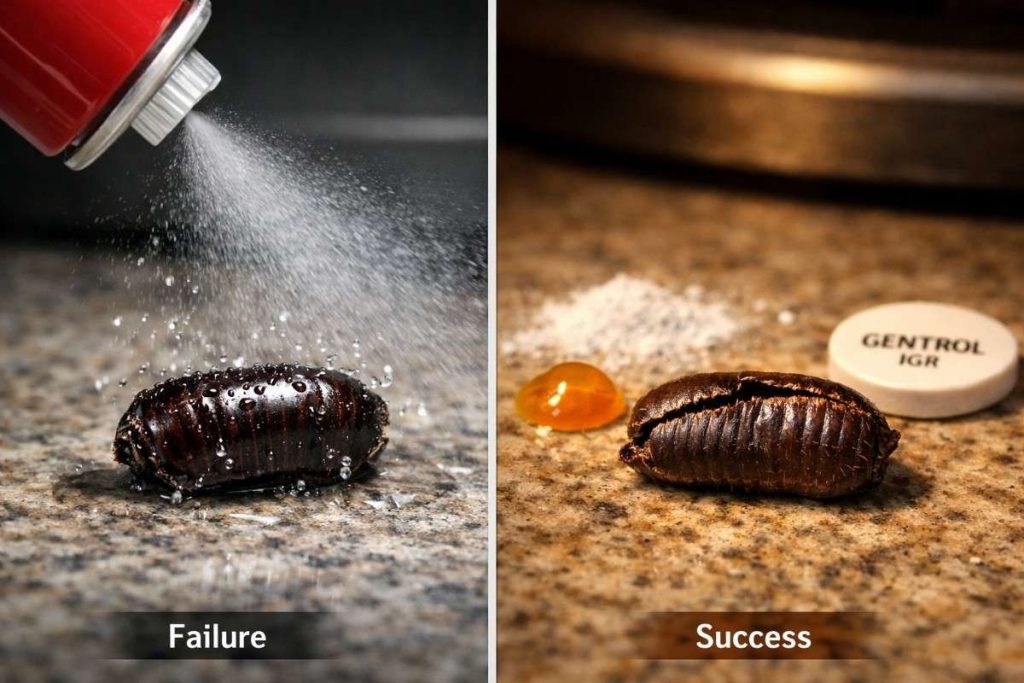
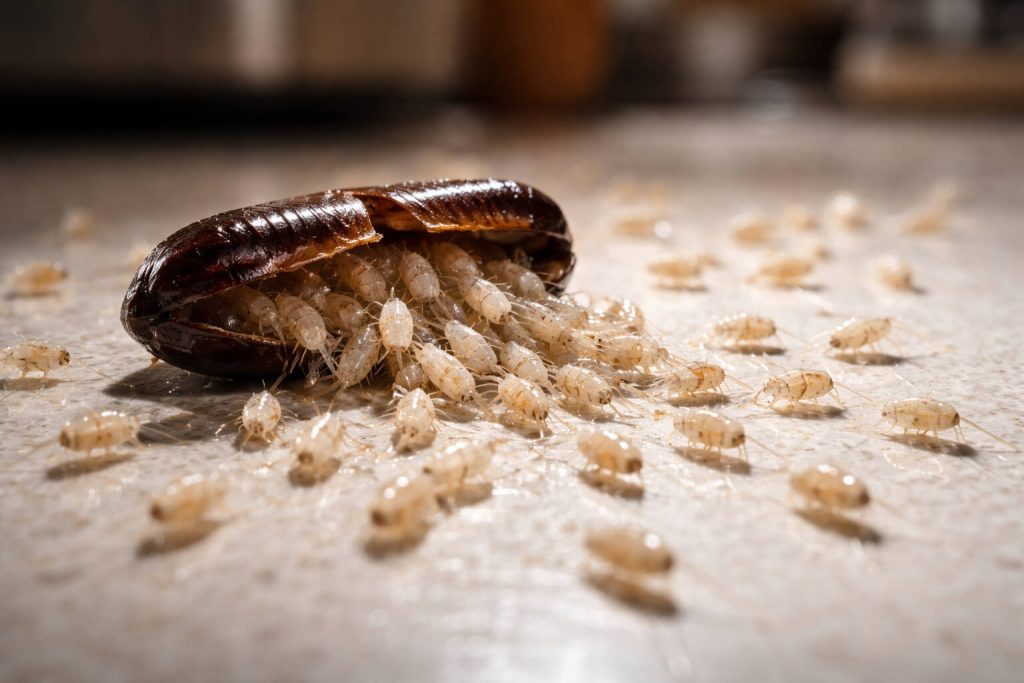
You sprayed. You bombed. You wiped out every visible cockroach in the kitchen. And three weeks later, dozens of tiny nymphs appeared behind the refrigerator because the eggs survived. This is the most frustrating reality of cockroach control: most products that kill adult roaches don’t touch their eggs. The ootheca, the hardened protein-shelled egg case that female cockroaches produce is specifically engineered by evolution to resist chemical exposure, dehydration, and physical damage. A standard contact spray hitting an ootheca is like throwing water at a sealed jar. So what kills roaches and their eggs? Not one single product. Effective cockroach elimination requires a multi-method approach that targets adults, nymphs, and oothecae simultaneously using the right combination of baits, dusts, insect growth regulators, and environmental controls. This guide covers the nine methods that actually work, explains exactly why most people fail at roach control, and gives you a step-by-step elimination plan built on the same integrated pest management principles professionals use. Whether you’re dealing with German cockroaches (Blattella germanica) in an apartment kitchen or American cockroaches (Periplaneta americana) in a basement, every approach here targets the full egg-to-adult lifecycle. Table of Contents 1. Why Roach Eggs Are So Hard to Kill 2. Gel Baits: The Most Effective Roach Killer Overall 3. Boric Acid: The Best Dual-Action Dust for Roaches and Eggs 4. Insect Growth Regulators (IGRs): Stopping Eggs From Developing 5. Diatomaceous Earth: The Mechanical Killer 6. Heat Treatment: The Only Method That Kills All Life Stages Instantly 7. Residual Sprays: What They Do and Don’t Kill 8. Natural Roach Killers That Actually Work 9. Professional Extermination: When DIY Isn’t Enough 10. What Doesn’t Kill Roach Eggs (Common Mistakes 11. The Complete Roach Elimination Plan: Step by Step 12. Species-Specific Treatment Guide 13. FAQs 14. Key Takeaways Why Roach Eggs Are So Hard to Kill Before covering what works, you need to understand why roach eggs destruction is fundamentally different from killing adults. The obstacle is structural. A cockroach ootheca isn’t a fragile, exposed egg like a bird’s. It’s a fortified capsule containing 14–48 individual egg chambers, each holding one developing embryo protected by its own membrane called a chorion. The entire assembly is sealed inside a rigid protein casing with a moisture-retention layer and a reinforced ridge (the keel) running along the top. What the Ootheca Resists This structure blocks most conventional insecticides through several mechanisms: Chemical impermeability. The outer casing is dense enough to prevent liquid or aerosol insecticides from penetrating to the embryos inside.  Research from Purdue University’s Department of Entomology has confirmed that standard synthetic pyrethroids (cypermethrin, permethrin, and deltamethrin) applied directly to oothecae produce no measurable reduction in hatch rate. Desiccation resistance. The moisture-retention layer maintains internal humidity even in dry environments, protecting embryos from the drying effects that kill exposed nymphs and adults. Physical durability. The casing withstands moderate crushing force, and its smooth exterior resists adhesion by many dust-based products. Concealed placement. Females deposit oothecae in cracks, crevices, wall voids, and other protected locations that treatment products may never reach. This is part of a broader predation risk and ootheca placement strategy shaped by millions of years of evolution. The core problem: You can kill every adult cockroach in a room and still face a full-scale resurgence 2–6 weeks later when untreated oothecae hatch. A single German cockroach ootheca contains 30–48 nymphs. Five surviving egg cases mean 150–240 new cockroaches, each reaching reproductive maturity in as little as 60 days. This is why cockroach elimination solutions must include at least one method that either destroys the ootheca directly, prevents embryonic development inside it, or kills nymphs immediately upon emergence. Targeting adults alone guarantees failure. Gel Baits: The Most Effective Roach Killer Overall If you’re choosing one product to anchor your roach control program, gel bait is the answer. It won’t penetrate the ootheca directly, but it’s the single most effective tool for eliminating the adults and nymphs that sustain the breeding cycle, and through a mechanism called horizontal transfer, it can wipe out cockroaches that never touch the bait directly. How Gel Baits Work Gel baits combine a food-grade attractant with a slow-acting insecticide. A cockroach feeds on the bait, returns to its harborage area, and dies 24–72 hours later. During that interval, and here’s why this matters for colony elimination, other cockroaches consume the dead roach’s body and fecal matter, ingesting a secondary dose of the active ingredient. This cascade effect, called horizontal transfer, means one bait placement can kill dozens of cockroaches that never directly contacted the product. Best Gel Bait Active Ingredients Not all gel baits perform equally. The active ingredient determines speed, efficacy, and resistance risk: Active Ingredient Example Products Kill Speed Notes Fipronil 0.05% Advion Cockroach Gel Bait, Maxforce FC Magnum 24–72 hours Excellent horizontal transfer; industry standard Indoxacarb 0.6% Advion Evolution 24–48 hours Strong against pyrethroid-resistant populations Hydramethylnon 2% Maxforce FC Select, Combat Source Kill 48–96 hours Proven long-term track record Imidacloprid 2.15% Bayer Maxforce Impact 24–48 hours Neonicotinoid class; effective on German roaches Abamectin 0.05% Vendetta Roach Gel 48–72 hours Works through unique mode of action (GABA receptor antagonism) Dinotefuran Alpine Cockroach Gel Bait 24–48 hours Non-repellent; high palatability Why Gel Baits Beat Sprays for Long-Term Control Three reasons gel baits outperform residual sprays: 1. Non-repellent formulation. Cockroaches actively eat gel baits because the attractant mimics food. Sprays, by contrast, often contain repellent chemicals that push cockroaches away from treated areas scattering them to untreated zones rather than killing them. 2. Colony-level impact. Through horizontal transfer, gel baits function as colony elimination methods rather than individual-kill products. A single bait placement in a high-traffic harborage can eliminate the entire local population, including nymphs too small to encounter spray residues. 3. Targeted placement. Gel baits go directly into cracks, crevices, hinges, and voids where cockroaches actually live the same areas where females deposit oothecae. This means newly hatched nymphs encounter bait immediately upon emergence. Gel Bait Placement Strategy Where you place gel bait matters as much as
How Many Eggs Do Roaches Lay
Articles

How Many Eggs Do Roaches Lay? Full Species Breakdown

One German cockroach. One single gravid female. That’s all it takes to produce over 300 offspring in roughly six months, no second mating is required. The reason cockroach infestations spiral from “I saw one” to “They’re everywhere” comes down to a simple biological reality: roaches don’t lay eggs one at a time. They produce hardened egg cases called oothecae, and each one holds anywhere from 14 to 48 developing embryos depending on the species. So how many eggs do roaches lay, exactly? The answer varies dramatically across the five most common household cockroach species, and those differences directly determine how fast an infestation grows in your home. This guide gives you the precise egg count per ootheca, the number of oothecae each female produces in her lifetime, and the total reproductive output for every major species, because understanding roach eggs production rate is the first step toward stopping population growth before it overwhelms you. Table of Contents 1. Quick Answer: Roach Egg Counts at a Glance( 2. How Many Eggs Does a German Cockroach Lay? 3. How Many Eggs Does an American Cockroach Lay? 4. Oriental roach eggs Count 5. Brown-banded roach eggs Count 6. Smoky Brown, Australian, and Other Species 7. Full Species Comparison Table 8. How Often Do Cockroaches Lay Eggs? 9. Total Lifetime Egg Production: The Numbers That Matter 10. Can One Roach Cause an Infestation? The Population Math 11. What Affects How Many Eggs a Cockroach Produces? 12. Where Do Cockroaches Lay Their Eggs in Homes? 13. How to Find and Destroy Roach Egg Cases 14. FAQs 15. Key Takeaways Quick Answer: Roach Egg Counts at a Glance If you need the short version, here it is:   German cockroach: 30–48 eggs per ootheca (average 37–38)   American cockroach: 14–16 eggs per ootheca (average 15)   Oriental cockroach: 16 eggs per ootheca   Brown banded cockroach: 14–18 eggs per ootheca (average 16)   Smoky brown cockroach: 20–26 eggs per ootheca   Australian cockroach: 20–24 eggs per ootheca The German cockroach (Blattella germanica) is the most prolific breeder among common urban pest insects, producing the most eggs per case, the most cases per lifetime, and the highest total reproductive output of any domestic cockroach species. But egg count per ootheca only tells part of the story. How often a female produces those cases and how many she creates over her entire lifespan are what truly drive the roach population growth rate in an infested home. Below is the full breakdown for every species you’re likely to encounter. How Many Eggs Does a German Cockroach Lay? The German cockroach is the dominant indoor cockroach species worldwide. It’s also the one most likely responsible if you’re dealing with a kitchen or bathroom infestation. And unfortunately, it holds the record for cockroach fecundity rate among household species. Eggs Per Ootheca Each German roach eggs case contains 30 to 48 individual eggs, with most oothecae averaging around 37–38 embryos per capsule. That’s roughly double the egg count of an American cockroach ootheca. The egg case itself is small, approximately 7–9 millimeters long, light tan to brown, and distinctly ridged with a visible keel (the suture line running along the top where nymphs eventually emerge). Oothecae Per Lifetime A single German cockroach female produces 4 to 8 oothecae during her adult life, which typically spans 20–30 weeks. Under optimal conditions, warm and humid with abundant food, some females push this number to 9 or even 10 cases. Total Lifetime Egg Production Here’s where the numbers get alarming:   Conservative estimate: 4 oothecae × 37 eggs = 148 eggs   Average estimate: 6 oothecae × 38 eggs = 228 eggs   Maximum potential: 8 oothecae × 48 eggs = 384 eggs A single German cockroach female can produce 150–384 eggs in her lifetime, with most producing approximately 200–250 under typical indoor conditions. Why German Roaches Lay More Eggs Three biological factors explain this species’ exceptional reproductive capacity: 1. Egg-carrying behavior. The female retains the ootheca attached to her abdomen until 24–48 hours before hatching. This maternal protection of the ootheca ensures consistent warmth and humidity, maximizing the survival rate of every egg inside the case. 2. Faster reproductive cycle. German cockroaches reach sexual maturity in as little as 36 days after hatching, far faster than the 6–12 months required by American cockroaches. This means each generation starts producing its own oothecae sooner. 3. Higher clutch size. At 30–48 eggs per case, the German cockroach’s clutch size dwarfs every other common household species. Combined with high egg-laying frequency, this creates the highest reproductive output per female of any synanthropic cockroach. Did You Know?  Researchers at North Carolina State University estimated that a single German cockroach female and her descendants could theoretically produce over 300,000 offspring in one year under ideal laboratory conditions. Real-world numbers are lower due to predation, resource limits, and mortality, but even at a fraction of that potential, population growth is staggering. How Many Eggs Does an American Cockroach Lay? The American cockroach (Periplaneta americana) is the largest common household cockroach in North America. Adults measure up to 53 mm, but their egg production per case is surprisingly modest compared to that of the German species. Eggs Per Ootheca Each American cockroach ootheca contains 14 to 16 eggs, with an average of 15 embryos per egg capsule. The egg case is larger than a German cockroach’s, roughly 8–10 millimeters long and dark reddish brown to mahogany in color, with a purse-like shape. Oothecae Per Lifetime American cockroach females are more productive over time than their per-case numbers might suggest. Each female generates approximately 6 to 14 oothecae during her adult lifespan, which can extend 1 to 1.5 years. Some entomological sources from the University of Florida’s Department of Entomology report females producing up to 90 oothecae under exceptional laboratory conditions, though 6–14 is the standard range in real-world environments. Total Lifetime Egg Production   Conservative estimate: 6 oothecae × 14 eggs = 84 eggs   Average estimate: 10 oothecae × 15 eggs = 150 eggs   High-end estimate: 14 oothecae × 16

How Long Does It Take for Roach Eggs to Hatch?
Articles

How Long Does It Take for Roach Eggs to Hatch?

A single German cockroach female can produce over 300 offspring in her lifetime. And she doesn’t deliver them one at a time; she deposits them in a protein-shelled egg case called an ootheca, each one packed with dozens of developing embryos ready to flood your kitchen in under a month. So, how long does it take for roach eggs to hatch? The answer depends on the cockroach species, ambient temperature, humidity levels, and whether that egg case is tucked behind your fridge or sitting in a garage. Most species hatch somewhere between 14 and 60+ days, but the details matter a lot more than the average. This guide breaks down the cockroach egg incubation period for every major species, explains what influences hatching speed, and shows you exactly what to look for if you suspect roach eggs are already developing in your home. Because knowing the timeline is the first step toward breaking the roach breeding cycle for good. Table of Contents 1. What Is a Cockroach Ootheca (and Why Should You Care)? 2. Roach Egg Hatching Time: The Quick-Reference Table 3. German Cockroach Eggs Hatching Time (14–28 Days) 4. American Cockroach Egg Incubation Period (44–55 Days) 5. Oriental Cockroach Egg Hatching Period (~60 Days) 6. Brown-Banded Cockroach Egg Case Incubation (37–103 Days) 7. Other Species: Smoky Brown, Australian, and Beyond 8. Does Temperature Affect Cockroach Egg Hatching? 9. Cockroach Egg Development Stages: Ootheca to Nymph 10. Do Cockroach Eggs Hatch on Their Own Without the Mother? 11. How to Tell If Roach Eggs Have Hatched 12. FAQs 13. Key Takeaways What Is a Cockroach Ootheca (and Why Should You Care)? Before you can understand roach egg hatching time, you need to understand the delivery system. Cockroaches don’t lay individual eggs like a housefly. Instead, the female produces a hardened egg capsule called an ootheca, a ridged, purse-shaped pod that holds multiple embryos in separate egg chambers. Think of it like a carton of eggs, except the carton is made of hardened protein and each “egg” inside is a developing cockroach nymph. Anatomy of a Roach Egg Case An ootheca has several distinct structural features: – Outer casing (protein shell): A tough, darkened layer that shields embryos from desiccation, mild pesticide exposure, and physical crushing – Keel (seam line): A ridge running along the top where nymphs eventually push through during emergence – Individual egg chambers: Separate compartments inside, each containing one embryo surrounded by a chorion (protective egg membrane) – Yolk sac nutrient supply: Provides developing embryos with the energy they need to reach the nymph stage – Moisture-retention layer: An inner lining that regulates water loss, critical for pest egg viability duration – Adhesive secretion: Some species glue the ootheca to surfaces using a sticky secretion from the ootheca attachment point The egg case pigmentation layer darkens as the ootheca matures. A freshly deposited ootheca is often white or pale tan, while a mature one turns dark brown or nearly black. Pro Tip: If you find a roach egg sac that’s dark and appears slightly swollen along the keel, it may be close to hatching. Light-colored, firm oothecae are typically earlier in the cockroach gestation period. How Many Roaches Hatch From One Egg? This question comes up constantly, and the answer is species-specific. Each ootheca contains a set number of embryonic segments (pre-hatch nymphs), and the count varies dramatically. – German cockroach (Blattella germanica): 30–48 nymphs per egg case – American cockroach (Periplaneta americana): 14–16 nymphs per egg case – Oriental cockroach: 16 nymphs per egg case – Brown-banded cockroach (Supella longipalpa): 10–18 nymphs per egg case – Australian cockroach (Periplaneta australasiae): 22–24 nymphs per egg case A single German cockroach ootheca can release up to 48 nymphs at once. Multiply that by the 4–8 egg cases one female produces in her lifetime, and you begin to see why the roach population growth rate spirals so quickly in infested homes. How Long Does Ootheca Take to Hatch? Quick-Reference Table Here’s the roach egg case hatching time for each major household cockroach species, compiled from entomological research published by universities including Purdue, the University of Florida, and Texas A&M AgriLife Extension: Species | Scientific Name | Incubation Period | Eggs per Ootheca | Egg Case Behavior German cockroach | Blattella germanica | 14–28 days | 30–48 | Carried until hatching American cockroach | Periplaneta americana | 44–55 days | 14–16 | Deposited & glued to surface Oriental cockroach | Blattodea family | 42–80 days (avg. ~60) | 16 | Deposited in sheltered area  Brown-banded cockroach | Supella longipalpa | 37–103 days | 10–18 | Glued to ceilings/furniture Smoky brown cockroach | Periplaneta fuliginosa | 45–70 days | 20 | Deposited near moisture Australian cockroach | Periplaneta australasiae | 30–40 days | 22–24 | Deposited in moist debris Turkestan cockroach | Shelfordella lateralis | 40–60 days | 16–18 | Deposited in soil/crevices These figures assume standard indoor conditions (roughly 72–80°F / 22–27°C with moderate humidity). Extreme cold, dryness, or chemical pesticide exposure can extend or completely halt the insect egg development period. German Cockroach Eggs Hatching Time (14–28 Days) The German cockroach is the fastest reproducer among common synanthropic species (insects that thrive alongside humans in indoor environments). With a cockroach egg incubation period of just 14 to 28 days, this species can cycle from egg deposition to nymph emergence in under a month. Why German Roaches Hatch the Fastest Three factors explain the speed: 1. Maternal protection of ootheca. Unlike most cockroach species, the female German cockroach carries the ootheca attached to her abdomen until just 1–2 days before hatching. This egg-case-carrying vs. depositing behavior gives the embryos consistent access to her body heat and moisture, dramatically improving the roach egg’s survival rate. 2. Smaller body, faster metabolism. German cockroaches belong to the family Ectobiidae. Their small size (roughly 13–16mm as adults) correlates with a faster overall biological clock compared to larger species in the family Blattidae. 3. Indoor adaptation. As obligate indoor pests in temperate climates, German

How Many Roaches Are in One Egg
Articles

How Many Roaches Are in One Egg?

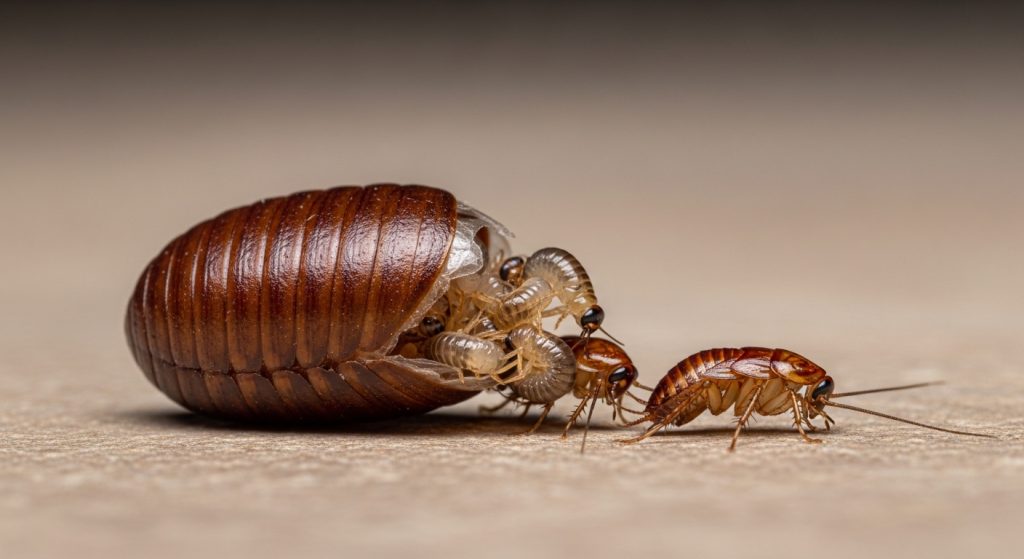
A single roach egg is not what most people picture. What looks like one “egg” is actually an egg case called an ootheca. Each ootheca holds multiple eggs inside small individual chambers. Depending on the species, one roach eggs case contains anywhere from 14 to 48 eggs. Every egg inside the capsule can hatch into one live nymph. That means one tiny egg case can release dozens of baby roaches into your home. What Is an Ootheca? Understanding the roach Eggs Case An ootheca is a small, pill-shaped capsule that a female roach produces. It belongs to the insect order Blattodea, which includes all roach species. The female forms this protective casing using a protein substance that hardens like keratin. It shields the developing embryos from predators, dry air, and some pesticides. Egg Case Structure and Components Inside the ootheca, you will find separate compartments lined up in two rows. Each compartment holds one embryo that develops into a single nymph. The internal partitions keep each egg safe and supplied with moisture. The protective casing stays intact until the nymphs are ready for emergence. Most oothecae measure between 5 and 13 millimeters long. Color ranges from tan to dark reddish-brown depending on the species. Egg Count by roach Species (Full Breakdown) Not all roach species produce the same number of eggs per ootheca. The difference in roach egg capacity across species is significant. Below is a species-by-species look at how many nymphs per egg case you can expect. German roach (Blattella germanica) The German roach is the highest-producing household species. Each ootheca holds 30 to 48 eggs, with an average of around 36. A single female from the family Blattellidae can produce 4 to 8 oothecae in her lifetime. That adds up to roughly 200 to 300 offspring from one female alone. German roaches also carry the egg case until just before hatching. This behavior boosts the hatching success rate and protects the brood. American roach (Periplaneta americana) The American roach belongs to the family Blattidae and produces fewer eggs per capsule. Each ootheca holds about 14 to 16 eggs. However, one female can produce 6 to 14 egg cases over her reproductive lifespan. She deposits each ootheca in a warm, humid, protected crevice. Oriental roach (Blatta orientalis) The Oriental roach produces a dark, rounded ootheca with 16 to 18 eggs inside. Females create about 8 oothecae during their lifetime. This species prefers cool, damp areas like basements and drains. The incubation duration lasts roughly 42 to 81 days before nymphs emerge. Brown-Banded roach (Supella longipalpa) Each brown-banded roach ootheca contains about 14 to 18 eggs. Females glue their egg cases to ceilings, furniture, and walls. A single female can produce around 14 oothecae in her lifetime. That brings her total lifetime offspring count to roughly 200 or more nymphs. Smoky Brown roach (Periplaneta fuliginosa) The smoky brown roach produces an ootheca with 20 to 26 eggs on average. This outdoor species often enters homes through attic vents and gaps. Females produce about 10 to 17 egg cases over their lives. The hatching period runs about 45 to 70 days. Australian roach (Periplaneta australasiae) The Australian roach ootheca holds roughly 20 to 24 eggs per capsule. Females hide their oothecae in moist, sheltered spots near food sources. This species thrives in warm, subtropical climates. Each female can produce around 12 to 30 oothecae during her reproductive lifespan. Species Egg Count Comparison Table Species              Eggs per Ootheca | Oothecae per Lifetime | Total Lifetime Offspring (Est.) German roach    30–48                          4–8                                 200–300+ American roach 14–16                          6–14                               120–200 Oriental roach    16–18                         ~8                                   130–145 Brown-Banded roach   14–18               ~14                                  200+ Smoky Brown roach | 20–26                10–17                              200–400+  Australian roach | 20–24                      12–30                              240–700+ The German roach has the highest egg count per single capsule. However, the Australian roach can produce more total offspring due to its higher ootheca production rate. How Fast Can One Egg Case Grow Into an Infestation? Roach population growth follows a pattern close to exponential growth. One single ootheca can trigger a serious colony expansion in weeks. Take the German roach as an example of the roach multiplier effect. One female and her offspring can produce over 30,000 roaches in just one year. This happens because nymphs reach reproductive maturity in about 50 to 60 days. Each new female then begins her own breeding cycle, causing geometric progression. Early intervention is critical. The longer you wait, the harder population control becomes. Factors That Affect roach Egg Count and Hatch Rate Several environmental conditions influence roach fecundity and hatching success rate. Not every egg inside an ootheca will survive. Temperature influence: Warm environments between 75°F and 85°F boost embryo development. Cold temperatures slow incubation and can reduce viability. Humidity effects: roaches need moisture for healthy egg development. Dry conditions can cause non-viable eggs and lower the emergence percentage. Nutritional factors: Well-fed females produce more oothecae with higher egg density. Poor nutrition reduces the ootheca production rate. Female age: Younger females typically produce larger, more viable clutches. Fecundity declines as the