

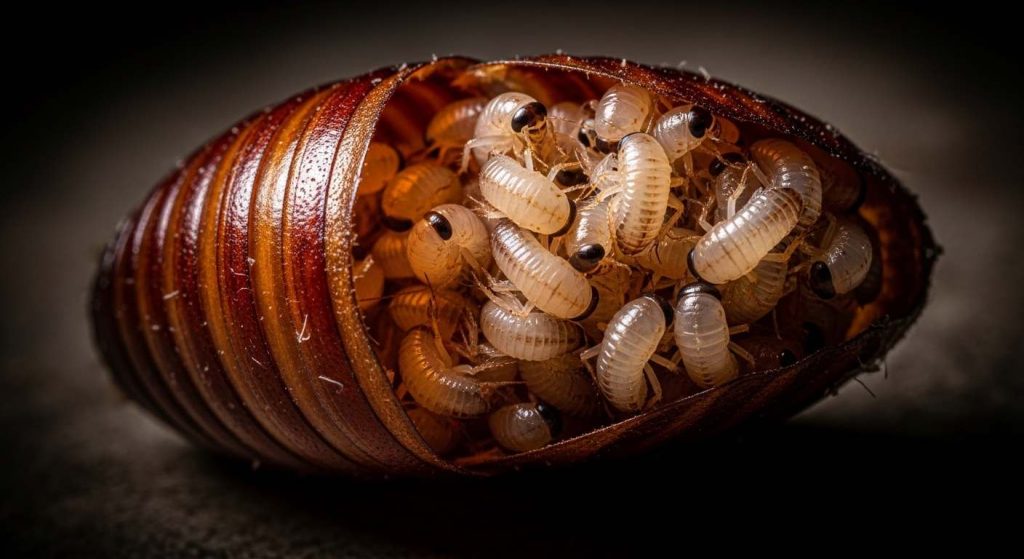
A single roach egg is not what most people picture. What looks like one “egg” is actually an egg case called an ootheca.
Each ootheca holds multiple eggs inside small individual chambers. Depending on the species, one roach eggs case contains anywhere from 14 to 48 eggs.
Every egg inside the capsule can hatch into one live nymph. That means one tiny egg case can release dozens of baby roaches into your home.
What Is an Ootheca? Understanding the roach Eggs Case
An ootheca is a small, pill-shaped capsule that a female roach produces. It belongs to the insect order Blattodea, which includes all roach species.
The female forms this protective casing using a protein substance that hardens like keratin. It shields the developing embryos from predators, dry air, and some pesticides.
Egg Case Structure and Components
Inside the ootheca, you will find separate compartments lined up in two rows. Each compartment holds one embryo that develops into a single nymph.
The internal partitions keep each egg safe and supplied with moisture. The protective casing stays intact until the nymphs are ready for emergence.
Most oothecae measure between 5 and 13 millimeters long. Color ranges from tan to dark reddish-brown depending on the species.
Egg Count by roach Species (Full Breakdown)
Not all roach species produce the same number of eggs per ootheca. The difference in roach egg capacity across species is significant.
Below is a species-by-species look at how many nymphs per egg case you can expect.
German roach (Blattella germanica)
The German roach is the highest-producing household species. Each ootheca holds 30 to 48 eggs, with an average of around 36.
A single female from the family Blattellidae can produce 4 to 8 oothecae in her lifetime. That adds up to roughly 200 to 300 offspring from one female alone.
German roaches also carry the egg case until just before hatching. This behavior boosts the hatching success rate and protects the brood.
American roach (Periplaneta americana)
The American roach belongs to the family Blattidae and produces fewer eggs per capsule. Each ootheca holds about 14 to 16 eggs.
However, one female can produce 6 to 14 egg cases over her reproductive lifespan. She deposits each ootheca in a warm, humid, protected crevice.
Oriental roach (Blatta orientalis)
The Oriental roach produces a dark, rounded ootheca with 16 to 18 eggs inside. Females create about 8 oothecae during their lifetime.
This species prefers cool, damp areas like basements and drains. The incubation duration lasts roughly 42 to 81 days before nymphs emerge.
Brown-Banded roach (Supella longipalpa)
Each brown-banded roach ootheca contains about 14 to 18 eggs. Females glue their egg cases to ceilings, furniture, and walls.
A single female can produce around 14 oothecae in her lifetime. That brings her total lifetime offspring count to roughly 200 or more nymphs.
Smoky Brown roach (Periplaneta fuliginosa)
The smoky brown roach produces an ootheca with 20 to 26 eggs on average. This outdoor species often enters homes through attic vents and gaps.
Females produce about 10 to 17 egg cases over their lives. The hatching period runs about 45 to 70 days.
Australian roach (Periplaneta australasiae)
The Australian roach ootheca holds roughly 20 to 24 eggs per capsule. Females hide their oothecae in moist, sheltered spots near food sources.
This species thrives in warm, subtropical climates. Each female can produce around 12 to 30 oothecae during her reproductive lifespan.
Species Egg Count Comparison Table
Species Eggs per Ootheca | Oothecae per Lifetime | Total Lifetime Offspring (Est.)
German roach 30–48 4–8 200–300+
American roach 14–16 6–14 120–200
Oriental roach 16–18 ~8 130–145
Brown-Banded roach 14–18 ~14 200+
Smoky Brown roach | 20–26 10–17 200–400+
Australian roach | 20–24 12–30 240–700+
The German roach has the highest egg count per single capsule. However, the Australian roach can produce more total offspring due to its higher ootheca production rate.
How Fast Can One Egg Case Grow Into an Infestation?
Roach population growth follows a pattern close to exponential growth. One single ootheca can trigger a serious colony expansion in weeks.
Take the German roach as an example of the roach multiplier effect. One female and her offspring can produce over 30,000 roaches in just one year.
This happens because nymphs reach reproductive maturity in about 50 to 60 days. Each new female then begins her own breeding cycle, causing geometric progression.
Early intervention is critical. The longer you wait, the harder population control becomes.
Factors That Affect roach Egg Count and Hatch Rate
Several environmental conditions influence roach fecundity and hatching success rate. Not every egg inside an ootheca will survive.
Temperature influence: Warm environments between 75°F and 85°F boost embryo development. Cold temperatures slow incubation and can reduce viability.
Humidity effects: roaches need moisture for healthy egg development. Dry conditions can cause non-viable eggs and lower the emergence percentage.
Nutritional factors: Well-fed females produce more oothecae with higher egg density. Poor nutrition reduces the ootheca production rate.
Female age: Younger females typically produce larger, more viable clutches. Fecundity declines as the female ages through her reproductive lifespan.
A typical hatch rate for healthy roach oothecae falls between 75% and 90%. Species variation and habitat quality also play a role.
Where Do Roaches Deposit Their Egg Cases?
Female roaches choose dark, protected egg case deposit sites near food and water. Knowing these spots helps you find and remove oothecae early.
Common locations include behind appliances like refrigerators and stoves. You will also find them inside walls, under sinks, and in dark corners.
Brown-banded roaches glue their oothecae to upper walls and ceilings. German roaches carry the case until hatching, then drop it in secure hiding spots.
Check warm, humid areas like bathroom cabinets and laundry rooms. Protected crevices near pipes and drains are also prime nymph emergence areas.
How to Identify and Remove roach Egg Cases (Checklist)
Use this simple checklist to find and deal with roach oothecae in your home.
Look for small, dark brown, pill-shaped capsules (5–13 mm long).
Check behind refrigerators, stoves, and dishwashers first.
Inspect under sinks, inside cabinets, and near plumbing gaps.
Examine cardboard boxes, paper bags, and pantry shelves.
Look along ceiling edges and upper walls for brown-banded species.
Crush or vacuum any oothecae you find immediately.
Seal the vacuum bag and dispose of it in an outdoor trash bin.
Apply an IGR (insect growth regulator) to prevent surviving nymphs from maturing.
Reduce moisture sources by fixing leaks and using dehumidifiers.
Schedule a professional inspection if you find three or more egg cases.
Safety note: Always wear gloves when handling roach egg cases. Roach debris can trigger allergies and asthma, especially in children, according to the
When to Call a Pest Professional
Finding even one ootheca suggests a breeding female is nearby. Pest management professionals can assess the full scope of an infestation.
Experts check hidden areas most homeowners miss, like inside walls and behind cabinets. They also use targeted treatments that address eggs, nymphs, and adults together.
Call a licensed exterminator if you see live roaches during the day. Daytime activity usually signals a large, established colony that needs professional population control strategies.
The University of Florida IFAS Extension provides detailed roach identification guides. Correct species identification matters because each species requires different control methods.
FAQs About roach Eggs
How many baby roaches come out of one egg case?
One roach ootheca releases 14 to 48 nymphs, depending on the species. German roach egg cases hold the most.
Do roach eggs hatch all at once?
Yes, nymphs usually emerge from the ootheca within a short window. The entire brood exits through a seam along the top of the capsule.
How long does it take roach eggs to hatch?
The incubation duration varies by species. Most oothecae hatch within 24 to 81 days, depending on temperature and humidity.
Can you kill roach eggs by stepping on them?
Crushing an ootheca can destroy the eggs inside. However, some eggs may survive, so dispose of crushed shells in a sealed bag.
How many egg cases does one roach produce?
A single female produces 4 to 30 oothecae during her lifetime. German roaches produce fewer cases but pack more eggs in each one.
What does a roach egg case look like?
An ootheca looks like a small, ridged, dark brown capsule. It resembles a tiny dried bean or purse about 5 to 13 millimeters long.
Where do roaches hide their eggs?
Females deposit oothecae behind appliances, inside wall cracks, and under sinks. They prefer warm, humid areas with nearby food sources.
Can one roach egg case start an infestation?
Yes. One ootheca can release up to 48 nymphs that reach maturity within weeks. Those nymphs then reproduce, causing a rapid population explosion.
Do roach eggs survive pesticide spray?
The hard ootheca casing protects eggs from many surface sprays. Insect growth regulators and professional treatments are more effective against egg cases.
Which roach species lays the most eggs?
The German roach (Blattella germanica) lays the most eggs per ootheca, at 30 to 48. It also has the fastest infestation growth rate among common household species.