

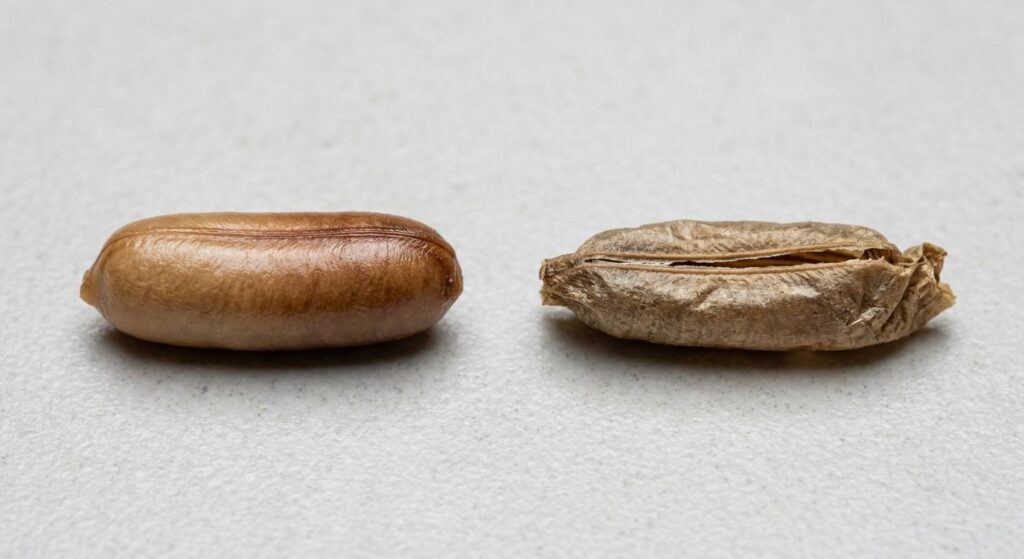
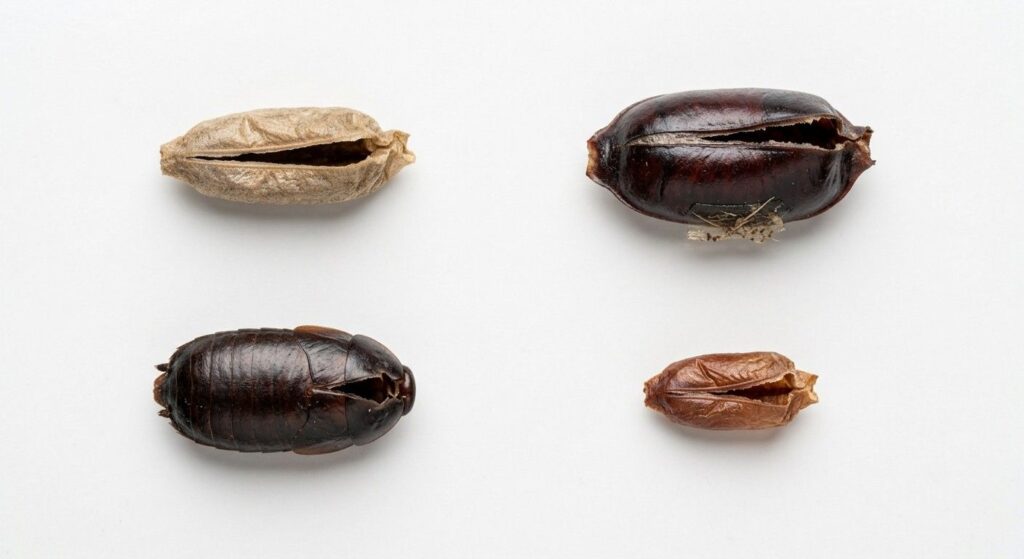
Hatched roach egg cases usually look split, hollow, flattened, collapsed, papery, or lighter than active egg cases. The clearest sign is an open seam along the long ridge of the ootheca, where baby roaches emerged from the capsule.
A full, unhatched roach egg case looks firm, plump, and sealed. A hatched roach egg case looks empty, dry, and sometimes partially crumpled. The case may still keep its capsule shape, but close inspection usually shows a split, gap, lifted edge, or opened keel along one side.
Finding a hatched roach egg case means the nymphs may already be active nearby. A single ootheca can release multiple baby roaches, so an empty case should be treated as evidence of recent or past reproduction, not harmless dirt.
Quick Answer: Signs of a Hatched Roach Egg Case
A hatched roach egg case is an empty ootheca that has already released nymphs. It often looks like a small brown capsule that has opened, dried, or collapsed.
Look for these signs:
- Split seam: the long ridge or keel is open or separated.
- Flattened body: the capsule looks less swollen than a full egg case.
- Hollow inside: the case feels empty or lightweight.
- Papery texture: the shell may look dry, brittle, or translucent.
- Lighter color: some empty cases fade or look dull after hatching.
- Crumpled edges: one side may look bent, crushed, or partially peeled.
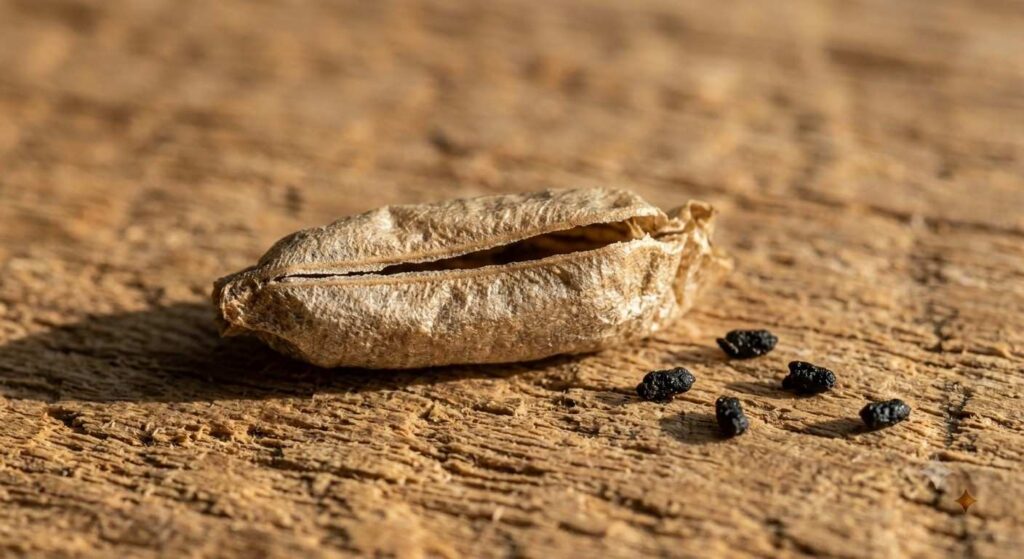
- Nymph evidence nearby: tiny baby roaches, shed skins, or black droppings may appear close to the case.
For general ootheca identification, see our guide on what roach eggs look like.
Hatched Roach Egg Case vs Unhatched Egg Case
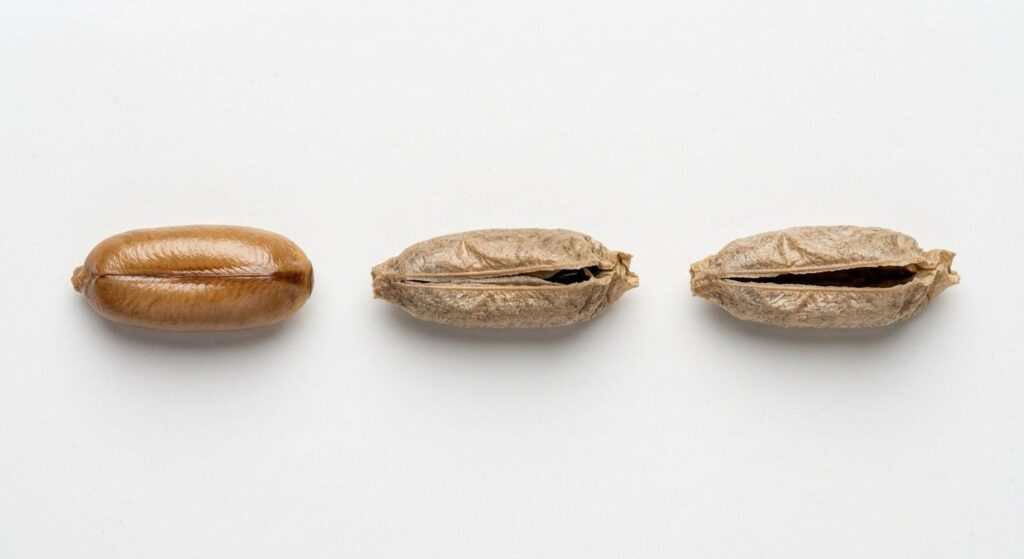
The difference between a hatched and unhatched roach egg case is the condition of the seam, body shape, and internal fullness. An unhatched ootheca is sealed and full. A hatched ootheca is opened and empty.
| Feature | Unhatched Roach Egg Case | Hatched Roach Egg Case |
|---|---|---|
| Seam / keel | Closed, tight, intact | Split, lifted, opened, or separated |
| Shape | Plump, firm, full, capsule-like | Flattened, hollow, collapsed, or crumpled |
| Texture | Leathery, firm, resistant | Dry, brittle, papery, lightweight |
| Color | Tan, brown, reddish-brown, or dark brown | Often duller, lighter, darker, or more translucent depending on age and species |
| Weight | Feels more solid if handled | Feels empty or fragile |
| Meaning | Embryos may still be developing | Nymphs likely already emerged |
| Next step | Remove and destroy intact | Remove and inspect for baby roaches nearby |
The seam is the most reliable visual clue. Color can vary by species and age, but a split ridge usually means the egg case has opened.
What Is a Roach Egg Case?
A roach egg case is called an ootheca. The ootheca is a protective capsule that holds multiple developing cockroach embryos inside.
Cockroaches do not usually scatter loose individual eggs around the house. Instead, the female produces a capsule that protects the eggs from drying out, disturbance, and many surface treatments. This is why finding one small case can represent many developing roaches.
The University of Florida IFAS Extension explains that cockroach eggs are deposited in groups inside a leathery case or capsule called an ootheca. The same guide notes that German cockroach oothecae may contain 30–48 eggs, while other cockroach capsules may contain 10–28 eggs University of Florida IFAS.
For a complete biology overview, read what are roach eggs?
Why Hatched Roach Egg Cases Split Open
Hatched roach egg cases split because the developing nymphs push through the ootheca seam when they are ready to emerge. The seam acts like an exit line along the capsule.
On many egg cases, this seam is visible as a ridge or keel. When the ootheca is active and sealed, the ridge looks tight. After hatch, the ridge may show a narrow opening, lifted line, cracked edge, or separated flap.
University of Florida IFAS describes German cockroach nymphs emerging from the ootheca and notes that nymphs may hatch while the female is still carrying the egg case UF IFAS German cockroach profile. This is why some German roach egg cases are never found loose until after hatch or near hatch.
What Color Are Hatched Roach Egg Cases?
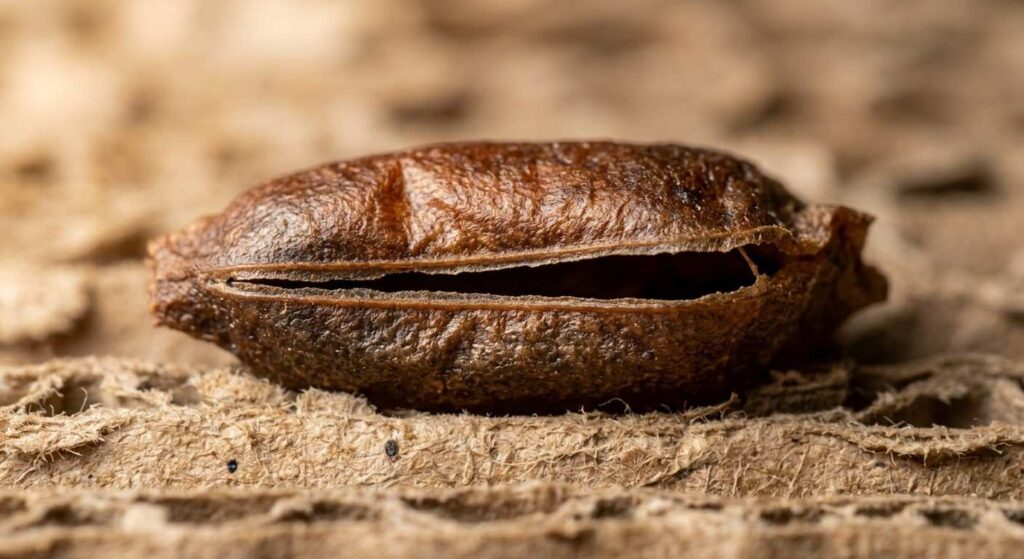
Hatched roach egg cases can be tan, brown, reddish-brown, dark brown, or almost black, depending on the cockroach species and how old the case is. Color alone cannot confirm whether the case is hatched.
A hatched case may look:
- Lighter and faded
- Duller than a fresh case
- More translucent or papery
- Darkened with age, dust, or moisture
- Split along the seam even if the color still looks normal
Do not rely only on color. A dark ootheca is not automatically hatched, and a light ootheca is not automatically active. The seam and body shape matter more.
What Shape Are Hatched Roach Egg Cases?
Hatched roach egg cases often keep a capsule-like shape, but they lose the firm, full appearance of an active case. The body may look flattened, sunken, dented, or open along one edge.
Common hatched ootheca shapes include:
- Small empty capsule
- Flattened bean
- Split purse
- Crumpled pill case
- Hollow ridged shell
- Dry brown husk
If the object is a tiny black dot, it is probably not an egg case. Black dots are more often roach droppings. For that comparison, read Are black dots roach eggs or poop?
What Does a Hatched German Roach Egg Case Look Like?
A hatched German roach egg case usually looks like a small light-brown or tan capsule with a split seam, flattened body, and hollow interior. German cockroach oothecae are commonly about 8 mm long and contain dozens of eggs.
Rutgers NJAES states that German cockroach eggs are carried in an ootheca by the female until just before hatching. A typical German cockroach egg case contains about 40 eggs and measures about 8 mm by 3 mm by 2 mm Rutgers NJAES.
Because German cockroach females carry the ootheca until close to hatch, a loose German ootheca may be close to hatching, recently hatched, or detached under stress. If the case is split and empty, inspect the surrounding area for first-instar nymphs.
Common places to find hatched German roach egg cases include:
- Cabinet hinges
- Drawer tracks
- Behind refrigerators
- Beside stoves
- Under kitchen sinks
- Around dishwasher edges
- Behind bathroom plumbing
- Inside cracks near food and water
For more species-specific detail, use our German roach eggs guide.
What Does a Hatched American Roach Egg Case Look Like?
A hatched American roach egg case usually looks like a dark brown or reddish-brown purse-shaped capsule with an opened seam and empty interior. American cockroach egg cases are commonly found in damp, protected areas.
University of Florida IFAS states that American cockroach females deposit a hardened purse-shaped ootheca near food and may glue it to a surface. The egg case contains about 16 eggs, is brown when deposited, turns black in a day or two, and is about 8 mm long and 5 mm high UF IFAS American cockroach profile.
A hatched American roach ootheca may remain attached to the surface where it was glued. If you find a dark capsule stuck near a basement drain, utility room, pipe chase, crawl space, or damp cabinet, inspect the seam before deciding whether it is still active.
What Does a Hatched Oriental Roach Egg Case Look Like?
A hatched Oriental roach egg case usually looks dark brown to nearly black, slightly inflated or capsule-shaped, and split or emptied along the seam. Because Oriental roach oothecae are naturally dark, they are often mistaken for dirt, seeds, or large droppings.
The key difference is shape. Oriental roach egg cases are still capsule-like, not pepper-like or pellet-like. A hatched case may look dry, hollow, or broken along the edge.
Common locations include:
- Damp basements
- Crawl spaces
- Drain areas
- Floor-wall junctions
- Moist storage corners
- Utility rooms
- Outdoor-to-indoor entry points
If a dark egg case is found in a damp location, inspect for live roaches, nymphs, and additional oothecae nearby.
What Does a Hatched Brown-Banded Roach Egg Case Look Like?
A hatched brown-banded roach egg case usually looks like a small reddish-brown capsule with a split seam and dry shell. Brown-banded oothecae are smaller than many other household roach egg cases, often around 5 mm long.
Brown-banded roaches place egg cases in warmer, drier, higher locations than German or Oriental roaches. A hatched case may appear attached to furniture, upper walls, ceilings, closets, electronics, picture frames, or cabinet tops.
Check these places:
- Behind picture frames
- Inside furniture joints
- Along ceiling corners
- In closets
- Behind wall decor
- Inside electronics
- Under shelves
- Near warm upper-wall areas
A small dry capsule in a high location should not be ignored. It may mean nymphs already emerged and dispersed into nearby cracks.
Freshly Hatched vs Old Empty Roach Egg Cases
A freshly hatched roach egg case and an old empty egg case can look similar, but the surrounding evidence helps separate them.
| Feature | Freshly Hatched Case | Old Empty Case |
|---|---|---|
| Shell condition | Split but still recognizable | Brittle, dusty, faded, or partly broken |
| Nearby nymphs | More likely present | May be absent or already dispersed |
| Droppings nearby | May be fresh and dark | May be mixed with old debris |
| Case attachment | May still be attached or recently dropped | May be loose, dry, or stuck with dust |
| Infestation meaning | Recent reproduction likely | Past reproduction possible, but still inspect |
Even an old empty case matters because it proves roaches reproduced at some point in that location. If droppings, live nymphs, or additional cases are also present, treat the area as active.
Dead, Dried, or Failed Egg Case vs Hatched Egg Case
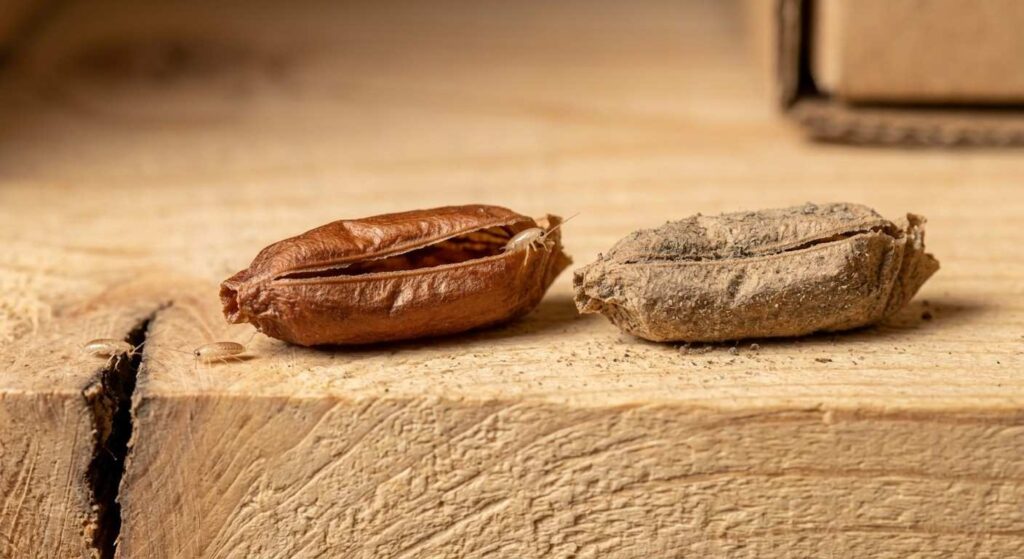
A dry or dead egg case is not always hatched. Some oothecae dry out, fail, or are abandoned before nymphs emerge. The best clue is the seam.
A failed or dead ootheca may look:
- Shriveled but still sealed
- Dried but not split
- Darkened or moldy
- Crushed without a clean hatch seam
- Detached too early from a German cockroach female
A hatched ootheca usually shows:
- A clear opening along the seam
- A hollow interior
- A split or lifted ridge
- Tiny nymphs, skins, or droppings nearby
Rutgers NJAES notes that if a German cockroach egg case is detached from the female, it typically will not hatch unless it is within one to two days from hatching Rutgers NJAES. This means a detached German ootheca can be active, failed, or hatched depending on timing and seam condition.
Where Are Hatched Roach Egg Cases Usually Found?
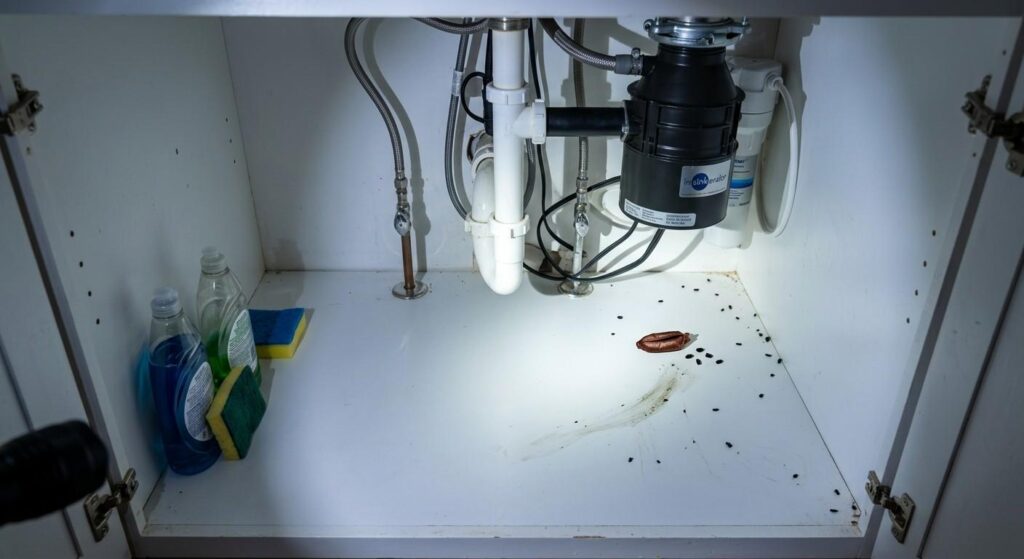
Hatched roach egg cases are usually found in protected places where nymphs can survive immediately after emergence. These areas are dark, tight, warm, and close to food or moisture.
Search these areas:
- Behind refrigerators and stoves
- Under kitchen sinks
- Inside cabinet corners
- Around cabinet hinges
- Behind dishwashers
- Under bathroom sinks
- Behind toilets
- Near pipe gaps
- Inside cardboard boxes
- Along baseboards
- Behind loose trim
- In basement corners
- Around laundry rooms
- Inside furniture and electronics for brown-banded roaches
For kitchen inspections, use our guide on how to find cockroach eggs in the kitchen.
What Baby Roaches Near a Hatched Egg Case Look Like
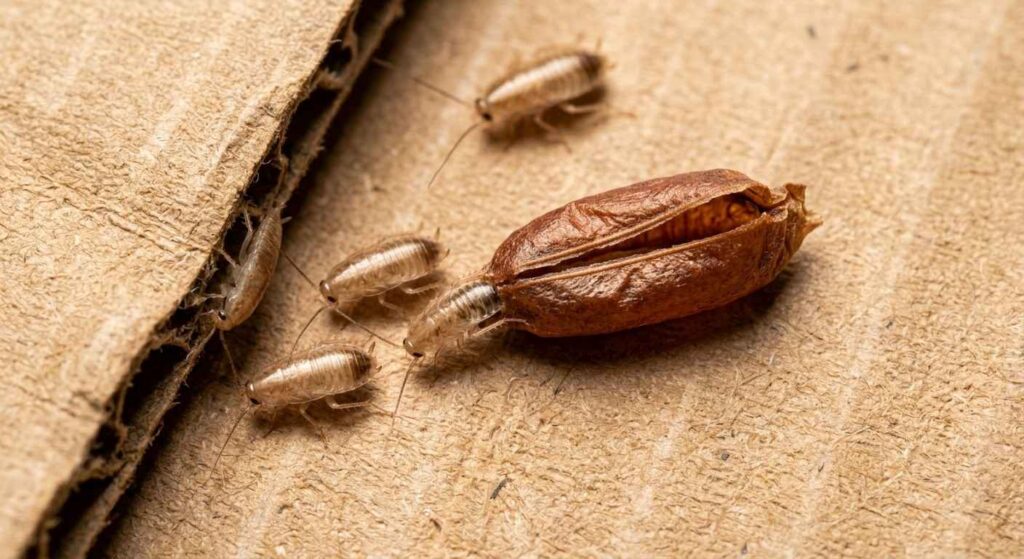
Baby roaches near a hatched egg case are called nymphs. Newly emerged nymphs are small, wingless, and may look pale at first before darkening.
University of Florida IFAS explains that German cockroach nymphs begin at egg hatch and do not have wings. Nymphs darken and continue through multiple molts before adulthood UF IFAS German cockroach profile.
Look for:
- Tiny roach-shaped insects
- Pale or light nymphs immediately after hatch
- Darker small nymphs nearby after several hours or days
- No wings
- Fast movement into cracks
- Small black droppings nearby
- Shed skins as nymphs grow
If you see baby roaches in the same area as a split ootheca, assume the case hatched recently.
Are Hatched Roach Egg Cases Dangerous?
A hatched roach egg case is not dangerous because it will hatch again. It is dangerous because it means baby roaches may already be present nearby.
A single empty ootheca can indicate:
- Recent reproduction
- Hidden nymphs in cracks
- A breeding female nearby
- More egg cases in the same harborage
- A growing infestation if no control steps are taken
Roach infestations can also create health concerns. Rutgers NJAES notes that German cockroach feces, shed skins, and dead bodies contain allergens that can trigger asthma Rutgers NJAES. Cleaning and control should address droppings, shed skins, egg cases, and live roaches together.
Should You Remove Hatched Roach Egg Cases?
Yes. You should remove hatched roach egg cases because they confirm a breeding site and can hide in the same areas where live roaches and nymphs are active.
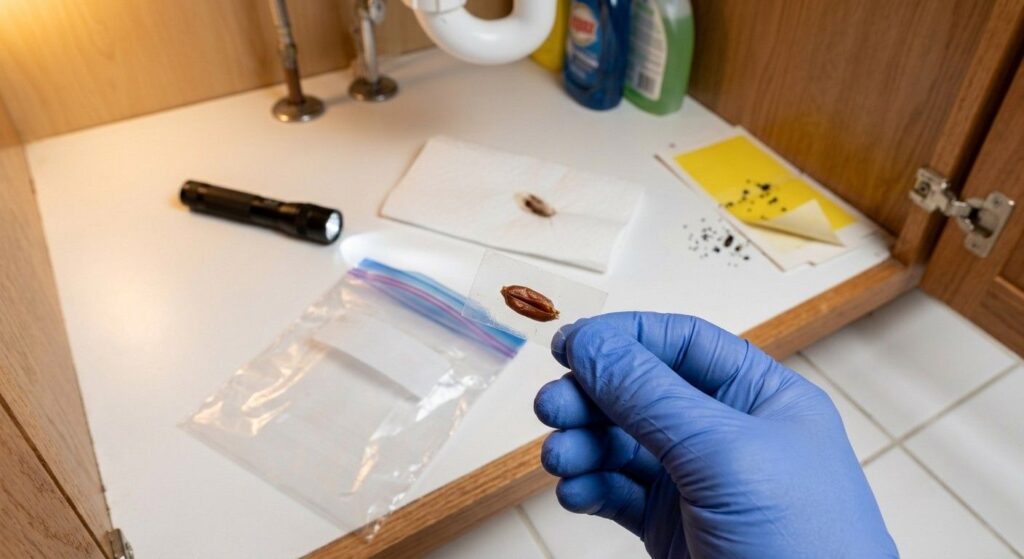
Use this removal process:
- Put on gloves. Avoid handling oothecae with bare hands.
- Photograph the case first. This helps identify species and location patterns.
- Pick it up with tape, a paper towel, or tweezers.
- Seal it in a plastic bag. Include nearby debris if possible.
- Dispose of it outdoors. Do not leave it in an indoor trash can.
- Vacuum nearby cracks and crevices. Use a HEPA filter vacuum if available.
- Wipe the area with hot, soapy water. Remove droppings and pheromone trails.
- Place sticky monitors nearby. Confirm whether nymphs or adults remain active.
Removing the empty case is only the first step. You still need to inspect for live nymphs, hidden adults, and additional oothecae.
What to Do After Finding a Hatched Roach Egg Case
After finding a hatched roach egg case, inspect and treat the area as a possible active breeding zone. Do not assume the problem is over because the case is empty.
Follow this action plan:
- Inspect the surrounding 6–10 feet. Focus on cracks, appliances, plumbing, cabinets, and cardboard.
- Look for nymphs. Baby roaches often stay near food and water.
- Check for more egg cases. One ootheca may not be the only one.
- Clean droppings and shed skins. Remove allergens and aggregation cues.
- Remove food residue. Clean grease, crumbs, pet food, and garbage areas.
- Fix moisture. Repair leaks, condensation, and standing water.
- Seal cracks. Reduce hiding places along baseboards and plumbing lines.
- Use sticky traps. Place monitors near suspected harborages.
- Use baits and IGRs where appropriate. Target the lifecycle, not just visible adults.
- Repeat inspections weekly. Hidden cases may continue to hatch.
For egg-stage treatment options, read what kills roaches and their eggs.
Can an Empty Roach Egg Case Still Have Eggs Inside?
An empty roach egg case usually does not still contain viable eggs if the seam is clearly split and the case is hollow. However, a damaged or dried ootheca can be confusing if it is crushed or partly sealed.
Use these checks:
- Split seam + hollow body: likely hatched.
- Closed seam + firm body: possibly unhatched.
- Closed seam + dry shriveled body: possibly dead or failed.
- Crushed case with no visible seam: uncertain; remove and inspect nearby.
- Capsule with tiny nymphs nearby: likely recently hatched.
When in doubt, remove the case as if it could still contain eggs and inspect the surrounding area as if nymphs may already be present.
Can You Crush a Hatched Roach Egg Case?
You can crush a confirmed empty case, but it is better to remove and seal it instead. Crushing unidentified oothecae into a surface can spread debris and make identification harder.
Use tape, a paper towel, tweezers, or a vacuum instead. Seal the case in a bag and dispose of it outdoors. Then clean the area.
If the case is unhatched, crushing may kill embryos, but it can also smear debris into cracks. Removal and sealed disposal is cleaner and safer.
Hatched Roach Egg Cases vs Roach Droppings
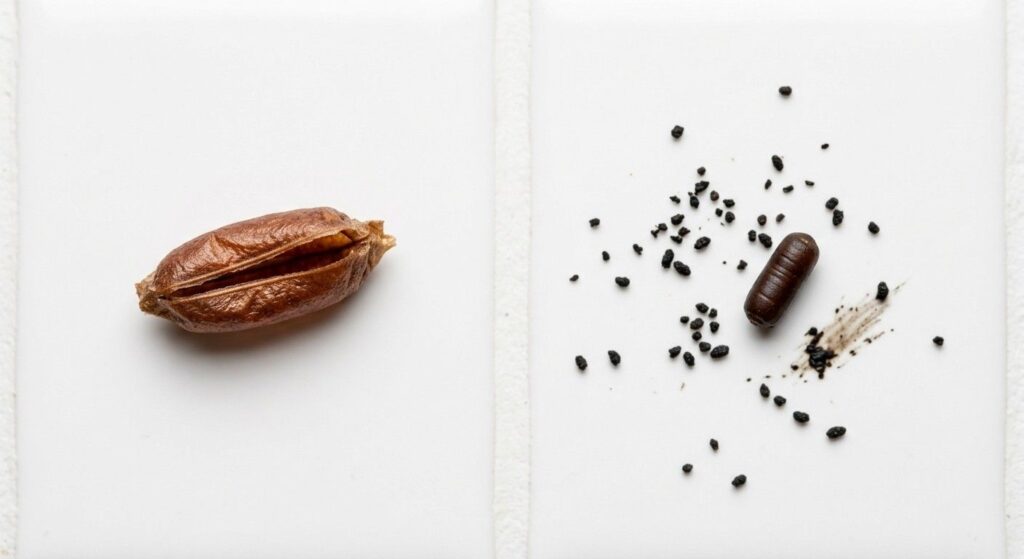
Hatched egg cases and roach droppings are often confused because both can be brown or dark. The shape is the fastest difference.
A hatched roach egg case is a capsule-shaped shell. Roach droppings are specks, pellets, stains, or smears.
| Feature | Hatched Egg Case | Roach Droppings |
|---|---|---|
| Shape | Hollow capsule, split purse, empty bean | Specks, pellets, smears, stains |
| Size | Several millimeters long | Tiny specks or small pellets |
| Texture | Dry shell or papery case | Crumbly, grainy, or smearable |
| Meaning | Nymphs likely emerged | Roaches are feeding and traveling nearby |
| Location | Hidden egg placement site | Travel paths and harborages |
For the full comparison, read roach eggs vs roach droppings.
Hatched Roach Egg Cases vs Carpet Beetle Shells
Hatched roach egg cases can also be mistaken for carpet beetle larvae shells. Roach egg cases are smooth capsules. Carpet beetle shells are hairy, bristly, hollow larval skins.
A carpet beetle larvae shell usually has visible hairs, segments, and a worm-like or carrot-shaped outline. A roach ootheca has a capsule shape and a seam.
If you found a fuzzy or bristly husk near wool, rugs, pet hair, or lint, compare it with our guide on roach eggs vs carpet beetle larvae shells.
Common Mistakes When Identifying Hatched Roach Egg Cases
Misidentification happens because many small brown household objects look similar. Seeds, droppings, beetle shells, pantry pest cases, and old roach egg cases can all look like debris.
Mistake 1: Assuming an Empty Case Means the Infestation Is Gone
An empty case means the egg case already released nymphs or is no longer viable. It does not mean the infestation ended. Check nearby cracks for baby roaches.
Mistake 2: Judging Only by Color
Color varies by species and age. A dark case can be active, hatched, or old. The seam and body fullness are more reliable.
Mistake 3: Ignoring Tiny Nymphs Nearby
Newly hatched nymphs are small and can hide quickly. Use a flashlight and inspect crevices near the case.
Mistake 4: Cleaning Without Monitoring
Cleaning removes evidence, but sticky monitors help confirm whether roaches are still active after cleanup.
Mistake 5: Treating Only Adults
Roach control fails when it only kills visible adults. A life cycle approach must target adults, nymphs, food, water, harborages, and future hatch cycles.
Final Verdict: What Do Hatched Roach Egg Cases Look Like?
Hatched roach egg cases look like empty, split, dry, and often flattened versions of active oothecae. The strongest visual clue is an open seam along the long ridge of the capsule. The case may also look hollow, papery, crumpled, lighter, or brittle.
An unhatched case looks plump, firm, and sealed. A hatched case looks opened, hollow, and less full.
If you find a hatched egg case, remove it, clean the area, inspect for tiny nymphs, place sticky monitors, and check nearby cracks for additional oothecae. One empty case can mean dozens of baby roaches have already entered the hiding spaces around it.
Frequently Asked Questions
What does an empty roach egg case look like?
An empty roach egg case usually looks split along the seam, hollow, flattened, dry, papery, or collapsed. It may still look like a small brown capsule, but the open ridge shows that nymphs likely emerged.
How do I know if a roach egg case has hatched?
A roach egg case has likely hatched if the long seam is open, the shell feels empty, the body looks flattened, and tiny roach nymphs or droppings are nearby.
Are hatched roach egg cases black?
Some hatched or old roach egg cases can look very dark, especially from species with naturally dark oothecae or from age and moisture. Most are brown, reddish-brown, or dark brown. Shape and seam condition matter more than color.
Can a hatched roach egg case still release roaches?
No. A truly hatched and empty case will not release more roaches. The concern is that the nymphs may already be hiding nearby.
Should I throw away a hatched roach egg case?
Yes. Pick it up with gloves, tape, a paper towel, or tweezers, seal it in a plastic bag, and dispose of it outdoors. Then inspect and clean the surrounding area.
What does an unhatched roach egg case look like?
An unhatched roach egg case looks plump, firm, sealed, and capsule-shaped. The seam or keel should appear tight and closed rather than split or lifted.
Where do roaches leave hatched egg cases?
Roaches leave hatched egg cases in hidden, protected areas such as cabinet corners, under sinks, behind appliances, around plumbing gaps, inside cardboard, along baseboards, and inside furniture or electronics, depending on the species.
Do German roach egg cases look different after hatching?
Yes. A hatched German roach egg case may look lighter, flatter, drier, and split along the seam. Because German females carry their ootheca until near hatch, loose cases should always be inspected carefully.
What should I do if I find baby roaches near an empty egg case?
Finding baby roaches near an empty egg case suggests recent hatching. Vacuum and clean the area, remove food and water sources, place sticky monitors, and begin a roach control plan using baits, sanitation, and crack-and-crevice treatment where appropriate.
Is one hatched roach egg case a serious problem?
Yes, it can be serious. One hatched ootheca can imply multiple nymphs have already emerged. Inspect nearby hiding places and monitor for additional activity before assuming it was isolated.