

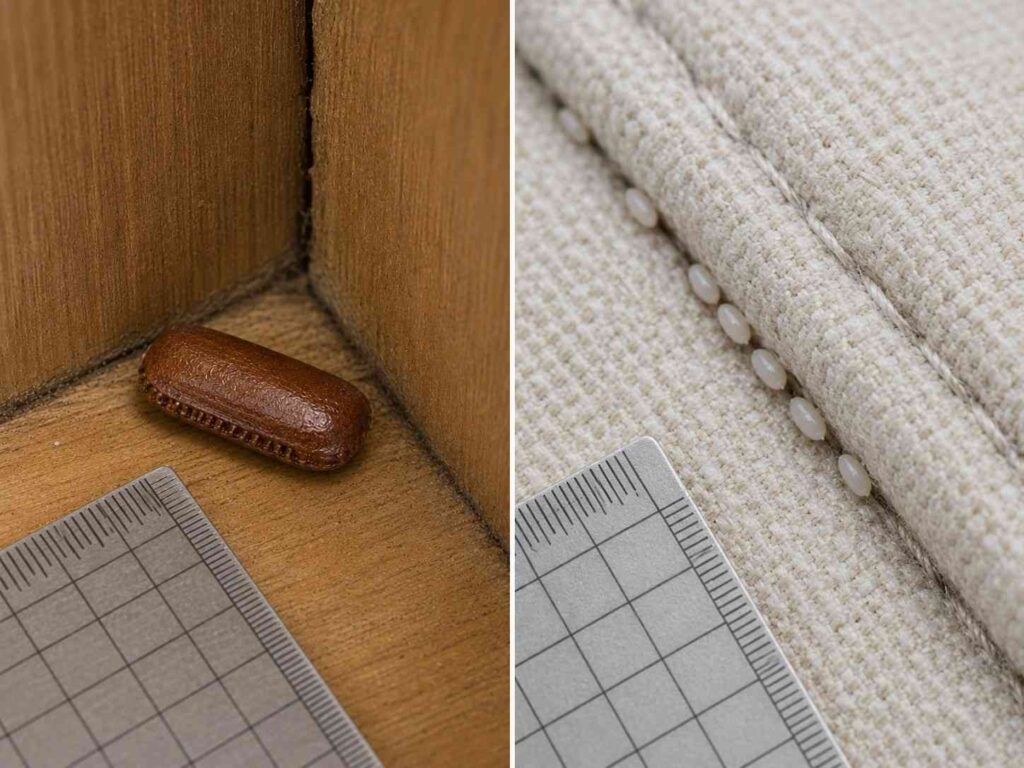
Roach eggs and bed bug eggs look different in size, color, structure, and hiding location. Roach “eggs” are usually brown capsule-shaped egg cases called oothecae, while bed bug eggs are tiny white or pale-yellow individual eggs glued into cracks near beds, furniture, and sleeping areas.
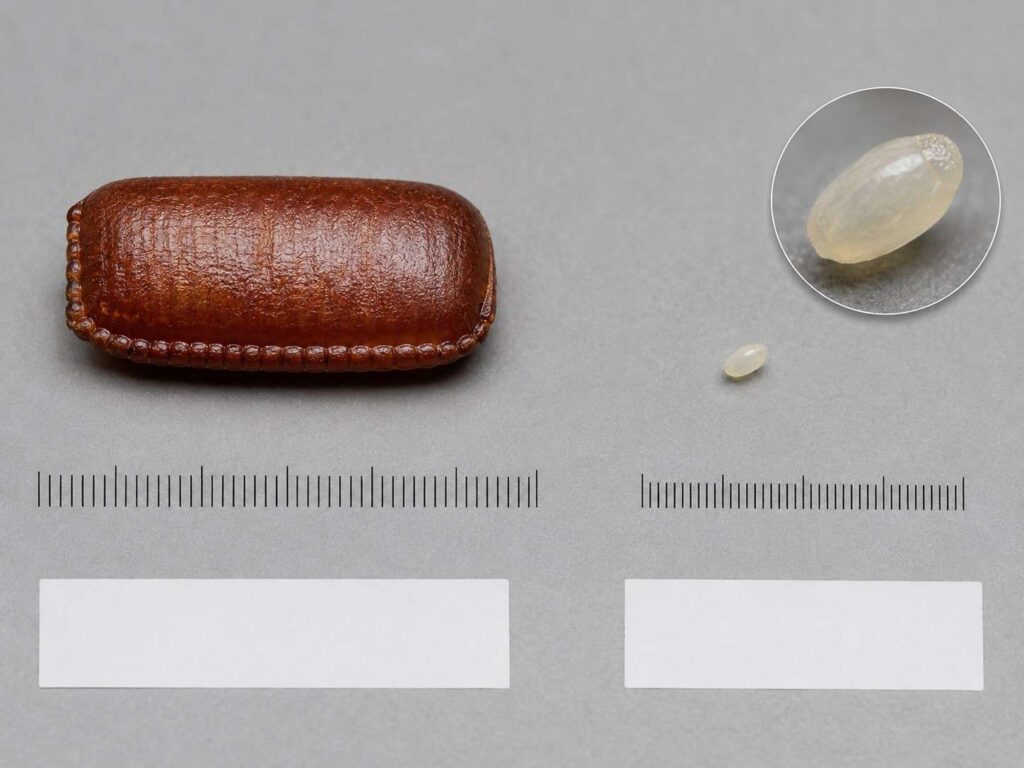
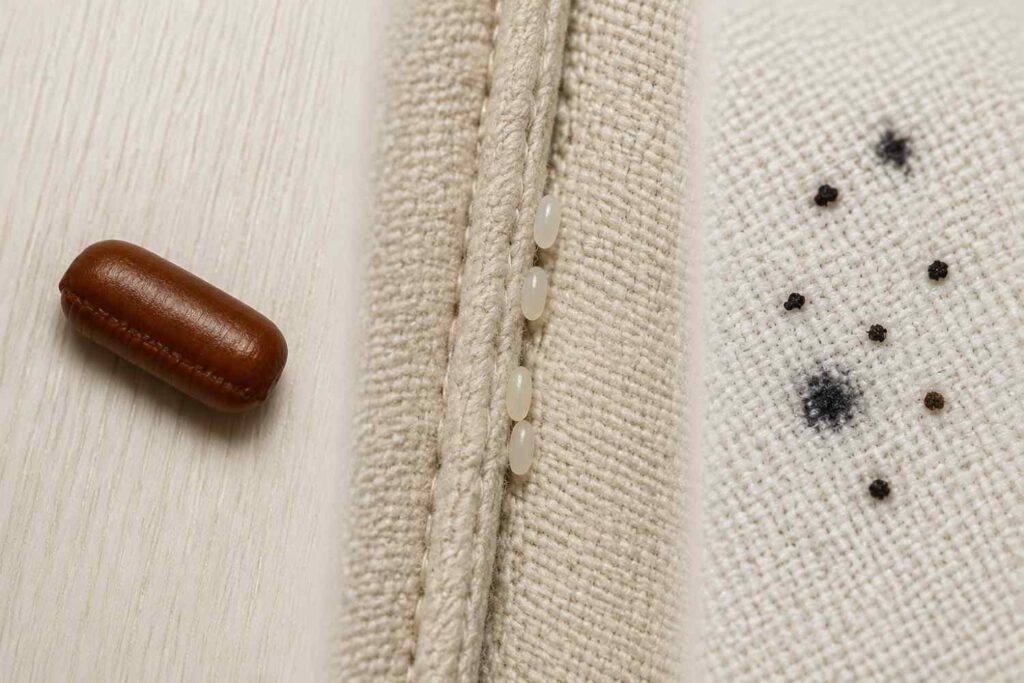
The easiest way to tell them apart is size. A roach egg case usually measures about 5–10 mm long, depending on the species. A bed bug egg is much smaller, usually about 1 mm long. Roach egg cases look like small brown purses, beans, or capsules. Bed bug eggs look like tiny pale grains, pinheads, or pearly specks.
Correct identification matters because a roach ootheca can hold multiple developing roaches, while each bed bug egg holds one developing bed bug. If you are not sure what you found, compare the object’s size, color, shape, texture, and location before choosing a treatment method.
Quick Comparison: Roach Eggs vs Bed Bug Eggs
| Feature | Roach Eggs / Oothecae | Bed Bug Eggs |
| Main structure | Protective egg case called an ootheca | Individual egg |
| Size | Usually 5–10 mm long | About 1 mm long |
| Color | Tan, brown, reddish-brown, dark brown, or blackish | White, pearl-white, or pale yellow |
| Shape | Capsule-shaped, purse-shaped, bean-shaped, or pill-like | Oval, pear-shaped, or tiny grain-like |
| Texture | Leathery, firm, sometimes ridged with a seam | Smooth, sticky, and very small |
| Egg count | One case can contain 10–50 eggs depending on species | One egg contains one bed bug embryo |
| Common locations | Kitchens, bathrooms, basements, cabinets, appliance gaps, drains, cardboard | Mattress seams, box springs, bed frames, headboards, furniture cracks, baseboards |
| Visibility | Visible to the naked eye | Visible, but hard to spot without strong light or magnification |
| Best first action | Identify the species and remove the ootheca safely | Inspect sleeping areas and confirm other bed bug signs |
For a full visual guide to cockroach egg cases, see our guide on what roach eggs look like.
Roach Eggs Are Usually Oothecae, Not Loose Eggs
Roach eggs are usually found inside a hardened protective capsule called an ootheca. A cockroach ootheca is a small egg case that protects multiple embryos from drying out, predators, and many surface treatments.
Most people use the phrase “roach eggs” to describe the ootheca itself. You usually will not find loose individual cockroach eggs scattered across a floor or mattress. Instead, you may find one small brown capsule that contains many eggs inside.
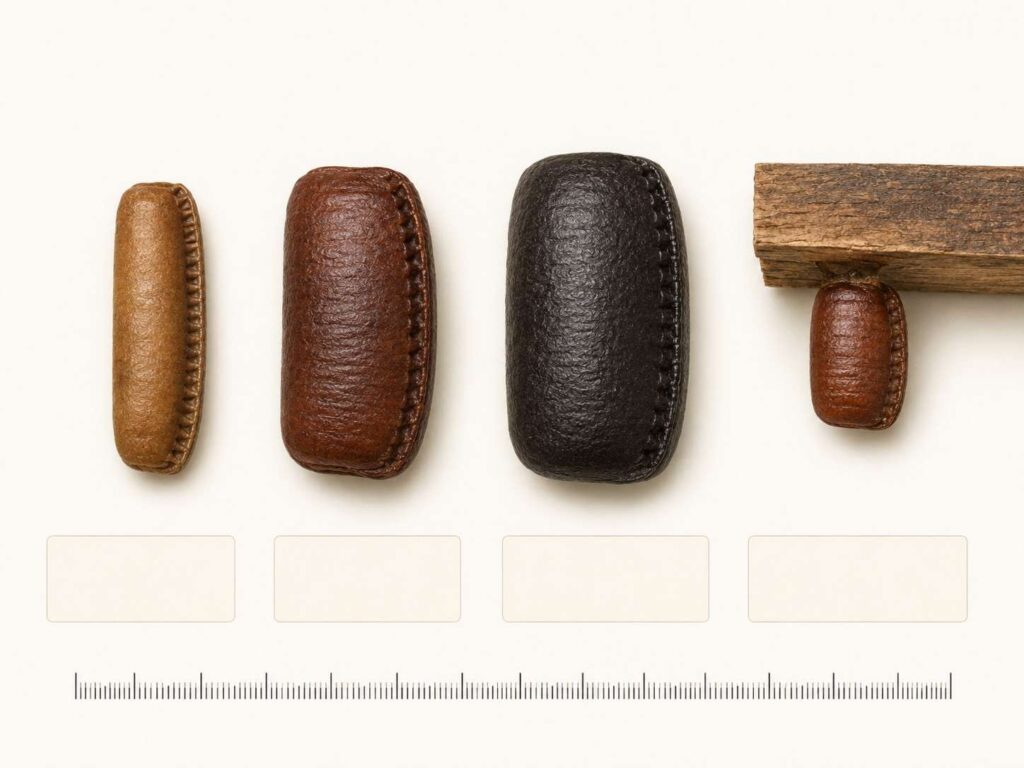
Different cockroach species produce different oothecae. German cockroach egg cases are usually light tan to brown and commonly measure about 6–9 mm. American cockroach egg cases are usually darker reddish-brown and close to 8 mm. Oriental cockroach egg cases are often very dark brown to black, while brown-banded cockroach egg cases are smaller and often attached to furniture or elevated surfaces.
If you need the biology behind the egg case, read our complete guide on what roach eggs are.
Bed Bug Eggs Are Tiny White Individual Eggs
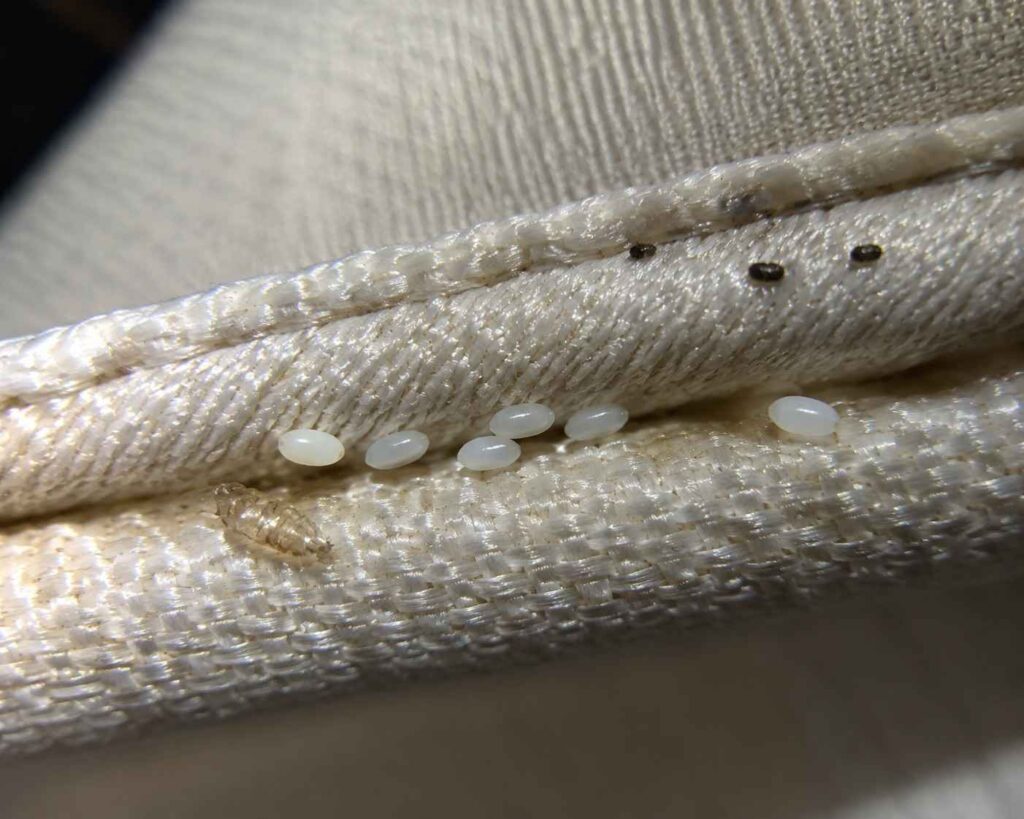
Bed bug eggs are tiny individual eggs, not large multi-egg capsules. The U.S. Environmental Protection Agency describes bed bug eggs and eggshells as tiny, about 1 mm, and pale; the same EPA guide notes that bed bugs commonly hide near mattress piping, seams, tags, bed frames, and headboards.
Penn State Extension describes bed bug eggs as white, oval-shaped, and approximately 1/16 inch long, commonly laid in cracks and crevices in walls, floors, beds, and furniture. West Virginia University Extension also describes bed bug eggs as white, pear-shaped, and about the size of a pinhead, with clusters laid in crevices.
A bed bug egg is much harder to spot than a roach ootheca because it is small, pale, and often glued into fabric seams or wood joints. If you find white specks in a mattress seam, inspect nearby for dark fecal spots, shed skins, live bed bugs, or reddish stains before deciding it is definitely a bed bug egg.
Size Difference: Roach Egg Cases Are Much Larger
Size is the fastest way to separate roach eggs from bed bug eggs. A roach egg case is usually several times larger than a bed bug egg.
A typical cockroach ootheca measures about 5–10 mm long. On your fingers, it may look like a small brown rice grain, tiny bean, seed, or capsule. German cockroach egg cases are commonly around 6–9 mm, while American and Oriental cockroach egg cases are often closer to 8–10 mm.
A bed bug egg is about 1 mm long. It may look like a tiny pale dot, a pinhead, or a small grain of salt. You can see it with the naked eye, but it is easy to miss on light fabric, pale wood, or dusty seams.
Simple Size Rule
If the object is brown and about the size of a small bean or capsule, it is more likely a roach egg case. If the object is white or pale and about the size of a pinhead, it is more likely a bed bug egg.
Color Difference: Roach Eggs Are Brown, Bed Bug Eggs Are Pale
Color is the second major difference between roach eggs and bed bug eggs. Roach egg cases are usually tan, brown, reddish-brown, dark brown, or blackish. Bed bug eggs are usually white, pearl-white, or pale yellow.
Fresh German roach oothecae may look light tan or amber. American roach oothecae often look reddish-brown and may darken with age. Oriental roach oothecae may appear very dark brown or nearly black. Brown-banded roach oothecae are usually small and light reddish-brown.
Bed bug eggs usually remain pale. They may look white, off-white, translucent, or pale yellow, especially when attached to a light-colored mattress seam or bed frame crack.
Do not rely on color alone. Dust, age, lighting, and surface material can change how an egg looks. Use color together with size, shape, and location.
Shape Difference: Roach Egg Cases Look Like Capsules
Roach egg cases look like tiny capsules, purses, beans, or flattened pills. Many have a visible seam or ridge along one side where the young roaches emerge after hatching.
Bed bug eggs look more like tiny oval grains or pear-shaped specks. They do not have the same large capsule structure because each bed bug egg is a single egg rather than a multi-egg case.
A cockroach ootheca also has a firmer, leathery appearance. Bed bug eggs are smoother and much smaller. Under magnification, bed bug eggs may show a tiny cap-like end where the nymph emerges.
Location Difference: Roaches Prefer Food, Water, Warmth, and Shelter
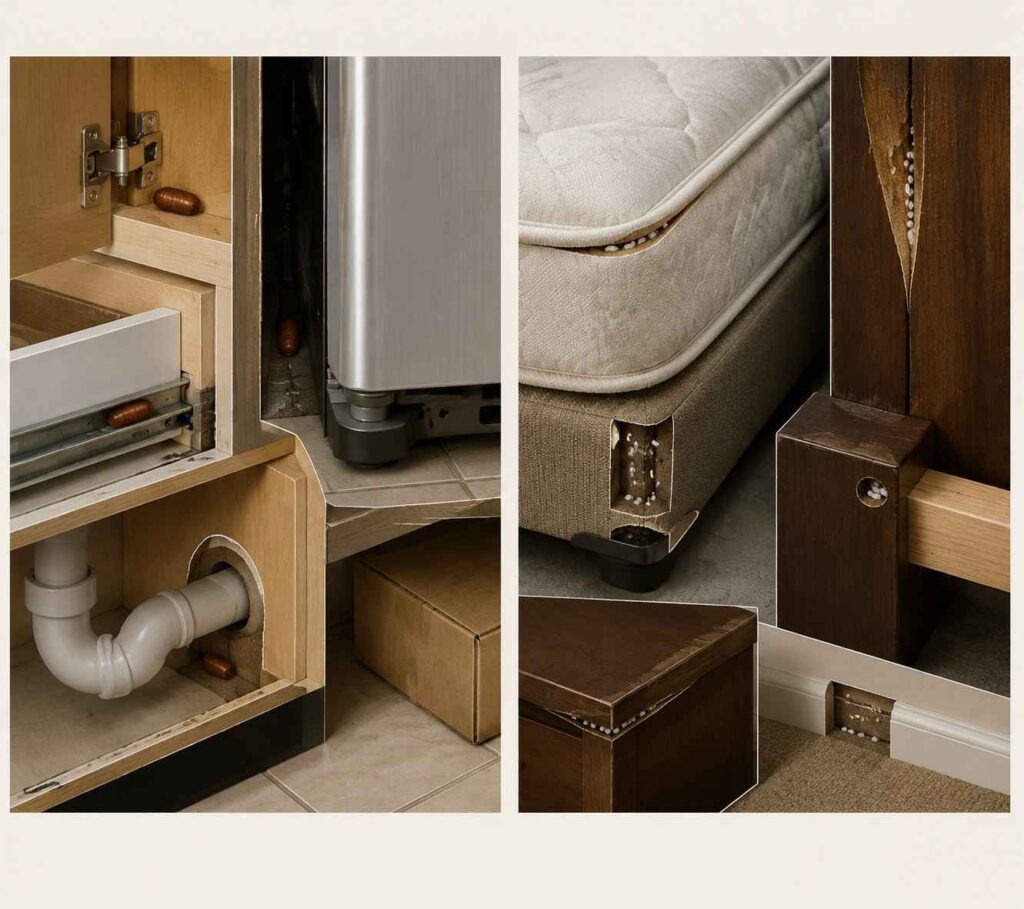
Roach egg cases are usually found near food, water, warmth, and dark shelter. Kitchens and bathrooms are the most common indoor inspection zones because roaches need moisture and food access.
Check these areas first for roach egg cases:
- Behind refrigerators, stoves, and dishwashers
- Under kitchen sinks and bathroom sinks
- Inside cabinet corners, hinges, and drawer tracks
- Behind microwaves, coffee makers, and small appliances
- Along baseboards, wall cracks, and pipe gaps
- Inside cardboard boxes, paper bags, and cluttered storage
- Near drains, basement corners, laundry areas, and crawl spaces
German cockroach egg activity is especially common in kitchens and bathrooms. Rutgers NJAES explains that German cockroach females carry an ootheca until just before hatch, and a typical egg case contains about 40 eggs. That carrying behavior means you may see a pregnant female before you find a loose German roach egg case.
If you are inspecting a kitchen, use our detailed guide on where to find cockroach eggs in the kitchen.
Location Difference: Bed Bugs Prefer Sleeping and Resting Areas
Bed bug eggs are usually found close to where people sleep or rest. Bed bugs feed on blood, so their eggs are commonly placed near beds, couches, recliners, and other resting areas.
Check these areas first for bed bug eggs:
- Mattress seams, piping, folds, and tags
- Box spring seams and underside fabric
- Bed frame joints, screw holes, and headboard cracks
- Nightstands, drawer joints, and furniture seams
- Couch seams, recliner folds, and cushion edges
- Baseboards behind the bed
- Loose wallpaper, wall hangings, and nearby electrical outlets in heavier infestations
The EPA notes that bed bugs hide in many places when not feeding, including mattress seams, box spring seams, bed frame cracks, headboards, drawer joints, electrical receptacles, loose wallpaper, and even screw heads in heavier infestations.
Simple Location Rule
Brown capsule in a kitchen cabinet or behind an appliance usually points toward roaches. White pinhead-sized eggs in a mattress seam or headboard crack usually point toward bed bugs.
Roach Egg Case vs Bed Bug Egg: Reproductive Risk
A roach egg case and a bed bug egg create different infestation risks. One cockroach ootheca can contain many developing roaches, while one bed bug egg produces one nymph.
German cockroach oothecae are especially serious because they can contain dozens of eggs. Rutgers NJAES states that a typical German cockroach egg case contains about 40 eggs and is carried by the adult female until just before hatch. The University of Florida IFAS Extension describes American cockroach oothecae as hardened purse-shaped egg cases and states that American cockroaches lay about 16 eggs per egg case.
Bed bug eggs are laid individually or in small clusters. A single bed bug egg does not contain a cluster of embryos, but multiple eggs hidden in seams can support a growing infestation if the source is not treated.
The practical takeaway is simple: one roach ootheca can release many nymphs at once, while many bed bug eggs may be spread across several protected hiding places near the bed.
Are Black Dots Roach Eggs or Bed Bug Eggs?
Black dots are usually not roach eggs or bed bug eggs. Roach eggs are capsule-shaped and usually brown, while bed bug eggs are pale and about 1 mm long.
Black dots near roach activity are more likely cockroach droppings, dirt, food debris, or old insect fragments. Black or dark spots near bed bug activity may be bed bug fecal staining, especially if the spots bleed into fabric like marker ink.
If you found tiny black specks and are not sure what they are, compare them with our guide: Are black dots roach eggs?
How to Inspect an Unknown Egg Safely
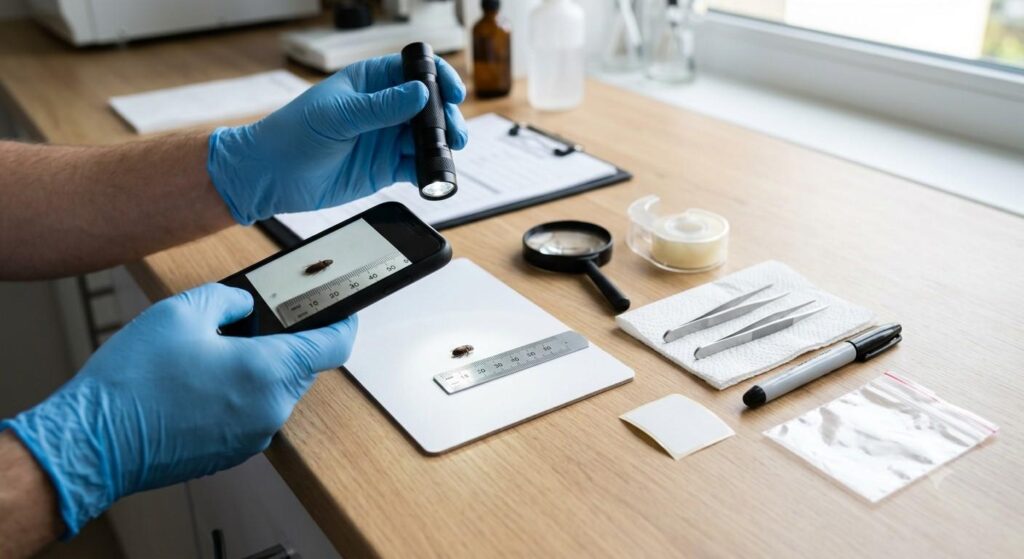
An unknown insect egg should be inspected without crushing it into fabric, carpet, or cracks. Use light, magnification, and location clues before touching it.
Follow this quick inspection process:
- Photograph it first. Take a close-up photo with a coin, ruler, or fingernail nearby for scale.
- Measure the size. Around 1 mm points toward bed bug eggs; 5–10 mm points toward a roach ootheca.
- Check the color. Pale white or yellow points toward bed bugs; brown or reddish-brown points toward roaches.
- Look at the shape. Capsule-shaped and ridged points toward a roach egg case; tiny oval and smooth points toward a bed bug egg.
- Inspect the surrounding signs. Roach droppings, musty odor, and kitchen activity suggest roaches. Dark mattress spots, shed skins, and bites suggest bed bugs.
- Seal what you remove. Use tape, a disposable paper towel, or a vacuum with immediate sealed disposal.
If you confirm a roach egg case, read our guide on what kills roaches and their eggs before relying on sprays alone.
What to Do If You Find Roach Eggs
If you find a roach egg case, remove it carefully and inspect the surrounding area for more oothecae, droppings, nymphs, and live adults. A single roach egg case can signal active reproduction nearby.
Use this response plan:
- Pick up the ootheca with tape, gloves, or a paper towel.
- Seal it in a plastic bag before throwing it away outdoors.
- Vacuum cracks, cabinet corners, and appliance gaps.
- Remove food crumbs, grease, cardboard, and standing water.
- Place sticky monitors near suspected harborages.
- Use baits and insect growth regulators where appropriate.
- Continue monitoring for several weeks because hidden oothecae may still hatch.
For German cockroaches specifically, also read our German roach eggs identification guide, because German roaches reproduce faster than many other household species.
What to Do If You Find Bed Bug Eggs
If you find bed bug eggs, inspect the entire sleeping area before treating one spot. Bed bug eggs are often hidden with live bed bugs, shed skins, fecal stains, and additional eggs.
Use this response plan:
- Remove bedding carefully and bag it before carrying it through the house.
- Launder and dry washable fabrics on high heat when fabric instructions allow.
- Vacuum mattress seams, bed frames, headboards, baseboards, and furniture cracks.
- Empty the vacuum contents into a sealed bag and dispose of it outdoors.
- Use mattress and box spring encasements designed for bed bug control.
- Reduce clutter near the bed to remove hiding places.
- Contact a licensed pest professional if eggs, live bugs, or bites continue.
Bed bug infestations often require a different treatment plan than roach infestations. Do not treat bed bug eggs with roach-only products unless the product label specifically allows that use.
Common Mistakes When Comparing Roach Eggs and Bed Bug Eggs
Misidentification usually happens because people compare the wrong features. The object’s size, color, and location should be evaluated together.
Mistake 1: Calling Every Small Brown Object a Roach Egg
Small brown objects may be food debris, seeds, old insect cases, mouse droppings, or roach droppings. A true roach ootheca usually has a capsule shape and may show a seam or ridged surface.
Mistake 2: Expecting Bed Bug Eggs to Be Brown
Bed bug eggs are usually pale, not brown. Brown or black evidence around a mattress is more likely fecal staining, shed skins, blood spots, or debris.
Mistake 3: Looking for Bed Bug Eggs Only on Sheets
Bed bugs can cross sheets, but they usually hide eggs in protected seams, cracks, and joints. Mattress piping, box spring edges, bed frames, and headboards are more important inspection points.
Mistake 4: Spraying and Assuming All Eggs Are Dead
Many insect eggs and egg cases are protected from casual surface spraying. Roach oothecae are especially difficult because the hardened case shields embryos. For roach infestations, use a lifecycle-based plan that targets adults, nymphs, and egg hatch timing.
Final Verdict: How to Tell the Difference Fast
Roach eggs vs bed bug eggs can be separated quickly by checking size, color, and location. Roach egg cases are larger brown capsules, usually 5–10 mm long, and are commonly found near kitchens, bathrooms, appliances, drains, and hidden food or water sources. Bed bug eggs are tiny pale individual eggs, about 1 mm long, and are usually found in mattress seams, box springs, bed frames, headboards, and nearby furniture cracks.
If the object is brown, firm, capsule-shaped, and found behind an appliance, treat it as a possible roach ootheca. If the object is white, pinhead-sized, sticky, and found in a mattress seam or headboard crack, treat it as a possible bed bug egg.
When in doubt, photograph the object, compare size and location, inspect for supporting signs, and avoid spreading the material through the home.
Frequently Asked Questions
Are roach eggs bigger than bed bug eggs?
Yes. Roach egg cases are usually much bigger than bed bug eggs. A roach ootheca often measures about 5–10 mm long, while a bed bug egg is usually about 1 mm long.
Are bed bug eggs brown like roach eggs?
No. Bed bug eggs are usually white, pearl-white, or pale yellow. Roach egg cases are usually tan, brown, reddish-brown, dark brown, or blackish depending on the species and age.
Can bed bug eggs be found in kitchens?
Bed bug eggs can be found away from beds in heavy infestations, but they are most common near sleeping and resting areas. Eggs in kitchens are more likely to be roach-related, pantry pest-related, or another type of insect evidence.
Can roach eggs be found in beds?
Roach egg cases are not usually laid in beds, but roaches can enter bedrooms if food, clutter, moisture, or hiding places are available. Brown-banded roaches may place egg cases in furniture and elevated locations, including bedroom furniture.
What looks like a bed bug egg but is not?
Lint, dandruff, fabric pills, dust, carpet fibers, flea eggs, and small food crumbs can look like bed bug eggs. Bed bug eggs are usually glued into protected cracks or seams and are often found with other signs like dark fecal spots, shed skins, or live bugs.
What looks like a roach egg but is not?
Seeds, mouse droppings, roach droppings, beetle cases, food particles, and old insect shells can be mistaken for roach eggs. A real roach egg case usually has a capsule-like shape, brown color, and protective casing.
Should I crush roach eggs or bed bug eggs?
Do not crush unidentified eggs into fabric, carpet, or cracks. Pick them up with tape, gloves, or a paper towel, seal them in a plastic bag, and dispose of them outside. Vacuuming can help, but the vacuum contents should be sealed and removed immediately.
Which is worse: roach eggs or bed bug eggs?
Both require action, but the risk is different. One roach ootheca can contain many developing roaches, while each bed bug egg contains one developing bed bug. Bed bugs are harder to confirm without inspecting sleeping areas, while roaches often require a lifecycle-based treatment plan to prevent hidden egg cases from restarting the infestation.