

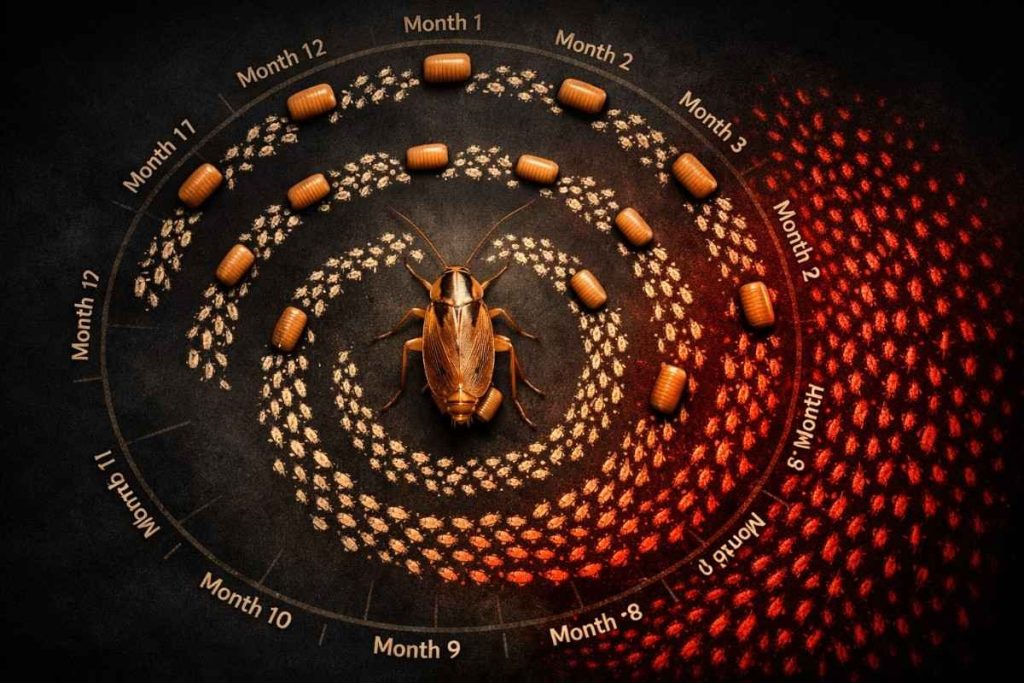
If you’ve spotted a single cockroach in your kitchen, there’s a question you need answered immediately: how often do roaches lay eggs? The answer determines how quickly a minor nuisance transforms into a full-scale infestation, and unfortunately, the math is not in your favor. Cockroaches belong to the order Blattodea, one of the oldest and most reproductively efficient insect groups on the planet. A single gravid female can produce hundreds of offspring in her lifetime, and under ideal conditions, some species cycle through six generations per year.
In this guide, we break down the exact cockroach egg-laying frequency for every major pest species, how many eggs each ootheca contains, how fast those eggs hatch, and what environmental factors accelerate the entire breeding cycle. More importantly, we’ll show you the narrow intervention window you have before a small roach problem becomes an uncontrollable population explosion.
Understanding the Cockroach Reproductive Cycle
Incomplete Metamorphosis: Egg → Nymph → Adult
Unlike insects such as butterflies or beetles that undergo complete metamorphosis, cockroaches develop through incomplete metamorphosis, meaning they pass through only three life stages: egg, nymph, and adult. There is no larval or pupal phase. When cockroach eggs hatch, the emerging nymphs already resemble miniature versions of the adults, just smaller, wingless, and lighter in color.
Each nymph progresses through a series of developmental phases called instars, typically six to seven molting events, where it sheds its exoskeleton through a process called ecdysis. Immediately after molting, the nymph appears white or translucent (more on what that means later) before its new cuticle hardens and darkens. The entire journey from first instar nymph to reproductive adult varies dramatically by species, from as little as 103 days for the German cockroach to over 600 days for the American cockroach.
What Is an Ootheca?
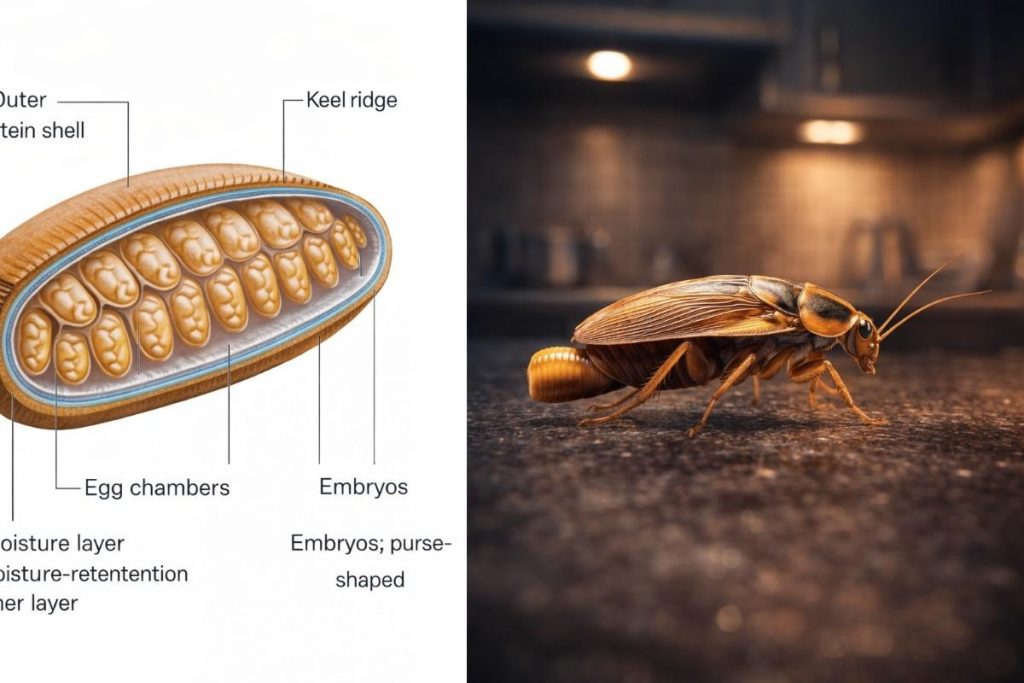
Cockroaches don’t scatter individual eggs. Instead, the female produces a hardened egg capsule called an ootheca, a purse-shaped, ridged casing made of tanned protein that shields developing embryos from predators, desiccation, and most pesticides. The ootheca contains two parallel rows of egg chambers separated by a structural keel (a raised ridge running along the top). Each chamber houses a single developing nymph embryo nourished by a yolk sac.
Depending on the species, the egg-bearing female either carries the ootheca on her abdominal tip until just before hatching (as the German cockroach does) or deposits it in a hidden location shortly after formation, adhering it with a salivary secretion. This behavioral difference is a critical factor in how successfully each species reproduces and how difficult its eggs are to find and destroy.
How Often Do Roaches Lay Eggs? Frequency by Species
The answer to how often cockroaches lay eggs depends entirely on the species. Below is a detailed breakdown of the roach reproduction rate for the six most common household pest species.
German Cockroach (Blattella germanica)
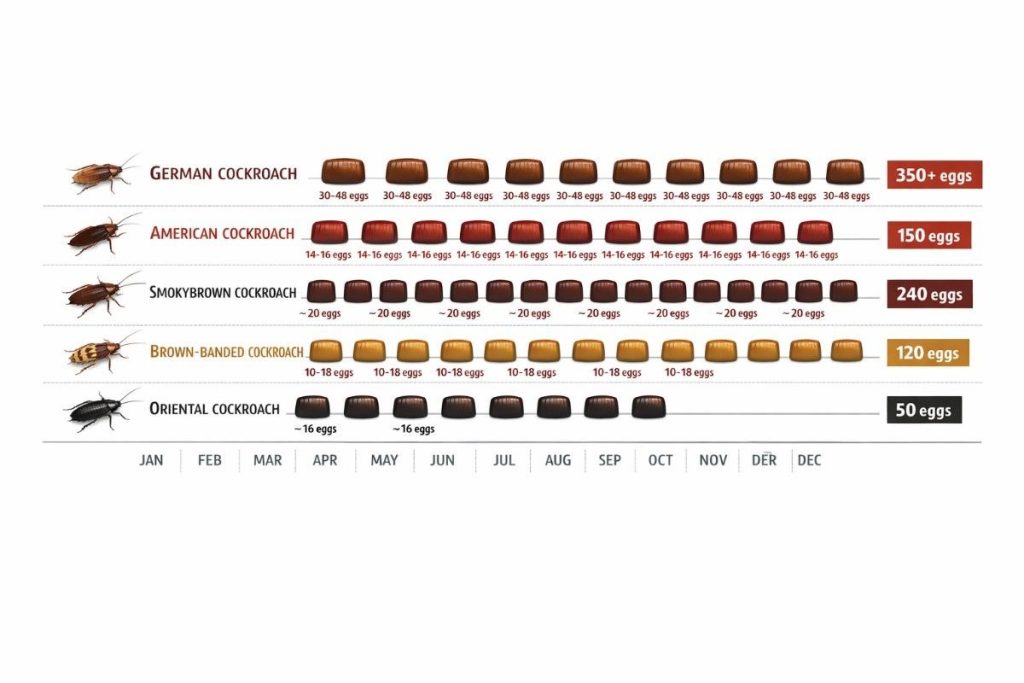
The German cockroach is the most prolific indoor reproducer and the primary driver of residential infestations worldwide. A single female produces a new ootheca approximately every 6 weeks, carrying the egg case on her abdominal tip for nearly the entire 28-day incubation period (at 86°F) before dropping it just hours before hatching. Each ootheca contains 30 to 48 eggs, the highest count of any common pest species.
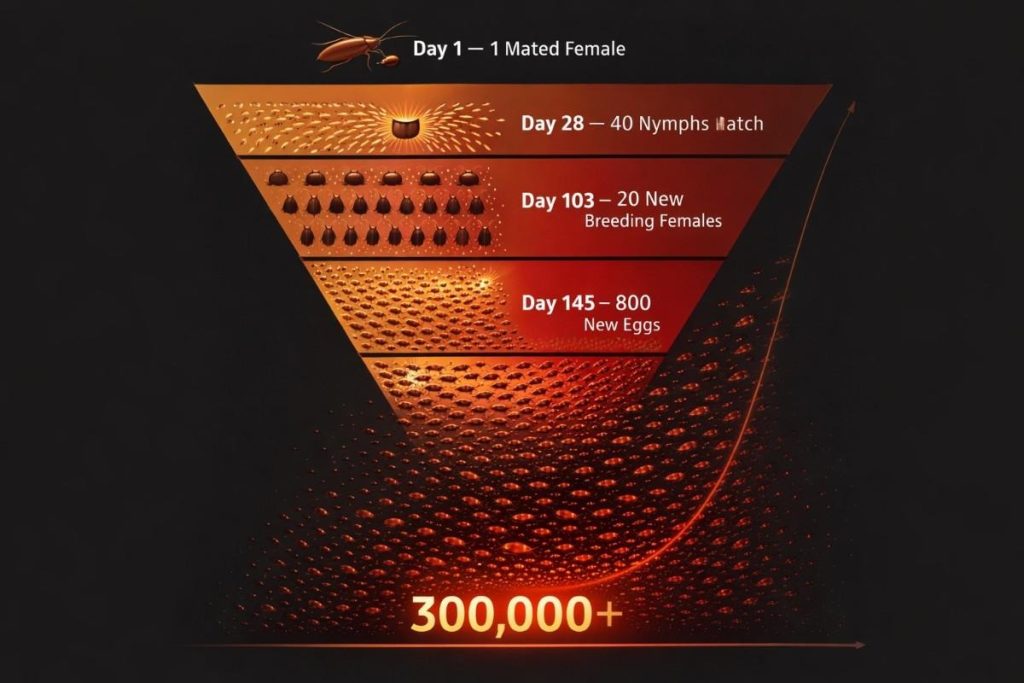
A female German cockroach can produce 4 to 8 oothecae across her 200-day adult lifespan, yielding a staggering 200 to 384 offspring from a single individual. When you factor in overlapping generations with her daughters beginning to reproduce within 103 days, a single mated female can theoretically generate over 300,000 descendants in one year.
American Cockroach (Periplaneta americana)
The American cockroach reproduces more slowly but lives significantly longer. Females produce one ootheca approximately every 4 to 6 weeks, depositing the dark reddish-brown, 8 mm-long egg case in warm, humid, sheltered locations like basements, crawl spaces, and sewer access points. Each capsule holds 14 to 16 eggs.
A female American cockroach produces around 6 to 14 oothecae across her 1- to 2-year adult lifespan, totaling roughly 90 to 224 offspring. The complete egg-to-adult development cycle takes approximately 600 days, making population growth slower, but their preference for city sewers, commercial buildings, and shared plumbing systems means they spread effectively across multi-unit structures.
Oriental Cockroach (Blatta orientalis)
Oriental cockroaches are the slowest reproducers among major pest species. Females produce a dark, inflated-looking ootheca approximately every 1 to 2 months, depositing it in damp basements, crawl spaces, and mulch beds. Each egg case contains roughly 16 eggs, and the total development period from egg to adult spans an extraordinarily long 300 to 800 days, depending on temperature conditions.
A female Oriental cockroach produces approximately 8 oothecae across her lifetime, yielding around 128 total offspring. While these numbers seem modest compared to the German cockroach, their tolerance for cold and their affinity for damp, decaying organic matter make them persistent outdoor-to-indoor invaders, especially in temperate climates.
Brown-Banded Cockroach (Supella longipalpa)
Brown-banded cockroaches are unique in both their egg-laying behavior and habitat preferences. Females produce a small ootheca approximately every 4 to 6 weeks, containing 10 to 18 eggs, and unlike other species, they glue it to elevated surfaces such as upper cabinet walls, behind picture frames, on ceilings, and even inside electronics. This makes their oothecae among the hardest to locate during inspections.
A female produces roughly 14 oothecae in her lifetime, totaling approximately 140 to 252 offspring. The full development period takes around 161 to 276 days. Brown-banded cockroaches prefer drier, warmer environments than their German counterparts and are more likely to infest bedrooms, living rooms, and offices rather than kitchens and bathrooms.
Smokybrown Cockroach (Periplaneta fuliginosa)
Common in the southeastern United States, smoky brown cockroaches produce a dark brown to black ootheca approximately every month, each containing 20 eggs. The egg case is roughly 10–14 mm long and is typically deposited in tree bark crevices, mulch beds, soffits, and attic spaces. Development from egg to adult takes 160 to 365+ days, depending on the climate.
Egg-Laying Frequency Comparison Table
| Species | Egg-Laying Frequency | Eggs per Ootheca | Oothecae per Lifetime | Total Offspring per Female | Egg-to-Adult Timeline |
| German (B. germanica) | Every ~6 weeks | 30–48 | 4–8 | 200–384 | ~103 days |
| American (P. americana) | Every 4–6 weeks | 14–16 | 6–14 | 90–224 | ~600 days |
| Oriental (B. orientalis) | Every 1–2 months | 16 | ~8 | ~128 | 300–800 days |
| Brown-Banded (S. longipalpa) | Every 4–6 weeks | 10–18 | ~14 | 140–252 | 161–276 days |
| Smoky brown (P. fuliginosa) | Every ~4 weeks | ~20 | 10–20 | 200–400 | 160–365 days |
How Long Does It Take for Roach Eggs to Hatch?
The cockroach egg incubation period is heavily influenced by temperature, a critical detail most pest control guides gloss over.
| Condition | German Cockroach Hatch Time |
|---|---|
| 86°F (30°C) – Ideal thermophilic range | ~28 days |
| 70°F (21°C) – Typical air-conditioned home | ~60 days |
This means a climate-controlled home environment can nearly double the incubation period, while warm, humid conditions such as behind a refrigerator motor or near a hot water heater dramatically accelerate egg development. American cockroach eggs take 44 to 60 days under normal conditions, while Oriental cockroach oothecae may require 42 to 81 days before eclosion (hatching) occurs.
How Fast Do Cockroaches Multiply? The Math Behind an Infestation
Here’s where the numbers get alarming. A thriving cockroach colony typically maintains a ratio of approximately 75% nymphs to 25% adults, meaning the vast majority of the population is invisible, developing inside walls, under appliances, and within harborage sites. If you’re seeing adult roaches regularly, you’re likely viewing only a fraction of the actual population.
Consider one mated German cockroach female:
Day 1: 1 female produces 1 ootheca (40 eggs)
Day 28: 40 nymphs hatch
Day 103: Those nymphs reach adulthood; ~20 new females mate
Day 145: 20 females each produce an ootheca (800 total eggs)
Day 173: 800 new nymphs hatch
By month 12: Theoretical descendants exceed 300,000
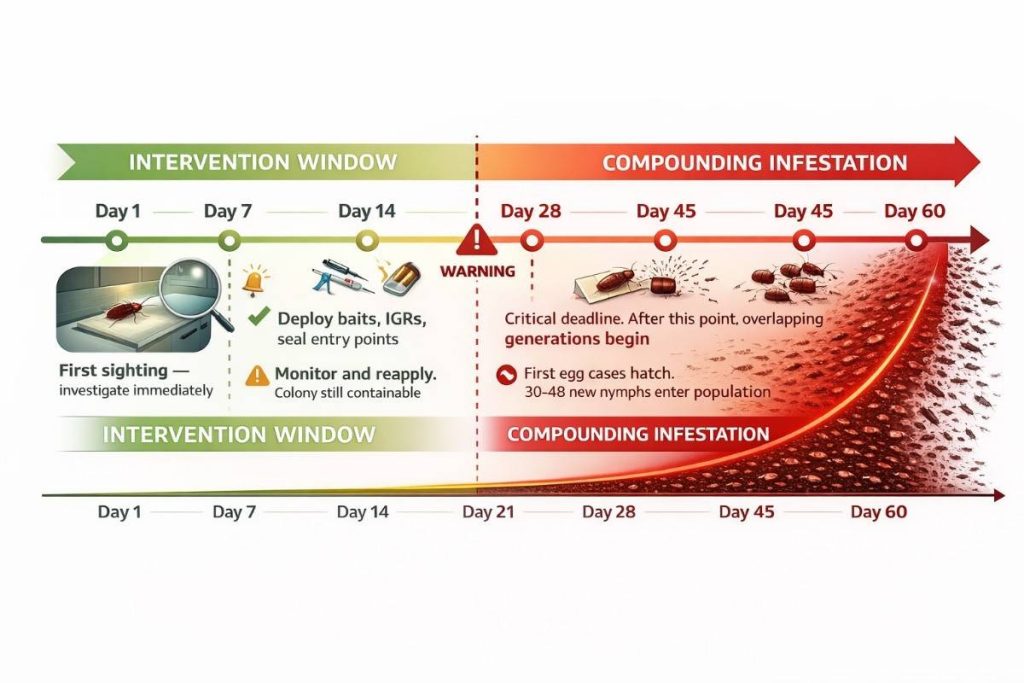
This exponential pest proliferation is why entomologists and pest management professionals stress early intervention, ideally within the first 21 days of detecting any cockroach activity.
Environmental Factors That Accelerate Roach Reproduction
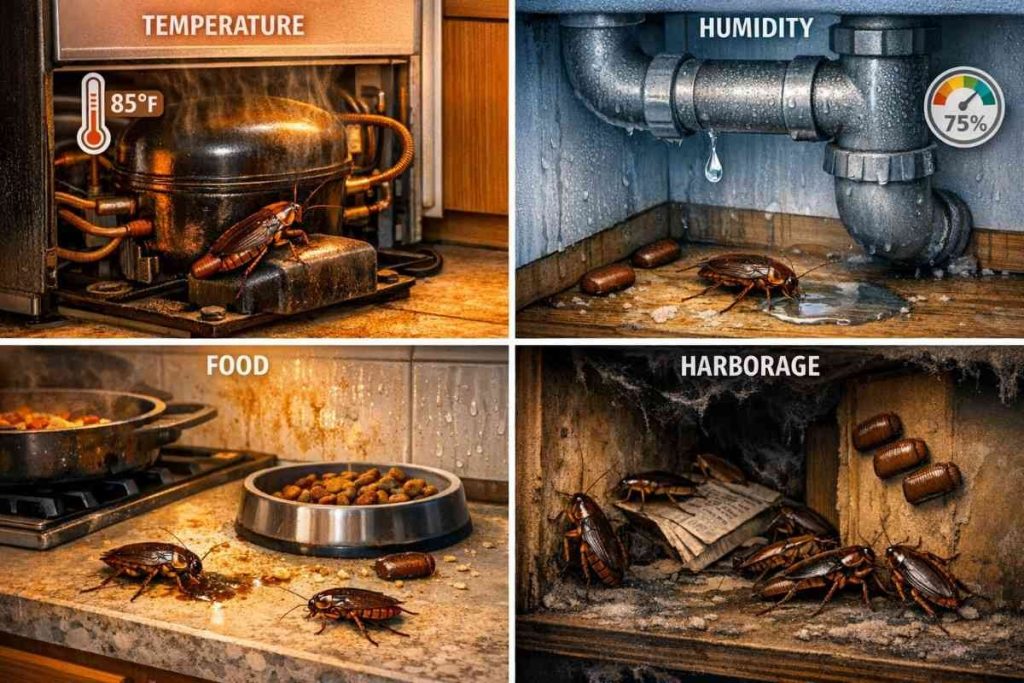
Cockroach reproductive output, or fecundity, isn’t fixed. It responds directly to environmental conditions:
Temperature: Warmer environments (80–90°F) accelerate ootheca development and shorten generation time. Thermophilic conditions behind appliances create ideal microhabitats.
Humidity: Moisture is critical. Damp basements, leaking pipes, and condensation around HVAC systems provide the humidity cockroaches need for successful egg development.
Food availability: Abundant food sources, such as grease residue, crumbs, pet food, and garbage, directly increase a female’s reproductive output and the number of oothecae she produces.
Harborage density: Wall voids, crevices behind cabinets, cardboard boxes, and cluttered storage areas provide the dark, sheltered oviposition sites females require.
Reducing these four factors is the foundation of integrated pest management (IPM) and the most reliable long-term strategy for suppressing cockroach breeding cycles.
Can Cockroaches Reproduce Without a Male?
Yes, and this is one of the most underreported facts in pest biology. Several cockroach species, including the American cockroach, are capable of parthenogenesis, specifically a form called automixis-type thelytoky, where unfertilized females produce viable offspring without mating. While parthenogenetic reproduction yields lower hatch rates than sexual reproduction, it means that even a single isolated female can potentially start a colony.
Additionally, female cockroaches possess a spermatheca, a sperm storage organ that allows them to retain sperm from a single mating event and use it to fertilize multiple oothecae over weeks or months without needing to mate again. This biological adaptation makes cockroach population control even more challenging, because removing male cockroaches from the environment does not stop reproduction.
Where Do Cockroaches Lay Their Eggs?
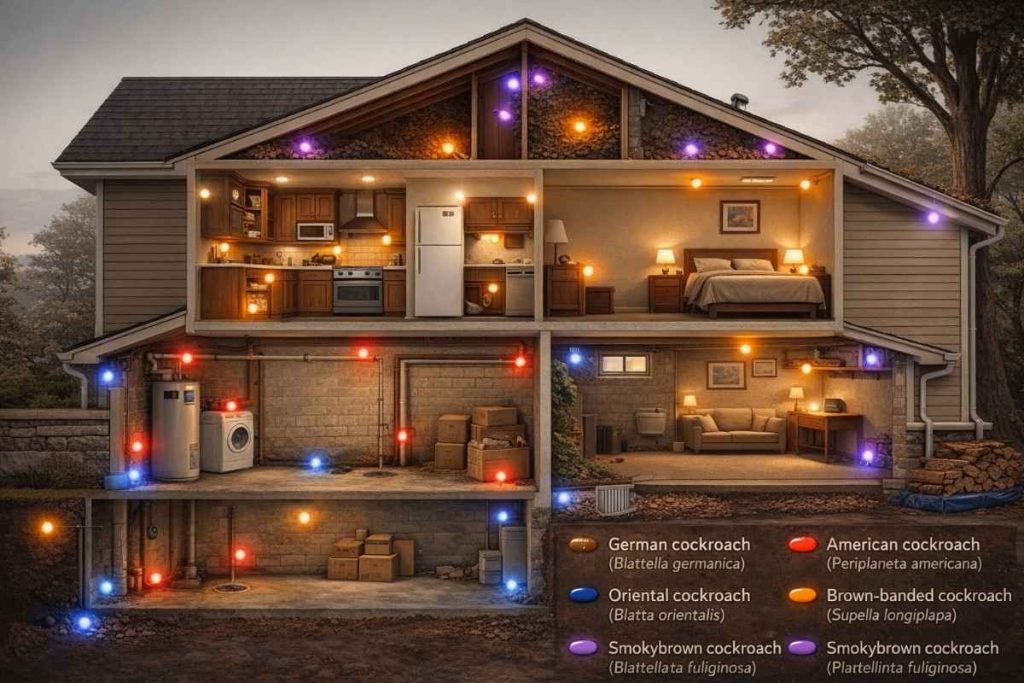
Egg deposition sites vary by species, but all cockroaches seek dark, sheltered, and humid locations close to food and water:
German cockroach: Kitchen cabinets, under sinks, behind refrigerators, inside appliance motors, wall voids near plumbing
American cockroach: Basements, crawl spaces, utility rooms, sewer drains, boiler rooms, damp cardboard
Oriental cockroach: Ground-level crevices, mulch beds, leaf litter, basement floor drains, beneath concrete slabs
Brown-banded cockroach: Upper walls, behind picture frames, inside electronics, on ceilings, and bedroom furniture; uniquely prefers drier, elevated locations
Smoky brown cockroach: Attic soffits, tree bark, woodpiles, gutters, outdoor planters
In apartment complexes and multi-unit housing, cockroach oothecae frequently travel between units through shared plumbing chases, electrical conduit gaps, and HVAC ductwork, making building-wide pest exclusion essential for lasting control.
White Cockroaches: What They Really Mean
If you’ve spotted a white or translucent cockroach, you’re not looking at a separate species; you’re seeing a nymph or adult immediately after ecdysis (molting), before its new exoskeleton has hardened and darkened.
While a single white cockroach isn’t cause for alarm, frequent sightings indicate a high turnover, actively growing population with nymphs regularly progressing through instar stages.
In practical terms, multiple white cockroach sightings suggest a thriving colony with sustained reproduction and a more urgent need for intervention.
How to Stop Roach Eggs from Hatching: Control & Prevention
Because the ootheca’s hardened protein shell resists most surface sprays and aerosol insecticides, eliminating cockroach eggs requires targeted strategies:
Insect Growth Regulators (IGRs)
IGRs are synthetic compounds that mimic juvenile cockroach hormones, disrupting nymph development and preventing them from reaching reproductive maturity. Applied as sprays or point-source stations, IGRs should be reapplied every 30 to 90 days to cover multiple hatching cycles. They don’t kill on contact; they break the breeding cycle by producing sterile or nonviable adults.
Gel Baits & Bait Stations
Professional-grade gel bait applied in small dots near harborage sites is the single most effective chemical tool against active cockroach populations. Nymphs that emerge from oothecae and feed on bait or on the feces and carcasses of baited adults receive a lethal secondary dose through horizontal transfer.
Physical Removal & Sanitation
Vacuuming visible oothecae, sealing entry points with caulk or steel wool, repairing leaking plumbing, and eliminating food and moisture sources are non-negotiable components of any integrated pest management (IPM) program. Without environmental modification, chemical treatments alone will not sustain long-term population suppression.
Professional Pest Control
For established infestations, particularly in multi-unit buildings, professional treatment typically costs $100 to $600 depending on severity and building size. Reputable providers offer a 3-month warranty and schedule follow-up visits timed to coincide with hatching cycles, ensuring emerging nymphs are eliminated before they reach reproductive age.
The 21-Day Intervention Window
Here’s a critical concept most homeowners miss: From the moment you spot the first sign of cockroach activity, a single live roach, droppings that look like ground pepper, or a musty pheromone odor in cabinets, you have approximately 21 days before an early-stage infestation begins compounding into overlapping generations.
Acting within this window with a combination of baiting, IGR application, and sanitation gives you the highest probability of eliminating the colony before it establishes satellite populations in adjacent rooms or units.
Frequently Asked Questions
Does squishing a cockroach release its eggs?
Not exactly. If you crush a female carrying an ootheca, the egg case may detach intact, and if the embryos inside are sufficiently developed, they can still hatch. This is why squishing is not a reliable control method. It’s better to vacuum gravid females and dispose of the sealed bag immediately in an outdoor trash bin to prevent any surviving nymphs from emerging indoors.
Is seeing one roach a sign of infestation?
Seeing a single cockroach, especially during daylight hours, is a strong indicator that a larger population exists out of sight. Cockroaches are nocturnal and only venture into open spaces when harborage sites are overcrowded or food is scarce. Studies suggest the visible roach population represents only 20 to 25% of the actual colony size.
Is there a queen roach?
No. Unlike ants or termites, cockroaches have no queen, no king, and no caste hierarchy. Every adult female is capable of independent reproduction. This decentralized reproductive structure is one reason cockroach colonies are so resilient; there’s no single individual whose removal would collapse the population.
Can roaches lay eggs in your clothes?
It’s uncommon but possible, particularly with brown-banded cockroaches (Supella longipalpa), which prefer drier environments and elevated surfaces for ootheca deposition. Clothing stored in dark closets, laundry left in piles on the floor, and items inside cardboard boxes are all potential oviposition sites. This is also a common vector for transporting roach eggs between locations, including via luggage after hotel stays.
Do roaches ever fully go away?
With persistent, properly executed integrated pest management, yes, cockroach populations can be eliminated from a structure entirely. However, re-infestation is always possible if entry points remain unsealed, sanitation lapses, or neighboring units harbor untreated colonies. Ongoing monitoring with sticky traps and quarterly IGR reapplication provide the best long-term defense against recurrence.
What bug can be mistaken for a cockroach?
Several insects are commonly confused with cockroaches, including ground beetles, wood-boring beetles, water bugs (giant water bugs are a different insect entirely), cricket nymphs, and June bugs. Accurate identification matters because treatment strategies differ significantly. When in doubt, capture a specimen and consult a licensed pest professional or your local university extension entomology department for confirmation.
How long can a cockroach live without its head?
Up to one week. Cockroaches breathe through spiracles (small holes) distributed along their body segments, not through their mouth or nose. A decapitated cockroach eventually dies from dehydration rather than suffocation. While this is more of a biological curiosity than a pest control concern, it illustrates the extreme physiological resilience that makes cockroaches such persistent survivors and why controlling their reproduction at the egg stage is the most effective long-term strategy.